Table of Contents
Introduction
The power of yoga in transforming your body and mind is the song everyone who practises yoga sings. The majority of the people who step into yoga have reducing stress and mastering flexibility as their goal. Here comes yet another extension of this – Yoga Nidra. In this step by step guide, discover the incredible impact that Yoga Nidra can have on your life – it’s one of those magic phrases that translates to “yoga sleep” for those who are curious. Yoga Nidra is basically a super systematic way of unwinding, that sends you sliding into that limbo zone between being fully awake and fast asleep. And that is where the real healing and transformation happens – it’s like your body and mind know exactly what to do without you even having to think about it.
Yoga Nidra has its roots in the ancient traditions of yoga and tantra – which is great because it works just as well for beginners who are just starting to explore yoga as it does for seasoned pros who are already well down the line. This guide is going to break down the 8 stages of Yoga Nidra – and it will show you how to use it to reduce stress, improve the quality of your sleep and cultivate a deeper sense of inner peace which in turn will sharpen your focus to a whole new level. Whether you’re just starting to think about trying Yoga Nidra or you’re looking for a way to take your practice to the next level with some guided sessions – this guide will be your go to roadmap for getting started.
Want to step up? Join our Yoga Instructor Course Online!
What is Yoga Nidra?
1: Which of these is the primary goal of yoga practice?
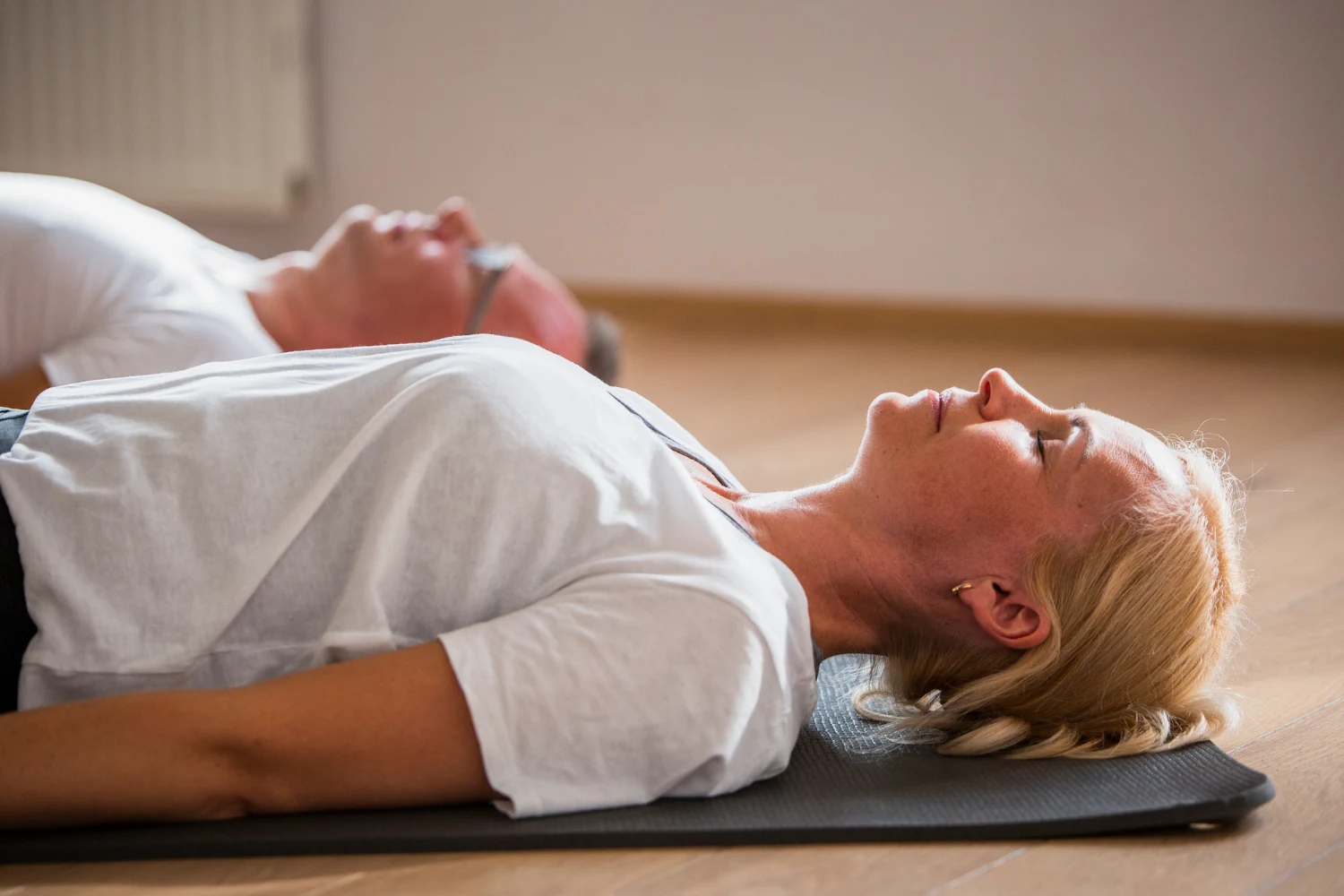
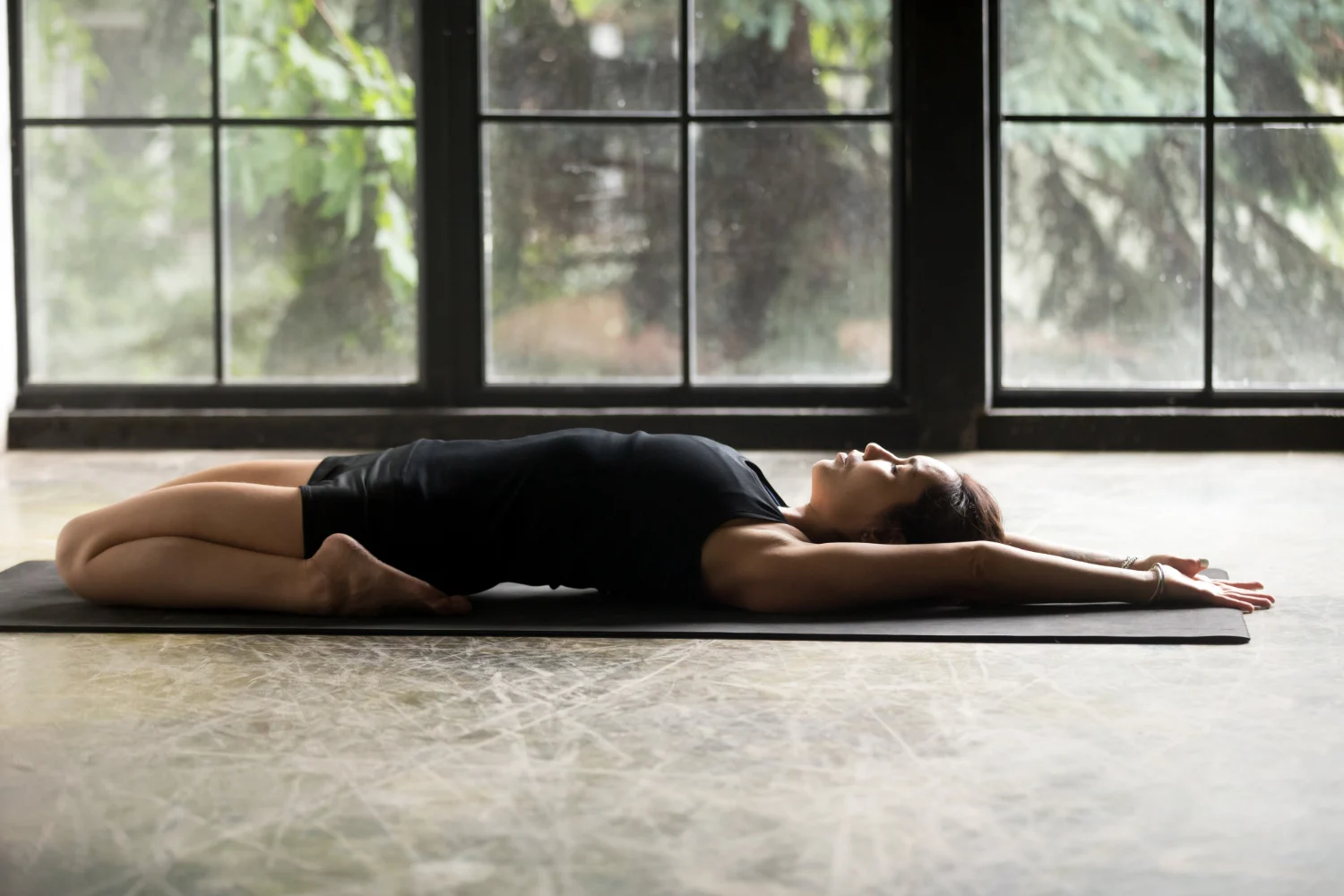
Yoga Nidra is basically a type of guided meditation that whisks you away to a deep, conscious sleep. It is one where you’re acutely aware of everything that’s going on but also happen to feel way more relaxed than you would if you were just doing a regular guided meditation. Yoga Nidra is different from those sorts of meditations where it’s all about keeping your mind from wandering off in different directions. It is super gentle and just sort of eases you into a really deep state of relaxation – but one where you are still acutely aware of what’s going on.
When you’re in a Yoga Nidra session, your body is basically zoned out in this sleep-like state, but your brain is still fully awake – and that balance is what makes this stuff so unique. It lets your nervous system reboot, emotional tension just melts away and you get to refashion those subconscious patterns of thought that have been spinning your life into chaos.
The more often you give Yoga Nidra a try, the more its effects start to seep in at all levels of being – physical, mental, emotional and subconscious. That’s probably why it’s one of the most effective relaxation techniques going – and getting the word out.
Become a Certified Yoga Instructor
Yoga Teacher Training Course by Entri App: Master authentic yoga techniques, earn certification, and build a successful career as a professional yoga instructor.
Join Now!Key Yoga Nidra Benefits
- Helps bring down anxiety, stress and insomnia – making everyday life a lot easier
- Really boosts your focus, memory and creativity – giving you a real edge in lots of areas of life
- Gets your nervous system into a better balance – helping you feel more level-headed
- Helps you heal emotionally and build resilience – so you can bounce back from tough times
- Gives you a general sense of wellbeing – just makes you feel good all round
How Yoga Nidra Helps in Yoga Training
| Benefit | How It Helps in Yoga Training |
| Stress Reduction | Lowers cortisol levels, supporting sustained practice |
| Improved Sleep | Induces deep rest without full sleep |
| Emotional Balance | Releases stored tensions and emotional blocks |
| Self-Awareness | Strengthens sankalpa (inner resolve) for long-term goals |
Pro Tip: Just starting out with Yoga Nidra? Try doing a 20 to 30 minute session each night before bed. That’s a good place to start off.
Preparing for a Yoga Nidra Session
Before you even get to the 8 steps of Yoga Nidra, sort out your environment to help you chill out nice & completely:
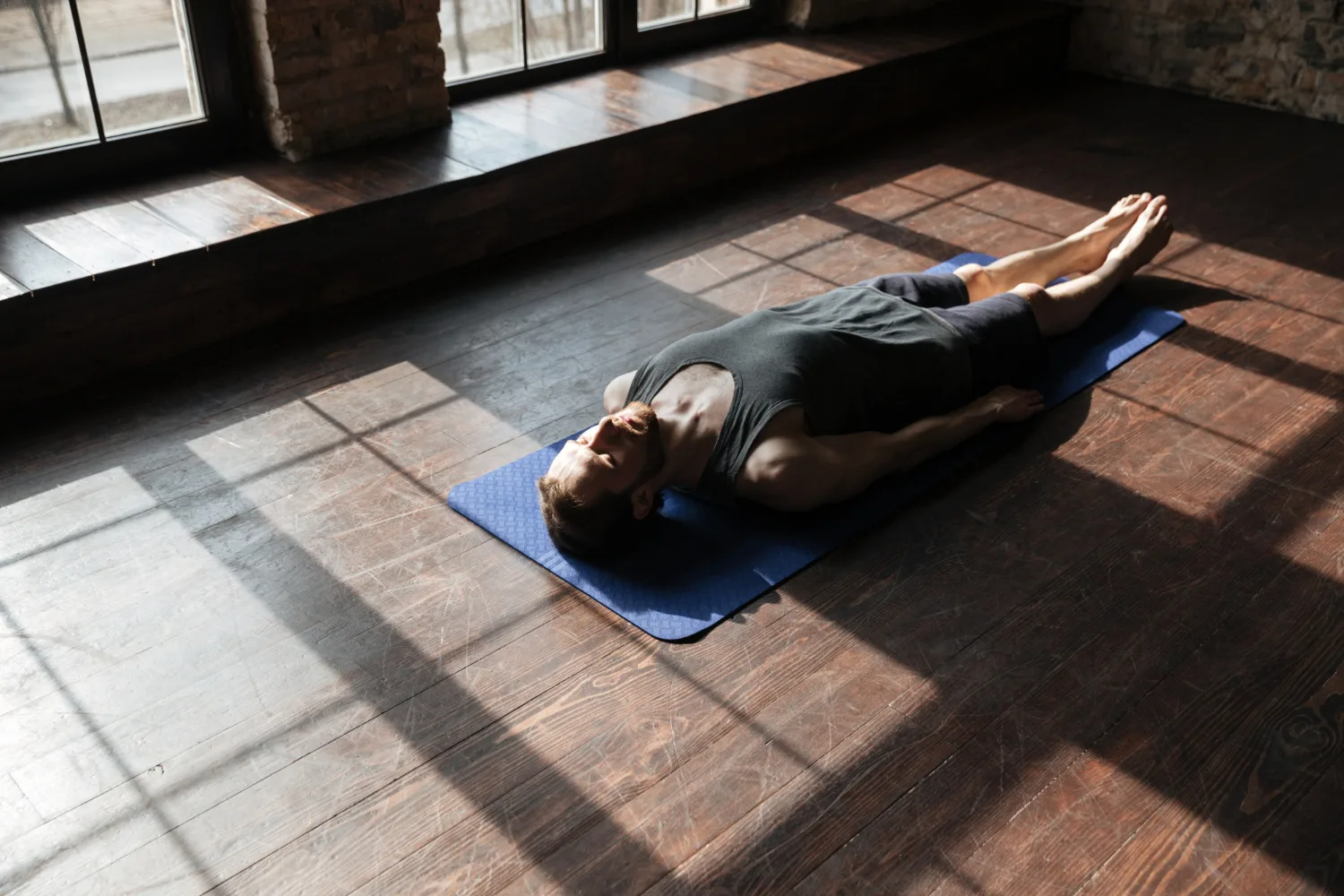
- just flop down on a yoga mat in Savasana – the old corpse pose will do just fine
- grab a blanket to ward off the chill
- dim the lights or block out distractions with some curtains
- play a guided Yoga Nidra recording to keep you on track
Duration: If you can manage 30 to 45 minutes per session, that’s ideal
Getting your space right makes all the difference – it lets you relax and just go with the flow.
Stage 1: Sankalpa (Setting an Intention)
Things kick off with Sankalpa – a positive affirmation you say out loud to yourself three times while you’re getting settled. This is your shot to plant a resolve that’ll really stick and be effective. This is especially since your mind is loafing around, feeling nice and relaxed, and receptive.
How to Formulate a Sankalpa
- Keep it positive
- Use the present tense
- Make it short and meaningful
Examples of Sankalpa
| Sankalpa | Purpose in Yoga Training |
| “I am healthy and strong” | Physical vitality |
| “I embrace inner peace” | Emotional stability |
| “I achieve my goals effortlessly” | Focus and motivation |
Elaboration: Sankalpa aligns your subconscious with your conscious goals, making every stage of Yoga Nidra more effective.
Become a Certified Yoga Instructor
Yoga Teacher Training Course by Entri App: Master authentic yoga techniques, earn certification, and build a successful career as a professional yoga instructor.
Join Now!Stage 2: Rotation of Consciousness
In this stage, awareness is mentally rotated through different parts of the body without physical movement. Each body part is silently named, creating a deep body-mind connection.
Rotation Sequence Overview
| Body Parts Covered | Focus Area |
| Right side (hand to foot) | Grounding energy |
| Left side | Balancing opposites |
| Back and front torso | Core relaxation |
| Head and face | Sensory release |
Elaboration: This systematic scanning releases deeply held muscular and nervous tension, making it especially effective for stress relief.
Stage 3: Breath Awareness
Here, attention shifts to the natural flow of breath without controlling it at all. Awareness may rest on the nostrils or the rise and fall of the abdomen.
Breathing Techniques
| Technique | Repetitions | Benefit |
| Nostril counting | 10 forward & backward | Calms prana |
| Abdominal awareness | 20 cycles | Deepens relaxation |
| Ujjayi (optional) | Gentle | Enhances focus |
Elaboration: Breath awareness bridges the external body and the internal mind, preparing you for subtler Yoga Nidra states.
Stage 4: Opposites and Feelings
In this stage, you consciously experience contrasting sensations or emotions without any judgment. This allows them to rise and dissolve naturally.
Common Opposite Pairs
| Opposite Pair | Emotional Release |
| Heavy / Light | Physical awareness |
| Pain / Pleasure | Trauma processing |
| Fear / Gratitude | Emotional balance |
| Hatred / Love | Heart chakra harmony |
Elaboration: Experiencing opposites neutralizes emotional extremes, cultivating equanimity and inner strength.
Stage 5: Visualization
Visualization involves guided imagery – symbols, scenes, or rapid image sequences that engage the subconscious mind.
Visualization Progression
| Level | Examples | Purpose |
| Simple | Blue sky, lotus flower | Calm the subconscious |
| Symbolic | Golden light | Energy activation |
| Rapid | Tree, river, eagle | Intuitive flow |
Elaboration: Visualization enhances creativity, emotional healing, and deep rest – making it especially powerful for improving sleep quality.
Stage 6: Sankalpa Repetition
The original sankalpa is repeated three times again. Now it is when the mind is deeply relaxed and receptive.
Elaboration: This is where transformation accelerates. The subconscious absorbs the resolve effortlessly, reinforcing positive change.
Stage 7: Externalization
Awareness is gradually brought back to the external world.
Return Steps
- Gently wiggle fingers and toes
- Stretch slowly
- Become aware of sounds
- Open the eyes mindfully
Elaboration: Proper externalization ensures smooth integration and prevents disorientation after deep relaxation.
Stage 8: Completion and Integration
The practice ends with a sense of gratitude and reflection. Over time, the effects of Yoga Nidra accumulate, creating lasting inner change.
Post-Practice Tips
| Action | Why It Matters |
| Journal insights | Tracks mental and emotional shifts |
| Hydrate and rest | Supports nervous system recovery |
| Weekly review | Strengthens long-term benefits |
Elaboration: Integration transforms Yoga Nidra from a practice into a lifestyle for holistic wellness.
Want to step up? Join our Yoga Instructor Course Online!
Key Takeaways
- Yoga Nidra is a seriously powerful form of guided meditation that can induce a deep, conscious sleep.
- The 8 stages work their way systematically through body, mind and subconscious – it’s a really methodical process.
- Sankalpa is the bit that holds the key to long term transformation – it’s pretty central to the whole thing.
- Regular practice will see big improvements in sleep, focus and emotional balance – it’s pretty useful stuff.
- Even just 20 to 45 minutes a day can lead to some pretty profound changes.
Conclusion
The 8 stages of Yoga Nidra offer a super structured yet gentle route to deep relaxation and self awareness. Whether you’re just dipping your toes into yoga or you’re someone that’s been struggling with stress and insomnia for years, Yoga Nidra is basically a scientifically supported and spiritually grounded solution that’s well worth trying.
With a bit of regular practice, Yoga Nidra will do more than just relax you – it’ll actually change the way you respond to life. You’ll find yourself moving forward with a lot more clarity, balance and inner peace than you ever thought possible.
|
RELATED ARTICLES |
|
| Important Mudras of Yoga | |
| 10 Yoga Poses for Anxiety Relief | How an Advanced Yoga Course Can Boost Your Teaching Career |
Become a Certified Yoga Instructor
Yoga Teacher Training Course by Entri App: Master authentic yoga techniques, earn certification, and build a successful career as a professional yoga instructor.
Join Now!Frequently Asked Questions
Can beginners just start doing Yoga Nidra right away?
Yeah, there’s no need to wait – Yoga Nidra is one of the easiest meditation techniques to get going with as a beginner. You don’t need to know a thing about yoga to start giving it a go.
How much time should you spend on a Yoga Nidra session?
Well, 30 to 45 minutes is a good place to start, but if you’re new to all this it’s probably best to start with 20 minutes and see how you feel – then you can always add a bit more time in if you need to.
Can doing Yoga Nidra get a good night's sleep just as well as actual sleep?
Honestly, it’s not a substitute for a proper night’s sleep – you won’t get the same benefits from it. But you’ll probably feel pretty refreshed afterwards – as if you’ve had a few hours shut-eye.
How often should you try Yoga Nidra?
Practising Yoga Nidra every day is definitely the best way to get the most out of it – you’ll probably start to see some pretty good results that way.
Is Yoga Nidra the same as hypnosis?
No way, there’s a common misconception that it’s similar but its rooted in completely different traditions – both have an effect on your subconscious tho, so it’s not entirely unrelated.
Does Yoga Nidra actually help with insomnia?
Yeah, it is pretty good at improving sleep quality – which is a godsend for people with insomnia.
Do I need a guided recording to try Yoga Nidra?
You don’t need one, but for newbies a guided recording can be a really good way to figure out how to do it.
When is a good time to try Yoga Nidra?
You can do it any time you like but most people find it helpful to do it either just before bed or during the day when they need a bit of a break.
How long does it take to see any results from Yoga Nidra?
Honestly – it varies hugely from person to person – some people start to feel the benefits within a week or so, but the more you do it the quicker you’ll probably start to notice a difference.