
Table of Contents
In 2026, with a never before rise in instant digital payments, high-speed consumerism, and complex financial products, it is easier than ever to fall into traps that erode your wealth.
It is high time to realise that the problem might not be your income. On the other hand, it is likely your bad money habits.
Key Takeaways
- Track Your Money: Use a budget to stop micro-leaks in your spending.
- Kill High-Interest Debt: Never carry a balance on your credit card.
- Invest for Growth: Don’t let your money rot in a savings account; beat inflation with equity.
- Prioritize Safety: Build an emergency fund and get proper insurance before you start investing.
- Avoid the Status Trap: Buy what you need, not what makes you look rich on social media.
Join our Online Course and Learn Stock Marketing the Right Way. Enrol Now!
Introduction
1: What is a stock?
In the fast-paced world we are living in today, especially in a growing economy like India, the dream of financial freedom is shared by everyone. Irrespective of whether you are a salaried professional in Bengaluru or a small business owner in Lucknow, you work hard to earn.
However, many people find that despite their rising salaries, their bank balance remains quite low. A survey reveals that 57% of respondents had an increase in income in 2025 that was higher than 52% in 2024. However, despite the rise in income, 50% of families did not save in 2025.
The sad truth is that it is as good as running on a treadmill. Even though you might be moving fast, you will be staying in the same place. By identifying and eliminating these bad money habits, you can stop the drain on your finances and start building a secure future for yourself and your family.
In this blog, we will cover everything about the top 9 money habits that are keeping you poor. We will also suggest some proven tips on how you can break them to start your journey toward real wealth.
Living Without a Monthly Budget

The most common mistake is having no idea where your money goes. Many Indians follow the “spend first, save what’s left” approach. The big problem is that by the 20th of the month, there is usually nothing left to save.
With no budget in place, small expenses like daily gourmet coffees, frequent quick-commerce orders like Zepto or Blinkit, and multiple OTT subscriptions go unnoticed. These “micro-leaks” can add up to thousands of rupees every month.
The Fix: Use the 50-30-20 Rule.
- 50% for Needs (Rent, Groceries, Bills)
- 30% for Wants (Dining out, Movies)
- 20% for Savings and Investments.
Falling into the “Minimum Due” Credit Card Trap
Credit cards are a double-edged sword. In 2026, with RuPay credit cards linked to UPI, swiping has become even more convenient. However, many users only pay the “Minimum Amount Due” shown on their statement.This is one of the most dangerous bad money habits.
When you pay only the minimum, the bank charges an interest rate of 36% to 42% per year on the remaining balance. You aren’t just paying for your purchase; you are paying a massive “laziness tax” to the bank.
The Fix: Always pay your credit card bill in full and on time. If you cannot afford to pay for something in full by the end of the month, you cannot afford the item.
Ignoring the Power of Inflation
Inflation is the “silent thief” of wealth. If you keep all your savings in a traditional savings account earning 3% interest while inflation in India is around 5-6%, you are actually losing money every year.Your ₹100 today might only buy ₹94 worth of goods next year.
Many people feel “safe” with cash under the mattress or in low-interest accounts, but this habit prevents your money from growing.
The Fix: Move beyond just “saving” and start “investing.” Look for assets like Equity Mutual Funds, Index Funds, or Gold (Sovereign Gold Bonds) that have the potential to beat inflation over the long term.
Stock Market Training Reviewed & Monitored by SEBI Registered RA
Trusted, concepts to help you grow with confidence. Enroll now and learn to start investing the right way.
Know moreLifestyle Creep (Spending to Impress)
In these times of Instagram and LinkedIn overdose, the pressure to look successful is crazy. Lifestyle creep happens when your expenses rise as fast as or faster than your salary.
Buying a luxury SUV on a heavy EMI just because your neighbor did, or upgrading to the latest iPhone every year, is a recipe for poverty. These are bad money habits driven by social validation rather than financial need. Real wealth is what you don’t see—it’s the money in your investments, not the brand on your shirt.
The Fix: Practice the 30-Day Rule. If you want to buy something non-essential, wait for 30 days. If you still want it and can afford it without an EMI, then buy it.
Having No Emergency Fund
Life is unpredictable as a sudden medical emergency, a car breakdown, or a job loss can happen to anyone. You might find it shocking that 75% of Indians don’t have enough money to meet a basic emergency.
Without an emergency fund, most people turn to high-interest personal loans or break their long-term investments (like their PF or Mutual Funds) at the wrong time. This breaks the “compounding” of your wealth and sets you back by years.
The Fix: Build a “Financial Shield.” Aim to save at least 6 months of your essential monthly expenses in a separate, liquid account or a Liquid Mutual Fund. This money should only be touched in a real emergency.
Falling for the EMI and BNPL Culture
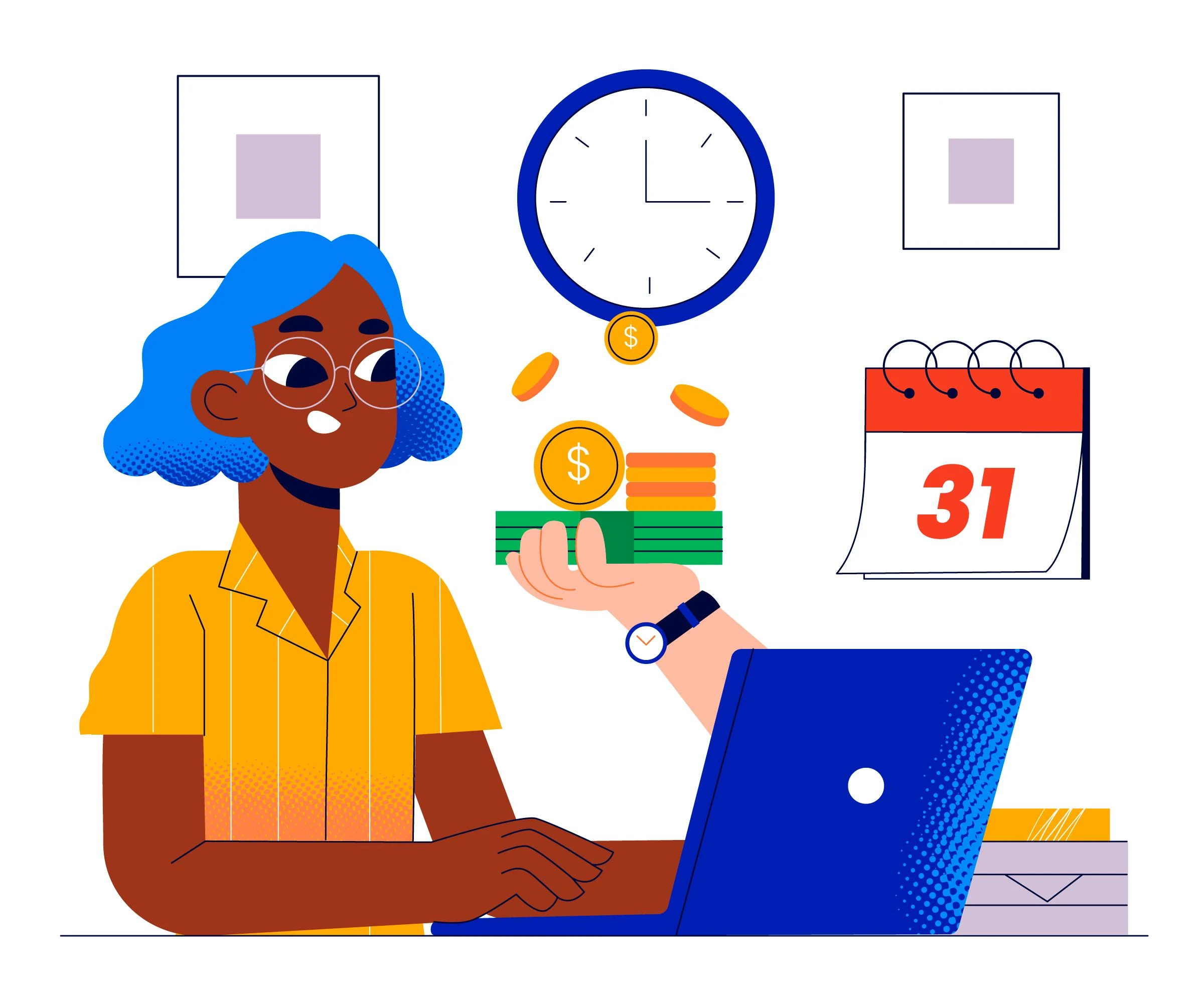
“Buy Now, Pay Later” (BNPL) and No-Cost EMIs have made it easy to buy things we don’t need with money we don’t have. While “No-Cost” sounds great, these schemes often hide processing fees or lure you into overspending.
When your monthly income is already committed to 5 different EMIs before the month even begins, you have zero “financial breathing room.” This cycle of debt is one of the hardest bad money habits to break.
A recent survey conducted across India shows that thousands of borrowers are reeling under debt due to easy credit. Of the total struggling borrowers, 85% of them are forced to pay over 40% of their monthly income towards EMIs.
The Fix: Avoid using EMIs for lifestyle products like clothes or gadgets. Use credit only for appreciating assets (like a home) or for genuine emergencies.
Delaying Your Investment Journey
Many young professionals in India think, “I will start investing once I earn more.” This is a massive mistake. In the world of finance, time is more important than money.
Are you yet to realise the power of compounding? A 25-year-old starting a SIP (Systematic Investment Plan) of ₹5,000 will likely end up with a much larger corpus than a 35-year-old starting with ₹15,000. By waiting, you lose the most valuable asset you have: time.
The Fix: Start small, but start today. Even a ₹500 SIP is better than no SIP at all. Increase your investment amount every time you get a salary hike.
Lacking Adequate Insurance

A recent survey shows that in the case of Indian women, only 20% of them have adequate health insurance. Relying solely on your company-provided health insurance is a risky move.
If you lose your job, you lose your cover. Furthermore, many people treat insurance as an “investment” by buying ULIPs or traditional plans.
Mixing insurance and investment usually leads to low insurance cover and poor investment returns. This is one of those bad money habits that can bankrupt a family during a crisis.
The Fix: Keep them separate.
- Term Insurance: Get a pure term plan with a cover of 10-15 times your annual income.
- Health Insurance: Get an independent family floater policy to cover hospital bills.
Relying on Social Media Tips and Herd Mentality
Do you invest based on a “hot tip” from a WhatsApp group or a YouTube influencer? Realise at least now that it is gambling and not investing.
The worst part is that a whopping 62% of retail investors are making decisions based on recommendations from finfluencers on social media, reveals a SEBI survey. Many people lose their hard-earned money in penny stocks or “get-rich-quick” schemes because they miss doing their own research.
Following the herd usually means you buy when the market is high (due to greed) and sell when the market is low (due to fear).
The Fix: Educate yourself and stock to a simple, goal-based investment plan. If you find it difficult, consult a SEBI-registered investment advisor rather than following anonymous tips.
Join our Online Course and Learn Stock Marketing the Right Way. Enrol Now!
Parting Words
Is it lack of proper guidance that is keeping you away from stock market investing? No worries as a team of expert mentors is all that you need.
With its team of highly experienced, expert mentors headed by a SEBI-registered research analyst, Entri Finacademy has grown to be a trusted finance education platform. Since 2022, this platform has been delivering online stock trading courses.
You might be delighted to know that stock market courses at Entri can be learnt online with absolutely no need to step out of your home. Moreover, with features such as exclusive doubt clearance sessions and practical trading support, learning is pretty easy here. The icing on the cake is the option to learn stock market courses right from the very basics to the advanced levels, that too in regional languages such as Malayalam and Tamil.
To know more about Entri Finacademy’s stock market courses and mutual fund courses, click here.
|
RELATED POSTS |
|
Stock Market Training Reviewed & Monitored by SEBI Registered RA
Trusted, concepts to help you grow with confidence. Enroll now and learn to start investing the right way.
Know moreFrequently Asked Questions
What is the biggest money mistake Indians make?
The most common mistake is spending for social status (lifestyle creep) and relying on EMIs for non-essential items, which prevents any real saving.
How much should I save every month?
A good rule of thumb is the 50-30-20 rule, where you aim to save and invest at least 20% of your take-home salary.
Is "No-Cost EMI" actually free?
Not always. Retailers often offer a discount equivalent to the interest, but you may still pay processing fees and lose out on cash-payment discounts.
Why is my savings account not enough for wealth?
Savings accounts offer low interest (3-4%), which is usually lower than inflation (5-6%). This means your money’s buying power decreases over time.
When should I start investing?
Immediately. The earlier you start, the more you benefit from compounding. Even small amounts like ₹500-1,000 per month can grow significantly over decades.
Do I need a separate health insurance if my company provides one?
Yes. Company insurance ends if you leave or lose your job. A personal policy ensures you are covered during transition periods and old age.
How can I stop overspending on UPI?
Set a daily limit on your UPI app and try using a separate bank account for monthly discretionary spending to keep your main savings safe.