Table of Contents
Forex trading attracts millions due to 3 major reasons, the thrill of trading currencies, the 24-hour global markets, and the promise of high returns. But for many traders in India, early excitement often gives way to disappointment. The difference between those who succeed and those who lose money often comes down to avoiding the common forex trading mistakes that beginners repeatedly commit.
In this blog post, we’ll delve deep into the top 7 mistakes traders typically make and explain how you can avoid them, especially in the Indian context. Whether you’re trading from Mumbai, Delhi, Kochi or a small town, these lessons will help you stay away from all those pitfalls and become a successful trader.

Mistake 1: Starting Without Proper Education
One of the biggest errors novices make is jumping into forex trading without understanding the basics, what moves currency pairs, how leverage works, or how to analyse charts and news.
Why is this risky
- Lack of knowledge means you don’t know how to interpret market signals, leading to poor entry/exit timing.
- You may misunderstand leverage, risk, and volatility, which can devastate your capital quickly.
- You become overly dependent on tips, hearsay or “hot signals” without internalizing how forex actually works.
How to avoid it
- Invest time in learning: do courses, read credible forex-trading guides, study both technical and fundamental analysis.
- Start by using a demo account, practise with virtual money so that you understand market behaviour with no real risk.
- Understand macroeconomic events such as global central bank decisions, USDINR dynamics, geopolitical news etc. which often influence forex pairs relevant for Indian traders.
Learn Stock Marketing with a Share Trading Expert! Explore Here!
Mistake 2: Trading With No Concrete Plan
1: What is a stock?
Many traders make a blind jump without a strategy, no clear trade plan, no entry or exit rules, no risk limits. That’s like driving without a map.
Why that’s problematic
- Decisions become impulsive, you may enter trades randomly driven by fear, greed, or hype.
- Without defined rules, you cannot measure performance or identify what works or fails.
- You lack a benchmark, when the trade fails or succeeds, you don’t know whether it was luck or a valid strategy.
How to avoid it
- Before you start, prepare a written trading plan : define which currency pairs you will trade, what analysis will guide you i.e. technical or fundamental, entry and exit rules, stop-loss and take-profit thresholds, position sizing.
- Back-test your plan on historical data or use it on a demo account first.
- Stick to your plan and avoid deviating unless you have new data or clear justification.
Mistake 3: Overlooking Risk Management & Overleveraging
One of the most dangerous traps in forex: using high leverage and risking too much capital per trade. Many ignore risk management altogether.
Why is this dangerous
- Forex leverage magnifies both profits and losses. A small adverse move can wipe out a large portion of your account.
- Risking a large percentage of your capital in one trade is like gambling; one bad trade can destroy months of good work.
- Without risk management, even consistent small losses accumulate and destroy your capital over time.
How to avoid it
- Follow the “1–2% rule”: never risk more than 1–2% of your total account balance on a single trade.
- Use sensible leverage – avoid high leverage especially as a beginner. If available, choose conservative ratios and many experts suggest keeping it modest.
- Diversify – never put all your trading capital into one position or one currency pair. Spread risk across trades i.e. stay away from over-concentrated bets.
Mistake 4: Not Using Stop-Loss Or Failing to Cut Losses
Many traders skip stop-loss orders as they either forget, or hope that the market will turn in their favor. That’s a big mistake.
Why does this harm you
- Without stop-loss, a small unfavourable move can become a large loss before you react.
- Holding onto losing trades, hoping for a bounce, or closing winning trades too early, often stems from emotional bias rather than strategy.
- Long-term, constant small losses can deplete your capital, even if you win occasionally.
How to avoid it
- Always set a stop-loss when you open a trade. Determine it based on market volatility, support/resistance levels, and your risk tolerance.
- Use a reasonable lot size so that even if the stop-loss hits, you only lose a small percentage of your total capital, inline with risk-management rules.
- Avoid letting hope or fear drive decisions. Accept that losses are part of trading, better to take a small loss than risk wiping out your account.
Mistake 5: Overtrading and Chasing the Market
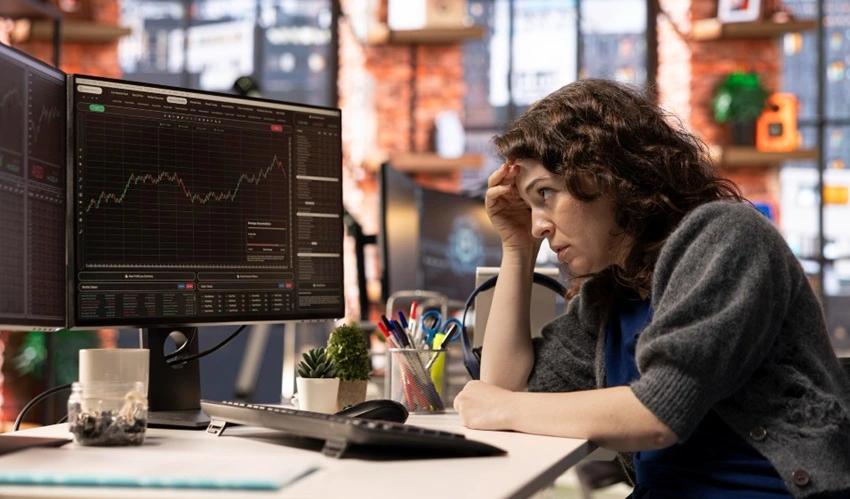
Beginners and even some experienced traders often fall into the trap of overtrading. They keep the platform open, jump into every “opportunity,” and chase profits.
Why overtrading hurts
- Trading generally means more exposure to market noise and higher transaction costs, making it harder to stay profitable.
- Trading due to boredom, impatience, or FOMO (fear of missing out) leads to poor-quality trades rather than well-thought-out setups.
- Overtrading reduces discipline; you might stray from your trading plan or risk limits in the rush to make money.
How to avoid it
- Trade less, but trade wisely: wait for high-probability setups that match your trading plan criteria.
- Set a daily or weekly limit on the number of trades. Stick to that even if the market seems tempting.
- Focus on quality over quantity. It’s better to have fewer, well-analyzed trades than many impulsive ones.
Stock Market Training Reviewed & Monitored by SEBI Registered Investment Advisor
Trusted, concepts to help you grow with confidence. Enroll now and learn to start investing the right way.
Know moreMistake 6: Emotional Decisions & Lack of Discipline
Emotions are often the downfall in forex trading. Fear, greed, FOMO, and revenge trading, when these take control, logic takes a back seat.
Common emotional traps
- Fear & greed: closing winners too early out of fear, holding losers too long, hoping fora reversal.
- Revenge trading: trying to recover losses by placing risky trades immediately after a loss.
- FOMO: jumping into trades because everyone else is trading, or because of trending news, without analysis.
How to avoid it
- Develop mental discipline. Treat trading like a business, not a gamble.
- Always follow your trading plan and risk-management rules, never trade based on impulses or “gut feelings.”
- Take regular breaks. Especially after losses or a string of trades, avoid overreacting or chasing recovery.
Mistake 7: Not Maintaining a Trading Journal / Ignoring Learning from Mistakes
Many traders don’t record their trades or analyse their performance over time. That means repeating the same mistakes over and over.
Why this matters
- Without records, you can’t review what went right or wrong, and you won’t learn effectively.
- Repeating the same mistakes erodes capital and confidence.
- If you lack feedback, you can’t refine your strategy or improve over time.
How to avoid it
- Maintain a trading journal, record entry and exit price, rationale for trade, position size, stop-loss level, outcome, and emotions at trade time.
- Review your journal periodically (weekly or monthly). Look for patterns: what works, what fails, which mistakes repeat.
- Based on the insights from your journal, refine your strategy, adjust risk rules, or avoid recurring emotional biases.
Learn Stock Marketing with a Share Trading Expert! Explore Here!
Key Takeaways
- Forex trading can be rewarding, but only if there is discipline, knowledge, and a well-defined strategy.
- The most common forex trading mistakes like overleveraging, ignoring risk management, trading without a plan, or emotional trading often cause more damage than market volatility itself.
- For Indian traders: market conditions, currency-pair behaviour (like INR pairs), and global economic/economic events add complexity, so education and caution matter even more.
- Success in forex doesn’t come from seeking quick gains, it comes from patience, consistency, and treating each trade as part of a long-term journey.
- Use tools: demo account, stop-loss, trading journal, risk rules. Use your mind, not emotions.
Parting Words
As a forex trading enthusiast, do you want to learn forex trading from an expert? Entri Finacademy, a trusted, SEBI-compliant, finance-education platform is offering all that and more. With over 9 million students, Entri has been conducting forex trading, stock trading and mutual fund courses since 2017. A compelling reason to choose Entri is their team of highly experienced, expert mentors. Moreover, with amazing features such as live and recorded classes and exclusive doubt clearance sessions, this is the perfect platform for learning forex trading. To know more about Entri’s courses, click here.
Stock Market Training Reviewed & Monitored by SEBI Registered Investment Advisor
Trusted, concepts to help you grow with confidence. Enroll now and learn to start investing the right way.
Know moreFrequently Asked Questions
What does “common forex trading mistakes” really mean?
It refers to the typical errors traders repeatedly commit, often because of lack of education, planning, or discipline. These mistakes (like overtrading, overleveraging, and emotional trading) are universal, yet easily avoidable with proper strategy.
As an Indian trader, is forex even suitable given market regulations and currency volatility?
Yes, but Indian traders must be especially cautious. Before trading, understand applicable regulations, currency-pair behaviour (like INR pairs), and global economic events. Proper risk management and realistic expectations are key.
How much capital should I risk per trade?
A common guideline is to risk no more than 1-2% of your total trading capital per trade. This helps ensure that even a few losses won’t wipe out your account.
Should I use high leverage for faster profits?
High leverage can amplify gains, but it also magnifies losses. Especially as a beginner, prefer lower leverage ratios. Focus on consistent, sustainable growth rather than chasing quick profits.
What’s a stop-loss and why is it important?
A stop-loss is a preset trigger to close a trade if the market moves against you. It limits how much you can lose on a trade, protecting your capital and reducing emotional decision-making.
What should be the frequency of trading?
There’s no fixed number, but avoid overtrading. It’s better to trade fewer times with well-analyzed setups than many times impulsively. Some traders set daily or weekly trade limits to stay disciplined.
Does reviewing past trades really help?
Absolutely. Maintaining a trading journal and reviewing past trades helps identify what works and what doesn’t, spot emotional or strategic mistakes, refine your trading approach, and grow over time.