Table of Contents
RazorpayX Payroll, Zoho Payroll, greytHR, Keka, factoHR, and Zimyo are among the payroll software choices that are considered to be among the finest in India in the year 2026. Automating wage calculations, managing tax deductions (PF, ESI, and TDS), generating payslips, and ensuring full compliance with Indian statutes are all tasks that may be accomplished with the assistance of these technologies.
Is being an HR your dream? Enrol now for our course on Human Resource!
Introduction
When it comes to employee compensation, tax deductions, regulatory compliance, and attendance tracking, payroll management is an essential role for every organization. However, it may quickly become increasingly complicated due to these factors. The manual management of payroll in India, where legislation such as PF, ESI, and TDS are subject to periodic changes, typically results in errors, delays, and compliance issues.
When it comes to this particular aspect, payroll management software plays a significant role. Calculating salaries, ensuring that tax deductions are precise, generating payslips, and assisting firms in remaining in compliance with government rules are all things that are automated by this software. Organisations of all sizes, from startups to huge corporations, are increasingly using payroll software in order to reduce the amount of time spent on HR operations, increase accuracy, and streamline HR processes.
What is Payroll Management Software?
The process of calculating, administering, and delivering employee pay cheques can be automated with the help of payroll management software, which is a digital tool available today. Tax deductions, compliance with government rules, tracking attendance, and the generation of payslips are some of the major activities that are handled by this software programme.
By using this software, businesses are able to ensure accuracy, save time, and reduce the number of errors that occur when they manually process payroll. Generally speaking, it is responsible for managing components such as base salary, allowances, PF, ESI, TDS, bonuses, and deductions.
In layman’s words, payroll management software has the ability to assist organisations in accurately and punctually paying their employees, all while maintaining full compliance with the labour laws and tax regulations that are in place in India.
Become an HR Expert – Enroll in Our HR Management Course Today!
Unlock the secrets to effective Human Resource Management with our expert-led course! Learn recruitment, employee relations, performance management, and more to build a thriving workplace. Start your journey toward a successful HR career today!
Know MoreWhy Businesses in India Need Payroll Software?
The manual management of payroll, taxes, and compliance is a challenging endeavor that requires a significant amount of time and is prone to errors for enterprises in India. As a consequence of this, their companies must need payroll software. Due to the ever-changing legislation that governs PF, ESI, and TDS, as well as state-specific labour rules, even relatively slight errors could result in penalties and dissatisfaction among workers. This is because of the fact that the legislation is constantly evolving.
Payroll software, which assists businesses in ensuring that each and every compensation cycle is precise and consistent, can be utilised to streamline and automate these procedures, hence facilitating their efficiency and effectiveness. The effort that is put in by human resources people is also decreased, and as a consequence, the reliance on manual computations is reduced to a minimum.
Important reasons inlcude:
- Processing of salaries is guaranteed to be correct and on schedule.
- Ensures compliance with statutory requirements (PF, ESI, and TDS)
- Lessens the likelihood of human error in payroll computations
- It helps the human resources and finance teams save time.
- Enhanced trust among employees and increased openness
- Provides instantaneous generation of reports and payslips.
Top Payroll Management Softwares in India

When it comes to payroll management software solutions in India in the year 2026, the following are some of the most popular and extensively utilised options. When it comes to automating pay processing and guaranteeing statutory compliance, such as PF, ESI, and TDS, these systems are trusted by startups, small and medium-sized organisations (SMEs), and large enterprises.
1. greytHR
GreytHR is a payroll platform that is well-known for its robust compliance support and its ease of payroll automation. It is one of the most established payroll platforms in India. Small and medium-sized businesses (SMEs) extensively utilise it to manage payroll, attendance, and HR operations.
2. Zoho Payroll
As a component of the Zoho ecosystem, Zoho Payroll is an excellent choice for companies of a smaller scale. It integrates with accounting software such as Zoho Books and provides automatic processing of salaries, as well as compliance with tax regulations.
3. Keka HR
A contemporary human resource management system (HRMS) platform, Keka integrates payroll, attendance, and performance management. Its user-friendly design and scalability have made it a popular choice among businesses that are expanding their operations.
4. RazorpayX Payroll
When it comes to automating compliance and providing quick salary disbursements, RazorpayX Payroll is a popular choice among entrepreneurs. Not only does it simplify the processing of payroll, but it also streamlines direct bank payments and tax calculations.
5. factoHR
factoHR is a human resources and payroll solution that is mobile-first and features robust connectivity with payroll and attendance. It works well for teams that are based in the field and for enterprises of a medium size.
6. Zimyo
Zimyo is a comprehensive human resources and payroll software that enables organisations to utilise a single platform for the management of payroll, employee engagement, and onboarding practices.
Comparison of Top Payroll Software in India
The following is a comprehensive comparison of the most important payroll management software that is utilised in India, based on the features, the use cases that are the most successful, and the strengths of each of the software:
| Software | Best For | Key Features | Strength |
|---|---|---|---|
| greytHR | Small and medium-sized enterprises (SMEs) and compliance-focused organisations | PF, ESI, TDS automation, payslips, attendance integration | High levels of compliance with the law and dependability |
| Zoho Payroll | The Zoho ecosystem is utilised by small enterprises. | Integration with Zoho Books, tax filing, and automation of salary processing | PPC Management Consulting offers a straightforward interface with Zoho products. |
| Keka | Companies that are mid-sized and growing | HRMS + payroll + performance + attendance | User interface that is up to date and an all-in-one human resources platform (Keka) |
| RazorpayX Payroll | New businesses and prompt payouts | Instantaneous transfers of salaries and automation of compliance | Payments made quickly and integration with banking (purshoLOGY – Rent. Use. Succeed.) |
| factoHR | Teams that are both mid-sized and field-based | Automated human resources, mobile payroll, and attendance tracking | Strong human resources system that prioritises mobile devices |
| Zimyo | SMEs that require an all-in-one human resources system | Instruments for payroll, onboarding, and engagement | Affordable unified human resources platform (PKC Management Consulting) |
Become an HR Expert – Enroll in Our HR Management Course Today!
Unlock the secrets to effective Human Resource Management with our expert-led course! Learn recruitment, employee relations, performance management, and more to build a thriving workplace. Start your journey toward a successful HR career today!
Know MoreFeatures to Look for in Payroll Software
It is crucial to make certain that the payroll management software that you select in India is capable of performing all of the necessary duties that are associated with the processing of salaries, compliance, and employee management. In addition to automating computations, an effective payroll system should also limit the number of errors that occur and ensure that legal correctness is maintained.
- Automated Salary Processing
- Statutory Compliance (PF, ESI, TDS, PT)
- Payslip Generation & Reports
- Employee Self-Service (ESS) Portal
- Attendance & Leave Integration
- Data Security & Access Control
- Multi-State Compliance Support
Payroll Software for Different Business Types
Payroll requirements in India vary from company to company, based on factors such as the size of the company, the composition of its staff, and the level of compliance required. The software that manages payroll is designed to accommodate a wide range of requirements, from those of tiny startups to those of major organisations.
1. New business ideas
It is crucial for startups, which often have a small team, to have payroll processing systems that are not only simple but also economical and rapid.
2. Small and medium-sized businesses
This is because small and medium-sized businesses (SMEs) demand more extensive features than startups do when it comes to scalability and compliance management.
3. Companies of an Extremely Large Scale
It is necessary for major businesses to have human resources and payroll systems that are both robust and scalable because they are responsible for managing thousands of employees who are divided across numerous locations.
4. Companies and Consultants in the Field of Accounting
Due to the fact that they are in charge of managing payroll for a variety of different clients, these businesses require a high level of compliance accuracy as well as batch processing.
5. Businesses that are primarily engaged in the production and provision of field labour
Payroll software that is tied to the recording of attendance, shifts, and overtime that employees perform is required by these businesses.
Common Payroll Challenges Businesses Face
The management of payroll may appear to be straightforward, but in reality, businesses in India confront a number of obstacles as a result of the complexity of rules, the variety of their workforce, and the constant modifications to compliance standards. In the event that these difficulties are not managed appropriately, they may result in errors, delays, and even legal penalties.
1. Complex Statutory Compliance
Changes in PF, ESI, TDS, and Professional Tax laws are difficult to manage. Indian states may have varied compliance standards, complicating payroll management.
2. Manual Calculations Errors
Manual payroll processing can lead to errors in salary calculations, deductions, and overtime. Small mistakes can damage employee trust and pleasure.
3. Time-consuming payroll processing
HR teams in growing firms spend a lot of time processing numerous employee pay, checking attendance, and calculating deductions.
4. Leave/Attendance Integration Issues
Attendance system and payroll data discrepancies can affect salary estimates. Missing or improper attendance records cause disagreements.
5. Tax Calculation Issues
Calculating income tax (TDS) and Form 16 can be difficult when employees have diverse compensation structures and investment declarations.
6. Data security and management
Payroll data includes sensitive details including salary, bank accounts, and taxes. Poor data security might leak or allow unauthorised access.
7. Multistate/Remote Workforce Complexity
Labour regulations and location-based compliance rules complicate operations in numerous states or with distant workers.
Is being an HR your dream? Enrol now for our course on Human Resource!
Advantages of Using Payroll Software
By simplifying wage management, improving accuracy, and ensuring compliance with Indian labour and tax rules, payroll software provides businesses with a number of benefits that help them achieve their goals. It does away with the need for manual labour and replaces it with automation, which makes the processing of payroll more efficient and dependable.
1. Lessens the amount of work and is more efficient
2. Ensures that the processing of pay is carried out in an accurate manner
3. Makes fulfilment of state statutes easier to achieve
4. Increases the level of contentment experienced by the staff members
5. It reduces the expenses that are needed for administration
Furthermore, it provides enhanced capabilities for reporting and analysis.
7. Enhances the reliability of the data protection system.
Concerns or Limitations to Consider
Before implementing payroll administration software, firms should evaluate its drawbacks. Understanding these problems helps choose and apply the right solution.
1. subscription and implementation costs
2. User Learning Curve Climbing
3. Internet Connection Dependence
4. Some tools lack customisation.
5. Concerns about data privacy and security
6. Integration Issues
How to Choose the Right Payroll Software
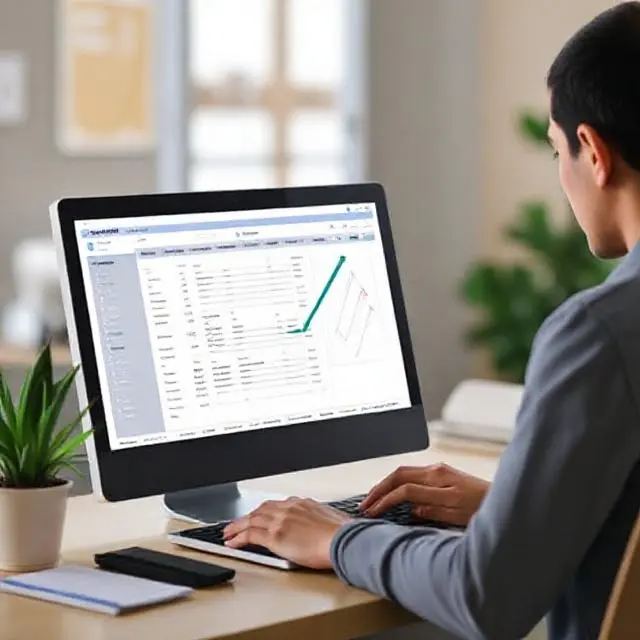
Making the appropriate choice when selecting payroll management software is essential since it has a direct impact on the accuracy of salaries, compliance, and general efficiency of human resources. The finest solution should be able to accommodate the size of your company, your budget, and your operational requirements while also guaranteeing complete compliance with Indian legislation.
- Ensure there is support for statutory compliance
- Make sure it is easy to use.
- Ensure that it is scalable
- Determine the Capabilities of Integration
- Evaluate the Features of the Employee Self-Service System
- When thinking about security and data protection,
- Evaluate the Value Versus the Price
Future Trends in Payroll Software in India
AI, changing labour laws, and digital-first workplaces have accelerated payroll software development in India. Payroll systems are expected to become smarter, more efficient, and better integrated with HR and finance systems.
1. AI-Driven Payroll Automation
2. Real-time payroll processing
3. Robust labour code compliance automation
4. Cloud-Based Payroll Systems
5. Employee Self-Service Payroll and Mobile Banking
6. Human Resources and Financial System Compatibility
7. Focus on Data Security and Compliance
Wrapping Up
The use of payroll management software makes it easier for Indian businesses to comply with regulatory requirements, calculate taxes, and pay their employees. An increase in accuracy, transparency, and efficiency can be achieved through the automation of repetitive payroll procedures.
These tools simplify PF, ESI, TDS, attendance, and staff data for both large and small businesses, hence minimising the number of errors and the amount of administrative work performed. Payroll software will be improved by cloud computing, artificial intelligence, and real-time processing.
With the correct payroll software, you may save time, reduce the amount of concerns you have about compliance, and increase employee happiness, all of which contribute to improved operational efficiency and business success.
Become an HR Expert – Enroll in Our HR Management Course Today!
Unlock the secrets to effective Human Resource Management with our expert-led course! Learn recruitment, employee relations, performance management, and more to build a thriving workplace. Start your journey toward a successful HR career today!
Know MoreFrequently Asked Questions
Is payroll software suitable for small businesses in India?
Yes, payroll software is very useful for small businesses as it saves time, reduces errors, and ensures compliance even with limited HR staff.
Can payroll software integrate with attendance systems?
Yes, many payroll systems integrate with biometric or digital attendance tools to ensure accurate salary calculations based on working hours and leave records.
Is payroll software cloud-based?
Most modern payroll solutions in India are cloud-based, allowing businesses to access data anytime from anywhere with internet connectivity.
Does payroll software generate payslips automatically?
Yes, payroll software automatically generates digital payslips and allows employees to download them through self-service portals.
Is payroll software secure for employee data?
Do companies need technical skills to use payroll software?
No, most modern payroll software is user-friendly and designed for HR teams without technical backgrounds. Training may be needed for advanced features.
Is employee data safe in payroll software?
Reputed software providers use encryption, secure servers, and role-based access to ensure employee data privacy and protection.
Can payroll software be customized for different salary structures?
Yes, most payroll systems allow customization of salary components such as allowances, bonuses, deductions, and incentives based on company policies.