Table of Contents
Meditation gets pitched up as being some pretty heavy stuff, or super mystical, but for the most part people don’t come to meditation looking for some kind of deep insight. They’re usually coming because their mind is just a cluttered mess – they can’t even sit still without their mind racing, they’re feeling restless even when they’re not doing anything, or they’re struggling with stress that manifests as exhaustion, irritability, and a really bad night’s sleep.
For yoga people and those looking to teach yoga, meditation slowly becomes more than just a personal thing – it becomes a key part of the job. The way you breathe, the way you observe things, the way you respond to situations, and the way you create a space for others to be in – all that is deeply influenced by how steady your own mind is. That’s one reason traditional yoga never really divided the physical practice from meditation.
In Yoga Teacher Training Courses (YTC’s for short) , meditation isn’t some extra add-on that you can opt for or not. Its taught as an essential part of building the kind of awareness, clarity and calm that actually affects how you do yoga – and how you teach it.
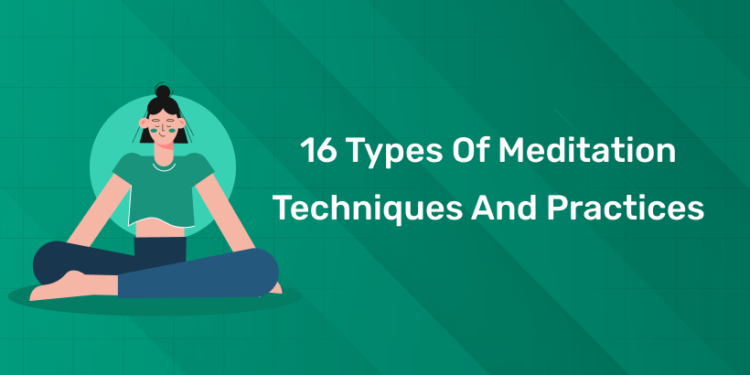
This blog takes a look at 16 different meditation techniques and practices, trying to break them down so that you know what they actually feel like in everyday life, and how they can fit into a yoga practice and teaching.
What Meditation Really Means in Yoga
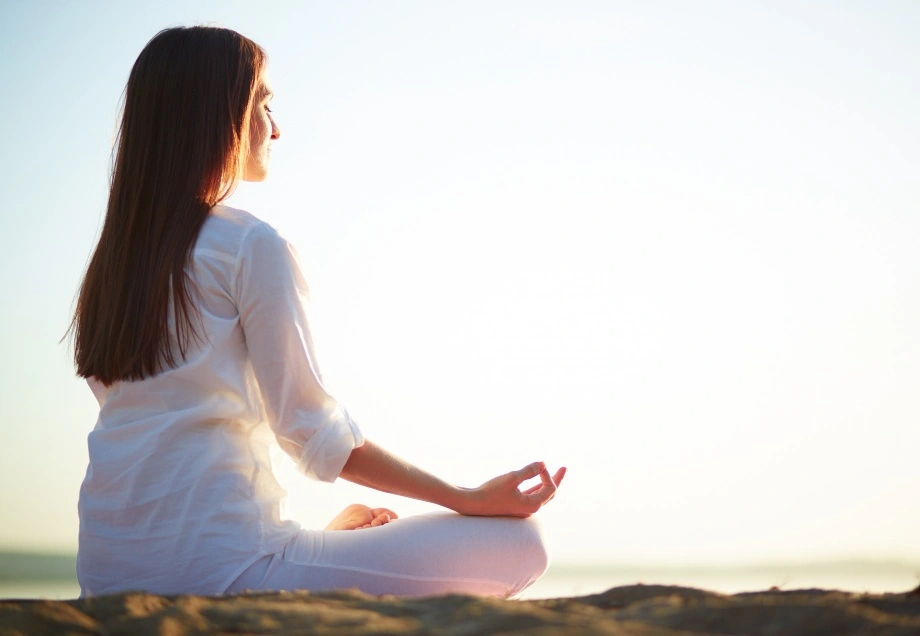
Meditation does not mean stopping thoughts. That idea alone makes many people quit before they start. Thoughts will always come. The practice is about not following every thought.
Think of sitting near a road. Cars pass. You don’t chase them. You don’t stop them. Just notice them. Meditation works in the same way.
Over time, this creates space, between stimulus and response, between emotion and action. For anyone working with children, that space is invaluable.
Learn Yoga from the best teachers in the industry! Join the Entri app!
1. Mindfulness Meditation
Mindfulness meditation is about noticing what is happening right now, your breathing, your thoughts, your body, your surroundings, without trying to fix anything.
At first, it feels messy. Thoughts jump everywhere. That’s normal. Slowly, you begin to recognise patterns: how quickly the mind reacts, how often it drifts into the past or future.
For teachers, this practice strengthens observation, a core Montessori skill. You learn to see without immediately judging or correcting.
2. Breathing-Based Meditation
This is one of the simplest practices, and also one of the most effective. You sit comfortably and pay attention to your natural breath. No counting. No control.
When the mind wanders, you gently return to the breath.
This kind of meditation is extremely useful during stressful days. Even five minutes before entering a classroom can change how the day unfolds.
3. Guided Meditation
Guided meditation is helpful when sitting in silence feels overwhelming. Someone else’s voice gives direction, asking you to relax, imagine, or observe.
Many beginners start here, especially those dealing with mental fatigue. It’s also useful after emotionally demanding work, when the mind needs help slowing down.
4. Loving-Kindness (Metta) Meditation
In loving-kindness meditation, you consciously generate feelings of goodwill, first toward yourself, then toward others.
This practice can feel uncomfortable at first, especially for people who are used to being hard on themselves. Over time, it softens emotional edges.
For educators, this meditation supports patience, empathy, and emotional resilience, qualities children sense immediately.
5. Body Awareness / Body Scan Meditation
Here, attention moves slowly through the body, noticing sensations without trying to change them.
You may realise how much tension you carry without noticing, in the jaw, shoulders, or lower back. This awareness alone often leads to release.
This practice is particularly helpful for people who experience stress physically rather than mentally.
6. Mantra Meditation
Mantra meditation uses repetition, a word, phrase, or sound. The repetition gives the mind something steady to return to.
This works well for people whose thoughts are constant and loud. The rhythm of repetition creates a gentle anchor.
In Indian contexts, mantra-based practices are familiar and culturally rooted, which makes them easier for many to adopt.
7. Transcendental Meditation
This is a structured form of mantra meditation taught by certified instructors. It involves repeating a specific mantra in a particular way.
People often choose this when they want a clear system rather than self-guided exploration. Like any structured practice, consistency matters more than intensity.
8. Visualisation Meditation
Visualisation meditation is a powerful tool for tapping into your imagination, letting you craft mental images of peaceful places, warm light, or positive outcomes. People who are naturally visual tend to find this kind of meditation really helpful – like teachers before a big presentation or tough conversation.
It’s also super useful for healing and building confidence.
9. Zen Meditation (Zazen)
Zen meditation is all about finding a good posture, staying still and present in the moment. There’s not a lot of guidance once you get going, which can feel a bit daunting because there’s no distraction to help you tune out your own thoughts. But trust us, over time it builds quiet strength and discipline – exactly what you need to take on life’s challenges.
It suits people who like to keep things simple and structured, without a lot of extra help along the way.
10. Walking Meditation
Walking meditation brings mindfulness into your daily routine – you just walk at a nice slow pace, paying close attention to each step, each shift in your weight. People who get restless when they have to sit still sometimes find that this kind of meditation really helps them chill out.
It’s also a great way to remind yourself that meditation doesn’t have to be a separate thing from your normal daily life. Try adapting walking meditation into your school day with outdoor time or transitions – it can be really helpful.
11. Chakra-Based Meditation
Chakra meditation is a technique that focuses your attention on different parts of your body, linking certain areas to different emotions. Some people really connect with this way of meditating, while others prefer something a bit more neutral. There’s no right or wrong, though – the only thing that actually matters is whether you feel like it’s working for you.
12. Sound-Based Meditation
Sound meditation uses external sounds like bells, bowls, or chants to give your mind something to really focus on. It can be especially helpful in group settings or whenever you’re feeling a bit overwhelmed and your mind is racing.
13. Object Observation Meditation
This practice involves choosing a simple object – maybe a candle flame or a leaf – and really focusing your attention on it, observing it in as much detail as you can. It’s a great way to build your attention and patience. Plus, it’s kind of similar to the way you notice things without interfering in Montessori observation – a super useful skill to develop.
14. Progressive Muscle Relaxation
Progressive muscle relaxation is a technique where you gently tense and release your muscles in groups, working your way through your body. It’s a really useful tool for when you’re struggling to relax or get to sleep. And it’s especially good for people who get a bit anxious or jumpy.
15. Yoga Nidra
Yoga Nidra is a guided relaxation that really helps your body rest while keeping your mind lightly aware. It’s often used by people who are feeling burnt out or really emotionally drained – sometimes just one session can feel like several hours of deep relaxation.
16. Silent Sitting (Open Awareness)
This is simply sitting in silence, aware of whatever arises, thoughts, sensations, emotions.
There is no technique to follow. No goal to reach. This practice grows naturally with experience and maturity.
Why Meditation Is Essential in Yoga Teacher Training
1: Which of these is the primary goal of yoga practice?
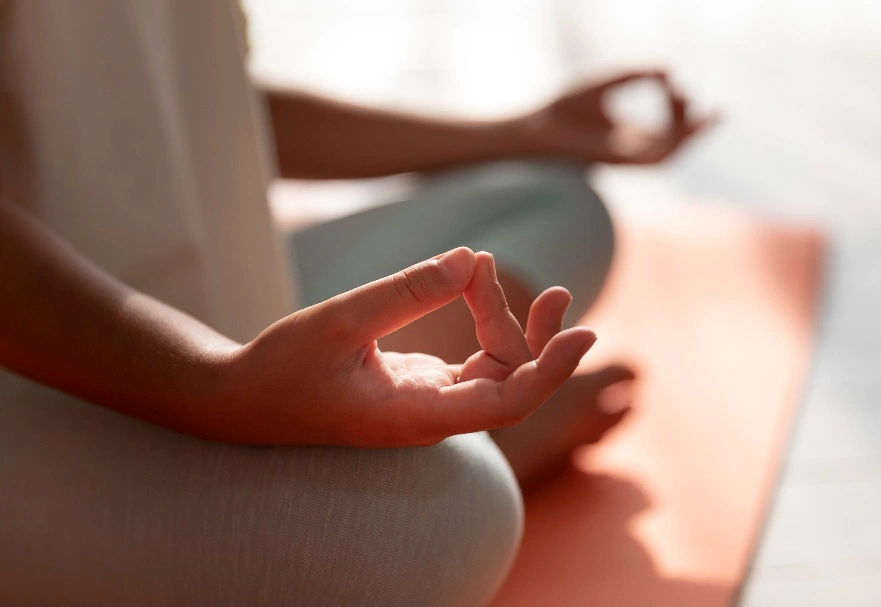
Yoga teachers are more than just postures – they convey presence. Your students respond as much to what’s inside you as to any verbal cues they get.
Meditation does a few pretty key things for teachers:
- it helps you stay calm, rather than react
- keeps you clear-headed even in the middle of a class
- lets you be a space for students to feel supported & heard, no matter what their needs are
- helps you develop the self-discipline & focus you need to teach with confidence
That’s why meditation is a foundational part of yoga TTC programs – not just some optional sideline.
Become a Certified Yoga Instructor
Yoga Teacher Training Course by Entri App: Master authentic yoga techniques, earn certification, and build a successful career as a professional yoga instructor.
Join Now!Meditation in the Entri Yoga TTC Course
The Entri yoga TTC course is all about meditation – it’s a foundation for teaching yoga in a holistic way. You won’t see it as a separate thing from your asanas or pranayama – its a way of deepening your whole practice.
By learning meditation while you’re practising your asanas, you’re going to end up with a much better balance in your life, on & off the mat.
How to Start Without Pressure
You don’t need to do all the meditation techniques out there – just pick one that feels accessible. Then – just do a little bit regularly. Give yourself time to feel your way into it.
Meditation isn’t always the most visible thing – but its impact shows up in all sorts of small ways – in being calmer, clearer & more steady
Key Takeaways
- Meditation is not just an option for yoga teachers – its a core part of what we do
- Not all meditations are the same – there are loads of different techniques to suit every mind and every stage of life
- Its the regularity that matters more than the length of time you spend meditating
- Meditation helps keep you calm & focused in the classroom – which is key for creating a safe space for your students
- The Entri yoga TTC course puts meditation at the heart of teacher training
- Meditation is not about becoming a different person – its about being able to be present in the moment just as you are
Become a Certified Yoga Instructor
Yoga Teacher Training Course by Entri App: Master authentic yoga techniques, earn certification, and build a successful career as a professional yoga instructor.
Join Now!Final Thoughts
Meditation might not make all your problems go away – but it can definitely change the way you face them. For yoga teachers – that shift can be a real game-changer – it makes you a stronger teacher & a more steady presence in the classroom
Having a steady teacher creates a steady class, and having a calm mind creates a safe space for people to learn and grow in.
Meditation is not about trying to change who you are – it’s about learning to be present with who you are – just as you are.
Become a Certified Yoga Instructor
Yoga Teacher Training Course by Entri App: Master authentic yoga techniques, earn certification, and build a successful career as a professional yoga instructor.
Join Now!Frequently Asked Questions
What are the different types of meditation?
There are many types of meditation, including mindfulness, breathing meditation, loving-kindness, mantra meditation, guided meditation, and movement-based practices like walking meditation.
Which meditation technique is best for beginners?
Breathing meditation and guided meditation are often easiest for beginners because they are simple, structured, and do not require prior experience.
How long should meditation be practised daily?
Even 5 to 10 minutes of daily meditation is enough to experience benefits if practised consistently.
Is meditation religious or spiritual?
Meditation is not religious. It is a mental practice that improves awareness, emotional balance, and focus, and can be practised by anyone.
Can meditation help reduce stress and anxiety?
Yes, regular meditation helps calm the nervous system, reduce stress, and improve emotional regulation over time.
How is mindfulness meditation different from other types?
Mindfulness meditation focuses on observing thoughts and sensations without judgment, while other types may use breath, sound, movement, or visualisation.
Can teachers benefit from meditation practices?
Yes, meditation helps teachers improve patience, observation, emotional stability, and classroom presence.
Is meditation useful for Montessori educators?
Meditation supports key Montessori qualities such as calm guidance, non-reactive observation, and emotional awareness.
Can meditation be practised at home without guidance?
Yes, many meditation techniques can be practised independently once a basic understanding is developed.
Is meditation taught in Yoga TTC courses?
Yes, Yoga Teacher Training Courses (Yoga TTC) include meditation practices as part of mental discipline, self-study, and holistic yoga education.