Table of Contents
Introduction
Pre primary education is the first stage of formal learning. It helps young children prepare for school life gradually. Children learn through play, communication, and simple activities daily.
Early learning supports emotional, social, and intellectual development greatly. Pre primary education also improves confidence, communication, and classroom readiness naturally. Positive early learning experiences help children build strong learning foundations.
Key Takeaways
- Pre primary education supports early childhood development.
- Children learn through play-based activities and interaction.
- Different stages prepare children for formal schooling.
- Early learning improves confidence and communication.
- Teachers and parents both support child development.
- Positive preschool experiences improve school readiness.
Unlock your passion for education and shape young minds as a Montessori teacher!
Children learn very quickly during early childhood years. Supportive learning environments improve curiosity and emotional growth naturally. Early education also helps children become comfortable with classroom routines and activities.
Get Certified & Start Your Montessori Career
Montessori Teacher Training Course by Entri App: Gain expert skills, earn certification, and kickstart your teaching career.
Join Now!Frequently Asked Questions
What is pre primary education?
Pre primary education is the first stage of formal learning before primary school. It focuses on early childhood development through play, communication, and interactive activities.
What is the age group for pre primary education?
Pre primary education usually includes children between two and six years. Different stages like playgroup, nursery, LKG, and UKG follow different age ranges.
Why is pre primary education important for children?
Pre primary education improves communication, confidence, emotional growth, and social skills naturally. It also prepares children for future classroom learning and routines.
What are the stages of pre primary education?
The common stages include playgroup, nursery, LKG, and UKG. Each stage supports different learning and developmental skills during childhood.
How do children learn in pre primary classrooms?
Children mainly learn through play-based and interactive teaching methods. Storytelling, music, games, art, and group activities are commonly used.
What skills develop during pre primary education?
Children improve communication, creativity, emotional balance, social interaction, memory, and basic learning skills during these years.
What is play-based learning in preschool education?
Play-based learning uses games and fun activities for teaching concepts naturally. This method improves attention, curiosity, confidence, and classroom participation greatly.
What role do teachers play in early childhood learning?
Teachers guide children through classroom activities, communication development, and emotional support daily. Positive teacher interaction improves confidence and learning comfort naturally.
How can parents support pre primary learning at home?
Parents can support learning through reading, communication, healthy routines, and creative activities regularly. Emotional encouragement also improves confidence and school readiness greatly.
What career opportunities exist in pre primary education?
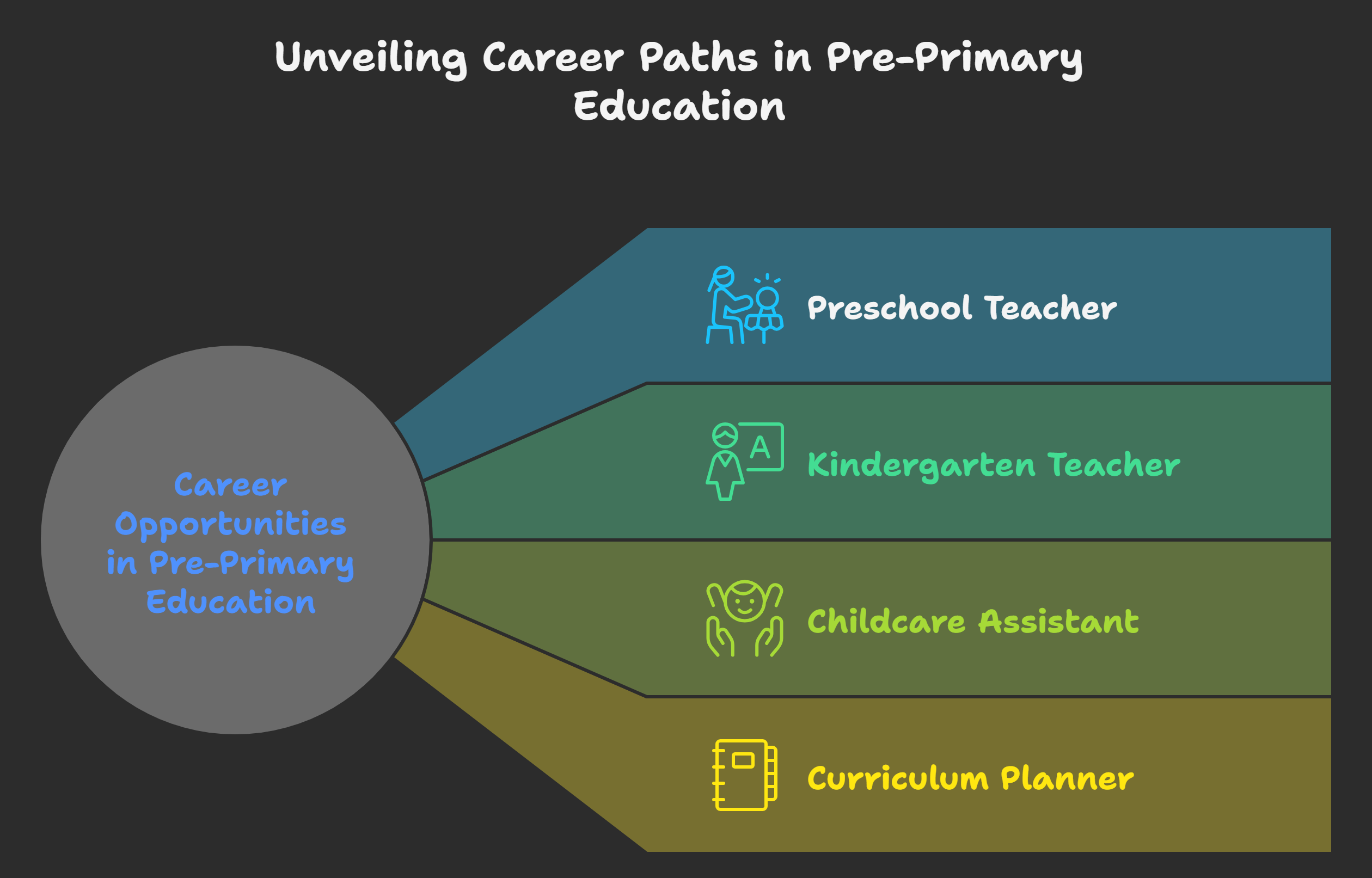
Career opportunities include preschool teacher, kindergarten teacher, childcare assistant, and curriculum planner roles. Growing awareness about early childhood learning increases demand in this field naturally.