Table of Contents
Back pain is a common problem among people from all age groups and walks of life. It has become a topic of discussion among family, friends and colleagues and even an opening thought with strangers. It might be caused by hours spent hunched over a desk or merely from poor posture. In most cases, lack of movement is the cause. There are millions of people reportedly suffering from this chronic discomfort in their daily lives. Back pain surely affects your productivity and overall quality of life. The ultimate solution is to slip yoga into your routine.
Yoga is the most suitable option as a natural and scientifically backed solution. It is very easily accessible and affordable compared to any other options at hand. Those pain-killers and muscle relaxants might help you get quick relief, but yoga targets and gets to the root cause. It also strengthens your muscles further. Make it a part of your lifestyle and you will get relief from the troubling back pain. That is not all, you can embrace flexibility for a lifetime.
Extensive studies suggest that those who practice yoga regularly experience pain levels lower than others. Here is an extensive understanding of the most effective yoga poses. They are specifically designed for back pain relief. Whether you are completely new to practicing yoga or someone looking to make it more organized, it is for you. Keep reading to know all you need to ease that back pain and achieve mobility.
Want to step up? Join our Yoga Instructor Course Online!
How Yoga Helps Relieve Back Pain
Eager to get straight to the yoga lessons? Before that, it is important that you know how yoga works and why it is so effective. It has its traditional values to impart and now has found its space among people all over the world. But above all, it has been proven effective in the overall well being and ensures to turn into a healthy body. You need to note that every pose works in favour of different parts of the body and you need to practice yoga according to your preferences and concerns. Here are the major factors that make yoga a go to option.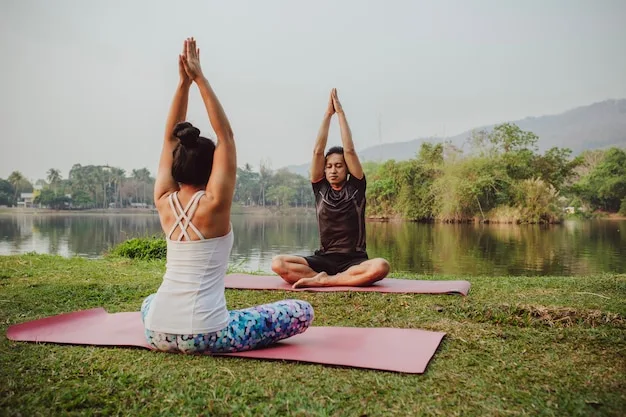
Strengthens Supporting Muscles
If you are someone with a hectic schedule, back pain is surely one of the troubles you are dealing with. Your core muscles on the back have undue stress on them with recurrent need to take rest. Yoga poses curated for the same can help you relieve the stress and discomfort. They help improve spinal alignment and strengthen the muscles. The core strength acquired through yoga enables your spine to bear any sorts of load on it. The strength built through yoga stays with you for good.
Improves Posture
Chronic back pains are caused mainly by the careless postures you have on a daily basis. Being more mindful about your postures is important. Once the damage is done, practising yoga can be the wisest solution. It helps develop better awareness about your body. Most importantly, practising yoga can activate key postural muscles like your abdominals. Poses like Cat-Cow stretch and Bridge Pose are targeted to correct your alignment and poor posture.
Releases Tension
The back pain conundrum is caused mostly by the excessive muscle tension in your upper body, particularly back, hips and shoulders. These muscle tensions stop you from moving easily and trigger pain at times unseen. Yoga stretches enable you to release the tension and gradually relaxes your body. Yoga poses that are required to be held for 15 to 60 seconds can do wonders for a lifetime. These poses and stretches can help deal with the stiffness in the back and stretch your spine. The result comes to you owning a flexible body. All you need is a healthy routine.
Enhances Flexibility and Body Awareness
Being mindful about your body and its movements is a peculiar experience. It can play an important role in improving your lifestyle. The mindfulness cultivated by practising yoga can help identify what is good for your body and what triggers pain. With a consistent yoga practice, blood circulation improves in the back which enhances flexibility. Any minor discomfort can be easily identified so that you can avoid harmful patterns in postures among others.
Supports Long-Term Health
Practising yoga serves overall well-being as it involves body stretching exercises as well as breathing exercises all at once. Breathing practices, in particular, are said to activate the parasympathetic nervous system. It fosters relaxation responses for you. In addition to releasing tension in your body, it helps calm stress hormones with a soothing impact. In short, practising yoga does not just help you get rid of bodily pain, but also leaves you relaxed and healthy.
Benefits of Practicing Yoga for Back Pain
1: Which of these is the primary goal of yoga practice?
Consistently working with regular yoga practices help with instant relief as well as long-term relief. Here are the multiple layers of benefits that come with practising yoga.
Physical Benefits
The main reason you are considering yoga must be the physical well being it brings. The pain relief poses and stretches make movements and day-to-day activities less stressful. The specific benefit of yoga is in improving muscle tone and core strength. Lower back areas are the ones causing most trouble and a weak lower back brings in painful days. Once you have included yoga into your daily routine, your spinal mobility can be better than ever before. Everything as usual as bending and lifting can be subtle and normal thereafter.
Over years, research shows that all those who practice yoga on a regular basis report increased flexibility and free movement in the spine and hamstrings. Back pain episodes dwindle and diminish over a period of time. Many of them experienced relief within 4 to 6 weeks. Most importantly, these people come to use lesser pain medication from the first stages itself. Almost 75 percent of the yoga practitioners report overall improvements.
Mental and Emotional Benefits
Yoga is made popular with its mind and body connection. It extends the influence beyond physical well being. People with stress and anxiety are prescribed to follow a steady yoga stretch routine. The majority of these have reported significant improvement. The physical pain caused by muscle tension can also be brought to the minimum this way. Yoga is also recommended for those who need to improve sleep quality naturally. This has reportedly enabled deeper rest and faster recovery. In short, yoga helps decrease physical pain as well as improve mental clarity. It enables emotional stability and ensures enhancement in overall mood.
Long-Term Benefits
The lasting impact of yoga makes it worth a shot. Even those without any physical pain or stress can make it part of their routine and see a remarkable improvement in their body. Studies report that consistently practising yoga ensures sustained improvement within months. Yoga builds permanent changes in muscle strength and adds more flexibility. This suggests that the benefits you get from mere 10 or 15 minutes every day can give you lasting strength.
Become a Certified Yoga Instructor
Yoga Teacher Training Course by Entri App: Master authentic yoga techniques, earn certification, and build a successful career as a professional yoga instructor.
Join Now!4 Yoga Poses for Back Pain
Here are the key yoga poses you have been looking for. All you need is to include them in your daily movement exercise for pain relief and flexibility. Being consistent with the practice is non-negotiable.
Cat-Cow Stretch (Marjaryasana-Bitilasana)
This is a gentle practice that is ideal for warming up the spine. It relieves stiffness in the back and works through your entire spine. It helps in building awareness about your spinal movement and flexibility over regular practices. Muscles Engaged: Erector Spinae (back muscles), Abdominals, Intercostals (rib muscles)
Steps:
- Start with Table Pose
Come to all fours on your mat. Keep your hands directly under your shoulders and knees under your hips. Your back should be flat and parallel to the floor.
- Transition to Cow Pose
Inhale deeply through your nose. Drop your belly toward the mat and gently lift your head facing the ceiling. Roll your shoulders back while opening your chest. You can feel your spine create a gentle arch.
- Transition to Cat Pose
Exhale slowly. Draw your belly inward and round your back toward the ceiling. Move your chin closer to your chest. Feel your spine create a gentle inward curve.
- Flow between Poses
Move between these poses. Hold each pose for a few seconds. Don’t rush and be calm.
- Repeat
Move at a comfortable pace repeating the poses. You can keep a count of 5 to 10 times or for a couple of minutes.
Tips for Beginners:
- Move slowly with smaller ranges of motion.
- Turn your hands slightly outward or rest on yoga blocks for height.
- Place a cushion under your knees to make yourself more comfortable.
Bridge Pose (Setu Bandha Sarvangasana)
This is key to back pain concerns. This pose strengthens the glutes and lower back. This results in improved spinal stability as strong glutes reduce strain on the lower back. Muscles Engaged: Gluteus maximus and medius, Erector Spinae (back muscles), Hamstrings, Core muscles Steps:
- Lie on your back
Once you are lying flat on your back, bend your knees with your feet flat on the floor. Keep the feet apart and away from your hips.
- Position your arms
Keep your arms by your sides with palms facing down. Press both your palms and your shoulders on the floor.
- Press your feet
Press both your feet and lift your hips towards the ceiling.
- Align your body
Roll your shoulders and lift your chest towards your chin. Avoid moving your head to the sides.
- Hold the pose
Maintain the pose for about one minute while taking deep breaths.
- Release
Lower your hips and lie flat on the floor. Repeat 3 to 5 times with breaks of 10 to 15 seconds in between.
Tips for Beginners:
- Ensure your knees stay directly over your ankles
- If you feel pain instead of a strengthening sensation, place a block under your lower back immediately.
- For more intensity, clasp your hands beneath your back, rolling your shoulders further under.
Pigeon Pose (Eka Pada Rajakapotasana)
This one is to loosen your hips. Pigeon pose stretches the piriformis muscle of your hip external rotators. Opening your hips relieves the compression and in turn reduces the pain on the lower back.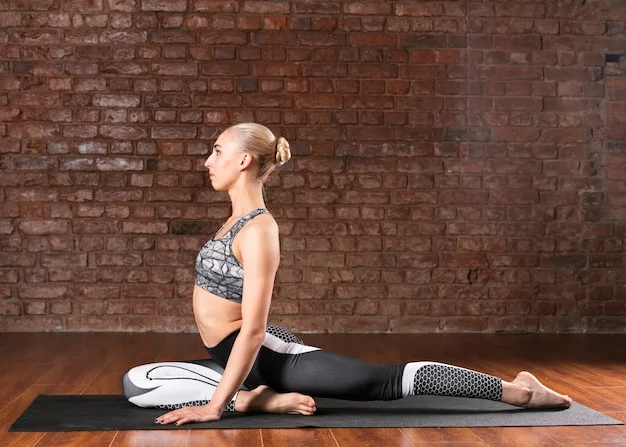 Muscles Engaged: Piriformis muscle, Hip external rotators, Gluteus maximus, Lower back muscles
Steps:
- Start in Downward Dog Pose
Come to all fours on the floor. Press your hips back into Downward Dog pose.
- Bring your Right Knee Forward
Gently bring your right knee to your right wrist and position it down your right shoulder.
- Align your Shin
Turn your right shin and position it parallel to the front of your mat. Your right foot should be close to your left hand.
- Ground your Back Leg
Extend your left leg straight backwards behind you. Keep the top of the foot resting on the map.
- Fix your Position
Keep your position stable and rest in an upright position on your hands. To deepen the stretch, fold forward your front leg.
- Breathe and Relax
Take deep breaths holding your position for 30 to 60 seconds.
- Switch the Side
Repeat the same with your left side.
Tips for Beginners:
- If there is a gap between your hip and the mat, place a folded blanket under your right hip.
- Warming up is important before you go for forward folds in Pigeon pose. Make sure your hip is less stiff.
Become a Certified Yoga Instructor
Yoga Teacher Training Course by Entri App: Master authentic yoga techniques, earn certification, and build a successful career as a professional yoga instructor.
Join Now!Child’s Pose (Balasana)
This is the most relaxing pose of all. It stretches the entire back, hip and shoulders. Child’s Pose is considered a counter-pose after an active yoga stretch session. It also helps release tension. This an excellent pose to get back to whenever you need to reset.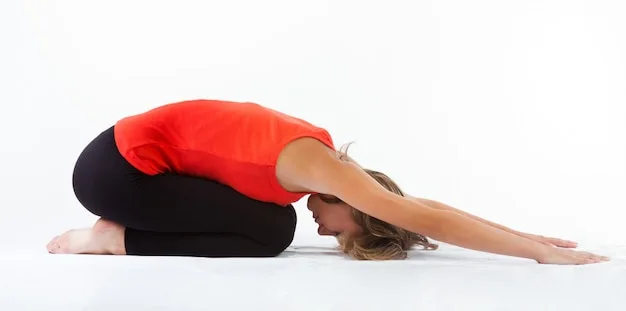 Muscles Engaged: Erector Spinae (back muscles), Hip flexors, Latissimus dorsi, Shoulders
Steps:
- Start from Table pose
Come to your all fours and then sink your hips towards your heels.
- Extend your Arms
Move your hands forward through the mat as it is recommended for maximum stretch. This makes your torso fold over your thighs. You can also place them alongside your body.
- Rest your Forehead
Place your forehead on the mat or turn on one side.
- Focus in Relaxation
Concentrate on your breath. Make your inhale-exhale cycle intentional. This will help you relax your upper back too.
- Hold longer than other poses
Hold the pose from 1 to 5 minutes or as long as it feels comfortable. You will feel relaxed by the end.
Tips for Beginners:
- Place a rolled blanket under your torso for support.
- Add extra cushioning under your shins or between your calves to minimize the initial strain.
- Feel free to sway slightly side to side to release tension along different parts of your back.
Want to step up? Join our Yoga Instructor Course Online!
Conclusion
Exercising regularly can be the most significant step to having a healthy life. The one reason people are drawn to yoga is the troubles induced by lifestyle patterns. Back pain is the most complained about aspect of body pain. But it need not remain a permanent issue with your body. These four effective yoga poses offer scientific solutions with a lasting impact.
The strong point of yoga is that it does not just address the reason you approached it for. Instead it gets an overall improvement in terms of health and well being. All you need is commitment to a consistent yoga routine of a minimum of 15 minutes everyday. Every 4 to 5 days a week can bring a drastic change in lifestyle and body flexibility.Over enthusiasm will do no good. Start with a gentle daily practice and keep up with it. Do not compromise on consistency and see the wonders yourself.
|
RELATED POSTS |
|
|
Prone vs. Supine Yoga Poses: Key Differences, Benefits & How to Practice |
|
Become a Certified Yoga Instructor
Yoga Teacher Training Course by Entri App: Master authentic yoga techniques, earn certification, and build a successful career as a professional yoga instructor.
Join Now!Frequently Asked Questions
Which is the best time of the day for yoga?
Mornings and evenings can work on different levels. Mornings are best to improve mobility. Practising yoga in the evenings helps release tension.
How long will it take to see results from yoga?
It depends on the different preferences. If you practise consistently, you can notice improvements within 1 to 2 weeks. However, lasting changes typically happen after 4 to 6 weeks of regular practice.
Is it okay to practise yoga with acute back pain?
You should not practise intense stretches in such conditions. If you are experiencing severe or acute back pain, you should stick with Child’s Pose and other gentle stretching.
How long and often should I practise yoga?
It is ideal to practise at a minimum of 15 minutes. Practicing 4 to 5 times per week will surely bring best results. This time frame allows strengthening the muscles while giving your body adequate recovery time.
Does yoga offer any sort of permanent cure for back pain?
It depends on individual conditions. Yoga reduces and even eliminates back pain for most people. This is best witnessed in people with good posture habits and lifestyle choices.
Should I practice yoga before or after other exercises?
Yoga works in both cases. When practiced before other exercises, it warms up your muscles and improves mobility. While practiced after, it enhances recovery and prevents tightness in the muscles.
Is it necessary to have blocks and other props while practising yoga?
These props can be helpful but not mandatory. You can practice yoga without any props and still have good results. You can also substitute with common items like books for blocks and a belt or scarf for straps.
What breathing techniques should I use during these poses?
The foundational technique is “ujjayi breathing”. This is taking deep, slow breaths through your nose. You need to inhale through your nose for a count of 4, holding gently for a count of 2-4, and then exhale through your nose for a count of 4.
Is it normal to feel sore after starting a yoga exercise?
Mild muscle soreness is common for the first couple of weeks. However, increased back pain needs special attention. It might be caused by intense stretches or practicing with wrong alignment.
Can yoga work better than medication for back pain?
For instance relief you should require medication. Yoga can only reduce dependency on medication. Medical advice should be taken for severe conditions.