

Two managers can have the same knowledge and experience, yet one builds a loyal, motivated team while the other struggles with conflict and attrition. The difference is often emotional intelligence: how well each manager understands and manages their own emotions and responds to the emotions of others.
This lesson explains what emotional intelligence is, its five components, how it differs from IQ, why it matters at work, examples for HR and managers, and how to improve it.
What is emotional intelligence?
Emotional intelligence (EI), often called EQ (emotional quotient), is the ability to recognise, understand and manage your own emotions, and to recognise, understand and influence the emotions of others.
The term was introduced by psychologists Peter Salovey and John Mayer in 1990. It became widely known after Daniel Goleman published his book Emotional Intelligence in 1995 and applied the idea to leadership and the workplace.
The five components of emotional intelligence
Goleman describes five components, which are the most commonly taught in workplaces.
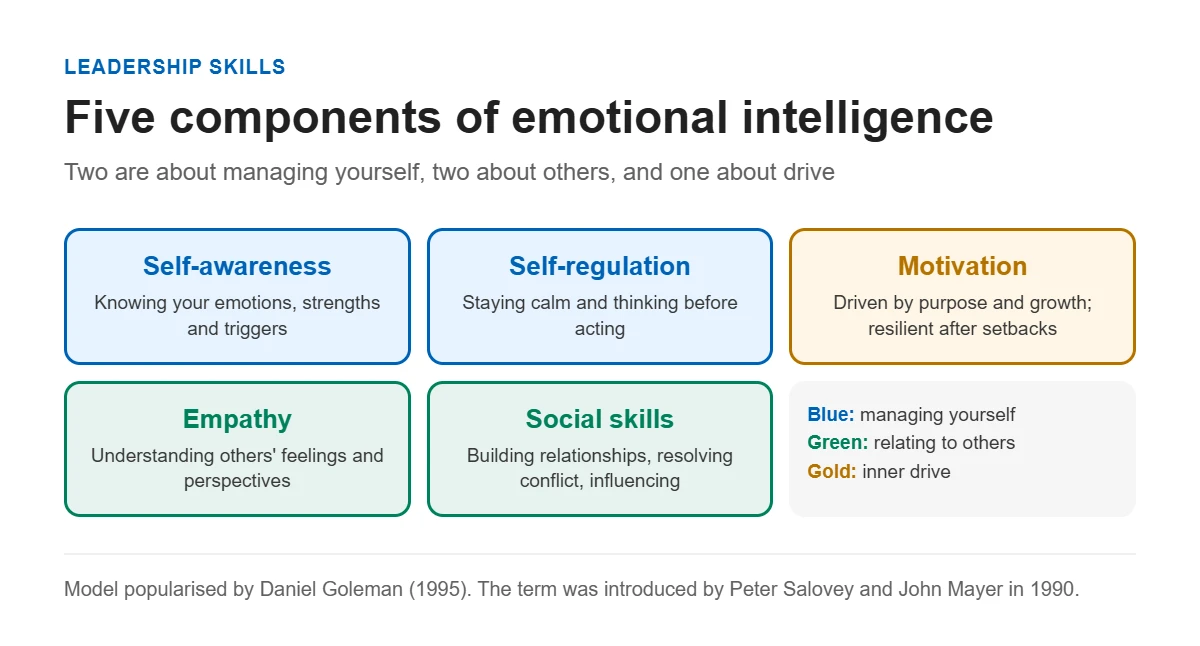
The five components of emotional intelligence.
1. Self-awareness
Knowing your emotions, strengths, weaknesses and triggers, and how they affect others.
Example: an HR manager notices she becomes defensive when managers criticise HR policies, and decides to pause and ask questions before responding.
2. Self-regulation
Managing your emotions and impulses, staying calm under pressure and thinking before acting.
Example: during a heated grievance meeting, an HR executive stays composed and keeps the discussion focused on facts.
3. Motivation
Being driven by inner goals, such as purpose and growth, rather than only by money or status, and staying optimistic after setbacks.
Example: a recruiter keeps improving the process after missing a hiring target, instead of blaming the market.
4. Empathy
Understanding other people’s feelings and perspectives, and responding with care.
Example: when an employee asks for flexible hours to care for a parent, the HR partner listens to the full situation before discussing policy options.
5. Social skills
Building relationships, communicating clearly, resolving conflict, influencing and working in teams.
Example: an HR business partner brings two department heads together to resolve a dispute over shared resources.
Emotional intelligence vs IQ
| IQ | EQ | |
|---|---|---|
| Measures | Reasoning, logic, problem-solving | Understanding and managing emotions |
| Helps with | Technical and analytical work | Relationships, leadership, teamwork |
| Can it improve? | Relatively stable in adults | Can be developed with practice |
| At work | Helps you get the job | Helps you work well with people and lead |
Both matter. Technical skill without emotional intelligence often leads to conflict; emotional intelligence without competence doesn’t deliver results.
Why emotional intelligence matters at work
- Leadership: emotionally intelligent leaders build trust and engagement
- Teamwork: fewer conflicts and better collaboration
- Communication: messages are delivered with the right tone
- Stress management: better resilience during pressure and change
- Customer service: more patience and understanding with customers
- Decision-making: emotions are recognised rather than driving decisions unnoticed
Emotional intelligence in HR
HR professionals handle some of the most emotional moments in an employee’s working life: job offers, appraisals, grievances, harassment complaints, layoffs and exits. Emotional intelligence helps HR:
- deliver difficult news with dignity
- stay neutral and calm in conflicts
- read the mood of a team during change
- coach managers on how their behaviour affects people
- build trust so employees raise issues early
Signs of low and high emotional intelligence
| Low EI | High EI |
|---|---|
| Reacts angrily to criticism | Listens to criticism and asks questions |
| Blames others for problems | Takes responsibility |
| Interrupts and dominates conversations | Listens actively |
| Ignores how others feel | Notices and responds to emotions |
| Avoids difficult conversations | Handles them honestly and respectfully |
How to improve emotional intelligence
Build self-awareness
- keep a short reflection journal about situations that triggered strong emotions
- ask trusted colleagues for honest feedback
- use 360-degree feedback
Practise self-regulation
- pause before responding in tense situations
- name the emotion you feel (“I’m frustrated”) to reduce its intensity
- use breathing or a short break to reset
Develop empathy
- listen to understand, not to reply
- ask open questions such as “How is this affecting you?”
- consider how a decision will feel to the people affected
Strengthen social skills
- give specific, kind and honest feedback
- practise conflict resolution and negotiation
- recognise others’ contributions
Stay motivated
- set personal growth goals
- connect your work to a larger purpose
- treat setbacks as learning
Measuring emotional intelligence
Organisations sometimes use emotional intelligence assessments in leadership development. These should be used to support growth, not as the sole basis for hiring or promotion decisions.
Emotional intelligence underpins most leadership skills HR professionals need. It also helps when handling sensitive workplace relationships.
