

Knowing what an employer brand is doesn’t tell you how to build one. Companies with strong employer brands rarely got there through one big campaign. They combined a clear message with consistent actions, and they let their employees do much of the talking.
This lesson covers practical employer branding strategies HR teams can use, how to choose social media channels, and how to balance quick hiring wins with a brand that lasts.
Start with the foundation: know what you’re promising
Before any campaign, get two things clear.
What employees actually experience. Run short surveys, read exit interview notes, and check reviews on job platforms. Look for the themes people mention again and again, good and bad.
Who you want to attract. A brand aimed at fresh engineering graduates looks different from one aimed at experienced sales managers. Pick the two or three talent groups that matter most for the next year.
Everything below builds on these two answers.
Employer branding strategies that work
1. Write a specific employer value proposition
Turn what employees value into a short employer value proposition (EVP): three or four concrete promises, such as fast growth, flexible work, learning support or meaningful work. Test it with current employees. If they don’t recognise it, it isn’t true yet.
2. Fix the experience before you advertise it
If reviews keep mentioning late salaries, unclear appraisals or rude interviewers, fix those first. Promoting a brand the experience doesn’t support only speeds up the backlash.
3. Make the careers page useful
Most candidates visit the careers page before applying. Show real teams, real roles, a typical career path, benefits in plain language and a simple application process. Real photos and quotes from employees beat stock images every time.
4. Treat candidate experience as branding
Every candidate, including the ones you reject, walks away with a story. Clear job descriptions, fast responses, respectful interviews and a polite rejection message all shape the brand. Well-run interviews that feel fair and structured leave even unsuccessful candidates speaking well of you.
5. Use social media deliberately
Each platform suits a different kind of content:
| Platform | Best for |
|---|---|
| Career stories, leadership posts, job openings, professional achievements | |
| Culture, events, behind-the-scenes reels, day-in-the-life content | |
| YouTube | Longer videos: office tours, role explainers, employee interviews |
| X (Twitter) | Quick updates, Q&A sessions with recruiters, company news |
Post consistently, keep it real, and measure what works: engagement, reach, and above all, whether applications rise after a campaign.
6. Turn employees into advocates
Employee posts reach people company pages never reach, and they’re trusted more. Encourage employees to share milestones and team moments, give them simple guidelines and optional training on professional posting, and recognise people who represent the company well. Never force it: advocacy only works when it’s voluntary.
7. Build a referral culture
Employees who refer friends are vouching for the company with their own reputation, which makes referrals one of the most credible branding signals there is. We cover how to design a referral programme in the next lesson on employee referrals.
8. Respond to reviews and criticism
Reply to reviews on job platforms calmly and specifically. Acknowledge the issue, say what’s changing, and avoid copy-paste responses. When criticism goes public, a transparent response that shows action protects the brand far better than silence.
9. Keep alumni close
Former employees are a quiet but powerful audience. An alumni network, a respectful exit and occasional updates turn ex-employees into referrers, clients or even returning hires. That starts with a respectful, well-run exit.
Short-term vs long-term employer branding
Not all branding has the same goal. Some efforts aim to fill roles quickly. Others build a reputation over years. You need both, but they work differently.
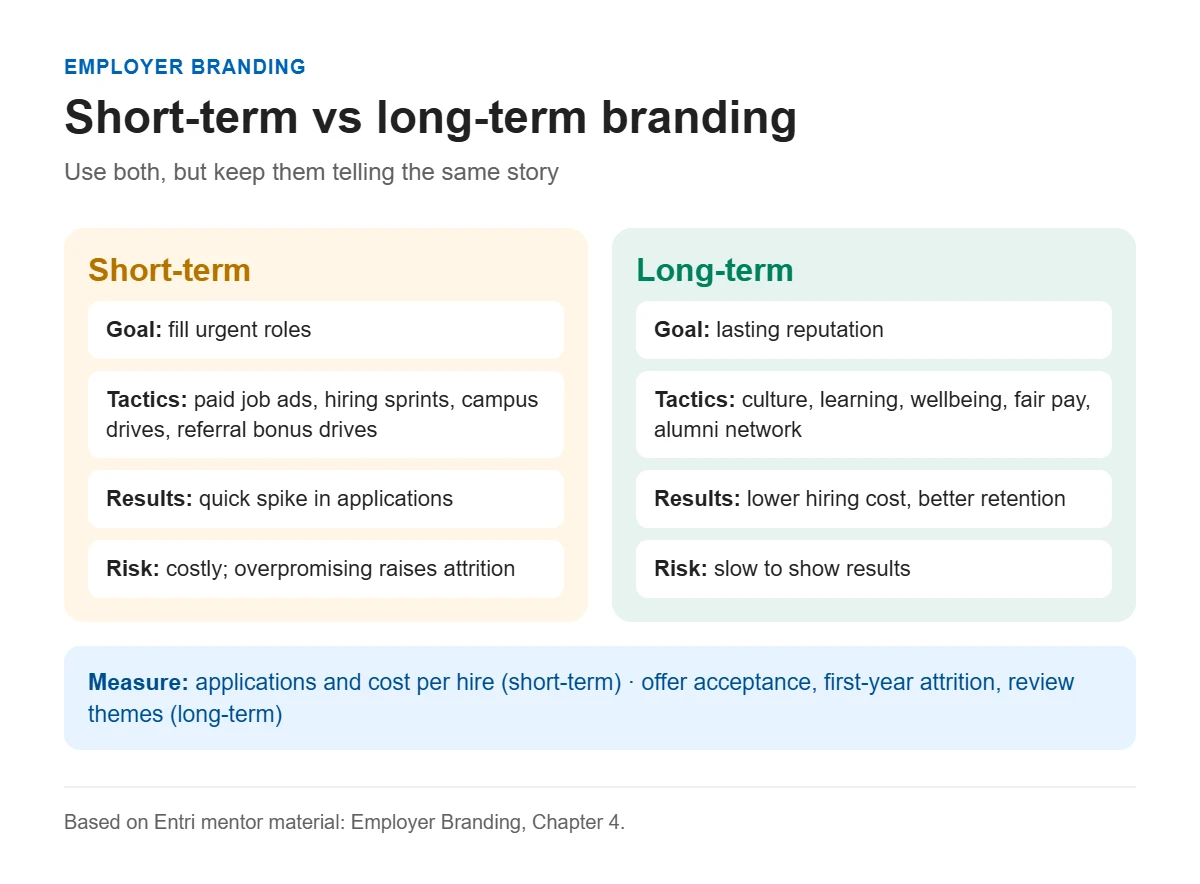
How short-term and long-term employer branding differ.
Short-term branding focuses on immediate hiring needs: paid job ads, hiring sprints, social media campaigns, campus drives and referral bonus drives. It produces quick spikes in applications, but costs more per hire and fades when spending stops. It also carries a risk: campaigns that overpromise attract people who leave once they see the reality.
Long-term branding builds a lasting reputation: consistent culture, learning and development, wellbeing programmes, fair pay practices, alumni networks and years of genuine employee stories. It is slower to show results but lowers hiring costs and improves retention over time.
The practical approach is to use short-term tactics when a hiring need is urgent, while making sure every campaign tells the same story as your long-term brand. A seasonal hiring drive that matches the company’s real culture strengthens the brand. One that contradicts it damages it.
How to measure your strategy
Pick a few metrics and track them every quarter:
- Short-term signals: application volume per campaign, engagement on hiring posts, cost per hire, time to fill
- Long-term signals: offer acceptance rate, first-year attrition, review themes and ratings, referral share of hires, alumni rehires
If short-term numbers rise but first-year attrition also rises, your campaigns are probably promising something the job doesn’t deliver.
A quick example
A mid-sized IT services firm struggled to hire freshers despite paying market rates. An employee survey showed that its training programme and mentor system were what young employees valued most, yet its careers page never mentioned either. HR rewrote the EVP around learning, asked trainees to post short videos about their first 90 days, and invited campus candidates to meet mentors during the drive. Application quality improved, and the trainees who joined arrived with realistic expectations.
Nothing about the job changed. The company simply started telling the true story clearly.
