Table of Contents
Students who learn programming, communication, practical skills, and new technologies usually get better career opportunities. They perform better in interviews and company work.
Students without skills may face problems during placements and workplace tasks. Today, companies need engineers who can solve problems, work in teams, and handle real work confidently. Because of this, skills have become very important for career growth.
Key Takeaways:
- Skills are very important for engineering career growth
- Skilled engineers usually get better jobs and salary
- Practical learning helps students grow faster
- Learning new technologies improves job opportunities
- Communication and technical skills are both important
- Continuous learning helps engineers build successful careers
New to Robotics? Start from the Basics. Join Now!
Context
Many engineering students dream of getting a good job after college. But today, a degree alone is not enough. Companies look for students who have skills, practical knowledge, and confidence. Every year, many engineering students graduate. But not everyone gets placed in good companies.
Some students get better jobs and salary growth, while others struggle to find opportunities. One main reason is the difference in skills.
In this blog, we will understand the difference between the 5-year growth of engineering freshers with skills and without skills.
What Happens in Year 1 (All Branches)
The first year after engineering is very important for every student. This is the time when students start their careers and learn real company work. Some students get good opportunities because of their skills, while others may struggle to find the right job.
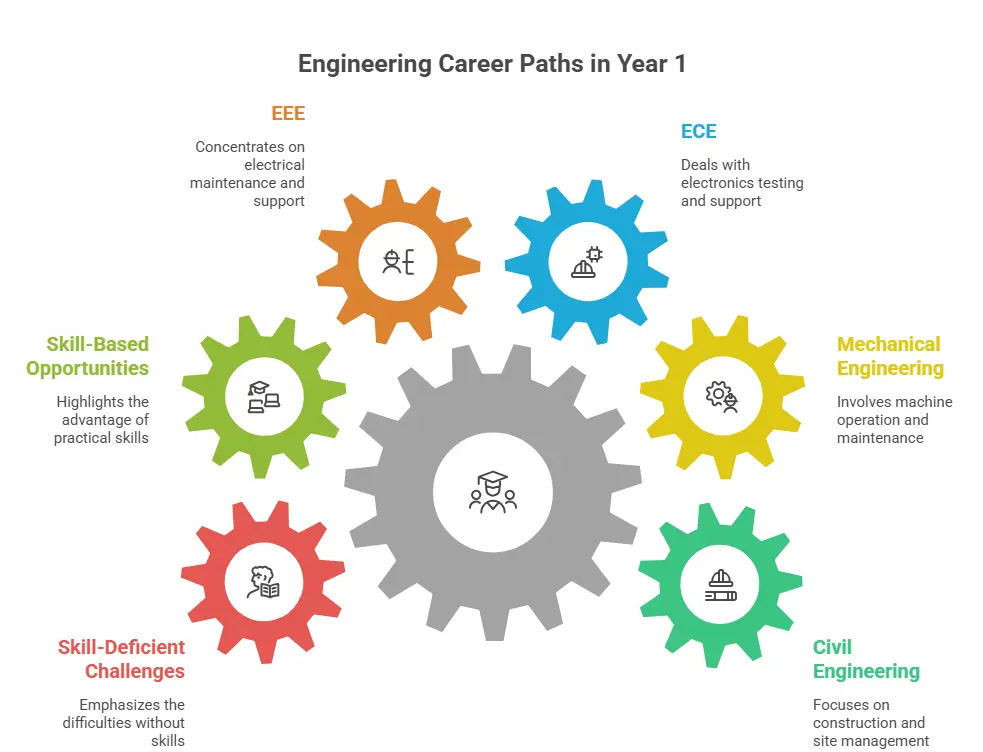
Different engineering branches have different starting roles and career paths.
🟠 Civil Engineering Students
Many civil engineering freshers start with site-related jobs.
Common roles:
- Site Engineer
- Site Trainee
- Junior Civil Engineer
Main work includes:
- Checking construction work
- Visiting project sites
- Helping senior engineers
- Preparing reports
Starting salary is usually:
- Around ₹12,000 to ₹18,000 per month
👉 Students with AutoCAD, project management, and practical skills may get better opportunities.
🟠 Mechanical Engineering Students
Mechanical engineering students often begin with trainee or production roles.
Common roles:
- Mechanical Trainee
- Production Engineer
- Maintenance Trainee
Main work includes:
- Machine checking
- Production support
- Maintenance work
- Factory operations
Starting salary is usually:
- Around ₹12,000 to ₹18,000 per month
👉 Students with CAD software and technical skills may grow faster.
🟠 ECE (Electronics & Communication) Students
ECE students may start with support or testing jobs.
Common roles:
- Testing Engineer
- Technical Support Staff
- Electronics Trainee
Main work includes:
- Testing electronic devices
- Basic troubleshooting
- Technical support work
Some students may get low core exposure in the beginning. Starting salary depends on skills and company type. Students with embedded systems, programming, and communication skills get better opportunities.
🟠 EEE (Electrical & Electronics) Students
EEE students often begin with support and maintenance jobs.
Common roles:
- Electrical Trainee
- Maintenance Support Staff
- Testing Assistant
Main work includes:
- Equipment checking
- Electrical maintenance
- Support work in industries
Some freshers may not get core electrical roles immediately.
👉 Students with practical knowledge and technical skills can get better growth.
🟠 Common Situation in Year 1
In the first year, many freshers:
- Learn company work
- Improve technical skills
- Gain practical experience
- Understand workplace culture
Students with skills usually:
- Learn faster
- Get better projects
- Receive more responsibilities
Students without skills may:
- Need extra training
- Struggle with technical work
- Take more time to grow
👉 The first year is mainly for learning, improving, and building experience.
Year 2–3: The Turning Point
The second and third years of a career are very important for engineering freshers. This is the stage where career growth starts changing based on skills and learning.
Some students improve their technical skills and learn new tools. They get better job roles, salary growth, and career opportunities. Other students who do not improve their skills may stay in the same type of work for a long time.
1. Civil Engineering
🔶Skilled Students
Civil engineers who learn additional skills can move into better roles.
Useful skills include:
- AutoCAD
- STAAD Pro
- Project planning
- Estimation skills
These students may move into:
- Design Engineer roles
- Planning jobs
- Office-based technical work
👉 Skilled civil engineers usually get better growth and salary.
🔶Non-Skilled Students
Students without additional skills may continue in basic site jobs.
Common work includes:
- Site supervision
- Basic reporting
- Daily site checking
Growth may become slow after some time.
👉 Lack of skills can limit career growth.
2. Mechanical Engineering
🔶Skilled Students
Mechanical engineers who improve technical skills can get better opportunities.
Useful skills include:
- SolidWorks
- CNC knowledge
- Automation basics
- CAD software
These students may move into:
- Design Engineer roles
- Automation jobs
- Quality control roles
👉 Skilled mechanical engineers often get better career growth.
🔶Non-Skilled Students
Students without skill improvement may continue in repetitive work.
Common work includes:
- Production floor work
- Machine monitoring
- Repeated factory tasks
Career growth may become slower.
👉 Skills help students move into better positions.
3. ECE / EEE Engineering
🔶Skilled Students
ECE and EEE students who learn modern technologies can get better jobs.
Useful skills include:
- Embedded systems
- IoT basics
- VLSI basics
- Programming skills
These students may get opportunities in:
- Product companies
- Embedded system roles
- Technical development jobs
👉 Modern technical skills improve career opportunities.
🔶Non-Skilled Students
Students without additional skills may stay in support-based jobs.
Common roles include:
- Technical support
- Service engineer roles
- Basic testing work
Growth may be limited in some roles.
👉 Learning new technologies is important for better growth.
Year 4–5: The Real Gap
By the fourth and fifth years, the difference between skilled and non-skilled engineers becomes very clear. At this stage, skills, learning, and experience start showing big results in career growth, salary, and confidence.
Some engineers grow quickly because they continuously improve their skills. Others may feel stuck because they did not focus on learning and skill development earlier.
🟠 Skilled Engineers
Engineers with good technical and soft skills usually grow faster in their careers.
They may have:
- Better job positions
- Higher salaries
- More confidence
- Better career stability
Many skilled engineers earn:
- Around ₹60,000 to ₹1 lakh or more per month
They may also:
- Switch to better companies
- Work on advanced projects
- Lead small teams
- Learn new technologies easily
👉 Skilled engineers usually have clear career goals and better future opportunities.
Their Life Situation
Many skilled engineers at this stage:
- Start saving money
- Plan investments
- Support family financially
- Build a stable future
👉 Skills help them grow both professionally and personally.
🟠 Non-Skilled Engineers
Engineers who did not improve their skills may face slower career growth.
Many may still work in:
- Low-level support jobs
- Repetitive work roles
- Limited growth positions
Their salary may remain around:
- ₹20,000 to ₹30,000 per month
They may also face:
- Work stress
- Career confusion
- Low confidence
- Fewer opportunities
👉 Lack of skill improvement can affect long-term career growth.
Their Life Situation
Some non-skilled engineers may still:
- Feel confused about career growth
- Search for better opportunities
- Try to learn skills very late
- Worry about salary and future
👉 One engineer is planning investments. Another engineer is still searching “how to grow career.”
Why this Gap Happens
The career gap between skilled and non-skilled engineers happens for many reasons. Some students improve their skills regularly, while others stop learning after college.
1. Outdated College Syllabus
Many college subjects are old and not fully connected to industry needs.
- Some technologies are outdated
- Practical learning may be limited
- Companies need modern skills
👉 Students need extra learning outside college.
2. Lack of Tool Exposure
Many students do not get enough practice with industry tools and software.
Examples:
- AutoCAD
- SolidWorks
- Programming tools
- Automation software
👉 Without practical tool knowledge, students may struggle in jobs.
3. Fear of Learning New Technology
Some students feel afraid to learn new skills.
Reasons may include:
- Lack of confidence
- Fear of failure
- Thinking technology is difficult
👉 Continuous learning is important for career growth.
4. Waiting for the “Perfect Job”
Some students wait only for high-paying or dream jobs.
Because of this:
- They avoid small opportunities
- They delay learning and experience
- Career growth becomes slow
👉 Starting small and learning continuously helps engineers grow faster.
Skills that Actually Change Careers
Learning the right skills can improve job opportunities and career growth. These skills help engineers get better jobs, better salary, and better career positions.
🔶Civil Engineering Skills
Civil engineers can improve careers by learning:
- AutoCAD
- Quantity Surveying
- BIM basics
- Estimation skills
- Project planning
👉 These skills help students move into better technical and design roles.
🔶Mechanical Engineering Skills
Mechanical engineers can grow faster with modern technical skills.
Useful skills include:
- CAD tools
- SolidWorks
- Automation basics
- CNC basics
- Robotics basics
👉 These skills improve opportunities in manufacturing and design industries.
🔶ECE / EEE Skills
ECE and EEE students should learn modern electronics and programming skills.
Important skills include:
- Embedded Systems
- IoT basics
- Python programming
- VLSI basics
- Circuit designing basics
👉 These skills help students get better technical jobs.
Skills Needed for All Engineering Branches
Some skills are important for every engineer.
1. Communication Skills
- Speaking clearly
- Interview communication
- Team discussions
👉 Good communication improves confidence and placements.
2. Digital Skills
- Basic computer skills
- MS Office
- Online tools
- Digital learning platforms
👉 Digital skills are useful in almost every company.
3. Problem-Solving Skills
- Thinking clearly
- Finding solutions
- Handling technical issues
👉 Problem-solving helps engineers work better.
4. Practical Learning
- Mini projects
- Internships
- Workshops
👉 Practical experience improves technical understanding.
What Freshers Should Do (Action Section)
Freshers should start improving skills early. Small learning steps can create big career growth in the future.
1. Don’t Wait for a Job
Do not wait only for placements or company calls.
- Start learning early
- Improve skills daily
- Practice regularly
👉 Learning should continue along with job searching.
2. Learn One Skill and One Tool
Start with simple learning.
Examples:
- AutoCAD
- Python
- SolidWorks
- Embedded Systems
- IoT basics
👉 One good skill can improve job opportunities.
3. Build Small Projects
Projects improve practical knowledge.
- Create simple projects
- Practice real applications
- Improve technical understanding
👉 Projects help during interviews and placements.
4. Follow Industry Needs
Learn what companies need today.
- Learn modern technologies
- Follow industry trends
- Improve practical skills
👉 Industry skills are more important than only syllabus learning.
5. Improve Communication Skills
Good communication is important everywhere.
- Speak confidently
- Practice English communication
- Join discussions
👉 Communication improves interview performance.
6. Keep Learning Continuously
Technology changes very fast.
- Learn new tools
- Upgrade skills regularly
- Stay updated
👉 Continuous learning helps career growth.
New to Robotics? Start from the Basics. Join Now!
Master Robotics and AI!
Ready to build the future? Join our comprehensive robotics course to bridge the gap between complex code and physical motion. You’ll gain hands-on experience giving you the technical edge needed to lead in the age of automation.
Know MoreConclusion
The growth of an engineering fresher depends a lot on skills and continuous learning. Students who improve technical skills, communication, and practical knowledge usually get better jobs and faster career growth. Small learning efforts in the beginning can create big changes in the future.
Students should not depend only on college studies or marks. Learning new tools, building projects, and gaining practical experience are very important today. With the right skills, confidence, and regular practice, engineers can build a successful and stable career.
Master Robotics and AI!
Ready to build the future? Join our comprehensive robotics course to bridge the gap between complex code and physical motion. You’ll gain hands-on experience giving you the technical edge needed to lead in the age of automation.
Know MoreFrequently Asked Questions
Why are skills important for engineering students?
Skills are important because companies look for students who can handle real work. Technical skills, communication, and practical knowledge help students get better jobs and career growth.
What happens if engineers do not improve their skills?
Engineers without skill improvement may face slow career growth, lower salary, and fewer job opportunities. They may also struggle during interviews and workplace tasks.
Which skills are important for civil engineering students?
Civil engineering students can improve careers by learning:
- AutoCAD
- Quantity Surveying
- BIM basics
- Estimation skills
- Project planning
These skills help students get better technical roles.
Which skills are useful for mechanical engineering students?
Mechanical engineering students can learn:
- CAD tools
- SolidWorks
- CNC basics
- Automation basics
- Robotics basics
These skills improve job opportunities in manufacturing and design industries.
What skills should ECE and EEE students learn?
ECE and EEE students can improve career growth by learning:
- Embedded Systems
- IoT basics
- Python programming
- VLSI basics
- Circuit designing
These skills help students get better technical jobs.
Why is practical learning important for freshers?
Practical learning helps students understand real company work. Projects, internships, workshops, and lab practice improve technical knowledge and confidence.
How can engineering freshers improve placement chances?
Freshers can improve placement chances by:
- Learning technical skills
- Improving communication
- Building projects
- Practicing programming
- Attending internships
- Preparing for interviews regularly
Can engineers build a successful career with continuous learning?
Yes. Engineers who continue learning new technologies and improving their skills usually get better jobs, salary growth, and career opportunities in the future.