Table of Contents
Over the last decade, we saw the rise of basic algorithmic trading—often called algo trading—which executes trades based on pre-set mathematical rules. However, we are now entering a completely new era: the era of AI Agents for Trading.
This technological leap brings forward an essential question that is captured in boardrooms and retail trading communities alike: Can artificial intelligence truly beat human traders? The concept of trading, since generations, has been that of an activity that requires deep human intuition, emotional resilience, and years of experience.
Learn Stock Marketing with a Share Trading Expert! Explore Here!
Key Takeaways
- Shift To Automation: Traditional retail trading is quickly adopting automation, turning Dalal Street into a technology-driven battlefield where speed and data processing are critical.
- Advantage Of AI Agents : Unlike standard algorithmic systems that follow fixed, rigid rules, AI agents can continuously learn, analyze raw data like news alerts and financial earnings, adapt to changing patterns, and make autonomous decisions.
- The Upperhand of Human Traders: Human traders still hold a strong edge in handling unexpected global crises, understanding market sentiment, and managing large-scale risks during extreme chaos.
- Hybrid Future is Key: The future of financial markets in India belongs to a collaborative framework where human intelligence guides and supervises powerful AI tools.
Introduction
1: What is a stock?
The Indian stock market is witnessing a never before, massive transformation. Be it any modern trading firm or an independent retail trader in Mumbai, Bengaluru, or Delhi, you will notice a common theme. It is nothing but the growing conversation around automation. Trading is no longer about staring at simple charts and manually clicking ‘buy’ or ‘sell’ buttons. Today, technology drives every tick of the market.
With the unprecedented growth and amazing advancements in machine learning, natural language processing, and neural networks, software systems are not just passive tools any longer. They are transforming into autonomous operators capable of scanning thousands of global metrics and at the same time, making complex strategic choices in fractions of a second.
This blog post covers everything about how these intelligent agents function and how they stack up against the human mind. It also takes a deep dive into the specific realities of the Indian stock market, and what the future holds for everyday market participants.
More about AI Agents for Trading
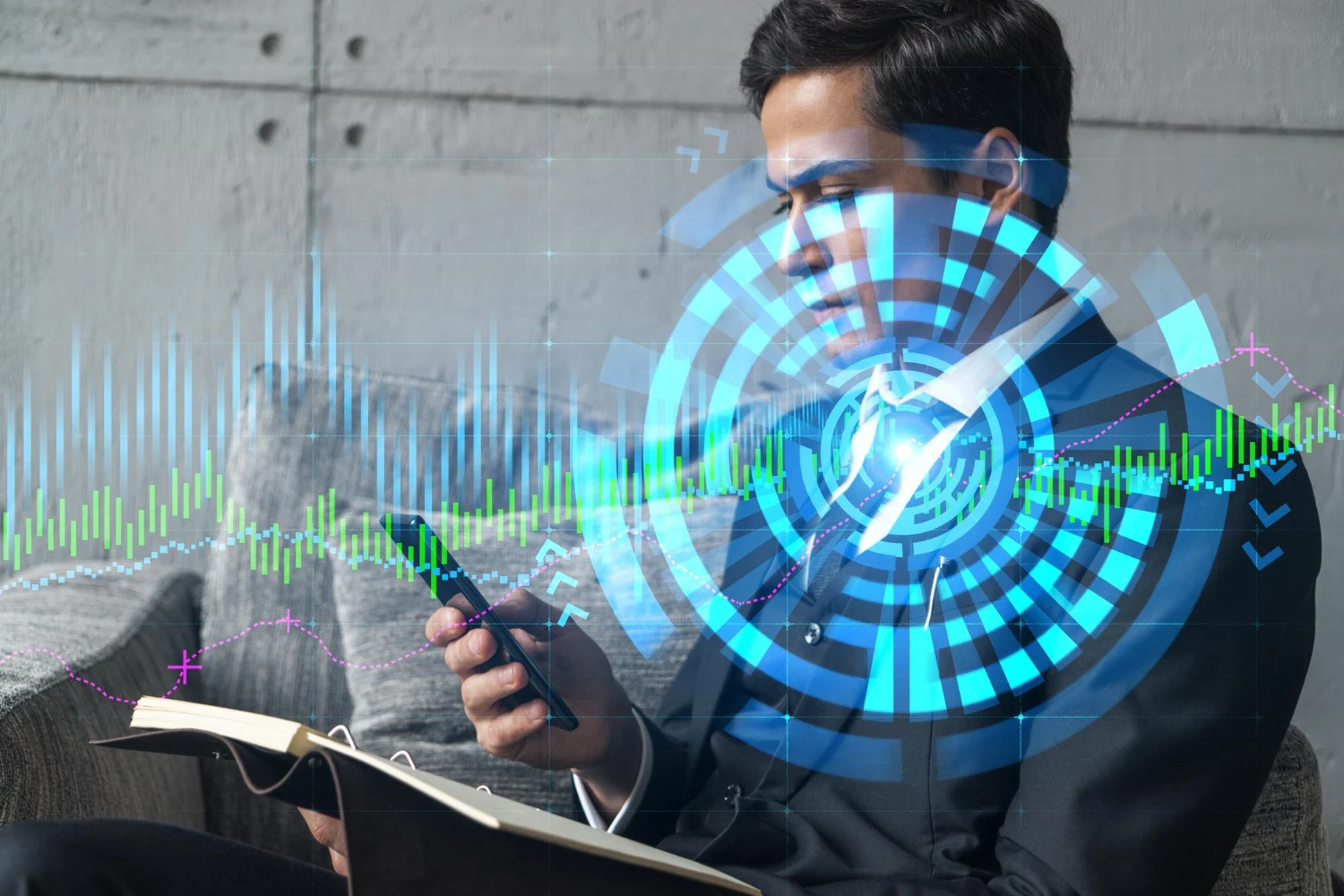
Before getting into this shift, we must first define what an AI agent actually is. It is equally important to understand how it differs from traditional computer programs. For years, Indian traders have utilized algorithmic trading.
Traditional algorithmic trading is highly rigid. It follows strict “If-Then” logic. For example, a trader might program a system to say: “If the 50-day moving average of a stock crosses above its 200-day moving average, buy 100 shares.”
The software does exactly that and nothing else. If there is an unexpected change in market conditions, or if major corporate news breaks out, the traditional algo cannot change its mind. It blindly follows the pre-programmed instructions till the time a human being intervenes and switches it off.
In stark contrast, AI Agents for Trading represent an entirely different level of sophistication. These agents are built using advanced artificial intelligence architectures. They do not just wait for human commands or rigid parameters.
On the other hand, an AI agent is designed to observe an environment, analyze incoming data streams, learn from past outcomes, and take independent actions to achieve a specific financial objective. Some typical examples include maximizing returns or minimizing portfolio risk.
With the unique ability to handle unstructured data, they can read financial news reports, listen to corporate earnings conference calls, track global social media trends, and analyze live price charts all at the same time. By processing these huge volumes of data through deep learning models, they recognize hidden patterns that are invisible to the human eye and make dynamic trading decisions in real-time.
The Structural Advantages of AI Agents
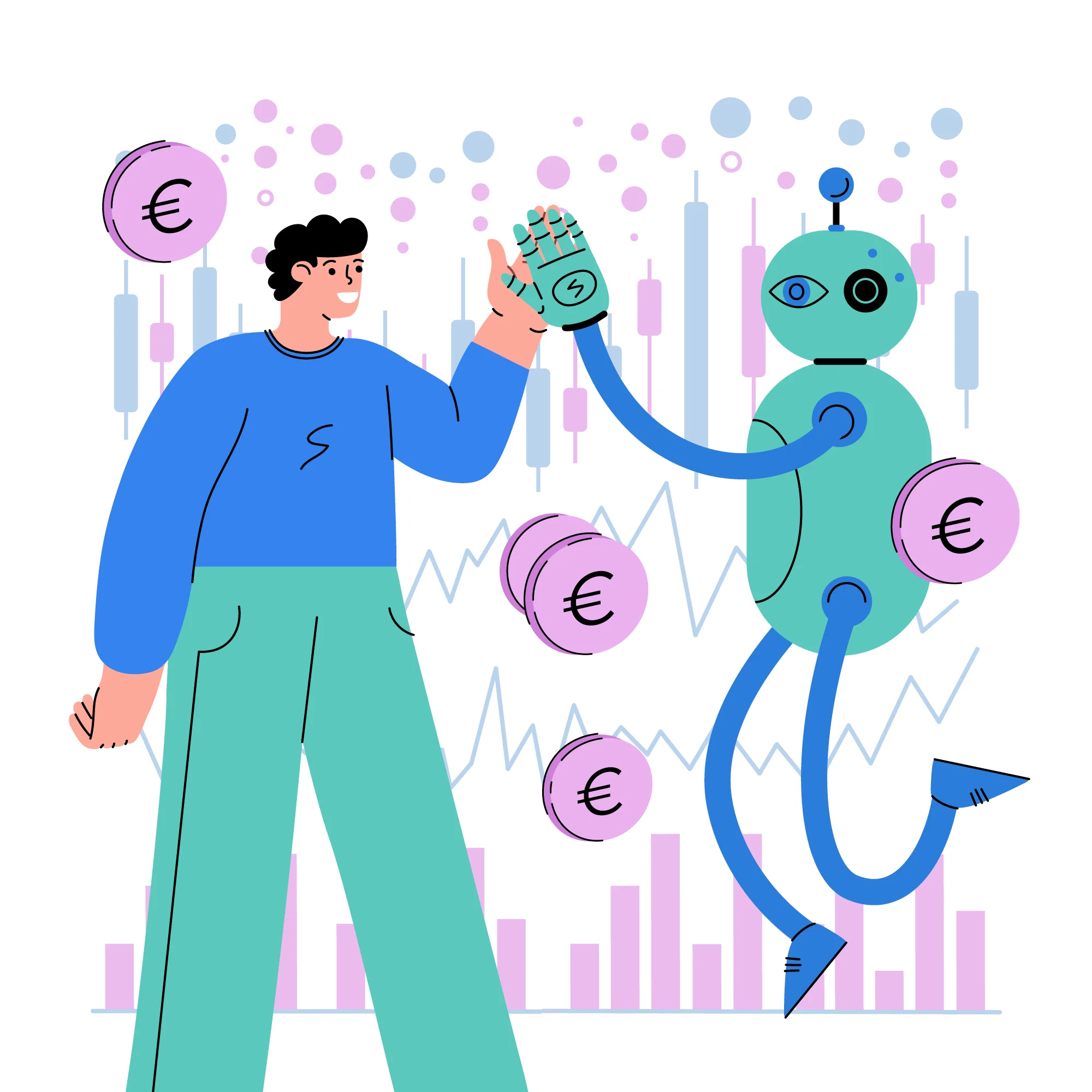
When we look at the core mechanics of trading, artificial intelligence offers several major structural advantages that a human being simply cannot match. These advantages are reshaping institutional trading setups and are increasingly becoming accessible to sophisticated retail investors.
1. Superior Processing Power and Speed
The human brain is an amazing organ, but it has severe limitations when it comes to processing massive data volumes in real-time. A human trader can closely track perhaps five, ten, or at most twenty stocks at a single time. They can read a couple of news articles, check a few charts, and look at the order book.
Meanwhile, an AI agent can scan thousands of stocks across multiple asset classes—including equities, derivatives, commodities, and currencies—simultaneously. It can analyze the historical data of the past twenty years for all these stocks within a few seconds.
Furthermore, when it comes to execution speed, machines operate in milliseconds or microseconds. By the time a human trader processes a piece of news, opens their broker application, and types in an order, an AI system has already analyzed the news, calculated the potential risk, executed the trade, and booked the profit.
2. Complete Elimination of Human Emotion
The biggest enemy of a trader is often not the market itself, but their own mind. Fear and greed dominate financial markets. When prices are crashing, fear takes over, causing many human traders to panic and sell their shares at the absolute bottom, incurring heavy losses.
Conversely, when prices are skyrocketing, greed takes over, pushing individuals to buy overvalued stocks at the absolute peak. Additionally, humans suffer from “revenge trading”—a psychological trap where a trader takes oversized, reckless risks immediately after a loss to win their money back.
AI agents are entirely immune to these emotional traps. They do not feel fear when the market drops, nor do they get greedy when it rises. They operate with absolute cold, mathematical logic. If a trade setup no longer fits the risk profile, the AI exits the position instantly without a single moment of hesitation or regret.
3. Continuous, Round-the-Clock Monitoring
Human beings require sleep, food, and family time. Trading for long hours leads to mental fatigue, which directly results in poor decision-making and costly analytical errors.
Financial markets, however, are deeply interconnected and never truly stop. What happens in the US markets overnight, or how the Asian markets open early in the morning, heavily impacts the opening bells in India.
AI Agents for Trading operate 24 hours a day, 7 days a week, without experiencing a drop in efficiency. They can continuously monitor global macro-economic indicators, overnight Western market movements, and sudden geopolitical developments, ensuring that the portfolio is protected or positioned correctly the moment the domestic market opens.
Where Human Traders Still Hold the Edge
Given these massive advantages, it might seem like machines have already won the battle entirely. However, that is far from the complete truth.
Human traders possess unique qualities that artificial intelligence cannot replicate easily. These human traits become exceptionally valuable during specific market conditions.
1. Adapting to Black Swan Events and Extreme Chaos
AI models are trained on historical data. They look at what happened in the past to predict what will happen in the future. But what happens when the market faces something that has never occurred before? These rare, unpredictable occurrences are known as “Black Swan” events.
Examples include the sudden outbreak of a global pandemic, unexpected geopolitical conflicts, or unprecedented structural regulatory changes by governments. When faced with such extreme chaos, AI models often fail because they have no historical data to reference. They might continue trading based on old patterns that are no longer valid, leading to catastrophic capital losses.
Human traders, on the other hand, possess natural intuition and context-driven reasoning. They can quickly assess an unprecedented global crisis, understand the broader socio-political reality, and completely change their strategy or move to cash to protect capital.
2. Deep Understanding of Corporate Context and Nuance
No denying the fact that an AI agent can read a financial report instantly. However, it often struggles with subtle context and human nuance.
A typical example is a company’s earnings call. During the call, a CEO might say all the right words about growth. However, a seasoned human analyst can catch a slight tone of hesitation or notice that management is avoiding direct answers to critical analyst questions.
In addition to that, understanding business ethics, corporate governance issues, and the underlying reputation of a promoter group requires a level of qualitative judgment that cannot be fully converted into mathematical equations. Humans excel at reading between the lines and identifying structural issues or hidden opportunities within a company that numbers alone do not reveal.
Stock Market Training Reviewed & Monitored by SEBI Registered Investment Advisor
Trusted, concepts to help you grow with confidence. Enroll now and learn to start investing the right way.
Know moreThe Reality of the Indian Trading Landscape
Applying AI Agents for Trading to the Indian market brings unique structural factors into play. The Indian stock market is distinct from Western markets in several ways, which alters how artificial intelligence operates here.
First, liquidity in India is highly concentrated. Though there are thousands of companies listed on the exchanges, the vast majority of trading volume and liquidity is locked within the top 100 to 200 stocks. For an AI agent to execute large trades efficiently without causing massive price slippage, it requires deep liquidity. This concentration means that AI systems often compete intensely within a narrow band of large-cap stocks, reducing the profit margins available from pure speed-based strategies.
Second, regulatory frameworks play a critical role. India’s market regulators maintain strict rules regarding automated trading, risk management systems, and algorithmic approvals to protect retail investors and prevent sudden flash crashes.
Every automated trading system used by institutional brokers must undergo rigorous testing and clearing processes. These regulations ensure a highly stable market but can slow down the speed at which complex, self-learning AI models can be deployed live into production without human oversight.
Third, the retail participation boom in India has created an environment driven heavily by retail sentiment, options trading, and social media discussions. Retail market participants often behave in ways that defy institutional logic.
This unpredictable retail momentum can create unique market anomalies that challenge pure data-driven AI models, sometimes giving intuitive human swing traders an unexpected advantage.
The Future: A Collaborative Hybrid Model
So, can artificial intelligence beat human traders? The answer is not a simple yes or no. If the game is purely about speed, processing vast oceans of data, and executing short-term mathematical trades, AI agents have already beaten humans.
A manual retail trader trying to compete with an AI system on a one-minute chart is facing an almost impossible battle. However, rather than looking at this as a direct war of Man versus Machine, the financial industry is moving toward a collaborative hybrid model. This is frequently referred to as “Centaur Trading.” In this model, the human trader and the AI agent work together as a team.
The AI agent acts as a super-powered research assistant and execution engine that handles the exhausting work of scanning thousands of charts, analyzing global news, monitoring risk thresholds, and alerting the human to high-probability setups. Subsequently, the human trader pitches in to provide macro-level strategy, qualitative judgment, context validation, and final emotional oversight.
This hybrid approach democratizes professional-grade tools. Retail investors in India are beginning to gain access to simplified AI-driven platforms. These platforms help them optimize their portfolios, manage downside risk, and remove emotional biases from their personal investing journeys.
Ultimately, the traders who survive and thrive in the coming decades will not be those who try to fight against artificial intelligence. Neither will they be pure machines operating without human wisdom. The winners will be the smart human traders who successfully learn to leverage AI Agents for Trading to supercharge their market performance.
Learn Stock Marketing with a Share Trading Expert! Explore Here!
Conclusion
The rise of automated systems has brought a permanent shift in the way capital markets operate. Without doubt, artificial intelligence offers unmatched speed, vast data processing capabilities, and complete emotional detachment. However, when it comes to intuition, qualitative context, and handling unprecedented global crises, human traders still hold a crucial advantage.
The modern trading landscape is no longer about human versus machine. On the other hand, it is about embracing technology to make better, more rational financial decisions. By understanding the strengths and limitations of both sides, Indian traders can better prepare themselves for a future where technology and human insight combine to tide over the complex world of finance successfully.
Stock Market Training Reviewed & Monitored by SEBI Registered Investment Advisor
Trusted, concepts to help you grow with confidence. Enroll now and learn to start investing the right way.
Know moreFrequently Asked Questions
What are AI Agents for Trading?
They are software programs that use artificial intelligence to analyze data, learn from market movements, and execute trades independently based on financial goals.
How do AI agents differ from normal algo trading?
Normal algo trading follows strict, unchangeable rules whereas AI agents can analyze unstructured data such as news, learn from new patterns, and adapt dynamically.
Can retail traders in India use AI trading agents?
Yes, several fintech platforms now offer AI-powered tools, automated scanners, and portfolio rebalancing assistants directly to retail investors.
Will AI completely replace human stock traders?
No. Though AI handles speed and data processing better, humans are still essential for macro strategy, qualitative analysis, and crisis management.
Do AI trading agents make mistakes or lose money?
Yes. AI can fail during unexpected “Black Swan” events or if it is trained on poor data, leading to bad trades.
Is AI trading legal in the Indian stock market?
Yes, automated trading is legal, but platforms must strictly follow guidelines and risk management rules set by market regulators.
What is the main advantage of AI over human traders?
AI completely eliminates human emotions like fear and greed, operating purely on logic, speed, and massive data analysis 24/7.