Table of Contents
Introduction
The first time you look at sewing, you can be pretty intimidated – all those needles, threads and bunches of fabric staring back at you. But here’s the thing: sewing isn’t as troublesome a task as it seems. In fact, it’s built on a solid foundation of skills that anyone can master with a bit of practice. Once you get a basic grasp on a few very important stitches like the simple straight stitch for just about every seam, the backstitch for when you need a little extra durability and the whipstitch for gobbling up those annoying hem allowances in no time – and you’ve got a handle on getting your fabric in gear (that means cutting, pinning & ironing), then the whole sewing world just opens up for you.
This beginner’s guide focuses in on the basics that’ll have you feeling totally confident in no time flat. You’ll pick up the skills to finally fix that dodgy pair of trousers, make some tweaks to clothes that don’t quite fit right, give new life to some old favourites that were on the verge of being chucked and even whip up simple things like tote bags or pillowcases from scratch. No more putting off mending that old favourite outfit for “sometime down the line”, it’s time to stop procrastinating and start fixing, tweaking and inventing from right now on. So go ahead and dive in – watch your sewing skills just take off and turn it into a hobby that’ll have you hooked for good.
Learn Advanced Designing & Boutique Skills with Experts. Join Now!
Essential Tools for Beginner Sewing
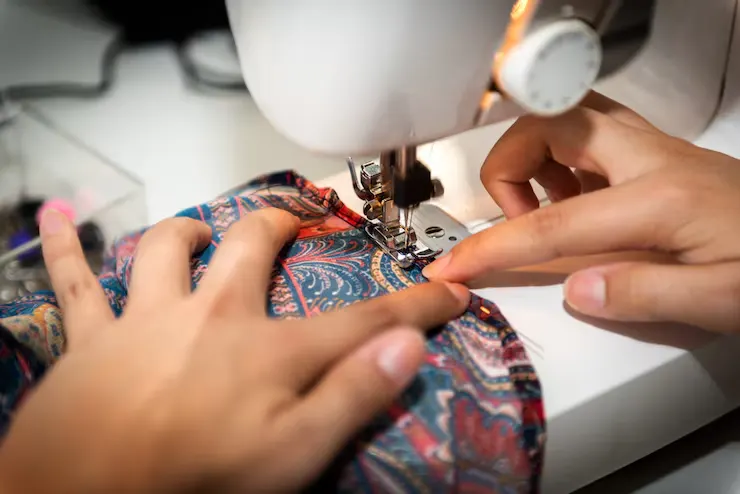
You don’t need a fully kitted out sewing studio to get going. A basic kit, chosen wisely, will make the learning process a breeze and keep your finished results looking ship-shape.
Must have Basics
- Hand sewing needles (various sizes) – thin ones for light fabrics and thick ones for denim and canvas.
- Thread (good quality polyester all-purpose): this one’s strong and a decent all-rounder for beginners – just pick a colour that matches your fabric fairly closely.
- Fabric scissors: and don’t be tempted to use them on paper – that’ll just dull the blades pronto.
- Pins or fabric clips: clips are great for thicker or slippery fabrics – they work a treat.
- Measuring tape + ruler: these two are a must for getting your hems spot on and keeping things evenly spaced.
- Tailor’s chalk or a marking pencil: just pick one that you can rub off easily so you don’t end up with any pesky permanent ink.
- A seam ripper: your saviour – making mistakes is just part of the learning process, and not a sign that you’re a complete disaster in the making.
- A thimble (optional but worth it): this will save your fingers from getting sore when you’re sewing through thick layers – trust us on this one.
- An iron and ironing board: pressing isn’t optional if you want your seams to look the part.
Beginner’s Tip: sewing gets a whole lot easier when you get into the habit of measuring, pinning/clipping and pressing. It’s got to cut down on at least 80% of beginner frustration – that’s got to be worth something!
Master Fashion Designing and Create Your Signature Style
Unlock your creative potential with our expert-led Fashion Designing course. Build in-demand skills and step confidently into the world of fashion!
Begin Your Fashion Career Today!Basic Techniques You Need to Know
Technique 1: Threading the Needle and Basic Stitching
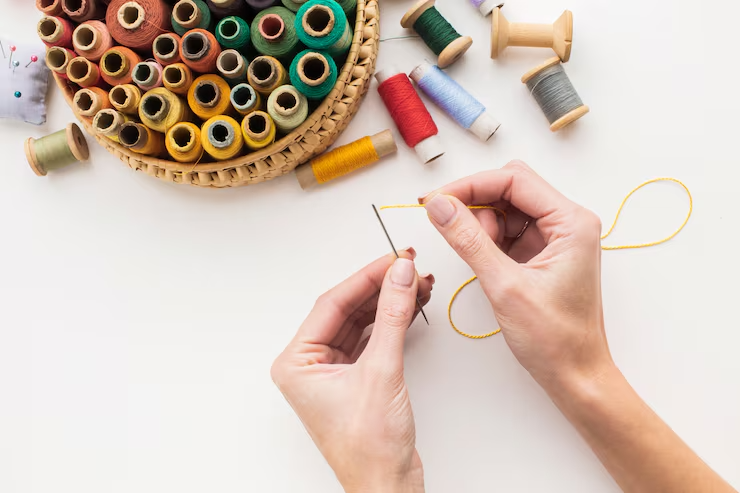
Before you learn “fancy” stitches, master threading and controlling stitch length. Neat basics make every future project easier.
Step-by-Step Guide
- Cut thread cleanly (about 18 to 24 inches). Longer thread tangles easily.
- Flatten the end by pinching it, or trim again for a crisp tip.
- Thread the needle and pull through so one side is slightly longer.
- Knot the end (a single knot is fine for most beginner hand sewing).
- Start from the wrong side (inside of the fabric) so the knot stays hidden.
- Use small, even stitches – aim for consistency over speed.
- Secure the end with 2 to 3 tiny stitches in the same spot (or a small knot) on the wrong side.
Pro-feel tip: If your stitches look messy, slow down and focus on even spacing. Consistency is what makes stitching look “professional,” not perfection.
Technique 2: The Running Stitch
The running stitch is the simplest – and one of the most useful – hand stitches. It’s great for quick seams, basting (temporary holding), gathering fabric, and simple repairs.
Step-by-Step Guide
- Insert the needle up from the wrong side.
- Move forward a short distance and insert the needle down.
- Repeat in a straight line, creating evenly spaced dashes.
- For speed, you can “load” several stitches on the needle before pulling through.
- Finish with a small securing stitch on the wrong side.
Best uses: temporary seams, simple mending, light fabrics, gathering (pull thread gently to bunch fabric).
Technique 3: Backstitch for Strength
If you want a strong, durable seam by hand, backstitch is the go-to. It creates overlapping stitches that mimic the strength of machine stitching.
Step-by-Step Guide
- Bring the needle up through fabric.
- Take a small stitch backward (insert needle down behind where you came up).
- Bring the needle up again a stitch-length ahead of the previous starting point.
- Insert needle down into the end of the previous stitch (this “locks” the line).
- Repeat to form a tight, continuous seam.
Best uses: fixing tears, sewing seams that will take tension, attaching straps, repairing underarms, mending bags.
Technique 4: Whipstitch for Quick Edges
Whipstitch wraps around the edge of fabric, helping prevent fraying and quickly closing seams or finishing raw edges.
Step-by-Step Guide
- Align the fabric edges (or fold a hem).
- Bring the needle up near the edge.
- Insert the needle over the edge and back through, forming diagonal wraps.
- Keep wraps evenly spaced and consistent.
- Secure at the end with a small knot on the inside.
Best uses: finishing raw edges, quick repairs, felt projects, closing linings, hand-finishing small openings.
Technique 5: Hemming Made Easy
A clean hem instantly upgrades how clothes look and fit. Once you can hem, you can shorten pants, adjust sleeves, and make old garments wearable again.
Step-by-Step Guide
- Try on and mark length (use chalk; measure both sides).
- Fold once to hide the raw edge, then fold again to create the hem.
- Press with iron to set the fold – this makes stitching far easier.
- Pin/clip the hem evenly.
- Use a blind hem stitch (nearly invisible) or small running stitches on the inside.
- Press again once finished.
Beginner-friendly choice: For simple fixes, a neat running stitch on the inside works well. For a cleaner outside look, use a blind hem stitch with tiny “bites” of the outer fabric.
Technique 6: Sewing on Buttons and Snaps
Loose buttons are one of the most common clothing problems – and one of the easiest wins. Snaps are also excellent for baby clothing, pouches, and quick closures.
Step-by-Step Guide
- Mark placement (match existing buttonholes if replacing).
- Thread needle and knot.
- Bring the needle up from the wrong side through one button hole.
- Stitch down through the opposite hole; repeat 6–10 times.
- For shank buttons (or to create thread space), place a pin/toothpick under thread while sewing.
- Wrap thread under the button a few times to create a strong “neck,” then secure with a knot.
For snaps: Sew each half firmly, ensuring alignment before final tightening. Reinforce with extra stitches – snaps face pulling force often.
Common Beginner Mistakes and Fixes
1) Tangled thread → Use shorter thread (18 to 24 inches), and let the needle hang occasionally to untwist.
2) Uneven stitches → Mark a guideline and slow down; consistency beats speed.
3) Puckered fabric → Don’t pull thread too tight; press fabric, and keep tension gentle.
4) Weak repairs that reopen → Switch from running stitch to backstitch for stressed areas.
5) Crooked hems → Measure from the floor (or a consistent reference), pin more, and always press first.
6) Visible knots and messy starts → Start from the wrong side, hide knots under folds, and secure neatly.
Learn Advanced Designing & Boutique Skills with Experts. Join Now!
Practice Projects to Build Confidence
If you want to improve quickly, choose small projects with clear finishes. These build muscle memory without overwhelming you.
- Handkerchief or simple napkin hem: best for learning pressing + hemming.
- Pillowcase seam repair: low pressure, high practice value.
- Drawstring pouch: teaches straight seams, edge finishing, and simple construction.
- Scrunchie or hairband: quick win and great for learning fabric handling.
- Button replacement “challenge”: replace 5 buttons across different shirts to master spacing and strength.
Progress mindset: Your first few stitches are training, not a final verdict. Sewing skill is built the same way handwriting is – repeat the basics until they become automatic.
Master Fashion Designing and Create Your Signature Style
Unlock your creative potential with our expert-led Fashion Designing course. Build in-demand skills and step confidently into the world of fashion!
Begin Your Fashion Career Today!Conclusion
The truth is it’s just a few basics that will give you the confidence to sew like a pro: getting your needle threaded without a fight, mastering a handful of core stitches like the running stitch for seams and the blanket stitch for edges – you know, the ones that keep your projects looking tidy and together, then getting to grips with hems for a finish that’s neat and tidy and finally, nailing closures like buttons or simple zippers. They may not be the flashiest skills but these are the building blocks that will turn hesitation into second nature in no time.
Once you’ve got a bit more of a feel for them with your fingers, you’ll be spotting all sorts of opportunities popping up everywhere: giving a new lease of life to old jeans from the repair pile, tweaking sleeve lengths for a custom fit, turning thrift store finds into one off scarves, or churning out little projects like aprons and pouches instead of buying them off the shelf. Just start small with 10 minutes a day of practice and don’t worry if perfection eludes you – just focus on neat and consistent technique and see what happens. The great thing is your sewing journey is really just getting underway – pick up that needle and you might just find yourself having fun.
Master Fashion Designing and Create Your Signature Style
Unlock your creative potential with our expert-led Fashion Designing course. Build in-demand skills and step confidently into the world of fashion!
Begin Your Fashion Career Today!Frequently Asked Questions
Which hand stitch is the strongest?
The Backstitch is one of the strongest stitches going – use it for seams or repairs where things are going to get tugged and pulled and you’ll be glad you did.
Why does my fabric go all puckered when I sew?
More often than not it is just because you’re pulling the thread too tight – try easing off on the tension and then press the fabric before and after you sew it and its a lot less likely to happen.
Do I really need an iron for sewing?
You will – pressing is what makes your seams sit flat and your stitches look neat and tidy and helps you get your work looking half way presentable.
How do I stop threads from getting all tangled up?
Use some shorter thread in the first place, and try not to over-twist it while you’re stitching – and now and then just let the needle dangle and the twists will come out.
How can I hide the knot in hand sewing?
Start on the wrong side of the fabric or shunt the knot under a fold or inside a hem where it won’t be visible.
Which is the easiest hemming method for beginners?
As a beginner, you can try double fold with a press. You can stitch it with some running stitches or a simple blind hem stitch.