Table of Contents
Key Takeaways
- Save Early: The earlier you start saving, the more your money grows thanks to “compounding.”
- Beat Inflation: Prices rise every year; your savings must grow faster than the cost of milk and petrol.
- Mix Your Investments: Use a combination of safe government schemes (EPF, PPF) and growth-oriented options (Mutual Funds).
- Health is Wealth: Get a separate medical insurance policy so your savings aren’t spent on hospital bills.
- Zero Debt: Aim to pay off all loans before you stop working.
- Update Nominees: Ensure your family is mentioned as nominees in all your bank accounts and policies.
Ace your personal finance journey with Entri’s Personal Finance Course. Join Now!
Introduction
1: What is a stock?
Whenever you hear the word ‘retirement’, it sounds like a long holiday. The thoughts that first come to your mind are waking up without an alarm, traveling, or finally starting that garden you always wanted.
However, in India, where the cost of living is rising fast, a happy retirement doesn’t happen by accident. It happens by planning. Since most of us don’t have a government “pension” anymore, we have to build our own. This pension planning checklist will show you exactly how to prepare, step-by-step, in a way that is easy to follow.

1. Check Your Current Savings
The first step, before you plan for the future, is to check what you have right now. Start by making a simple list:
- How much money is there in your bank account?
- What is your current EPF (Employee Provident Fund) balance?
- Do you have any gold, land, or LIC policies?
- Do you owe money on a car or home loan?
The first step in any pension planning checklist is to know your starting point. It helps you see how much more you need to save to reach your goal.
2. Account for Inflation (The “Rising Price” Factor)
As you know, in India, things get more expensive every year. Assume that you spend ₹40,000 a month today. After twenty years, you might need ₹1,20,000 to lead the exact same lifestyle. Due to this factor called inflation, when you plan your pension, don’t just think about today’s prices.
Always calculate for the future. If you don’t account for rising prices, your savings might run out halfway through your retirement.
3. Use Government Schemes (EPF and NPS)
For most Indian workers, the EPF is a great gift. It’s safe, and the interest is usually better than a savings account. However, EPF alone is rarely enough.
You should also look at the National Pension System (NPS). It is a government-backed scheme where you can choose to put some money into the stock market (for growth) and some into safe bonds. It also gives you extra tax savings. Including NPS in your pension planning checklist is a smart way to build a bigger fund.
Stock Market Training Reviewed & Monitored by SEBI Registered Investment Advisor
Trusted, concepts to help you grow with confidence. Enroll now and learn to start investing the right way.
Know more4. Don’t Be Afraid of Mutual Funds
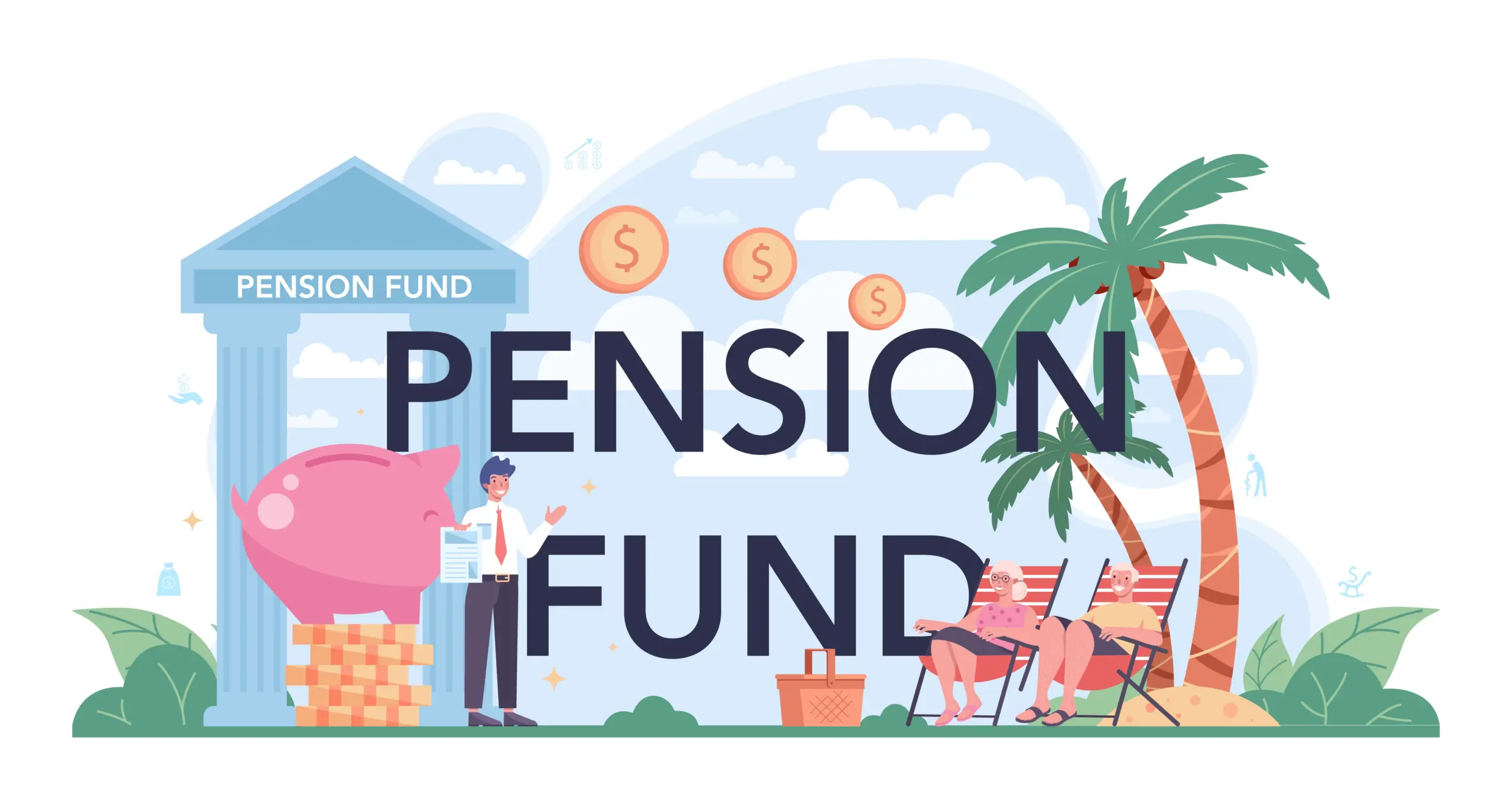
Many people in India stick only to Fixed Deposits (FDs). While FDs are safe, the interest they pay is often lower than the rate of inflation. The sad truth is that only nearly 9.5% of households in India have investments in securities like equities and mutual funds.
To truly grow your wealth, you need to put some money into Equity Mutual Funds. Over 10 or 15 years, these usually give much better returns. You don’t need to be an expert; you can start a Small Investment Plan (SIP) with as little as ₹500 a month.
The latest data, as of April 2026 shows that mutual fund holdings have risen for the 11th consecutive quarter to hit a record figure of 11.46%. This was mainly due to sustained inflows from individual investors.
This is the most important part of your pension planning checklist. As we get older, health issues are common. If you rely only on the insurance provided by your office, you will be unprotected the moment you retire. Buying insurance at age 60 is very expensive and difficult. Buy a personal health insurance policy now, while you are healthy, so it covers you when you are old. After the Central Government cutting down goods and services tax (GST) rates from 18% to 0% for individual health insurance policies, the share of high-value health insurance policies, with sum insured falling between Rs.20 lakh to more than Rs.1 crore has more than doubled in the last eight months. Your retirement years should be “stress-free.” If you are still paying monthly installments (EMIs) for a house or a car after you retire, it will eat up your pension. Believe it or not, only 38% of Indians are debt-free and the worst part is that among people aged 60 years and above, 31% of them are still dealing with EMIs. Make it a goal to be 100% debt-free at least two or three years before your last day of work. Sometimes, life throws a curveball at you. It may be an unexpected emergency like a leaky roof, a sudden family wedding, or a car repair. Thus, you should always have enough cash in a simple savings account to cover 6 to 12 months of expenses. This way, you won’t have to touch your long-term retirement investments for small emergencies. The most shocking part is that nearly 40% of affluents and HNIs in India do not have a sufficient emergency fund. Did you know that some pension income is taxable? When you withdraw money from certain schemes, the government might take a portion as tax. Talk to a friendly advisor or use online calculators to see which investments offer “tax-free” withdrawals. The goal is to keep as much of your hard-earned money as possible. Make sure all your investments have a “Nominee.” A nominee is the person (like a spouse or child) who gets the money if something happens to you. Also, write down all your account details and passwords in a safe place and tell your family where it is. Having a clear pension planning checklist also means making things easy for your loved ones. Money is important, but retirement is also about how you spend your time. Think about what you will do all day. Will you teach? Will you travel? Staying active keeps your mind sharp and your body healthy, which actually saves you money on doctor bills in the long run! Ace your personal finance journey with Entri’s Personal Finance Course. Join Now! While planning for your retirement days, there is nothing to be scared of or be upset about. It’s just about being disciplined today so you can be comfortable tomorrow. A major benefit of following this pension planning checklist is that you can make sure that you won’t have to depend on anyone else for money. All you have to do is to start small, stay consistent, and watch your “Golden Years” shine. Trusted, concepts to help you grow with confidence. Enroll now and learn to start investing the right way.
The best time to start is today. Even though it is about saving only a small amount, starting early gives your money more time to grow. PPF is very safe and tax-free. NPS has more risk but can give higher returns. Most people should go for a little bit of both. Try to save a minimum of 20% of what you earn every month specifically for your old age. It is better to be financially independent. This way, you are a support to your children, not a burden. A Systematic Investment Plan, popularly known as SIP is a way to put a small, fixed amount of money into mutual funds every month automatically. Only for emergencies. For retirement, savings accounts pay too little interest to beat rising prices. Yes. A Will ensures your house and money go to the right person without any family fights or legal trouble later.5. Get Your Own Health Insurance

6. Pay Off Your Loans
7. Build an Emergency Fund
8. Tax Planning
9. Fix Your Paperwork
10. Stay Active and Happy
Conclusion
Stock Market Training Reviewed & Monitored by SEBI Registered Investment Advisor
Frequently Asked Questions
When is the best time to start?
Is PPF better than NPS?
How much do I need to save?
Can I rely on my kids for retirement?
What is a SIP?
Should I keep money in a savings account?
Do I need a Will?