Table of Contents
Face, Hair & Pose Drawing for Fashion Illustrations shows fashion ideas clearly. It helps designers present their thoughts visually. These elements make fashion sketches look alive. They add emotion, style, and movement. Without them, drawings may feel plain. They are important for every fashion student. They help turn ideas into visuals. Learning them improves drawing confidence. They are basic skills in fashion illustration.
Fashion illustration is about showing designs creatively. Faces show mood and expression. Hair adds style and flow. Poses show how clothes move. Each element supports the design. Together, they improve presentation quality. They make sketches more interesting. Regular practice makes these skills better.
Learn Advanced Designing & Boutique Skills with Experts. Join Now!
Introduction
Fashion illustration is a simple way to show design ideas visually. It helps designers explain concepts before making garments. Illustrations connect creative thoughts with visual presentation. They help people understand ideas faster than written descriptions. Fashion sketches focus on style, mood, and overall appearance. They are used in fashion schools and professional design fields. Illustrations allow designers to express creativity freely. They help turn ideas into clear visual concepts. This makes fashion illustration an important design skill.
Fashion illustration is not about drawing realistic people. It focuses more on style and artistic expression. Designers use illustrations to suggest fabric feel and movement. They also show the purpose and theme of a design. Illustrations help viewers understand the designer’s vision. They make fashion collections more interesting and attractive. A good illustration can communicate many ideas quickly. It helps designs look organized and visually appealing.
Learning fashion illustration improves visual communication skills. It trains designers to observe shapes and details carefully. It improves hand control and drawing confidence. Students learn to express ideas clearly through sketches. Regular practice improves understanding of fashion aesthetics. Illustration skills also help in building strong portfolios. These skills are useful in many fashion-related careers. They help designers present ideas professionally.
Fashion illustration keeps changing with modern design trends. Digital tools are now used alongside traditional drawing methods. However, basic drawing skills remain very important. Strong basics help maintain consistency in illustrations. They allow designers to develop a personal drawing style. A strong foundation supports long-term creative growth.
Why Fashion Illustration Matters
-
It explains design ideas in a visual way.
-
It saves time during early design planning.
-
It allows creative experimentation without limits.
-
It improves storytelling in fashion concepts.
-
It strengthens professional design presentations.
Who Benefits from Learning Fashion Illustration
-
Fashion students and beginners.
-
Aspiring illustrators and creative learners.
-
Designers building professional portfolios.
-
Teachers explaining fashion design concepts.
-
Anyone interested in visual fashion communication.
Fashion illustration is both an art and a skill. It improves with regular practice and observation. Understanding its value encourages better learning. This makes it a strong foundation for fashion education.
Basics of Fashion Illustration Drawing
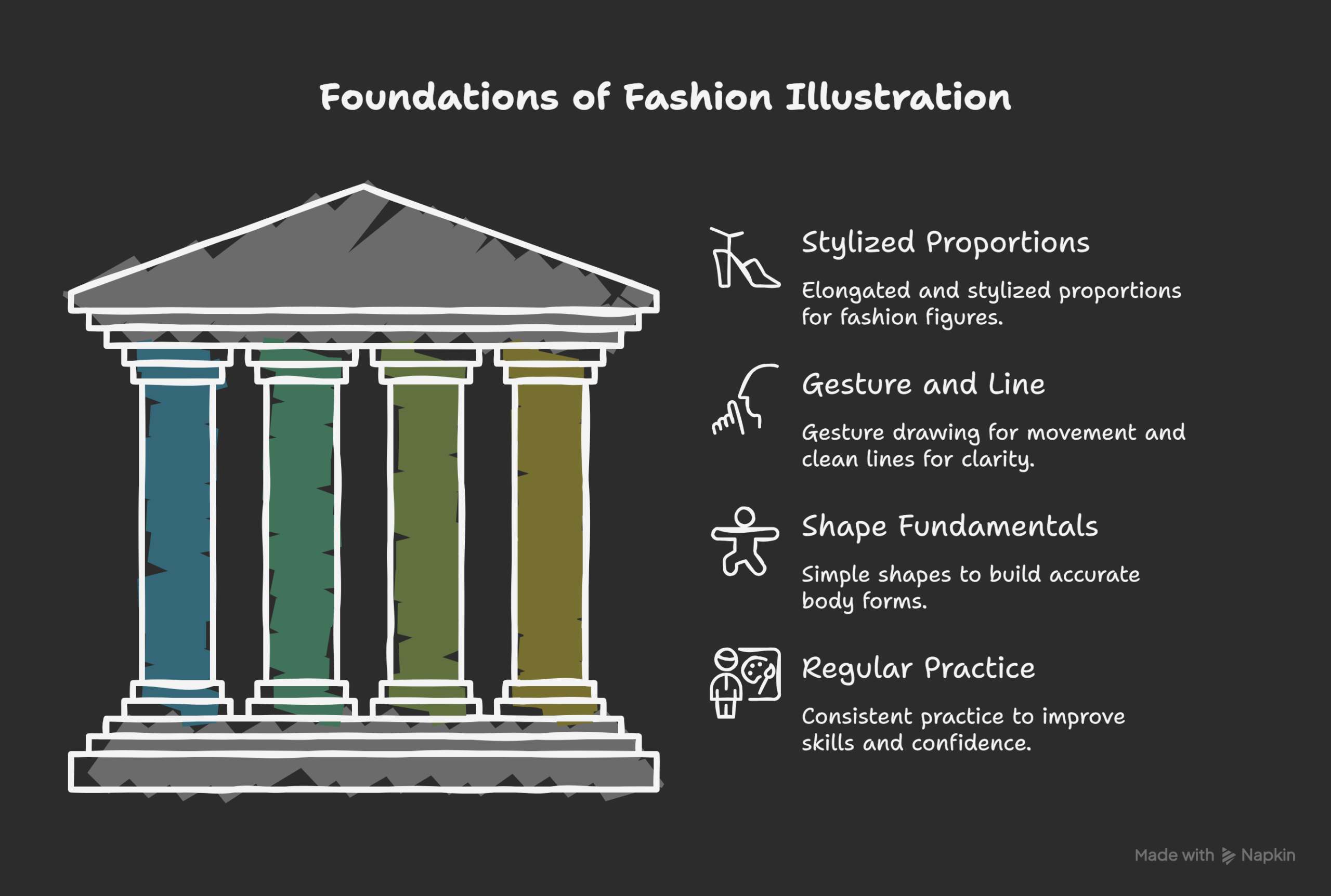
Fashion illustration drawing starts with understanding core fundamentals. These basics help create clear and expressive fashion sketches. They support consistency, balance, and visual harmony. Strong basics improve both creativity and technical confidence. Beginners should focus on foundation before adding complexity. These principles apply across styles and illustration methods.
Understanding Fashion Figure Proportions
Fashion figures use stylized body proportions. They appear taller and slimmer than real humans. This elongation adds elegance and visual appeal. Proportions are measured using head units.
Most fashion figures use eight to nine heads. Each head represents equal vertical body segments. This system ensures balanced and consistent figures. Beginners should practice proportional guides regularly.
Key points to remember:
-
Head unit defines overall figure height.
-
Legs appear longer than torso sections.
-
Shoulders remain slightly wider than hips.
-
Balance matters more than realism.
Basic Body Structure and Alignment
Every illustration starts with a simple body structure. This structure guides posture and balance. Artists begin with a straight centre line. This line represents the spine direction.
Shoulders and hips tilt for visual interest. Straight symmetry often looks stiff and unnatural. Slight angles create natural body flow. Alignment keeps figures stable and believable.
Important structural elements:
-
Centre line for body balance.
-
Shoulder line showing upper body direction.
-
Hip line indicating weight distribution.
-
Ground line for foot placement.
Gesture Drawing and Movement
Gesture drawing captures body movement quickly. It focuses on energy rather than detail. Loose lines show flow and direction. This step adds life to illustrations.
Gesture drawings are fast and expressive. They help avoid stiff and rigid figures. Movement lines guide final body construction. This practice improves drawing confidence greatly.
Gesture drawing benefits:
-
Encourages fluid and dynamic sketches.
-
Improves understanding of body flow.
-
Reduces fear of blank pages.
-
Builds speed and accuracy together.
Line Quality and Stroke Control
Line quality defines illustration style clearly. Clean lines look confident and professional. Uneven lines may appear hesitant. Artists should practice controlled hand movements.
Thick and thin lines add visual depth. Light lines help during early sketching stages. Darker lines define final shapes clearly. Consistency improves overall illustration clarity.
Good line practices:
-
Use light pressure for guidelines.
-
Strengthen final outlines carefully.
-
Avoid sketchy and broken strokes.
-
Practice steady hand movements daily.
Shapes and Form Simplification
Complex bodies start with simple shapes. Circles, ovals, and rectangles build structure. These shapes guide accurate proportions. They reduce drawing mistakes early.
Forms create three-dimensional appearance. They help understand volume and depth. Simple shapes make corrections easier. This method suits beginners well.
Tools Used in Fashion Illustration
Different tools support different drawing styles. Beginners can start with simple materials. Traditional and digital tools both work.
| Tool Type | Common Examples | Purpose |
|---|---|---|
| Pencils | HB, 2B, 4B | Sketching and shading |
| Pens | Fine liners | Clean outlining |
| Paper | Smooth sheets | Controlled line work |
| Digital | Tablets, stylus | Modern illustration methods |
Importance of Practice and Observation
Regular practice strengthens basic illustration skills. Observation improves understanding of body structure. Artists should study real-life references often. Practice builds muscle memory gradually.
Mistakes are part of learning. Each sketch improves accuracy and confidence. Consistency matters more than speed. Strong basics support advanced illustration growth.
Mastering basics creates strong illustration foundations. These skills support all future fashion drawing work.
Master Fashion Designing and Create Your Signature Style
Unlock your creative potential with our expert-led Fashion Designing course. Build in-demand skills and step confidently into the world of fashion!
Begin Your Fashion Career Today!Frequently Asked Questions
Why is face drawing important in fashion illustrations?
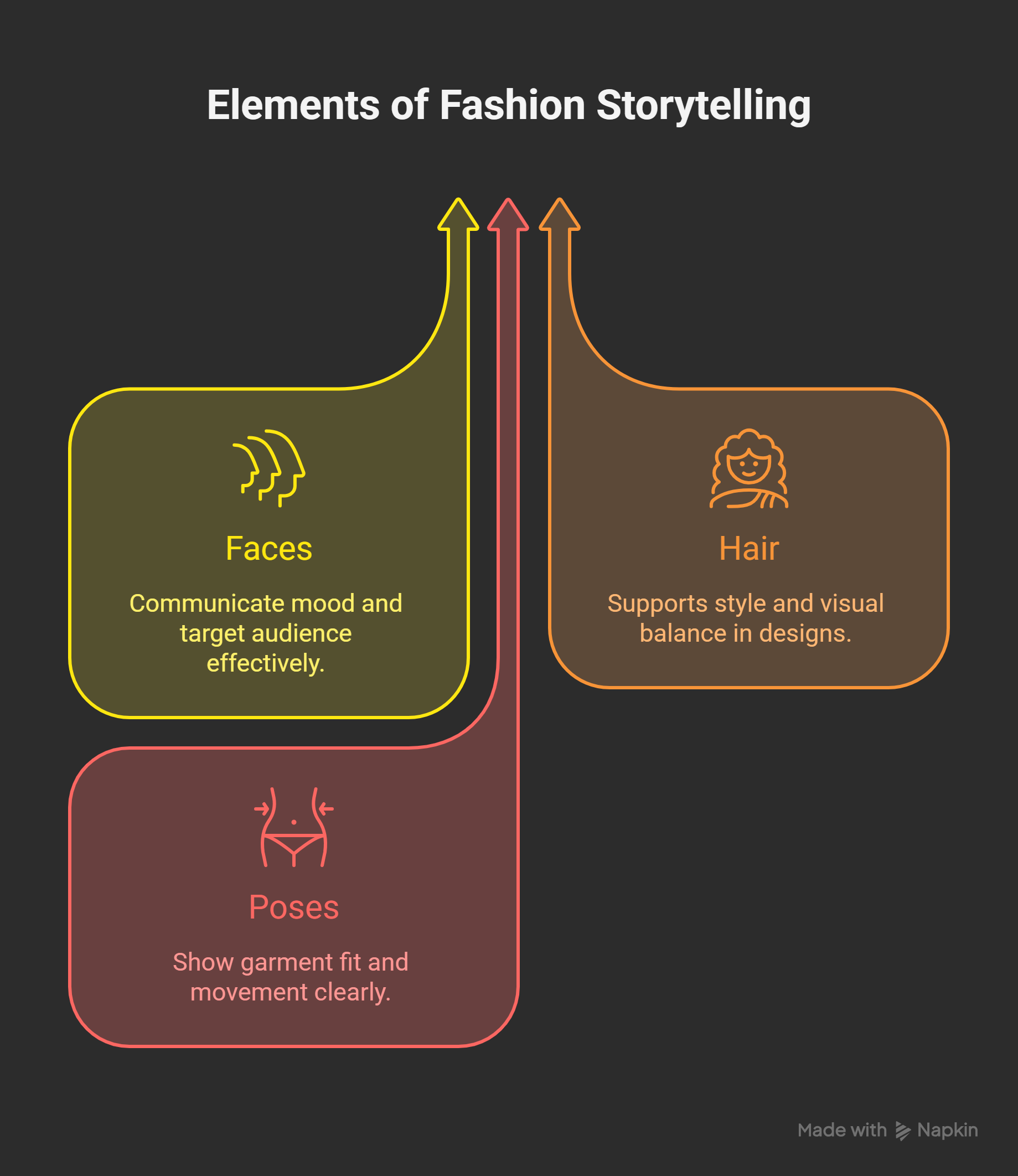
Faces help communicate the mood, personality, and attitude of a design. They add emotion to the sketch, making it more relatable and expressive. Even subtle facial expressions can highlight the type of clothing, the intended audience, or the overall theme of a fashion collection. Without the face, an illustration may appear lifeless and fail to convey the intended style or concept.
How does hair enhance fashion illustrations?
Hair adds movement, balance, and personality to a fashion sketch. It complements the outfit by following the theme, such as sleek hair for modern designs or flowing hair for casual, natural looks. Hair also guides the viewer’s eye across the illustration, creating flow and harmony. Properly drawn hair can elevate the overall aesthetics and make the sketch appear polished and complete.
What is the significance of pose in fashion illustrations?
Poses bring life and movement to illustrations, showing how garments fit and behave on the body. A dynamic pose can highlight fabric flow, drape, and structure, making the clothing more understandable and realistic. Even simple standing poses can communicate confidence and elegance, while more dramatic poses add style, attitude, and visual interest. Poses also help the illustration appear professional and visually balanced.
Can fashion illustrations work without face, hair, or pose?
While it is possible to illustrate only clothing, omitting face, hair, and pose reduces the visual impact. Sketches without these elements may appear flat, static, or incomplete. Faces, hair, and poses complete the storytelling, show garment behavior, and make illustrations more appealing. Including these elements ensures that viewers can better understand the mood, theme, and overall design concept.
How can beginners practice face drawing for fashion sketches?
Beginners should start with simple oval shapes and center guidelines to place facial features correctly. Focus on the eyes first, as they convey most emotion, followed by simplified noses and lips. Practice different expressions, face angles, and proportions regularly. Using references from magazines or photographs helps improve observation and ensures that the faces remain stylized yet expressive.
What is the best way to draw hair in fashion illustrations?
Start by drawing the overall hair volume and basic shape before adding flow or texture. Use smooth, continuous lines to show hair movement rather than drawing individual strands. Light shading and highlights can add depth and dimension without making the hair look heavy or overworked. Experiment with different hairstyles to match various clothing styles and themes.
How do poses affect the presentation of garments?
Poses determine how the garment is perceived by showing its structure, fit, and movement. Standing poses offer clarity for tailored designs, while walking or dynamic poses show how fabrics drape or flow. Limbs, body angles, and weight distribution affect the visual balance of the illustration. Practicing a variety of poses allows designers to choose the most suitable one for each garment.
How do face, hair, and pose work together in fashion illustration?
When combined, these elements create a complete and engaging visual story. Faces add emotion, hair adds style and movement, and poses show posture and garment behavior. Together, they make the illustration appear professional, expressive, and memorable. Using all three elements ensures that the viewer fully understands the design concept and its intended mood.
How often should one practice face, hair, and pose drawing?
Consistent and regular practice is essential to improve skill and confidence. Short daily sketching sessions are more effective than occasional long sessions. Practice should include observing real-life references, experimenting with different expressions, hairstyles, and poses, and gradually increasing complexity. Over time, this builds speed, accuracy, and natural flow in illustrations.
Why are face, hair, and pose considered essential skills for fashion designers?
These elements help designers communicate ideas clearly and professionally. They elevate fashion sketches from basic technical drawings to expressive visual presentations. Mastery of face, hair, and pose improves portfolio quality, enhances design storytelling, and ensures that illustrations stand out in competitive environments. They are critical for both education and professional fashion careers.