Table of Contents
Becoming an Embedded Test Engineer requires technical knowledge and practical experience. Strong foundations in programming are important. Electronics knowledge is also essential. Embedded systems concepts must be understood clearly. Testing methodologies should be learned gradually.
Hands-on practice plays a major role. Development boards help build practical skills. Debugging tools improve technical understanding. Real projects strengthen industry readiness. Continuous learning supports long-term career growth.
Kickstart your embedded systems career and turn your tech passion into high-demand skills!
Key Takeaways:
- Product Quality Remains the Primary Focus: Embedded systems require thorough testing. Reliable performance improves customer satisfaction.
- Technical Knowledge Supports Daily Responsibilities: Programming skills strengthen testing capabilities. Hardware understanding improves troubleshooting accuracy.
- Different Testing Methods Are Used: Functional testing validates product behavior. Integration testing verifies component compatibility.
- Many Industries Require Embedded Testing: Modern products depend on embedded systems. Demand continues growing across industries.
- Testing Tools Improve Efficiency: Automation reduces repetitive work. Advanced tools simplify defect identification.
- Career Growth Opportunities Remain Strong: Specialized roles offer future advancement. Leadership positions become accessible with experience.
👨💻 Understanding the Role of an Embedded Test Engineer
Embedded Test Engineers help ensure product quality. They verify system functionality and reliability. Their work supports successful product releases. Testing remains the primary responsibility.
Embedded products combine hardware and software. Both components must work correctly together. Testing helps validate this interaction. Product quality depends heavily on effective testing.
Who is an Embedded Test Engineer?
An Embedded Test Engineer validates embedded devices and systems. Product behavior is checked against requirements. Defects are identified before release. Reliability remains a key objective.
The role combines software and hardware knowledge. Collaboration happens with development teams regularly. Product quality remains the primary focus.
Key Responsibilities
Several responsibilities form part of this role.
Test Planning
Testing begins with proper planning. Clear objectives guide testing activities.
Common tasks include:
- Defining testing goals.
- Creating test strategies.
- Identifying test scenarios.
- Planning test coverage.
Test Execution
Test execution validates system behavior. Results help assess product readiness.
Typical activities include:
- Running test cases.
- Recording observations.
- Monitoring performance.
- Documenting results.
Hardware-Software Validation
Hardware and software must work together. Validation ensures proper communication and functionality.
Important areas include:
- System integration.
- Device communication.
- Feature verification.
- Operational stability.
Defect Identification
Testing helps identify issues early. Early detection reduces development risks.
Examples include:
- Software bugs.
- Hardware failures.
- Communication problems.
- Integration defects.
Performance and Reliability Testing
Products must perform consistently. Reliability remains important for customer satisfaction.
Testing often evaluates:
- Response times.
- System stability.
- Resource usage.
- Long-term performance.

Industries Hiring Embedded Test Engineers
Many industries use embedded systems extensively. Demand for testing professionals continues growing.
Automotive
Modern vehicles use advanced electronics. Reliable testing remains essential.
Examples include:
- Safety systems.
- Engine controllers.
- Driver assistance systems.
- Infotainment platforms.
Consumer Electronics
Consumer devices require dependable performance.
Examples include:
- Smartphones.
- Smart televisions.
- Wearable devices.
- Gaming systems.
Medical Devices
Medical equipment requires accuracy and reliability.
Examples include:
- Monitoring equipment.
- Diagnostic systems.
- Portable medical devices.
- Infusion pumps.
Aerospace
Aerospace systems require strict quality standards. Reliability remains a critical requirement.
Industrial Automation
Factories increasingly use embedded technology.
Examples include:
- Robotics systems.
- Industrial sensors.
- Control units.
- Manufacturing equipment.
IoT
Connected devices continue expanding rapidly.
Examples include:
- Smart homes.
- Smart appliances.
- Connected sensors.
- Wearable technology.
⚙️ What are Embedded Systems?
Understanding embedded systems remains essential. Every Embedded Test Engineer works with them. Strong fundamentals improve testing effectiveness.
Embedded systems appear in many everyday products. They perform specific tasks efficiently. Modern technology depends heavily on them.
Definition of Embedded Systems
Embedded systems combine hardware and software. They perform dedicated functions within devices. Most operate continuously and automatically.
Common functions include:
- Monitoring conditions.
- Processing information.
- Controlling operations.
- Executing specific tasks.
How Embedded Systems Differ from Traditional Software
Traditional software serves broad purposes. Embedded systems perform specialized functions.
| Embedded Systems | Traditional Software |
|---|---|
| Specific functions | Multiple functions |
| Hardware dependent | Hardware independent |
| Limited resources | Greater resources |
| Device focused | User focused |
Understanding these differences supports effective testing.
Real-World Examples
Embedded systems power many modern products.
Smartwatches
Smartwatches track health and activities. Embedded software manages device operations.
Cars
Vehicles contain numerous embedded controllers. Safety and performance depend on them.
Smart TVs
Smart televisions provide advanced features. Embedded systems manage internal operations.
Home Automation Devices
Smart homes rely on connected devices. Embedded systems enable automatic control.
Medical Equipment
Medical devices require reliable performance. Embedded systems support critical functions.
Master Embedded Systems Programming!
Launch your tech career with our Embedded Systems Course, designed for hands-on learning and industry readiness.
Know More🎓 Educational Requirements
Education helps build technical foundations. Practical learning remains equally important.
Relevant Degrees
Several degrees support this career path.
Popular options include:
- Electronics Engineering.
- Electrical Engineering.
- Computer Engineering.
- Instrumentation Engineering.
- Embedded Systems Engineering.
Can Non-ECE Students Become Embedded Test Engineers?
Yes, non-ECE students can enter this field. Technical skills often matter more. Practical experience also improves opportunities.
Certifications and Specialized Training Programs
Certifications strengthen technical profiles. They also improve industry exposure.
Useful areas include:
- Embedded Systems.
- Embedded Linux.
- Automation Testing.
- IoT Technologies.
💡 Essential Skills Required for Embedded Testing
Strong technical skills support career success. Hardware and software knowledge remain equally important.
Technical Skills
Important technical skills include:
- C programming.
- Embedded C.
- Basic Python scripting.
- Linux fundamentals.
These skills support testing activities daily.
Hardware Knowledge
Hardware understanding improves troubleshooting abilities.
Important areas include:
- Microcontrollers.
- Sensors and actuators.
- Circuit fundamentals.
- Electronic components.
Communication Protocols
Devices communicate through various protocols.
Important protocols include:
- UART.
- SPI.
- I2C.
- CAN.
- Ethernet.
Protocol knowledge improves testing effectiveness.
Testing Skills
Testing knowledge remains highly valuable.
Important skills include:
- Test case design.
- Test execution.
- Regression testing.
- Validation testing.
Debugging Tools and Instruments
Testing requires specialized tools.
Essential Checklist
- Oscilloscope.
- Logic Analyzer.
- Multimeter.
- JTAG Debugger.
- Development Boards.
- Serial Communication Tools.
🛣️ Step-by-Step Roadmap to Become an Embedded Test Engineer
A structured learning path improves progress. Each step builds important technical skills. Consistent practice supports long-term success.
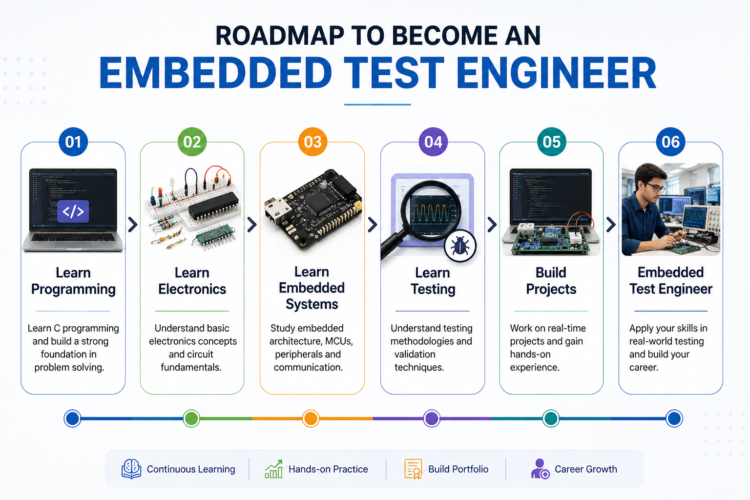
Step 1: Learn Programming Fundamentals
Programming forms the foundation of embedded testing. Strong coding skills improve technical understanding.
Focus on:
- Learning C programming.
- Understanding basic algorithms.
- Practicing problem-solving.
- Writing simple programs.
Step 2: Understand Electronics Basics
Electronics knowledge supports hardware testing. Basic concepts should be understood clearly.
Focus on:
- Voltage and current.
- Circuit components.
- Digital electronics.
- Electronic measurements.
Step 3: Study Embedded Systems Architecture
Embedded systems combine hardware and software. Understanding system architecture remains important.
Learn about:
- Microcontrollers.
- Memory systems.
- Peripherals.
- Device communication.
Step 4: Learn Testing Methodologies
Testing skills support product quality. Different testing approaches should be understood.
Important areas include:
- Functional testing.
- Validation testing.
- Regression testing.
- Integration testing.
Step 5: Work with Development Boards
Practical experience improves technical confidence. Development boards provide hands-on learning.
Popular options include:
- STM32 boards.
- Arduino boards.
- Raspberry Pi.
- ESP32 boards.
Step 6: Practice Real-Time Debugging
Debugging remains a critical skill. Practical troubleshooting improves problem-solving abilities.
Learn to use:
- Oscilloscopes.
- Logic analyzers.
- Multimeters.
- JTAG debuggers.
Step 7: Build a Portfolio of Embedded Projects
Projects demonstrate practical abilities. Employers often value project experience.
A strong portfolio should include:
- Hardware projects.
- Testing projects.
- Automation scripts.
- Documentation samples.
Step 8: Prepare for Interviews and Job Applications
Interview preparation improves confidence. Technical concepts should be reviewed regularly.
Focus on:
- Programming fundamentals.
- Embedded systems concepts.
- Testing methodologies.
- Debugging scenarios.
Master Embedded Systems Programming!
Launch your tech career with our Embedded Systems Course, designed for hands-on learning and industry readiness.
Know More🛠️ Tools Every Embedded Test Engineer Should Know
Testing activities require different tools. Familiarity with these tools improves efficiency.
Software Tools
Common software tools include:
- Embedded IDEs.
- Linux environments.
- Serial communication tools.
- Simulation software.
Examples:
- Keil.
- STM32CubeIDE.
- Eclipse.
- PuTTY.
Hardware Testing Tools
Hardware tools support validation activities.
Important tools include:
- Oscilloscopes.
- Logic analyzers.
- Multimeters.
- Signal generators.
These tools help identify hardware issues.
Automation and Scripting Tools
Automation improves testing efficiency.
Useful tools include:
- Python.
- Robot Framework.
- Shell scripting.
- Automated testing utilities.
Automation reduces repetitive work.
Version Control and Collaboration Tools
Modern projects require collaboration.
Important tools include:
- Git.
- GitHub.
- GitLab.
- Bitbucket.
Version control supports project management.
⚖️ Embedded Test Engineer vs Embedded Developer
Both roles support product development. However, their responsibilities differ significantly.
| Feature | Embedded Test Engineer | Embedded Developer |
|---|---|---|
| Primary Focus | Product quality | Product development |
| Coding Requirement | Moderate | High |
| Daily Responsibilities | Testing and validation | Software development |
| Testing Activities | Extensive | Limited |
| Career Path | Testing leadership | Development leadership |
Which Role Is Better?
The answer depends on career interests.
Choose Embedded Testing if:
- Product quality interests you.
- Debugging feels enjoyable.
- Validation work seems rewarding.
Choose Embedded Development if:
- Software creation interests you.
- Coding feels enjoyable.
- Product design motivates you.
📂 Projects that can Strengthen Your Resume
Projects demonstrate technical abilities. Practical work improves employability significantly.
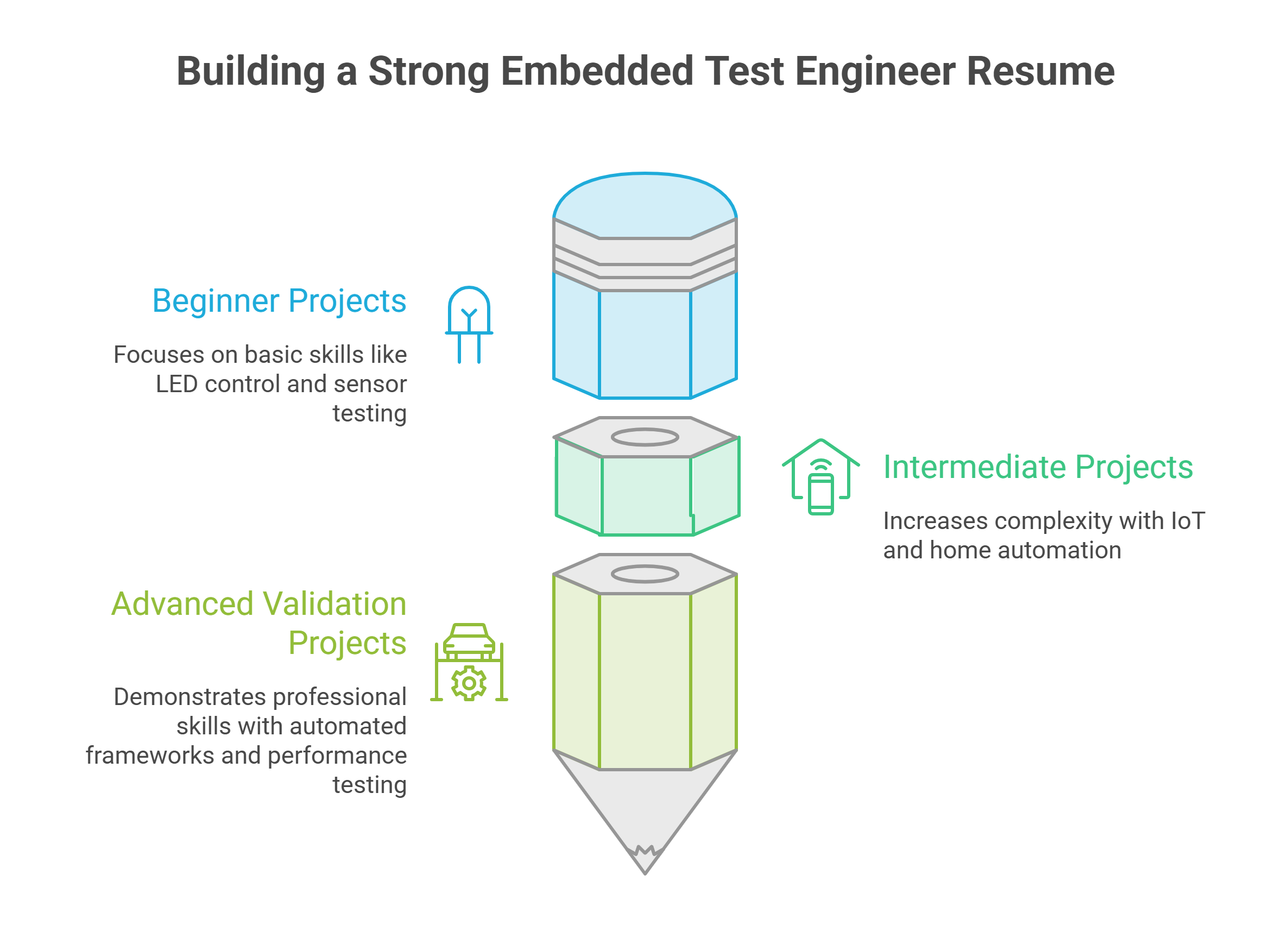
Beginner Projects
Suitable beginner projects include:
- LED control systems.
- Temperature monitoring devices.
- Sensor testing projects.
- UART communication testing.
These projects build basic skills.
Intermediate Projects
Intermediate projects increase complexity.
Examples include:
- IoT monitoring systems.
- Home automation projects.
- Embedded logging systems.
- Communication protocol testing.
These projects improve practical understanding.
Advanced Validation Projects
Advanced projects demonstrate professional skills.
Examples include:
- Automated testing frameworks.
- Embedded validation platforms.
- Performance testing systems.
- Reliability testing projects.
Advanced projects strengthen portfolios.
GitHub Portfolio Best Practices
A professional portfolio creates strong impressions.
Important practices include:
- Clear documentation.
- Organized repositories.
- Project explanations.
- Regular updates.
Employers often review project portfolios.
📈 Career Opportunities and Growth Path
Career growth remains strong in this field. Opportunities exist across many industries.
Entry-Level Roles
Many professionals start with:
- Junior Test Engineer.
- Validation Engineer.
- QA Engineer.
- Embedded Testing Intern.
These roles build practical experience.
Mid-Level Career Progression
Experience leads to broader responsibilities.
Typical roles include:
- Embedded Test Engineer.
- Senior Test Engineer.
- Validation Specialist.
- Test Lead.
Leadership skills often develop here.
Senior and Specialized Roles
Advanced professionals pursue specialized positions.
Examples include:
- Test Manager.
- Validation Manager.
- Automation Specialist.
- Quality Engineering Lead.
Career growth remains flexible.
Emerging Opportunities in IoT and Automotive Testing
New technologies create additional demand.
Growing areas include:
- IoT testing.
- Automotive testing.
- Connected devices.
- Functional safety testing.
Future opportunities remain promising.
💰 Salary of an Embedded Test Engineer
Embedded Test Engineers earn competitive salaries across industries. Earnings increase with experience and technical skills.
Freshers
Freshers typically earn ₹3 LPA to ₹6 LPA. Strong projects can improve starting packages.
Experienced Professionals
Experienced engineers often earn ₹6 LPA to ₹20+ LPA. Specialized skills can increase earning potential.
Factors Affecting Salary
Skills
Automation, debugging, and Embedded Linux skills often increase salaries.
Industry
Automotive, aerospace, and semiconductor sectors usually offer higher pay.
Location
Major technology hubs often provide better compensation.
Certifications
Relevant certifications can strengthen career opportunities.
Project Experience
Practical project experience improves employability and salary growth.
⚠️ Common Challenges in Embedded Testing
Every technical role presents challenges. Embedded testing is no exception.
Hardware Dependency
Testing often depends on hardware availability. Delays can affect project schedules.
Real-Time Constraints
Real-time systems require precise validation. Timing issues can become challenging.
Limited System Resources
Embedded devices often have limitations.
Examples include:
- Limited memory.
- Limited processing power.
- Power constraints.
Testing must consider these restrictions.
Debugging Complex Failures
Some defects involve multiple components. Root causes may remain difficult to identify.
🌟 Benefits of Choosing Embedded Testing as a Career
Embedded testing offers many advantages. Demand continues increasing globally.
Strong Industry Demand
Embedded systems continue expanding rapidly. Testing professionals remain highly valuable.
Diverse Industry Exposure
Many industries hire embedded testers. Career opportunities remain widely available.
High Learning Potential
Technology evolves continuously. New skills can be developed regularly.
Long-Term Career Stability
Embedded systems support modern technology. Demand is expected to remain strong.
Kickstart your embedded systems career and turn your tech passion into high-demand skills!
🚫 Mistakes Beginners Should Avoid
Avoiding common mistakes improves progress.
Ignoring Electronics Fundamentals
Strong electronics knowledge remains important. Weak fundamentals create learning difficulties.
Focusing Only on Theory
Practical experience matters greatly. Projects improve technical understanding.
Avoiding Hands-On Projects
Projects demonstrate real skills. Employers often value practical experience.
Neglecting Debugging Skills
Debugging remains a core responsibility. Strong troubleshooting skills improve effectiveness.
Not Learning Communication Protocols
Protocols support device communication. Understanding them improves testing abilities.
🏁 Conclusion
Embedded testing offers a rewarding technical career. Strong foundations in programming and electronics remain essential. Practical experience supports long-term success. Testing skills help ensure product quality and reliability.
Demand continues growing across industries. Opportunities exist in automotive, healthcare, IoT, aerospace, and consumer electronics. For those who enjoy testing, debugging, and problem-solving, Embedded Test Engineering offers excellent career prospects.
Master Embedded Systems Programming!
Launch your tech career with our Embedded Systems Course, designed for hands-on learning and industry readiness.
Know MoreFrequently Asked Questions
Is Embedded Testing a good career?
Yes, Embedded Testing is a promising career with strong demand across multiple industries. The field offers continuous learning opportunities, technical specialization, and long-term career growth.
Can a fresher become an Embedded Test Engineer?
Yes, freshers can start a career in Embedded Testing by building strong foundations in programming, electronics, and embedded systems. Practical projects, internships, and hands-on experience can significantly improve job prospects.
Is coding required for Embedded Testing?
Yes, coding plays an important role in many testing activities. Programming knowledge helps with automation, debugging, test script development, and understanding embedded software behavior.
Which programming language is most important for Embedded Testing?
C is generally considered the most important language because it is widely used in embedded software development. Python is also valuable for automation, scripting, and testing-related tasks.
How long does it take to learn Embedded Testing?
The learning period varies depending on prior technical knowledge and learning pace. Most beginners can build core skills within several months through structured learning and practical projects.
What is the difference between Embedded Testing and Software Testing?
Embedded Testing focuses on validating hardware and software interactions within embedded devices. Software Testing mainly evaluates software functionality without direct involvement of hardware components.
Which industries offer the best opportunities for Embedded Test Engineers?
Automotive, consumer electronics, medical devices, aerospace, industrial automation, and IoT industries offer excellent opportunities. These sectors rely heavily on embedded systems and require thorough product validation.
What certifications are useful for Embedded Testing careers?
Certifications in Embedded Systems, Embedded Linux, Automation Testing, IoT, and Quality Assurance can be highly beneficial. These certifications help strengthen technical skills and improve employability.
What tools should an Embedded Test Engineer learn?
Engineers should become familiar with oscilloscopes, logic analyzers, multimeters, JTAG debuggers, and serial communication tools. Knowledge of Git, Linux, Python, and automation frameworks is also highly valuable.
What skills are most important for Embedded Test Engineers?
Strong programming, debugging, testing, and analytical skills are essential for success in this role. Knowledge of embedded systems, communication protocols, electronics, and automation tools also plays a major role.