Table of Contents
Rainy days might be a bummer for some, but not in a Montessori classroom. On the contrary, they can actually be a pretty great excuse to do some really cool stuff indoors. There are eight Montessori activities which are easily adaptable for kids aged 2 to 6 that’ll keep them entertained, motivated, and building independence without even leaving the house.
These activities are particularly brilliant because they require minimal setup and you can probably find the materials you need just around the house or with some standard Montessori gear.
The best bit is that they totally stay true to the core principles of giving kids the autonomy to choose their own activities, getting in loads of repetition, and making sure they’re moving around and doing things that actually mean something.
In all the research that’s been done, the clear winner is that kids aged 2 to 6 get a real boost to concentration, fine motor skills, and even their ability to just get stuff done when they get to do sensorial and practical-life activities.
Register for the Entri Elevate Montessori Teacher Training Program! Join Now!
Key Takeaways
- Rainy days are the perfect excuse to ditch the outdoor time and replace it with some super fun indoor adventures that’ll keep the kids active and engaged.
- Doing all those practical-life activities like pouring, buttoning, or scrubbing is a great way to get those fine motor skills up to speed, build concentration and get kids to put things in order.
- To keep the Montessori rhythm going even without outdoor time you can easily alternate between calm and active tasks – a way to keep things interesting.
- You could even get your TTC trainees some great assessment data from observing the kids during these activities – sounds like a win to me.
Quick At-a-Glance: Activities, Skills & Prep Time
1: What is the primary focus of the first plane of development in the Montessori method?
| Activity | Core Skill | Approx. Time | Prep Level |
| Pouring Station | Practical life, fine motor | 10–15 mins | Low |
| Felt Weather Matching & Story Tray | Language, sequencing | 8–12 mins | Very Low |
| Buttoning & Dressing Frames | Fine motor, self-care | 10–20 mins | Low |
| Indoor Obstacle Course | Gross motor, coordination | 15–25 mins | Medium |
| Sensory Bin: Rainy-Day Theme | Tactile exploration, language | 10–20 mins | Low |
| Sound Matching Bottles | Auditory discrimination, memory | 10–15 mins | Low |
| Clay/Playdough Table with Tools | Fine motor, creativity | 15–25 mins | Low |
| Quiet Book Corner + Work Tray | Concentration, pre-literacy | 20–30 mins | Very Low |
Planning tip:
Rotate 3 to 4 activities per session and alternate calm tasks (pouring, playdough) with active ones (obstacle course) to mirror the Montessori work cycle rhythm.
Get Certified & Start Your Montessori Career
Montessori Teacher Training Course by Entri App: Gain expert skills, earn certification, and kickstart your teaching career.
Join Now!Age-to-Skill Mapping
| Age Range | Recommended Activities | Core Skills Emphasised |
| 2–3 years | Pouring Station, Sensory Bin | Practical life, tactile exploration |
| 3–4 years | Buttoning Frames, Sound Bottles, Felt Weather | Fine motor, auditory discrimination, language |
| 4–6 years | Obstacle Course, Story Tray, Playdough Tools | Gross motor planning, sequencing, creativity |
Mixed-age tip:
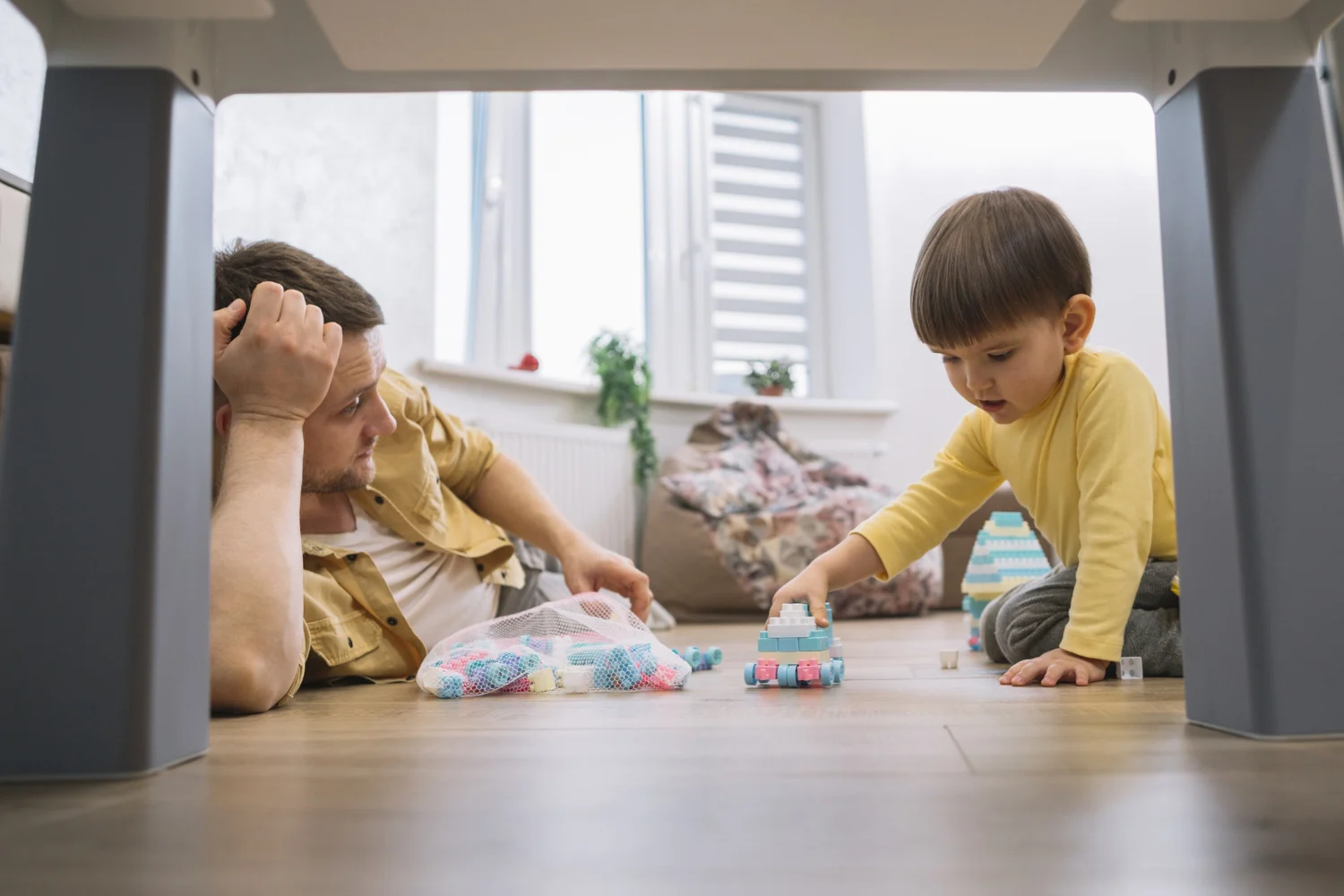
Pair older children (5 to 6) as guides for younger ones. It reinforces their own learning while building social responsibility.
1. Pouring Station (Ages 2 to 5)
A pouring station is a super-effective way to teach practical-life skills and get those hand-eye coordination skills up in a jiffy. A few minutes with graduated containers filled with water, rice or lentils and you’ve got a child refining their hand-eye and learning to move with purpose.
Using water, rice or lentils in those graduated containers is a great way to offer progressive challenges, cut down on mess with a tray and follow on from Montessori’s work on purposeful movement. Plus, it’s a lovely way to get kids used to working with different textures.
Montessori practical-life exercises have a pretty clear track record of improving fine motor precision and concentration in the under 5 if they’re done regularly. A bit of practice each day goes a long way.
Skills built: Pincer/palmar grasp, bilateral coordination, concentration, sequencing.
Materials: Two small pitchers or jugs, shallow tray, sponge, hand towel. Use a metal pitcher for children aged 4+ to add weight challenge.
Steps:
- Invite the child to carry the tray to their work mat.
- Demonstrate a slow, controlled pour – no narration, just the action.
- Invite the child to try; encourage them to steady the base with the non-dominant hand.
- Progress to smaller spouts or finer materials (lentils → water) as confidence grows.
- Conclude with clean-up: child sponges spills and returns the tray to the shelf.
Extension:
Add a funnel, food-safe dye for sensory variation, or measuring cups to introduce early numeracy.
Safety: Use a shallow non-slip tray; supervise water for children under 3.
2. Felt Weather Matching & Story Tray (Ages 3 to 6)
A felt board weather activity is one of the simplest and most fun language and sensorial activities you can do on a rainy day.
Kids match up the different weather symbols (cloud, sun, raindrop, rainbow) to the scene cards, and then use them to sequence a little weather story. It really helps with vocabulary, pattern recognition and storytelling skills and it looks pretty cool too.
This is a great way to support the Montessori language area outcomes and it’s also a super natural way for TTC trainees to get some observations in for their portfolio.
Skills built: Descriptive vocabulary, sequencing, sensorial discrimination, pre-literacy.
Materials: Felt board or textured surface, laminated felt weather pieces (DIY from craft felt), scene cards.
Steps:
- Introduce each felt piece by name; pass them to the child to feel.
- Flip a scene card and invite the child to place the matching weather symbol.
- Once all cards are matched, invite the child to arrange symbols into a “weather story.”
- Encourage narration: “What happens next?”
Extension: Add seasonal vocabulary; introduce simple weather-writing prompts for 5 to 6 year olds.
Get Certified & Start Your Montessori Career
Montessori Teacher Training Course by Entri App: Gain expert skills, earn certification, and kickstart your teaching career.
Join Now!3. Buttoning & Dressing Frames Relay (Ages 3 to 6)
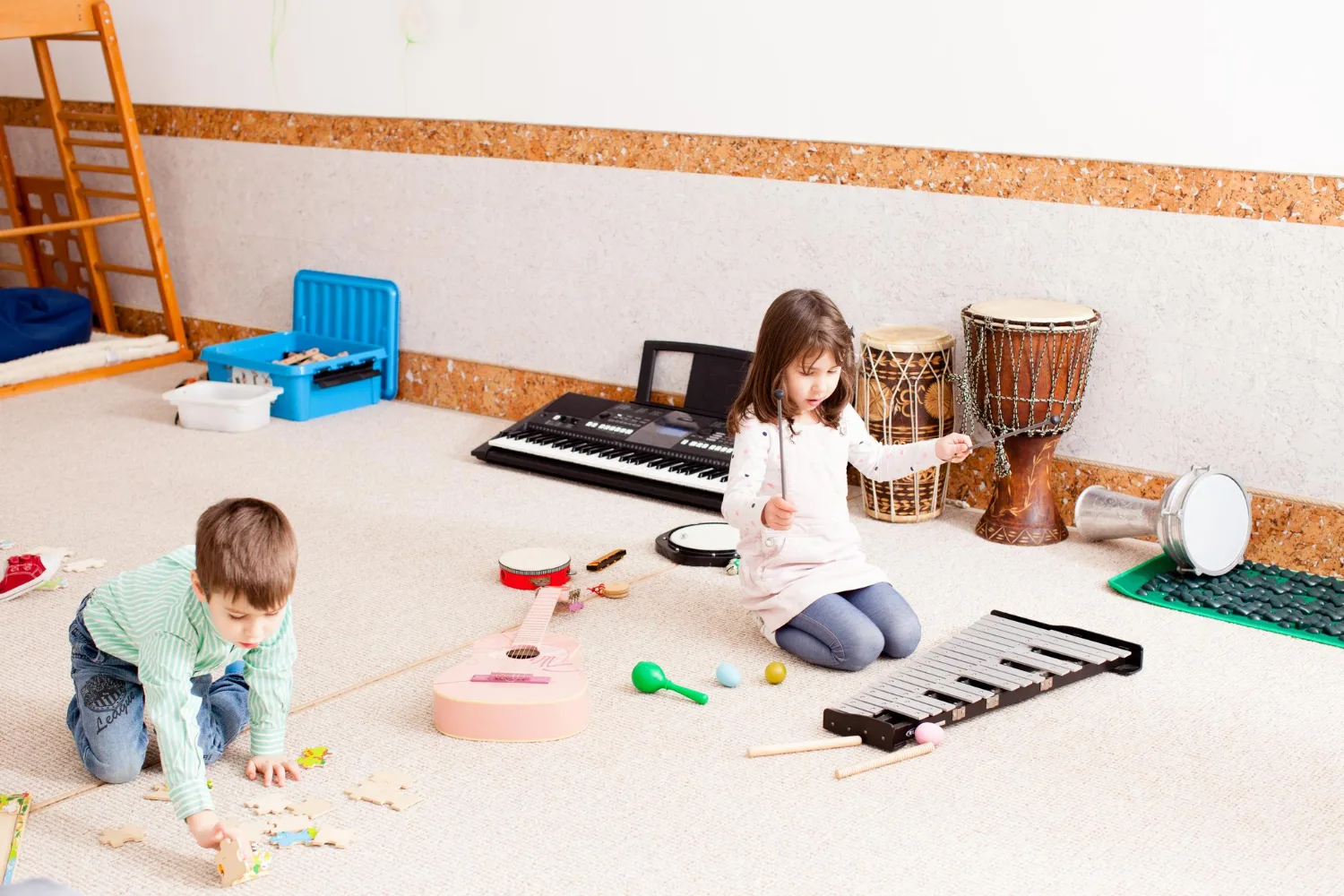
Dressing frames are among Dr. Montessori’s original materials, designed to isolate the motor challenge of self-care without the pressure of actually getting dressed. Practising buttons, zips, snaps, and laces develops the finger dexterity children need for independence and for handwriting readiness. Studies confirm that activities like buttoning engage coordinated hand movements and fine motor precision essential for academic tasks.
Skills built: Pincer grip, sequencing memory, self-correction, handwriting readiness.
Materials: Montessori dressing frame, or DIY: an old shirt with large buttons mounted on cardboard.
Steps:
- Demonstrate the complete fastening sequence silently and slowly.
- Invite the child to undo, then re-fasten.
- Introduce a second frame only when the first is mastered.
- For ages 5 to 6: run a relay with three frames – button → zip → lace.
Extension: Add a mirror for self-observation; introduce bow-tying as a Level 3 challenge.
4. Indoor Obstacle Course (Ages 2 to 6)
You can turn a bunch of rainy day restlessness into productive gross motor work with a super simple indoor obstacle course.
Just grab some cushions, some tape and a few low step stools, and before you know it you’ve got a safe course to set up in your hallway or living room in under ten minutes.
Gross motor challenges really help develop spatial awareness, body coordination and physical sequencing. All of these have a big impact on cognitive development.
Skills built: Balance, spatial awareness, motor planning, social turn-taking.
Materials: Painter’s tape, cushions, low step stool, blanket tunnel, hula hoops (optional).
Steps:
- Walk the course with children first: “Balance walk… hop… crawl… step over.”
- Invite one child at a time; others watch or cheer.
- Allow repeated runs – repetition is Montessori mastery, not redundancy.
- Add challenge: curvier balance line, beanbag to carry, longer tunnel.
- Close with a calm cool-down stretch.
Safety: Remove sharp furniture; use non-slip mats; supervise jumps for under-3s.
5. Sensory Bin: Rainy-Day Theme (Ages 2 to 5)
A sensory bin is a great way to get kids exploring and learning about the world around them on a rainy day – just indoors, on a tray, with a controlled mess.
Fill a shallow tub with some blue-dyed rice or kinetic sand, grab some small scooping tools and let them get to work. This kind of tactile exploration really helps with descriptive language, emotional regulation and fine motor control all at the same time.
Skills built: Tactile discrimination, descriptive vocabulary, emotional calm, fine motor control.
Materials: Shallow tub, blue-dyed rice or kinetic sand, small cups, spoons, funnels; non-toxic materials only. Use individual smaller trays in classroom settings for hygiene.
Steps:
- Invite the child to touch the material first and to describe it before tools are offered.
- Place tools nearby; let the child choose their own path.
- Observe without directing.
- After free exploration: “Can you fill this cup to the top?”
- Close with child-led clean-up: brush rice back in, wipe the tray.
Safety: Supervise closely for children under 3 (mouthing risk); clean and dry bin between sessions.
6. Sound Matching Bottles (Ages 3 to 6)
Sound matching bottles are all about training auditory discrimination. This is a pretty fundamental Montessori sensorial skill that has a big impact on phonemic awareness and early reading.
Kids get to shake up some pairs of opaque bottles filled with different materials, have a listen and try to find the matching pair. It really helps to build up their sensory memory, concentration and early scientific language.
Skills built: Auditory discrimination, memory, classification, concentration.
Materials: 6 to 8 small opaque bottle pairs (film canisters work well); fillings: rice, sand, bells, pebbles. Colour-code the bases for self-correction.
Steps:
- Present one matched pair: “These sound the same.”
- Introduce an unmatched bottle: “This one is different.”
- Mix all bottles; invite the child to find matching pairs by listening.
- Child self-corrects using the colour-coded base.
- Extension: arrange pairs from quietest to loudest.
7. Clay/Playdough Table with Tools (Ages 2 to 6)
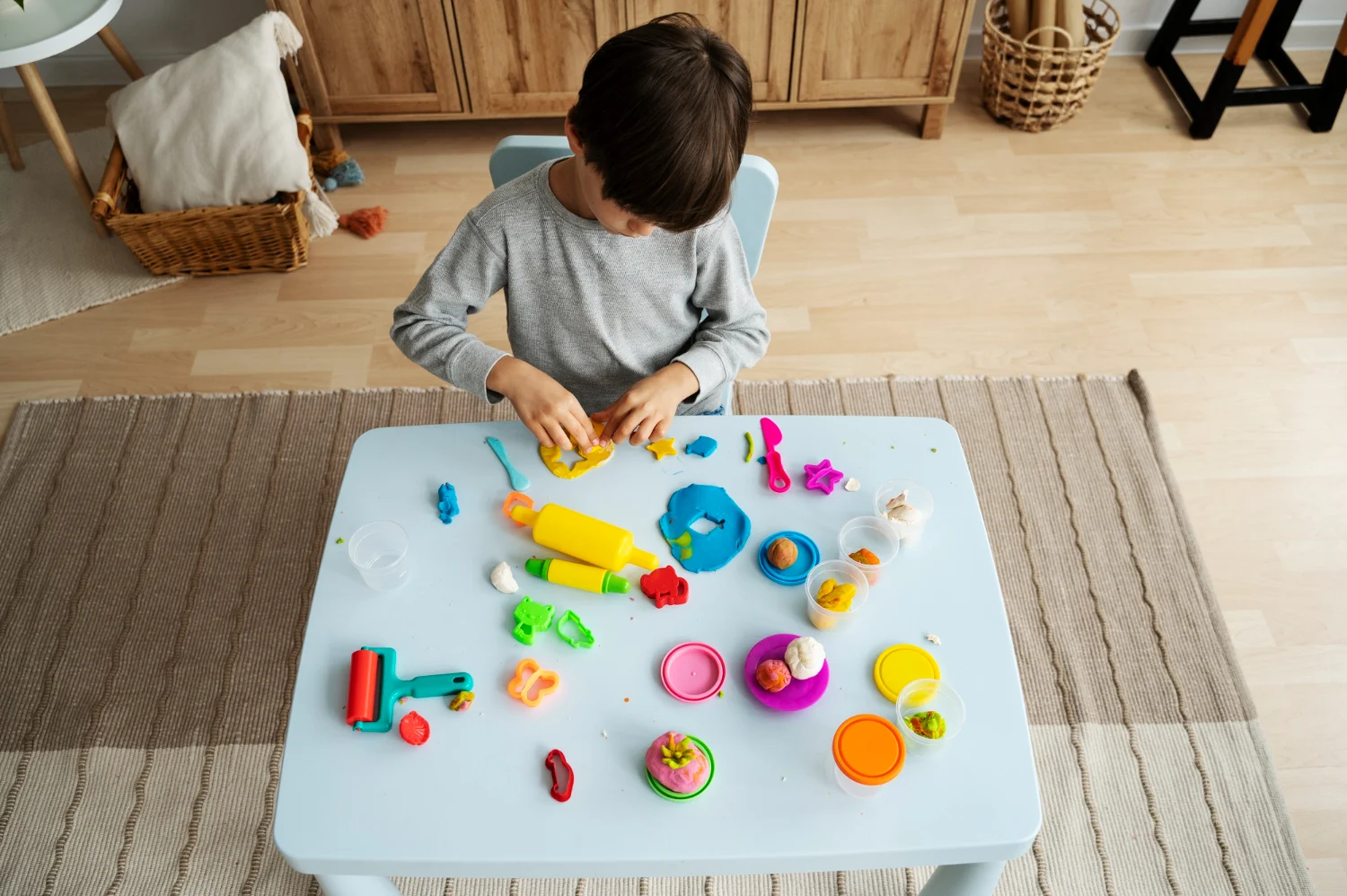 Playdough with some Montessori-style tools isn’t just about having a good time, it’s actually a bilateral coordination and fine motor workout. Tools like rolling pins, cutters and wooden sticks can really help this work.
The resistance of the dough is great for strengthening up those hand muscles that are needed for writing, and using the tools in an open-ended way really encourages some creative problem-solving.
Kids also get to enjoy the sensory experience of all the different textures, smells and temperatures. It’s a real feast for the senses.
Skills built:
Hand and finger strength, bilateral coordination, creative thinking, early geometry concepts.
Materials: Homemade playdough or air-dry clay, child-safe rolling pin, cookie cutters, wooden sticks, small molds; individual portions on separate mats for hygiene.
Steps:
- Place a ball of dough on the child’s mat; arrange tools beside it.
- Demonstrate one tool use and step back.
- Allow completely free exploration. Resist the urge to suggest “make a something.”
- For focus: ask the child to roll flat, cut a shape, and press a pattern using a stick.
- Clean up: roll unused dough into a ball, replace lid, wipe mat with a damp cloth.
8. Quiet Book Corner + Independent Work Tray (Ages 3 to 6)
Every rainy-day session needs some kind of calm anchor to help the kids transition between different activities.
A cosy reading nook can be as simple as rotating a few books, grabbing a soft cushion and turning down the lights. Pair that with a simple independent work tray (puzzle, lacing card or a sorting activity) and you’ve got a quiet zone that the kids can work in at their own pace.
It’s also a great example of the Montessori prepared environment principle in action – calm, beautiful and purposeful.
Skills built:
Sustained concentration, pre-literacy, emotional self-regulation, independent problem-solving.
Materials:
2 to 3 rotated books (not all at once), cushion, one puzzle or sorting tray on a low shelf. Keep the space visually uncluttered.
TTC observation tip:
This corner is an ideal observation station. You can note which books children return to, how long concentration lasts, and whether tray tasks are completed independently.
Sample Rainy-Day Schedule
- Arrival & Warm-up (5–10 mins): Calm welcome, short weather conversation using the felt board.
- Individual Work Cycle (25–40 mins): Child chooses from 2 to 3 available trays. Of these one can be practical-life, one sensorial, one quiet tray.
- Snack & Care Routine (15–20 mins): Self-serve snack; children wipe the table after.
- Group Activity (15–25 mins): Indoor obstacle course or felt story tray.
- Free Choice + Wind-Down (15–20 mins): Quiet book corner; brief group reflection — “What did you enjoy today?”
Use a visual timer for transitions. Give a two-minute warning before any activity change.
Classroom & Household Prep Checklist
- Low shelves or trays within child reach
- Spill mats and child-accessible clean-up kit (sponge, cloth)
- Backup quiet trays prepared and materials sanitised
- Safety check: sharp edges covered, choking hazards removed for under-3s
- Picture instruction cards on each tray
- Individual sensory trays for group settings
- Cleaning log for shared materials
Register for the Entri Elevate Montessori Teacher Training Program! Join Now!
Observation & Documentation for TTC Trainees
What to observe:
Length of concentration, independence level (self-corrects vs. seeks help), language used during activity, social interaction in group tasks.
Simple documentation template:
| Activity | Date | Child’s Response | Next Steps |
| Pouring Station | — | Poured without spill; repeated 4 times | Introduce finer material (lentils) |
| Sound Bottles | — | Matched 3 of 4 pairs | Reduce to 3 pairs; revisit next session |
Conclusion
Rainy days don’t have to be a disaster when you’ve got a plan in place. With a little intention and creativity, you can actually have some of the most productive sessions in a Montessori setting. This is possible even with minimal materials.
And whether you’re a parent muddling through a rainy afternoon at home or a Montessori TTC trainee building up your observation portfolio, these activities are going to give children some real skills to take away.
Get Certified & Start Your Montessori Career
Montessori Teacher Training Course by Entri App: Gain expert skills, earn certification, and kickstart your teaching career.
Join Now!Frequently Asked Questions
How long should each activity last?
Aim for 10 to 30 minutes depending on the child’s age and concentration span. Rotate 3 to 4 activities across the session rather than extending a single one past the child’s natural interest point.
How do I manage mess during sensory bin activities?
Use shallow trays, non-slip mats, and small material portions. Then build a child-led clean-up routine into the activity. Teaching children to sponge spills and return trays is part of Montessori learning, not an interruption to it.
What age is appropriate for sound matching bottles?
Sound matching bottles are best for children aged 3 to 6. For younger children (2 to 3), reduce to two or three pairs and use clearly contrasting sounds (bells versus sand) to make listening discrimination easier.
Can I run these activities without official Montessori materials?
Absolutely. Most activities use household items like pitchers, rice, old shirts, blankets, felt, and film canisters. The Montessori approach is about purposeful, child-led activity, not expensive equipment.
How do pouring stations improve concentration in young children?
Pouring requires a child to hold attention through a multi-step sequence — carry, pour, correct, clean. This progressively trains sustained focus. Montessori guides consistently identify the pouring exercise as one of the most effective early concentration builders.
How do I adapt these activities for a mixed-age group (2–6 years)?
Use the age-to-skill mapping table in this guide to assign age-appropriate challenge levels. Pair older children (5 to 6) with younger ones as helpers. This reinforces the older child’s skills while giving the younger child a model to observe and follow.
Can indoor Montessori activities replace outdoor time completely?
They substitute well on rainy days, but should not replace outdoor exploration permanently. The indoor obstacle course and sensory bin provide the closest equivalent to outdoor gross motor and tactile experiences when going outside isn’t possible.
What safety precautions are essential for indoor sensory activities?
Remove small items (pebbles, small bells) from reach of children under 3; use only non-toxic materials; supervise water-based activities closely; sanitise shared sensory bins between sessions.
What is the Montessori work cycle and how does it apply indoors?
The Montessori work cycle is an uninterrupted block (typically 2 to 3 hours) during which children choose and complete activities at their own pace. On rainy days, the same rhythm applies indoors — arrival warm-up, individual work cycle, snack, group time, and calm wind-down.
How do I make a DIY dressing frame for the buttoning activity?
Take an old shirt with large buttons and mount it on firm cardboard using adhesive or stitching, keeping the fabric taut so children can work the buttons without bunching. This DIY version works as effectively as a commercial Montessori frame for home or classroom use.