Table of Contents
An IoT developer brings all the different tech bits together to create connected devices that make our lives easier and more convenient.
As an IoT developer, you’ll be the one stitching together hardware, firmware, and the cloud. This makes it all work seamlessly to deliver real-world automation and valuable data insights.
IoT development is a massive beast that spans all sorts of industries like industrial automation, gadgets for the home, smart healthcare and even smart cities.
Kickstart Your Embedded Systems Career and Turn Your Tech Passion into High-Demand Skills!
Key Takeaways
- IoT development is a jack-of-all-trades kind of job that requires you to be a bit of a polymath.
- The top programming languages for the job – C, C++, Python and JavaScript.
- The key platforms – AWS IoT Core, Azure IoT Hub and Google Cloud IoT.
- Fresh out of college in India? You can expect to earn between ₹3.5 LPA to ₹6 LPA.
- Mid-career professionals are looking at ₹10 LPA to ₹25 LPA.
- Security is mandatory – secure boot, encrypted communication, and OTA updates.
- If you’re an embedded systems developer thinking of making the jump to IoT, all you really need is some training in connectivity protocols and cloud integration.
Why IoT Developers Matter
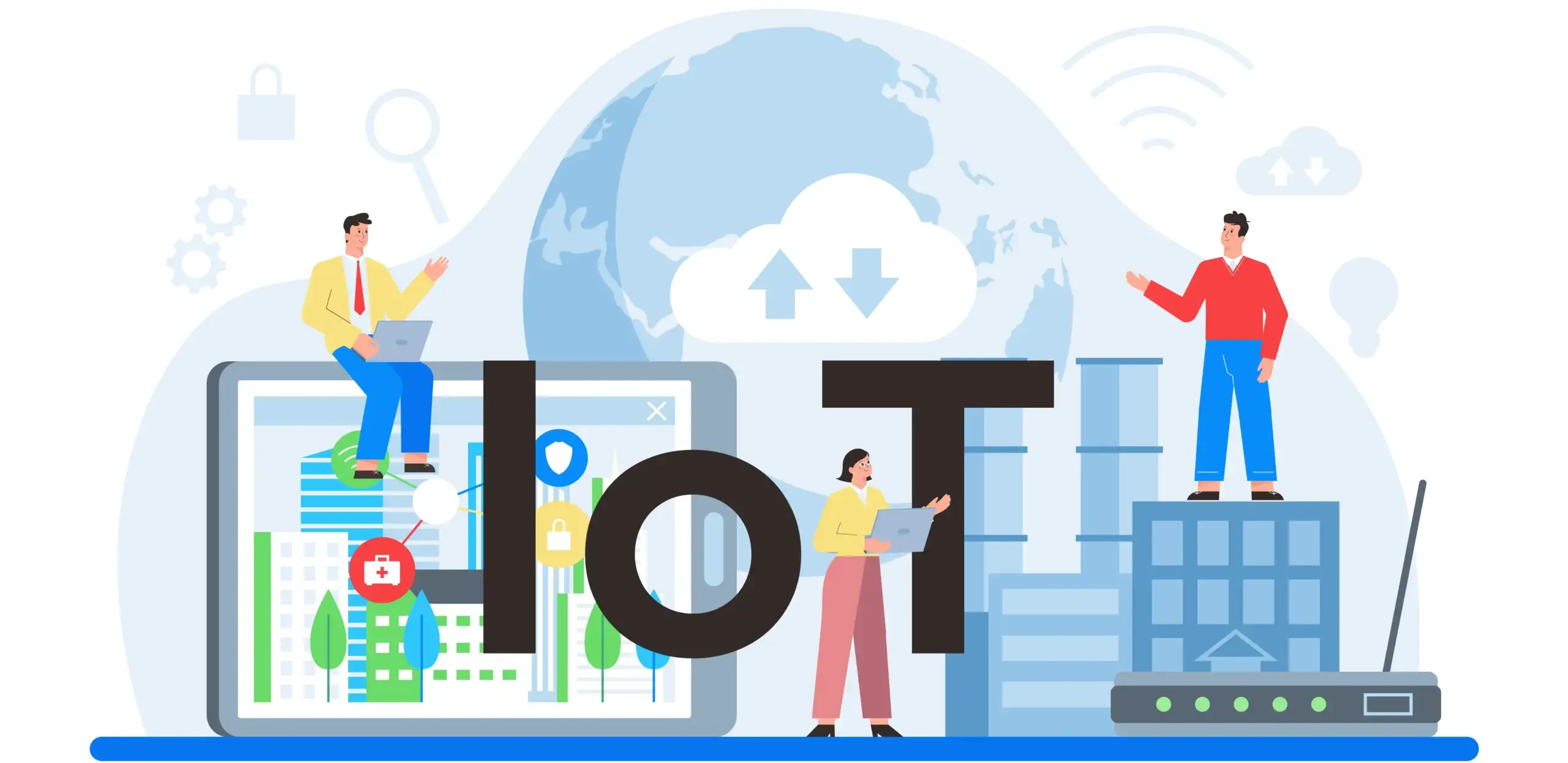
Every single smart device you’ve ever interacted with has been built and connected by an IoT developer somewhere along the line. From that sensor on the factory floor all the way up to your hospital patient monitor at the hospital – it’s all been made possible by an IoT developer’s hard work.
Companies rely on IoT developers to churn out reliable products and get the data insights from all those devices at scale which is basically the lifeblood of business today.
- Product reliability:
IoT developers are the ones making sure all those devices keep on working in the real world, which in turn keeps your brand and customer experience looking good.
- Data-driven features:
They build the systems that turn all that raw sensor data into valuable business intelligence that companies can actually use.
- Security and compliance:
And they’re responsible for making sure all the important security and regulatory things are taken care of too. This keeps your connected systems safe from all the bad guys and audit-ready for the regulators.
Master Embedded Systems Programming!
Launch your tech career with our Embedded Systems Course, designed for hands-on learning and industry readiness.
Know MoreKey Responsibilities of an IoT Developer
IoT Developers have a whole lot going on for them most of the time. A typical role looks something like this:
Embedded firmware development:
Writing low-level code in C/C++ – often in C/C++ – for those tiny microcontrollers and Unix-like operating systems that run right on the device itself.
Hardware-software integration:
Developing those Board Support Packages (BSPs) and hardware drivers so that the software bits can actually talk to the actual physical circuits – you know, so they work right.
Connectivity and protocol implementation:
Getting that bunch of communication standards sorted – MQTT, CoAP, Bluetooth Low Energy (BLE), LoRaWAN, and NB-IoT, all of which depend on your requirements for how far apart the device needs to be, how power-conscious it needs to be, and how much bandwidth you need.
Edge computing and local inference:
Deploying lightweight machine learning models & local logic on those edge devices just so they can do some basic thinking and problem-solving without having to bug the cloud all the time, and reduce that latency and cloud dependency.
Cloud integration and APIs:
Hooking up devices to cloud platforms via device shadows, those telemetry streams, and REST or MQTT APIs – all of which are the usual suspects when it comes to connecting a device to a cloud.
Device provisioning and OTA lifecycle management:
Automating the process of getting those devices online and then safely pushing over-the-air firmware updates to a whole bunch of them.
Security and compliance:
Getting the secure boot sorted out, implementing certificate-based authentication, setting up encrypted channels, and making sure that data is private – all the usual stuff when it comes to security and regulatory compliance.
Testing, validation, and field reliability:
Doing a whole bunch of hardware-in-the-loop testing, stress testing and actually checking how well they hold up in the real world.
Monitoring, logging, and telemetry pipelines:
Setting up those dashboards and alerting systems so that you can actually track how well the devices are holding up and catch any issues before they become problems.
Cross-functional collaboration and documentation:
Working with those hardware engineers, product managers, and QA folk – while also keeping an eye on clear technical specs and runbooks.
Core Technical Skills
The IoT developer skill set spans several disciplines. The table below outlines what each area means in practice:
| Skill Area | What It Means | Typical Tools / Technologies | Proficiency Level | Example Task |
| Embedded Programming | Writing device-level logic | C, C++, Python | Expert | Write interrupt-driven sensor read routine |
| RTOS & Concurrency | Managing real-time tasks and scheduling | FreeRTOS, Zephyr, ThreadX | Advanced | Implement task prioritisation for sensor fusion |
| Microcontrollers & SoCs | Programming processor hardware | STM32, ESP32, nRF52, Raspberry Pi | Advanced | Bring up a new MCU with custom BSP |
| Connectivity Protocols | Device-to-cloud and device-to-device comms | MQTT, CoAP, BLE, LoRaWAN, NB-IoT, Wi-Fi | Advanced | Implement MQTT reconnection with exponential backoff |
| Embedded Linux & Edge | Running Linux on constrained hardware | Yocto, Buildroot, OpenWRT | Intermediate–Advanced | Build a custom Linux image for gateway hardware |
| Cloud IoT Platforms | Managing devices and data at scale | AWS IoT Core, Azure IoT Hub, GCP IoT | Intermediate | Configure device twins and telemetry routing rules |
| Security & Cryptography | Protecting data and device identity | TLS, X.509, HSM, mbedTLS | Intermediate | Implement mutual TLS for device authentication |
| Data & Analytics | Processing and visualising device telemetry | InfluxDB, Grafana, Apache Kafka, Python | Intermediate | Build a real-time dashboard for fleet health |
| CI/CD & DevOps for Devices | Automating build, test, and deployment | GitHub Actions, Jenkins, Docker | Intermediate | Set up automated firmware build and OTA pipeline |
| Testing & Validation | Ensuring quality before field deployment | HIL rigs, Pytest, Unity, QEMU | Intermediate | Write unit tests for RTOS task modules |
Soft Skills and Non-Technical Requirements
Technical depth alone doesn’t necessarily make a great IOT developer. There are a number of non-technical skills that are just as important, including:
Systems thinking and debugging:
Reasoning across hardware, firmware, networks and cloud layers at the same time when trying to figure out why something is intermittently failing in the field, is a crucial skill.
Cross-team communication:
Translating the constraints that are holding back your embedded engineers for your product managers, and explaining what any cloud requirements mean for your firmware folks.
Documentation and spec writing:
Writing clear device specs, API contracts and runbooks that other teams can actually use, rather than just getting some vague feeling for what you think they’re saying.
Product mindset and user empathy:
Understanding the real world context you’re working in is key – a manufacturing floor is a different beast than a home consumer environment, so you really need to get that right before you start designing.
Project management basics:
Being able to scope out tasks, make some sort of educated guess on timelines, and identify potential blockers early on so that all the different teams can stay on track with their sprints.
Security-first mindset:
Treating security as just another design requirement from the very start, rather than just slapping it on as an afterthought when the product is all but finished.
Master Embedded Systems Programming!
Launch your tech career with our Embedded Systems Course, designed for hands-on learning and industry readiness.
Know MoreTypical Toolchain and Workflow

A typical journey for an IoT product delivery looks something like this:
Requirements and hardware selection
We start by fleshing out the device specs, picking an MCU/SoC that fits the power, connectivity, and cost constraints we’re dealing with.
Prototype firmware and bring-up
Next, we flash the initial firmware, check that all the hardware interfaces are working as they should (UART, SPI, I2C, etc.) and verify we’re getting the right sensor readings.
Connectivity integration and cloud endpoints
Now it’s time to implement the protocol stack (MQTT/BLE/LoRa etc.), hook up to the cloud platform, and make sure we’re getting the right telemetry flowing through.
Local testing, HIL, and validation
Before we send the thing out into the world, we do some Hardware-in-the-Loop simulations, run some stress tests and edge-case scenarios, and make sure everything looks good before the field trials.
CI/CD build and OTA preparation
Then we automate the firmware builds, sign off on the binaries, and get the staged OTA rollout pipelines set up and ready to go.
Staged rollout and monitoring
First we roll out to a small bunch of devices and keep an eye on the telemetry and error rates, before we start expanding the rollout.
Maintenance and vulnerability response
And once it’s all out in the field, we need to keep on top of patching vulnerabilities via OTA, managing device end-of-life, and making sure we don’t leave any old firmware versions hanging around.
Performance and Success Metrics
IoT developers get judged on the following metrics – and they’re all pretty easy to measure:
-
Device uptime / availability:
Aiming for 99.9% for production deployments – if you’re below that, it’s time to go hunting for the root cause.
-
OTA success rate:
The industry’s aiming for over 99% – and if that’s not happening, failed updates on big fleets can really cause problems.
-
MTTD / MTTR:
These are Mean Time to Detect and Mean Time to Recover for device failures – got to keep an eye on those via your monitoring pipelines.
-
Telemetry latency:
How long it takes for sensor data to get to the cloud is a big deal for real-time industrial apps – we’re aiming to keep it under 500ms.
-
Power consumption and battery life:
If you’re running on batteries, this is a no-brainer – cutting power consumption by 10% can easily double the lifetime of your field deployments.
-
Device scale and concurrency:
Ability to support millions of simultaneous device connections without degraded throughput or message loss.
Security and Compliance Checklist
Security is not optional in IoT. It is, in fact, an engineering discipline:
| Area | Checklist Items | Why It Matters |
| Device identity and provisioning | Unique device certificates, PKI infrastructure | Prevents impersonation attacks |
| Secure boot and firmware signing | Cryptographic signature verification at boot | Blocks unauthorised firmware |
| Encrypted communications | TLS 1.2/1.3, DTLS for UDP | Protects data in transit |
| Hardware-backed keys | HSM, TPM, Secure Element | Prevents key extraction from software |
| OTA and patch strategy | Signed updates, rollback mechanism, staged rollout | Safe update delivery at scale |
| Vulnerability management | CVE monitoring, dependency audit, patch SLAs | Reduces attack surface over time |
| Data privacy and retention | GDPR/IT Act compliance, data minimisation, retention policies | Meets legal and regulatory requirements |
Career Path and Salary
IoT is a career with strong upward mobility – here is what the journey typically looks like:
- Junior IoT Developer (0–2 years):
Works on firmware modules and basic sensor integration under senior guidance; learns toolchain and workflows.
- Mid-level IoT Developer (2–5 years):
Independently owns features across firmware and cloud; leads connectivity integration and testing.
- Senior IoT Developer (5–8 years):
Drives architecture decisions, mentors juniors, owns security strategy and OTA infrastructure.
- Lead / IoT Architect (8+ years):
Defines platform strategy, works directly with product leadership, reviews designs across the organisation.
| Experience Level | Years | Salary Range (India) | Key Expectations |
| Junior | 0–2 years | ₹3.5 to 6 LPA | Firmware basics, protocol awareness, guided delivery |
| Mid-level | 2–5 years | ₹10 to 25 LPA | Independent feature ownership, cloud integration |
| Senior | 5–8 years | ₹25 to 40 LPA | Architecture, security, team leadership |
| Lead / Architect | 8+ years | ₹40 LPA and above | Platform vision, cross-org technical strategy |
Note that salary ranges can vary by the company, city, and specialisation you choose.
Common IoT Developer Interview Questions

Most IoT interviews for developers basically come down to a few key themes:
Technical – Embedded C and RTOS
- How do you keep memory from getting out of hand on a resource-strapped microcontroller?
Stack vs heap, static allocation, and trying to avoid fragmentation all come into play.
- Can you tell the difference between polling and interrupt-driven I/O?
Interrupts are super event-driven and a great way to save CPU cycles. Polling on the other hand can be a bit of a waste of time but is way simpler to implement.
- How does FreeRTOS handle task priority when it comes to preemption?
Higher-priority tasks can override lower ones; talk a bit about priority inversion and mutexes if you can.
Networking and Protocols
- In what situations would you choose MQTT over HTTP for IoT work?
MQTT is a lightweight option that supports pub/sub and handles wonky networks a lot better
- How do you deal with reconnection after a network blackout when using MQTT?
Exponential backoff, persistent sessions, QoS levels 1 and 2.
- What is the difference between LoRaWAN and NB-IoT?
LoRaWAN is unlicensed spectrum, low cost, very low data rate; NB-IoT uses licensed LTE spectrum with carrier support.
Security and Operations
- How do you put together a secure system for pushing OTA updates?
Firmware signing, staged rollout, the ability to roll back in case things go south plus certificate validation all play a part
- What are the risks of hardcoding credentials into your firmware?
They can be easily extracted if someone reverse engineers it; stick with cert-based authentication and do secure provisioning instead
- How do you rotate out device certificates without killing the device?
Use a dual-certificate strategy and overlap the window during rotation
Certifications that add value:
- AWS Certified IoT Specialty
- Microsoft Azure IoT Developer Specialty
- ARM Accredited Engineer
- Embedded Linux training certificates from the Linux Foundation.
Kickstart Your Embedded Systems Career and Turn Your Tech Passion into High-Demand Skills!
Conclusion
The IoT developer role sits at one of the most exciting intersections in modern technology. It is a job role where physical hardware meets intelligent software meets real-world impact.
Whether you are an embedded engineer looking to expand into cloud connectivity or a software developer intrigued by hardware, the path into IoT is well-defined and the demand is strong.
The global market surging and Indian companies scaling connected product teams rapidly. There has never been a better time to build this skillset.
Start with the fundamentals, pick up a development board, and connect your first device to the cloud. The hands-on experience is what every IoT interview will ask about first.
|
RELATED POSTS |
|
|
Embedded Systems vs Robotics: Which Career Path Is Better for You? |
|
Master Embedded Systems Programming!
Launch your tech career with our Embedded Systems Course, designed for hands-on learning and industry readiness.
Know MoreFrequently Asked Questions
Is IoT development hardware or software?
IoT development is both hardware and software, combining microcontrollers and sensors with firmware, cloud APIs, and data pipelines. It’s inherently cross-disciplinary.
How long does it take to become an IoT developer?
With an engineering background and focused study, expect about 9–12 months to reach junior job readiness; prior embedded or software experience can shorten this.
Which certifications help IoT developers?
Top choices are AWS IoT and Azure IoT developer certifications; Embedded Linux (Linux Foundation) and ARM Accredited Engineer help for hardware-focused roles.
How is IoT different from embedded systems development?
Embedded systems target standalone device software; IoT adds network connectivity, cloud integration, remote management, and fleet-scale concerns.
What are the most common IoT security risks?
Common risks are hardcoded credentials, unencrypted data, unsigned firmware, and lack of remote patching; countermeasures include PKI provisioning, TLS, secure boot, and OTA updates.
Can an embedded developer transition to IoT?
Yes, by adding MQTT/cloud integration and device-management knowledge, most embedded engineers can transition smoothly.
What cloud platforms do IoT developers use most?
Enterprise: AWS IoT Core, Azure IoT Hub, Google Cloud IoT. Lightweight/open-source: Mosquitto, ThingsBoard, HiveMQ.
What industries hire the most IoT developers in India?
Top sectors: manufacturing, automotive, healthcare, agriculture (smart farming), logistics, and smart cities; large employers include TCS, Infosys, Bosch India, Qualcomm, and Intel.
Do IoT developers need to know PCB design?
No, PCB design is usually for hardware engineers, but reading schematics and basic signal knowledge is useful for collaboration.