Table of Contents
Neck stretches improve flexibility. It also reduces stiffness. Tight muscles are relaxed. Regular stretching supports better posture. It also improves daily movement. Gentle exercises work best. Slow movements protect the muscles.
Common stretches include neck tilts and rotations. Chin tucks also improve posture. Shoulder rolls reduce upper body tension. Chest stretches improve shoulder alignment. Daily practice gives better results. Stretch for several minutes daily. Never force any movement. Stop immediately if pain appears.
Join the best online yoga teacher training program of 2026! Register in Entri Elevate now!
Why Neck Stretching is Important
The neck supports the head constantly. It also controls many movements. Healthy muscles support smooth motion. Tight muscles limit flexibility. They also increase discomfort. Regular stretching keeps muscles relaxed. It also improves daily comfort.
Many activities strain the neck.
These include:
- Computer work.
- Mobile phone use.
- Reading.
- Driving.
- Watching television.
- Studying.
- Gaming.
Poor posture creates extra pressure. Muscles work much harder. They become tight gradually. Stiffness develops over time. Stretching helps reverse this tension.
Stress also affects neck muscles. Anxiety tightens many muscles. The shoulders also tighten. This increases neck discomfort. Gentle stretching gives relaxation. It eases muscle tension.
It improves flexibility. Flexible muscles move freely. They also recover faster. Movement becomes smoother. Everyday tasks feel easier.
Stretching also supports posture. Good posture protects joints. It also supports spinal alignment. Healthy posture reduces muscle fatigue. It also improves confidence.
Good posture helps:
- Reduce muscle strain.
- Improve body alignment.
- Relax shoulders.
- Support spinal health.
- Improve comfort.
Stretching improves circulation. Oxygen reaches tissues faster. Recovery becomes more effective. Muscles stay healthier.
It benefits:
- Students.
- Office workers.
- Drivers.
- Teachers.
- Athletes.
- Older adults.
- Remote workers.
Daily stretching needs little time. Small sessions produce results. Consistency matters most. Healthy habits protect the neck.
Simple Neck Stretch Exercises
1: Which of these is the primary goal of yoga practice?
Start every session slowly. Relax the shoulders first. Sit or stand comfortably. Keep breathing naturally. Never rush movements. Gentle stretching feels comfortable. Mild tension feels normal. Sharp pain never feels normal.
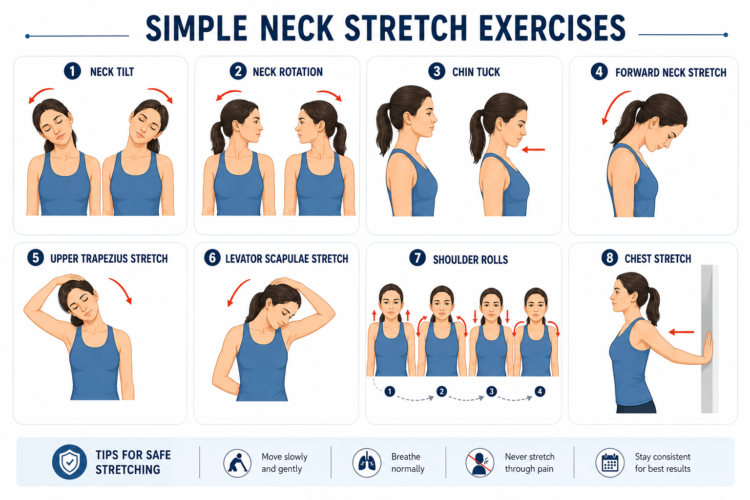
Neck Tilt Stretch
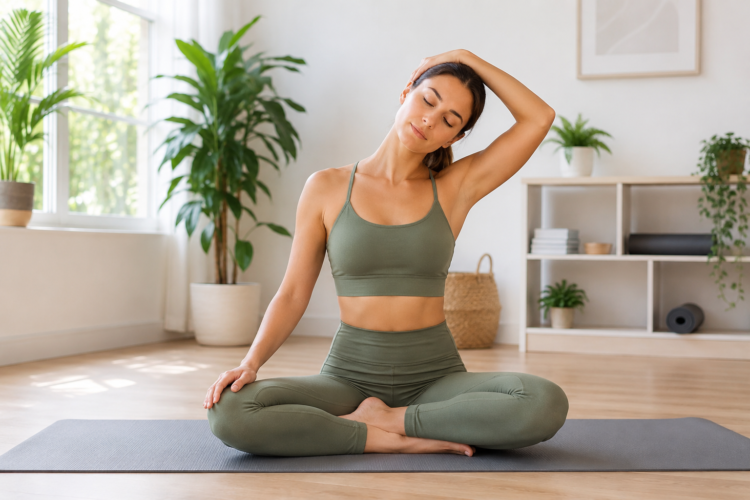
This stretch relaxes side muscles.
How to Perform
- Sit comfortably.
- Keep your back straight.
- Relax both shoulders.
- Tilt your head sideways.
- Move slowly downward.
- Hold comfortably.
- Return slowly.
- Repeat opposite side.
Benefits
- Relieves side tension.
- Improves flexibility.
- Reduces stiffness.
- Supports better posture.
- Improves daily movement.
Neck Rotation Stretch
This stretch improves neck mobility.
How to Perform
- Sit upright.
- Look forward.
- Relax your shoulders.
- Turn your head slowly.
- Look behind gently.
- Hold briefly.
- Return slowly.
- Repeat opposite side.
Benefits
- Improves movement.
- Reduces stiffness.
- Relaxes muscles.
- Improves flexibility.
- Supports daily activities.
Chin Tuck Exercise
This exercise improves posture.
How to Perform
- Sit upright.
- Face forward.
- Pull your chin backward.
- Keep your head level.
- Hold briefly.
- Relax slowly.
- Repeat several times.
Benefits
- Strengthens neck muscles.
- Improves posture.
- Supports spinal alignment.
- Reduces forward posture.
- Improves neck stability.
Forward Neck Stretch
This stretch loosens back muscles.
How to Perform
- Sit comfortably.
- Relax your shoulders.
- Lower your chin.
- Move toward your chest.
- Hold comfortably.
- Return slowly.
- Repeat gently.
Benefits
- Relieves neck tightness.
- Improves flexibility.
- Reduces muscle tension.
- Encourages relaxation.
- Improves comfort.
Upper Trapezius Stretch
This stretch targets shoulder muscles.
How to Perform
- Sit comfortably.
- Relax both shoulders.
- Tilt your head sideways.
- Place one hand gently.
- Apply light pressure.
- Hold comfortably.
- Return slowly.
- Repeat opposite side.
Benefits
- Relieves shoulder tension.
- Reduces neck tightness.
- Improves flexibility.
- Supports posture.
- Improves movement.
Levator Scapulae Stretch
This stretch reaches deeper muscles.
How to Perform
- Sit comfortably.
- Turn your head slightly.
- Look downward.
- Place one hand gently.
- Hold comfortably.
- Return slowly.
- Repeat opposite side.
Benefits
- Relieves muscle tightness.
- Improves neck movement.
- Reduces upper back tension.
- Supports posture.
- Improves flexibility.
Shoulder Roll Exercise
Loose shoulders support neck health.
How to Perform
- Stand comfortably.
- Relax both arms.
- Lift shoulders upward.
- Roll backward slowly.
- Lower gently.
- Repeat several times.
- Reverse directions.
Benefits
- Relieves shoulder tension.
- Improves circulation.
- Loosens muscles.
- Supports neck movement.
- Improves comfort.
Shoulder Blade Squeeze
Strong back muscles support posture.
How to Perform
- Sit upright.
- Relax shoulders.
- Pull blades together.
- Hold briefly.
- Release slowly.
- Repeat several times.
Benefits
- Strengthens upper back.
- Improves posture.
- Supports neck muscles.
- Reduces muscle fatigue.
- Improves stability.
Chest Stretch
Tight chest muscles affect posture.
How to Perform
- Stand comfortably.
- Clasp hands behind.
- Straighten both arms.
- Lift your chest.
- Hold comfortably.
- Return slowly.
Benefits
- Opens chest muscles.
- Improves posture.
- Reduces neck strain.
- Improves shoulder alignment.
- Supports flexibility.
Neck Flexion and Extension
This stretch improves flexibility.
How to Perform
- Sit comfortably.
- Lower your chin.
- Return slowly.
- Lift your chin gently.
- Avoid deep bending.
- Return comfortably.
- Repeat slowly.
Benefits
- Improves movement range.
- Reduces stiffness.
- Increases flexibility.
- Supports healthy joints.
- Encourages smooth movement.
How often Should Neck Stretches be Performed?
Daily stretching gives better results. Regular practice keeps muscles flexible. Short sessions work well. Consistency remains important. Progress happens gradually.
Follow these simple recommendations:
- Stretch every day.
- Stretch twice when needed.
- Hold every stretch.
- Hold for 20 seconds.
- Repeat each stretch twice.
- Breathe naturally.
- Move slowly.
- Stay relaxed.
Never rush improvement. Avoid painful movements. Listen to your body. Stretch comfortably every session. Healthy habits support lifelong neck health.
Become a Certified Yoga Instructor
Yoga Teacher Training Course by Entri App: Master authentic yoga techniques, earn certification, and build a successful career as a professional yoga instructor.
Join Now!Neck Stretches for Desk Workers
Desk work strains neck muscles. Long sitting reduces muscle movement. Poor posture increases daily discomfort. Screen use worsens muscle tension. Small habits create bigger problems. Regular stretching prevents stiffness. Frequent movement protects neck health. Short breaks improve daily comfort.
Why Desk Workers Experience Neck Pain
Office workers sit longer today. Remote work also increased. Many people skip movement. Neck muscles stay contracted. Blood flow becomes limited. Tightness develops gradually. Pain becomes more noticeable.
Common workplace habits include:
- Looking downward frequently.
- Leaning toward screens.
- Sitting without back support.
- Raising the shoulders.
- Holding phones incorrectly.
- Working without breaks.
- Using unsuitable chairs.
- Ignoring early stiffness.
These habits increase muscle fatigue. They also reduce flexibility. Daily stretching helps prevent discomfort.
How often should Desk Workers Stretch?
Stretching should become routine. Short sessions work well. Frequent movement protects muscles. Consistency gives better results.
General recommendations include:
- Stretch every hour.
- Stand every sixty minutes.
- Walk briefly.
- Roll shoulders often.
- Change sitting positions.
- Relax neck muscles.
- Stay physically active.
Small breaks reduce muscle fatigue. They also improve concentration. Productivity often improves naturally.
Chin Tucks During Work
Chin tucks improve posture. They strengthen deep neck muscles. They also reduce forward posture. This exercise suits office workers.
Purpose
This exercise improves alignment. It supports healthy posture. It also reduces neck strain.
How to Perform
- Sit comfortably.
- Face forward.
- Keep shoulders relaxed.
- Pull your chin backward.
- Avoid looking downward.
- Hold briefly.
- Return slowly.
- Repeat several times.
Benefits
- Corrects forward posture.
- Improves neck stability.
- Strengthens supporting muscles.
- Reduces muscle fatigue.
- Supports spinal alignment.
Common Mistakes
Avoid these mistakes:
- Tilting the head.
- Raising shoulders.
- Moving too quickly.
- Holding breath.
- Forcing movements.
Side Neck Stretch
This stretch loosens side muscles. Tight muscles become more flexible. Movement feels smoother afterward.
Purpose
The stretch reduces side tension. It improves comfortable movement. It also supports flexibility.
How to Perform
- Sit upright.
- Relax shoulders.
- Keep your back straight.
- Tilt your head sideways.
- Avoid twisting.
- Hold comfortably.
- Return slowly.
- Repeat opposite side.
Benefits
- Relieves tight muscles.
- Improves flexibility.
- Reduces stiffness.
- Supports healthy posture.
- Increases comfortable movement.
Common Mistakes
Avoid these habits:
- Lifting shoulders.
- Pulling aggressively.
- Twisting the neck.
- Stretching painfully.
- Moving too fast.
Shoulder Rolls
Healthy shoulders support neck muscles. Tight shoulders increase discomfort. Gentle movement relaxes surrounding muscles.
Purpose
This exercise improves shoulder mobility. It also reduces upper-body tension.
How to Perform
- Sit comfortably.
- Relax both arms.
- Lift shoulders upward.
- Roll backward slowly.
- Lower gently.
- Repeat several times.
- Reverse directions.
Benefits
- Loosens shoulder muscles.
- Improves circulation.
- Relieves tightness.
- Supports posture.
- Reduces upper-body fatigue.
Common Mistakes
Avoid these actions:
- Rolling too quickly.
- Shrugging forcefully.
- Holding your breath.
- Leaning forward.
- Skipping repetitions.
Seated Chest Stretch
Chest muscles influence posture. Tight chest muscles pull shoulders forward. This increases neck pressure. Regular stretching improves body alignment.
Purpose
This stretch opens chest muscles. It also improves shoulder position.
How to Perform
- Sit upright.
- Clasp hands behind.
- Straighten both arms.
- Lift your chest.
- Relax your shoulders.
- Hold comfortably.
- Return slowly.
Benefits
- Opens chest muscles.
- Improves posture.
- Reduces neck strain.
- Improves shoulder movement.
- Supports spinal alignment.
Common Mistakes
Avoid these mistakes:
- Arching excessively.
- Raising shoulders.
- Locking elbows.
- Stretching painfully.
- Rushing movements.
Creating a Healthy Desk Setup
Stretching alone cannot help. Proper workstation setup also matters. Good posture reduces muscle stress. Comfortable furniture supports daily movement.
Adjust Screen Height
Screen position affects posture.
Follow these suggestions:
- Keep screens higher.
- Face screens directly.
- Avoid looking downward.
- Maintain comfortable distance.
- Reduce unnecessary bending.
Correct positioning protects muscles.
Use a Supportive Chair
Chair support improves posture. Comfortable sitting reduces muscle fatigue.
Choose these features:
- Firm back support.
- Adjustable height.
- Comfortable seat.
- Stable armrests.
- Good lumbar support.
Supportive chairs improve comfort.
Position the Keyboard Properly
Arm position affects shoulders. Relaxed shoulders protect the neck.
Remember these points:
- Keep elbows relaxed.
- Avoid reaching forward.
- Keep wrists comfortable.
- Position keyboard nearby.
- Relax upper body.
Comfortable positioning reduces strain.
Keep Moving throughout the Day
Movement supports healthy muscles. Sitting continuously increases stiffness.
Healthy movement includes:
- Walking briefly.
- Standing regularly.
- Stretching hourly.
- Relaxing shoulders.
- Changing sitting positions.
Daily movement supports lifelong neck health.
Benefits of Regular Neck Stretching
Regular stretching supports neck health. It also improves daily comfort. Healthy muscles move freely. Flexible muscles resist strain. Daily practice brings lasting results.
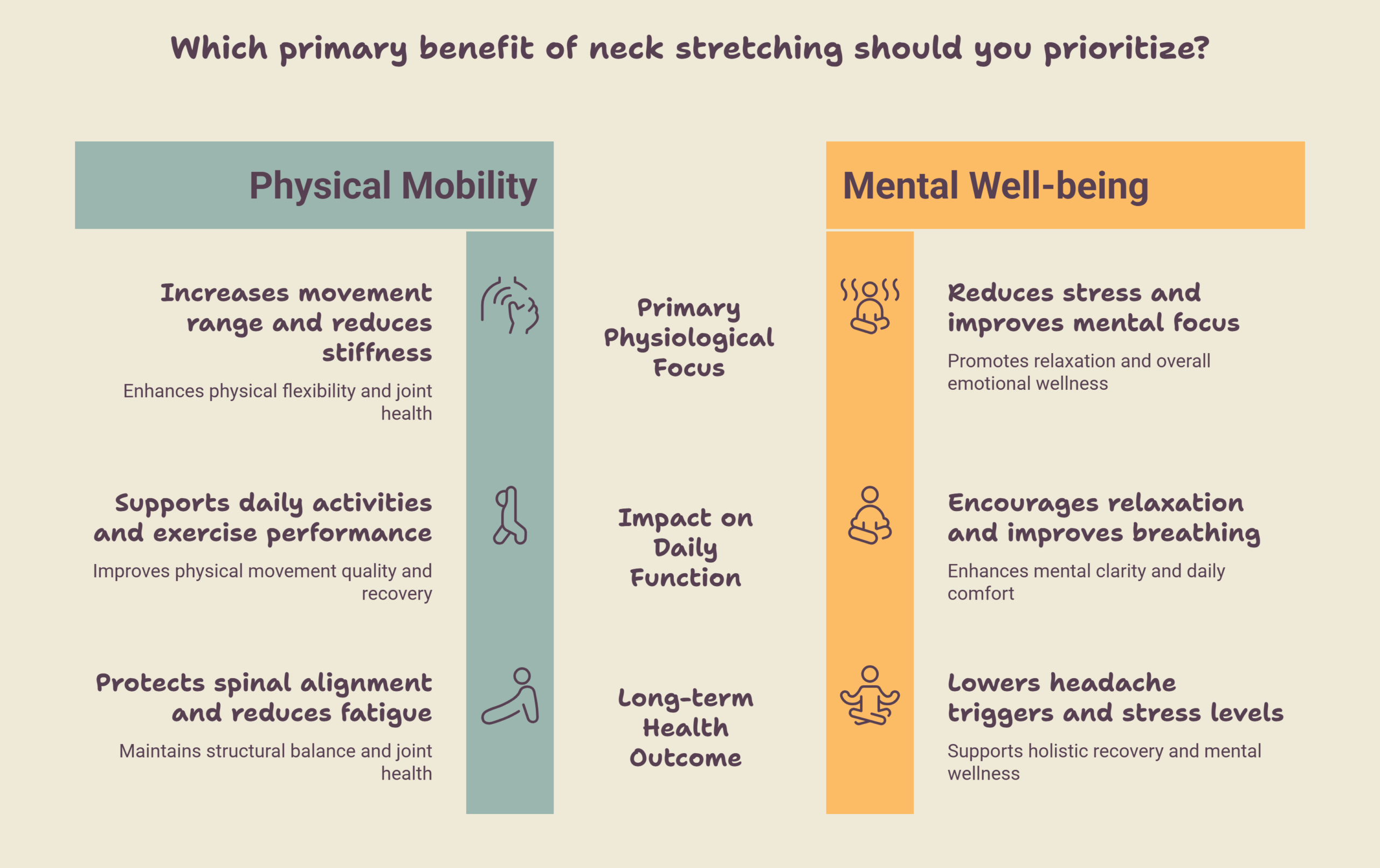
Improves Neck Flexibility
Flexible muscles move smoothly. They also support daily activities. Stretching gradually increases movement. Tight muscles become relaxed. Regular practice improves mobility.
Stretching helps:
- Increase movement range.
- Improve muscle flexibility.
- Reduce tightness.
- Support smooth movement.
- Improve daily comfort.
Flexible muscles recover faster. They also feel stronger.
Reduces Muscle Stiffness
Stiff muscles restrict movement. Stretching loosens tight tissues. Regular movement prevents stiffness. Comfortable muscles work better. Daily practice protects flexibility.
Stretching helps:
- Relax tight muscles.
- Improve neck mobility.
- Reduce morning stiffness.
- Improve comfort.
- Support daily movement.
Loose muscles reduce discomfort. They also improve confidence.
Relieves Muscle Tension
Stress tightens neck muscles. Long sitting increases tension. Gentle stretching encourages relaxation. Relaxed muscles feel lighter. Daily stretching reduces discomfort.
Stretching helps:
- Relax neck muscles.
- Reduce shoulder tension.
- Ease muscle tightness.
- Improve movement.
- Increase comfort.
Relaxed muscles improve daily activities.
Supports Better Posture
Healthy posture protects muscles. Good alignment reduces strain. Stretching supports upright posture. Balanced muscles improve stability. Healthy posture feels natural.
Stretching helps:
- Relax shoulders.
- Straighten body alignment.
- Support spinal health.
- Reduce forward posture.
- Improve standing position.
Better posture reduces muscle fatigue.
Supports Healthy Spinal Alignment
The neck supports the spine. Good alignment protects joints. Stretching helps maintain balance. Healthy muscles support posture. Strong muscles improve stability.
Regular stretching helps:
- Support spinal alignment.
- Improve body balance.
- Reduce uneven pressure.
- Improve movement quality.
- Protect neck joints.
Healthy alignment reduces daily strain.
Improves Blood Circulation
Good circulation supports muscles. Blood carries oxygen efficiently. Healthy muscles recover faster. Stretching improves blood flow. Better circulation supports healing.
Stretching helps:
- Deliver oxygen.
- Nourish muscles.
- Improve recovery.
- Reduce muscle fatigue.
- Support healthy tissues.
Healthy circulation improves muscle performance.
Reduces Headache Triggers
Tight muscles trigger headaches. Poor posture worsens discomfort. Stretching reduces muscle tension. Relaxed muscles reduce pressure. Healthy habits lower headache risks.
Stretching helps:
- Relax neck muscles.
- Ease shoulder tension.
- Improve posture.
- Reduce muscle tightness.
- Improve comfort.
Fewer tension headaches improve daily life.
Improves Daily Activities
Healthy muscles support movement. Everyday tasks become easier. Comfortable movement improves confidence. Daily stretching supports independence. Small improvements feel meaningful.
Stretching supports:
- Reading comfortably.
- Driving safely.
- Computer work.
- Household activities.
- Exercise routines.
Comfort improves every day.
Supports Exercise Performance
Flexible muscles perform better. Warm muscles move safely. Healthy joints improve exercise. Stretching prepares the body. Recovery also improves naturally.
Stretching helps:
- Prepare muscles.
- Improve flexibility.
- Reduce stiffness.
- Support recovery.
- Improve movement quality.
Exercise becomes more enjoyable.
Encourages Relaxation
Stretching calms the body. Relaxed muscles reduce stress. Gentle breathing improves comfort. Daily stretching supports mental wellness. Calm muscles improve recovery.
Stretching helps:
- Reduce stress.
- Calm the mind.
- Improve breathing.
- Relax muscles.
- Improve focus.
Relaxation supports overall well-being.
Become a Certified Yoga Instructor
Yoga Teacher Training Course by Entri App: Master authentic yoga techniques, earn certification, and build a successful career as a professional yoga instructor.
Join Now!Neck Stretching Safety Tips
Safe stretching prevents injuries. Proper technique protects muscles. Gentle movements improve results. Comfort should remain the priority.
Warm Up Before Stretching
Cold muscles tighten easily. Warm muscles stretch safely. Gentle movement prepares tissues.
Warm-up ideas include:
- Walk briefly.
- Roll shoulders.
- Swing arms gently.
- Move slowly.
- Relax muscles.
Warm muscles stretch comfortably.
Stretch Slowly
Slow movements protect muscles. Fast stretching increases risks. Gentle stretching works better.
Remember these tips:
- Move carefully.
- Stretch comfortably.
- Stay relaxed.
- Avoid rushing.
- Maintain control.
Slow stretching improves flexibility.
Never Stretch through Pain
Stretching should never hurt. Mild tension feels normal. Sharp pain signals problems.
Stop immediately after:
- Sharp pain.
- Tingling sensations.
- Dizziness.
- Numbness.
- Severe discomfort.
Pain requires careful attention.
Breathe Normally
Steady breathing supports relaxation. Good breathing reduces tension. Calm breathing improves stretching.
Always remember:
- Breathe slowly.
- Avoid breath holding.
- Relax naturally.
- Exhale gently.
- Stay calm.
Breathing supports better movement.
Maintain Good Posture
Proper posture protects muscles. Good alignment reduces strain. Straight posture improves stretching.
Keep:
- Head level.
- Back straight.
- Shoulders relaxed.
- Chin neutral.
- Body balanced.
Correct posture improves safety.
Avoid Bouncing
Bouncing strains muscles. Gentle stretching feels safer. Steady movements improve flexibility.
Instead:
- Hold steadily.
- Relax muscles.
- Stretch gradually.
- Move smoothly.
- Stay comfortable.
Gentle stretching prevents injuries.
Stay Consistent
Daily stretching creates progress. Healthy habits improve flexibility. Consistency produces lasting results.
Healthy habits include:
- Stretch daily.
- Move regularly.
- Take short breaks.
- Stay active.
- Practise patiently.
Consistency builds stronger muscles.
Join the best online yoga teacher training program of 2026! Register in Entri Elevate now!
Seek Medical Advice
Some conditions require guidance. Professional advice improves safety. Proper treatment prevents complications.
Consult healthcare professionals after:
- Serious injuries.
- Recent surgery.
- Chronic pain.
- Persistent stiffness.
- Frequent numbness.
Medical guidance supports safe recovery.
Conclusion
Neck stretching supports lifelong health. It improves flexibility gradually. Regular stretching reduces muscle tension. Good posture protects muscles. Healthy movement improves comfort. Short sessions give benefits. Daily practice produces lasting results.
Stretch gently every session. Never force movements. Listen to your body. Stop when pain appears. Stay active every day. Maintain healthy posture always. Consistency protects neck health. Healthy habits improve everyday movement.
Become a Certified Yoga Instructor
Yoga Teacher Training Course by Entri App: Master authentic yoga techniques, earn certification, and build a successful career as a professional yoga instructor.
Join Now!Frequently Asked Questions
How often should neck stretches be performed?
Stretch the neck daily. Short sessions provide the best results.
Can neck stretches reduce neck pain?
Yes, gentle stretching may reduce muscle tension. Severe pain needs medical advice.
What is the best neck stretch?
Chin tucks and neck tilts work well. They improve posture and flexibility.
How long should each neck stretch be held?
Hold each stretch for 15–30 seconds. Avoid forcing the movement.
Can desk workers benefit from neck stretches?
Yes, regular stretching reduces stiffness. It also improves posture during work.
Should neck stretches hurt?
No, stretching should feel comfortable. Stop immediately if pain occurs.
Can neck stretches improve posture?
Yes, regular stretching relaxes tight muscles. Better posture reduces neck strain.
Is it safe to stretch every day?
Yes, gentle daily stretching is generally safe. Consistency improves flexibility over time.
Should the neck be warmed up before stretching?
Yes, warm muscles stretch better. Gentle movements help prevent injuries.
When should a doctor be consulted?
Seek medical advice for severe pain. Also consult a doctor after injuries.