Table of Contents
Pigeon Pose improves hip flexibility effectively. It stretches tight lower-body muscles. The pose also reduces body stiffness. Many yoga practitioners include it daily. Beginners can also learn safely.
Proper technique remains very important. Slow movements prevent unnecessary strain. Regular practice improves overall mobility. Good alignment delivers better results. Pigeon Pose supports a balanced yoga routine.
The pose mainly targets the hips. It stretches surrounding muscles as well. Gentle breathing relaxes one. Consistent practice builds flexibility. Each responds differently. Patience produces better progress.
Join the best online yoga teacher training program of 2026! Register in Entri Elevate now!
What is Pigeon Pose?
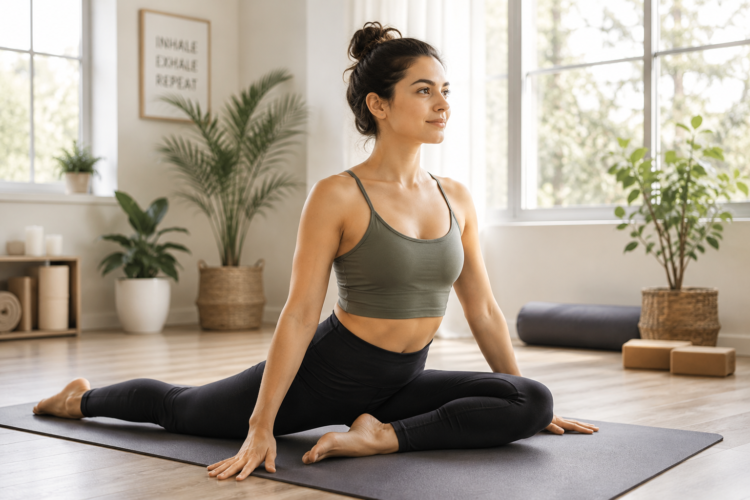
It is a seated yoga posture. It creates a deep hip stretch. The pose opens tight muscles. It also improves lower-body mobility. Many yoga styles include it. Beginners and experienced practitioners both practice it. Correct alignment remains essential. Gentle breathing enhances every movement.
Primary Purpose
Pigeon Pose focuses on hip opening.
It helps:
- Stretch hip muscles.
- Improve flexibility.
- Release body tension.
- Increase joint mobility.
- Support better posture.
The pose works gradually.
Muscles Targeted
Several muscles receive stretches.
They include:
- Gluteal muscles.
- Hip flexors.
- Piriformis muscle.
- Hamstrings.
- Lower back muscles.
These muscles often become tight.
Why Hip Flexibility Matters
Flexible hips support daily movement.
Healthy hips improve:
- Walking comfort.
- Running efficiency.
- Sitting posture.
- Exercise performance.
- Overall mobility.
Good flexibility also reduces stiffness.
When to Practice
Pigeon Pose fits many routines.
Good practice times include:
- Morning yoga.
- Evening stretching.
- After walking.
- After cycling.
- Post-workout recovery.
Avoid practicing with cold muscles.
Why Many People Practice Pigeon Pose
Modern lifestyles reduce mobility.
Many people spend hours sitting.
This causes:
- Tight hips.
- Muscle stiffness.
- Reduced flexibility.
- Limited movement.
- Poor posture.
Pigeon Pose helps restore movement.
Benefits of Pigeon Pose
1: Which of these is the primary goal of yoga practice?
Pigeon Pose offers many physical benefits. It also gives mental benefits. It stretches the hips. Which improves overall mobility. Regular practice reduces muscle tightness. This supports better posture. The pose also encourages relaxation. It is obtained through mindful breathing. Practicing with proper alignment is important. It provides the greatest benefits. It also reduces injury risks.
Improves Hip Flexibility
Pigeon Pose deeply stretches the hips.
It helps:
- Lengthen tight hip muscles.
- Improve joint mobility.
- Increase movement range.
- Reduce stiffness.
- Support easier stretching.
Flexible hips improve daily comfort.
Reduces Hip Tightness
Long hours of sitting tighten muscles.
Regular practice helps:
- Release muscle tension.
- Loosen stiff hips.
- Improve blood circulation.
- Increase comfort.
- Restore natural movement.
Office workers benefit greatly.
Improves Daily Movement
Flexible hips support everyday activities.
Benefits include:
- Easier walking.
- Comfortable climbing.
- Better bending.
- Smoother squatting.
- Improved balance.
Daily tasks become easier.
Supports Better Posture
Tight hips affect body alignment.
The pose helps:
- Improve standing posture.
- Reduce pelvic tightness.
- Support spinal alignment.
- Balance muscle groups.
- Reduce slouching.
Better posture reduces discomfort.
Enhances Athletic Performance
Athletes need flexible hips.
Pigeon Pose supports:
- Running performance.
- Cycling efficiency.
- Strength training.
- Dancing movements.
- Sports agility.
Improved mobility boosts performance.
Stretches Multiple Muscle Groups
The pose targets several muscles.
It stretches the:
- Glutes.
- Hip flexors.
- Piriformis.
- Hamstrings.
- Lower back.
Balanced stretching improves mobility.
Promotes Relaxation
Slow breathing calms the body.
The pose encourages:
- Mental relaxation.
- Better focus.
- Reduced stress.
- Body awareness.
- Calm breathing.
Mind and body relax together.
Supports Healthy Circulation
Stretching encourages healthy blood flow.
Better circulation helps:
- Deliver oxygen efficiently.
- Nourish muscles.
- Support recovery.
- Reduce stiffness.
- Improve movement quality.
Healthy muscles perform better.
Improves Body Balance
Balanced flexibility reduces movement differences.
Regular practice helps:
- Stretch both hips equally.
- Correct muscle imbalances.
- Improve coordination.
- Support smoother movement.
- Build body awareness.
Symmetry improves overall movement.
Become a Certified Yoga Instructor
Yoga Teacher Training Course by Entri App: Master authentic yoga techniques, earn certification, and build a successful career as a professional yoga instructor.
Join Now!How to Do Pigeon Pose Step-by-Step
Pigeon Pose requires slow, controlled movements. Proper alignment makes the pose safer and more effective. Rushing into the stretch may cause discomfort. Warm up the hips before starting. Move gently and breathe steadily throughout the pose. Stop immediately if sharp pain occurs. Practice on a yoga mat for better support.
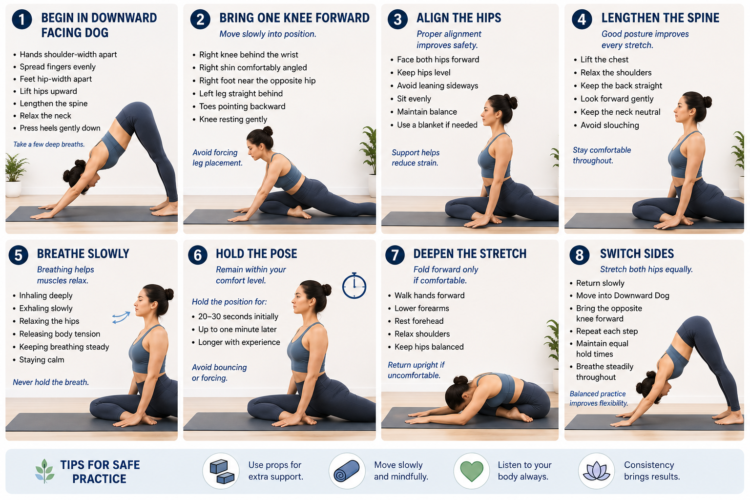
Step 1: Begin in Downward Facing Dog
Start with a stable foundation.
Follow these steps:
- Place hands shoulder-width apart.
- Spread the fingers evenly.
- Keep feet hip-width apart.
- Lift the hips upward.
- Lengthen the spine.
- Relax the neck.
- Press heels gently downward.
Take a few deep breaths.
Step 2: Bring One Knee Forward
Move slowly into position.
Place:
- Right knee behind the wrist.
- Right shin comfortably angled.
- Right foot near the opposite hip.
- Left leg straight behind.
- Toes pointing backward.
- Knee resting gently.
Avoid forcing leg placement.
Step 3: Align the Hips
Proper alignment improves safety.
Check these points:
- Face both hips forward.
- Keep hips level.
- Avoid leaning sideways.
- Sit evenly.
- Maintain balance.
- Use a blanket if needed.
Support helps reduce strain.
Step 4: Lengthen the Spine
Good posture improves every stretch.
Remember to:
- Lift the chest.
- Relax the shoulders.
- Keep the back straight.
- Look forward gently.
- Keep the neck neutral.
- Avoid slouching.
Stay comfortable throughout.
Step 5: Breathe Slowly
Breathing helps muscles relax.
Practice by:
- Inhaling deeply.
- Exhaling slowly.
- Relaxing the hips.
- Releasing body tension.
- Keeping breathing steady.
- Staying calm.
Never hold the breath.
Step 6: Hold the Pose
Remain within your comfort level.
Hold the position for:
- 20–30 seconds initially.
- Up to one minute later.
- Longer with experience.
Avoid bouncing or forcing.
Step 7: Deepen the Stretch
Fold forward only if comfortable.
Move carefully by:
- Walking the hands forward.
- Lowering the forearms.
- Resting the forehead.
- Relaxing the shoulders.
- Keeping the hips balanced.
Return upright if uncomfortable.
Step 8: Switch Sides
Stretch both hips equally.
After completing one side:
- Return slowly.
- Move into Downward Dog.
- Bring the opposite knee forward.
- Repeat each step.
- Maintain equal hold times.
- Breathe steadily throughout.
Balanced practice improves flexibility.
Tips for Better Results
Small adjustments improve the pose.
Keep these tips in mind:
- Warm up before stretching.
- Practice on both sides.
- Use yoga props if needed.
- Never force flexibility.
- Focus on proper alignment.
- Breathe throughout the pose.
- Practice consistently.
- Progress gradually.
Regular practice improves hip mobility, flexibility, and overall body awareness. Patience and proper technique deliver better long-term results than forcing deeper stretches.
Common Mistakes in Pigeon Pose
Pigeon Pose looks simple but requires proper technique. Small mistakes can reduce its benefits and increase discomfort. Good alignment protects the hips, knees, and lower back.
Slow movements and steady breathing improve every stretch. Learning correct form helps build flexibility safely.
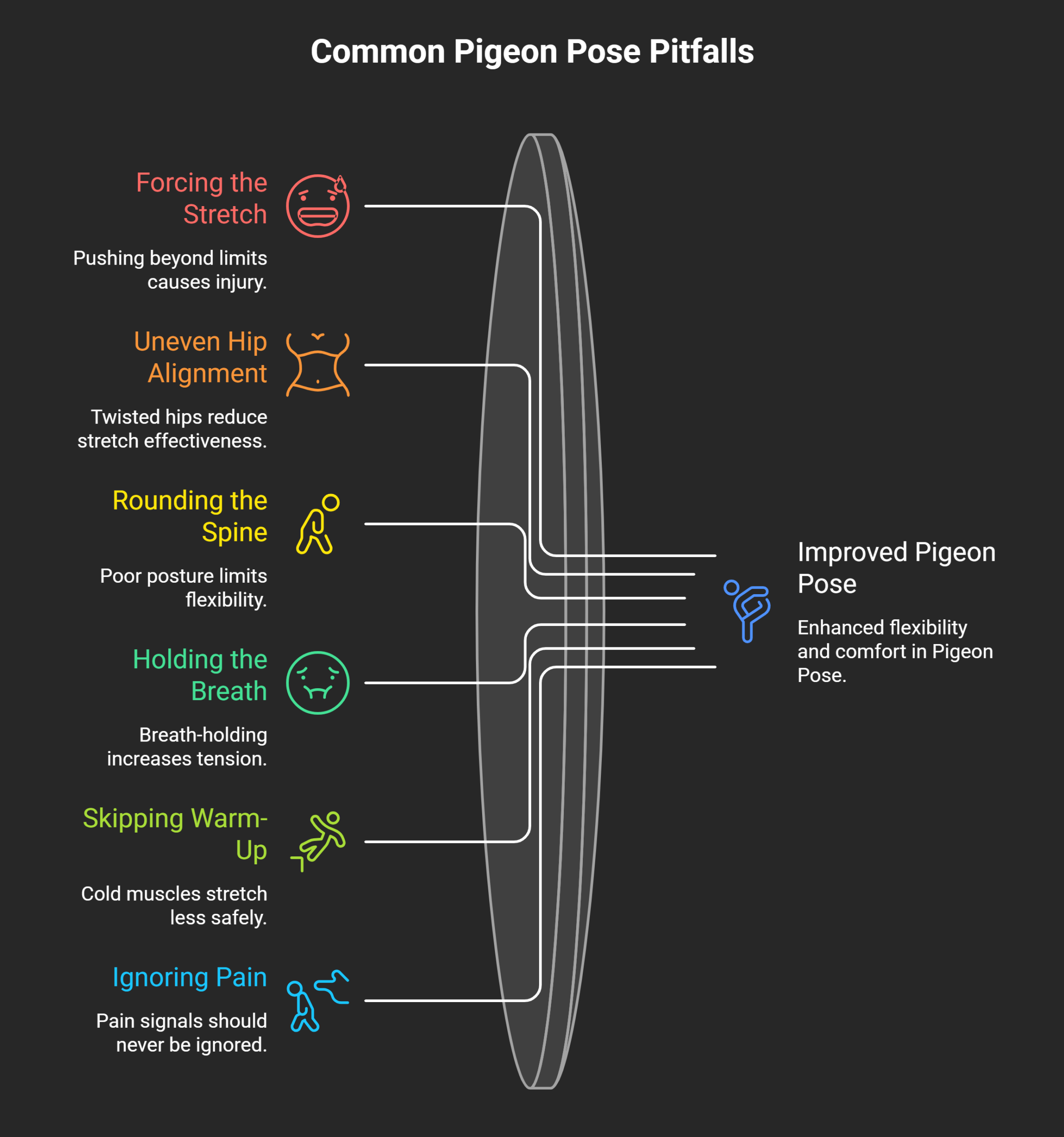
Forcing the Stretch
Stretching too deeply causes problems.
Avoid these habits:
- Pushing beyond comfort.
- Ignoring sharp pain.
- Moving too quickly.
- Bouncing during stretches.
- Comparing flexibility with others.
Stretch gradually every session.
Uneven Hip Alignment
Twisted hips reduce effectiveness.
Maintain proper alignment by:
- Facing both hips forward.
- Sitting evenly.
- Avoiding body rotation.
- Keeping balance.
- Using support if needed.
Level hips improve the stretch.
Rounding the Spine
Poor posture limits flexibility.
Keep the upper body:
- Chest lifted.
- Spine long.
- Shoulders relaxed.
- Neck neutral.
- Head aligned.
Good posture supports better movement.
Holding the Breath
Breathing affects muscle relaxation.
Remember to:
- Inhale deeply.
- Exhale slowly.
- Keep breathing naturally.
- Relax the body.
- Avoid breath-holding.
Steady breathing eases tension.
Skipping the Warm-Up
Cold muscles stretch less safely.
Warm up with:
- Cat-Cow Pose.
- Low Lunges.
- Gentle hip circles.
- Walking.
- Light yoga flows.
Warm muscles improve flexibility.
Ignoring Pain Signals
Pain should never be ignored.
Stop immediately if experiencing:
- Sharp knee pain.
- Hip discomfort.
- Lower back pain.
- Tingling sensations.
- Joint instability.
Modify the pose when necessary.
Using Incorrect Support
Props improve safety when used correctly.
Choose support that:
- Keeps hips level.
- Reduces knee pressure.
- Improves comfort.
- Maintains alignment.
- Matches flexibility.
Proper technique always matters most. Practicing mindfully prevents injuries and helps achieve better flexibility over time. Slow progress produces safer and longer-lasting results.
Pigeon Pose Variations
Pigeon Pose offers several variations. Different skill levels have different pose. Each pose provides unique benefits. Some focus on comfort. Others increase flexibility. Some help in balance. Choosing the right variation improves safety. One also gain confidence. Beginners should master basic positions. Advanced variations should be followed after consistent practice. Yoga props can bring more comfortable.
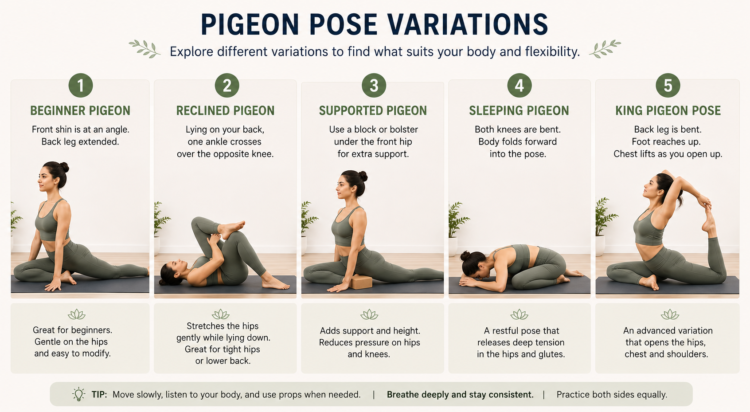
Beginner Pigeon Pose
This variation suits new practitioners.
Helpful modifications include:
- Keep the front shin angled.
- Raise the hips slightly.
- Use folded blankets.
- Place a yoga block underneath.
- Hold briefly.
This reduces unnecessary pressure.
Reclined Pigeon Pose
This gentle version protects the joints.
It is suitable for:
- Beginners.
- Older adults.
- Tight hips.
- Knee sensitivity.
- Recovery sessions.
Practice while lying comfortably.
Supported Pigeon Pose
Props improve body alignment.
Useful props include:
- Yoga blocks.
- Bolsters.
- Folded blankets.
- Firm cushions.
- Yoga towels.
Support increases stability and comfort.
Sleeping Pigeon Pose
This variation deepens the stretch.
Practice by:
- Folding the upper body forward.
- Resting the forehead comfortably.
- Relaxing the shoulders.
- Breathing slowly.
- Keeping the hips balanced.
Never force the position.
King Pigeon Pose
This advanced variation requires preparation.
It develops:
- Greater hip flexibility.
- Stronger back mobility.
- Better shoulder flexibility.
- Improved balance.
- Full-body coordination.
Practice only after mastering the basic pose.
Choosing the Right Variation
Every body responds differently.
Select a variation based on:
- Flexibility level.
- Previous injuries.
- Comfort.
- Practice experience.
- Personal fitness goals.
Progress slowly with regular practice. Move to advanced variations only after gaining strength, flexibility, and confidence. Proper technique always matters more than achieving a deeper stretch.
Become a Certified Yoga Instructor
Yoga Teacher Training Course by Entri App: Master authentic yoga techniques, earn certification, and build a successful career as a professional yoga instructor.
Join Now!Who Should Avoid Pigeon Pose?
Pigeon Pose benefits many practitioners. However, it may not suit everyone. Certain health conditions require extra care. Deep hip stretches can increase discomfort if performed incorrectly. Listening to the body remains essential. Professional guidance improves safety whenever needed.
People With Knee Injuries
The front knee carries body weight.
Avoid the pose when experiencing:
- Knee ligament injuries.
- Meniscus tears.
- Knee swelling.
- Sharp knee pain.
- Recent knee surgery.
Choose gentler stretches instead.
People With Hip Injuries
Deep hip opening may worsen symptoms.
Practice carefully after:
- Hip replacement surgery.
- Hip fractures.
- Hip inflammation.
- Hip joint instability.
- Severe arthritis.
Seek medical advice first.
People With Lower Back Problems
Poor alignment affects the lower back.
Avoid the pose during:
- Severe back pain.
- Herniated discs.
- Sciatica flare-ups.
- Muscle spasms.
- Acute injuries.
Stop immediately if pain increases.
Pregnant Women
Pregnancy changes joint flexibility.
Practice only with:
- Medical approval.
- Certified yoga guidance.
- Proper modifications.
- Extra body support.
- Comfortable positioning.
Avoid deep stretching without supervision.
Beginners With Very Tight Hips
Limited flexibility needs patience.
Helpful safety tips include:
- Warm up thoroughly.
- Use yoga blocks.
- Place blankets underneath.
- Hold briefly.
- Increase gradually.
Never force the stretch.
People Recovering From Surgery
Healing tissues need protection.
Avoid Pigeon Pose after:
- Hip surgery.
- Knee surgery.
- Pelvic surgery.
- Lower back surgery.
- Major muscle injuries.
Resume only after medical clearance.
General Safety Tips
Safe practice always comes first.
Remember these guidelines:
- Stretch without pain.
- Breathe steadily.
- Maintain proper alignment.
- Stop if discomfort increases.
- Consult a healthcare professional when unsure.
Choosing the right variation improves safety. Using yoga props also reduces strain. Practicing within personal limits helps prevent injuries while supporting steady progress.
Join the best online yoga teacher training program of 2026! Register in Entri Elevate now!
Conclusion
Pigeon Pose naturally improves hip flexibility. It also improves mobility. Regular practice helps reduce muscle tightness. It also helps reduce body stiffness. Proper alignment makes every stretch safe. Slow, steady breathing relaxes one.
Gentle movements protect the hips and knees. It prevents strain. Beginners should progress gradually. They must not force stretch. Yoga props provide extra comfort. It also gives better support. Different variations suit different flexibility levels.
Practicing consistently. It improves movement over time. Patience and proper technique produce lasting results. Safe practice always delivers the greatest benefits.
Become a Certified Yoga Instructor
Yoga Teacher Training Course by Entri App: Master authentic yoga techniques, earn certification, and build a successful career as a professional yoga instructor.
Join Now!Frequently Asked Questions
What is Pigeon Pose in yoga?
Pigeon Pose is a yoga posture that stretches the hips, glutes, hip flexors, and lower back while improving flexibility and mobility. It is commonly practiced in Hatha, Vinyasa, and Yin Yoga to release hip tightness and support better movement.
What are the benefits of Pigeon Pose?
Pigeon Pose improves hip flexibility, reduces muscle tightness, supports better posture, and increases joint mobility through regular practice. It also promotes relaxation by encouraging slow breathing and mindful stretching.
Is Pigeon Pose suitable for beginners?
Yes, beginners can practice Pigeon Pose by using yoga blocks, folded blankets, or bolsters for extra support and comfort. Moving slowly, maintaining proper alignment, and avoiding deep stretches help beginners practice safely.
How long should Pigeon Pose be held?
Beginners can hold the pose for about 20 to 30 seconds on each side before gradually increasing the duration as flexibility improves. The focus should remain on steady breathing and good alignment instead of holding the pose for longer.
Which muscles does Pigeon Pose stretch?
Pigeon Pose mainly stretches the glutes, piriformis, hip flexors, hamstrings, and lower back muscles while improving hip mobility. These muscles often become tight due to prolonged sitting, exercise, or reduced movement.
Can Pigeon Pose help relieve hip tightness?
Yes, regular practice helps release tight muscles around the hips and pelvis while improving flexibility over time. It is especially beneficial for people who spend long hours sitting or have limited hip mobility.
Who should avoid Pigeon Pose?
People with knee injuries, hip injuries, severe lower back pain, recent surgeries, or joint instability should avoid the pose unless advised by a healthcare professional. Pregnant women should practice only under qualified guidance using appropriate modifications.
What are the easiest Pigeon Pose variations?
Beginner Pigeon Pose, Reclined Pigeon Pose, and Supported Pigeon Pose are the easiest variations because they reduce pressure on the hips and knees. These options are ideal for beginners, older adults, and anyone with limited flexibility.
How often should Pigeon Pose be practiced?
Pigeon Pose can be practiced several times a week as part of a regular yoga routine to improve flexibility and mobility. Consistent practice with proper technique provides better long-term results than occasional stretching.
What are the most common mistakes in Pigeon Pose?
Common mistakes include forcing the stretch, twisting the hips, rounding the back, skipping the warm-up, and holding the breath during the pose. Maintaining proper alignment, breathing steadily, and using yoga props when needed help perform the pose safely and effectively.