Table of Contents
Sun Salutation is a popular yoga practice. Many practise it every day. It combines simple movements with breathing. Each movement flows into the next. This creates a smooth yoga sequence. Regular practice improves body flexibility. It also builds strength gradually. Balance improves with consistent practice. The body feels more active daily. The mind also feels calmer.
There are different Sun Salutation sequences. Each sequence has a different purpose. Some are easier for beginners. Others offer a bigger challenge. Some improve strength more effectively. Others focus on flexibility and mobility.
Learning each sequence becomes very helpful. It becomes easier to choose wisely. This guide explains Sequences A, B, and C. It covers their steps and benefits. It also explains their differences. Practice tips are also discussed.
Join the best online yoga teacher training program of 2026! Register in Entri Elevate now!
What are Sun Salutation Sequences A, B, and C?
Sun Salutation A, B, and C are 3 sequences. Each sequence follows a set order. Every sequence includes different yoga poses. Each movement matches the breathing pattern.
Sequence A teaches the basic movements. It is for beginners. Sequence B adds more standing poses. It also builds more strength. Sun Salutation C includes extra stretches. It also includes gentle backbends.
Together, these sequences improve flexibility and strength. They also improve balance and posture. Regular practice improves fitness.
1: Which of these is the primary goal of yoga practice?
Why are there Different Sun Salutation Sequences?
Every practitioner has different needs.
Different sequences help:
- Build strength gradually.
- Improve flexibility.
- Increase stamina.
- Develop better balance.
- Support yoga progression.
Each sequence serves a unique purpose.
Sequence A
Sun Salutation A introduces the basics.
It focuses on:
- Simple movements.
- Smooth transitions.
- Basic flexibility.
- Breathing coordination.
- Full-body stretching.
It is beginner-friendly.
Sequence B
Sequence B increases the challenge.
It includes:
- Stronger standing poses.
- Chair Pose.
- Warrior I.
- Extra strength work.
- Greater endurance.
It suits intermediate practitioners.
Sequence C
Sequence C offers more variety.
It often includes:
- Additional stretches.
- Gentle backbends.
- Side stretches.
- Twisting movements.
- Deeper flexibility work.
Many teachers create their own versions.
Common Benefits
All three sequences offer similar advantages.
They help:
- Improve flexibility.
- Build strength.
- Increase mobility.
- Improve posture.
- Boost circulation.
- Develop body awareness.
- Improve balance.
- Support overall fitness.
Regular practice produces better results.
Choosing the Right Sequence
The best sequence depends on experience.
Choose based on:
- Fitness level.
- Flexibility.
- Yoga experience.
- Health condition.
- Personal goals.
Progress gradually over time.
Become a Certified Yoga Instructor
Yoga Teacher Training Course by Entri App: Master authentic yoga techniques, earn certification, and build a successful career as a professional yoga instructor.
Join Now!What is Surya Namaskar?
Surya Namaskar means: “Salutation to the Sun.” It is a yoga practice. Several yoga poses. are included in it. These poses form one smooth sequence. Every movement matches the breathing. This creates a natural flow. It warms one’s body. Blood circulation also improves. Tight muscles become loose. Yoga classes begin with it. It improves focus and energy.
Meaning of Surya Namaskar
The name has two Sanskrit words.
- Surya means Sun.
- Namaskar means greeting or salutation.
Together, they express respect for the sun.
Why is it Practised?
People practice Surya Namaskar for many reasons.
It helps:
- Warm the body.
- Improve flexibility.
- Build strength.
- Increase energy.
- Improve focus.
It also prepares the mind.
Muscles Worked
Surya Namaskar engages many muscles.
It activates:
- Legs.
- Arms.
- Shoulders.
- Chest.
- Core.
- Back.
- Hips.
- Glutes.
Almost the entire body works together.
Importance of Breathing
Breathing guides every movement.
Proper breathing helps:
- Improve oxygen flow.
- Increase relaxation.
- Support smooth transitions.
- Reduce tension.
- Improve concentration.
Never hold the breath.
Best Time to Practise
Morning remains the preferred time.
Morning practice helps:
- Increase energy.
- Improve flexibility.
- Refresh the mind.
- Start the day positively.
- Build consistency.
Evening practice also offers benefits.
Suitable for Many Fitness Levels
Surya Namaskar suits many practitioners.
It benefits:
- Beginners.
- Intermediate learners.
- Advanced practitioners.
- Athletes.
- Older adults with modifications.
Practice according to ability.
Health Benefits
Regular practice supports overall wellness.
It helps:
- Improve posture.
- Increase circulation.
- Support heart health.
- Improve coordination.
- Build endurance.
Consistency brings lasting improvements.
Sun Salutation A Steps and Benefits
It is the basic sequence. Many people learn this sequence first. It teaches simple yoga movements. Every pose flows into the next. Each movement matches the breathing. The sequence stretches the whole body. It also builds strength gradually. Practice improves flexibility. It also enhance balance. It prepares one for harder poses. Beginners can learn it safely. It creates a strong yoga foundation.
Steps of Sun Salutation A
Follow the sequence slowly.
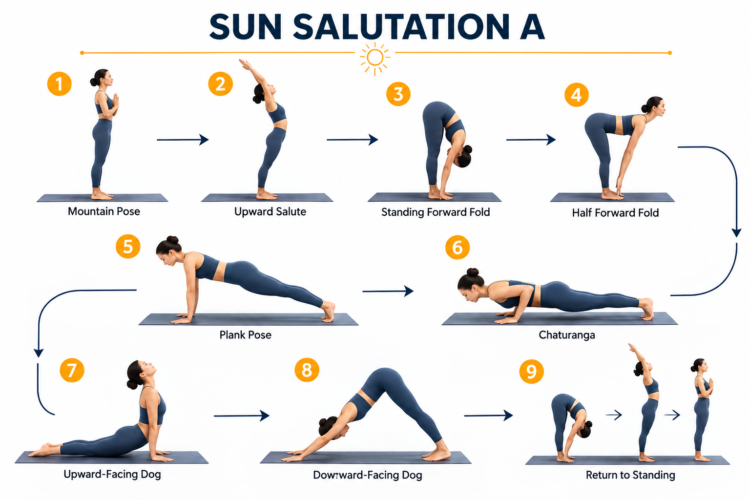
Step-1: Mountain Pose
- Stand upright.
- Keep feet together.
- Relax the shoulders.
- Breathe naturally.
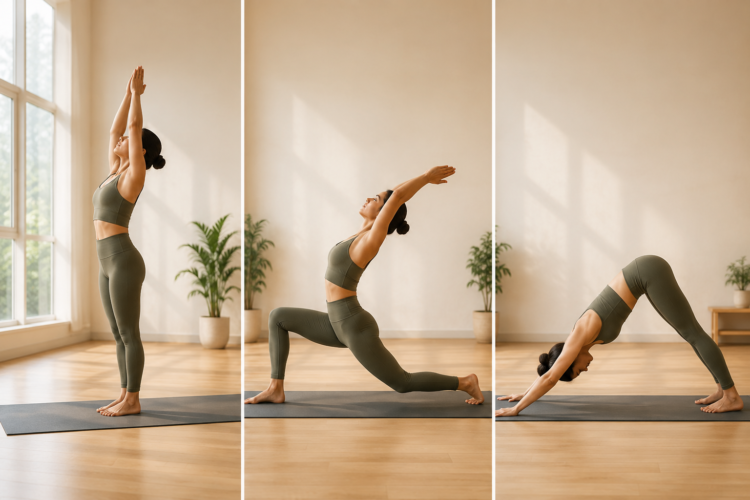
Step-2: Upward Salute
- Raise both arms.
- Lift the chest.
- Reach upward.
- Look gently forward.
Step-3: Standing Forward Fold
- Bend from the hips.
- Reach toward the floor.
- Relax the neck.
- Keep knees slightly bent if needed.
Step-4: Half Forward Fold
- Lift the chest.
- Lengthen the spine.
- Keep fingertips near the floor.
- Look forward gently.
Step-5: Plank Pose
- Step both feet backward.
- Keep the body straight.
- Tighten the core.
- Support with both hands.
Step-6: Chaturanga
- Lower halfway.
- Keep elbows close.
- Maintain body alignment.
- Move with control.
Step-7: Upward-Facing Dog
- Lift the chest.
- Straighten the arms.
- Open the shoulders.
- Look upward gently.
Step-8: Downward-Facing Dog
- Lift the hips.
- Lengthen the spine.
- Press heels downward.
- Hold for several breaths.
Step-9: Return to Standing
- Step forward.
- Fold gently.
- Raise the arms.
- Return to Mountain Pose.
Repeat the sequence smoothly.
Benefits of Sun Salutation A
Sequence A offers many beginner-friendly benefits.
Improves Flexibility
It stretches:
- Hamstrings.
- Calves.
- Hips.
- Shoulders.
- Spine.
Movement becomes easier.
Builds Strength
The sequence strengthens:
- Arms.
- Core.
- Legs.
- Back.
- Shoulders.
Strength develops gradually.
Improves Circulation
Flowing movements encourage healthy blood flow.
Better circulation helps:
- Deliver oxygen.
- Improve energy.
- Support recovery.
- Reduce stiffness.
- Warm muscles.
Improves Breathing
Every posture follows the breath.
Benefits include:
- Better lung function.
- Calm breathing.
- Improved focus.
- Better coordination.
- Reduced stress.
Improves Balance and Coordination
Regular practice develops:
- Better stability.
- Body awareness.
- Smooth movement.
- Improved posture.
- Greater control.
Small improvements appear with consistent practice.
Sun Salutation B Steps and Benefits
It is more challenging than A. Few extra poses are included. These poses build more body strength. They also improve balance and stamina. Chair Pose strengthens the legs and core. Warrior I improves stability and flexibility. The sequence raises the heart rate. It also gives the body a better workout. People with some yoga experience usually practise it. Move slowly through every pose. Match every movement with breathing. Proper technique gives better results.
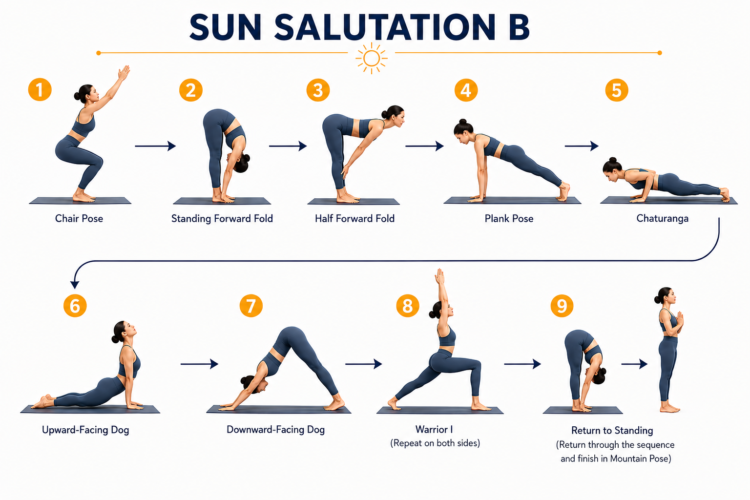
Steps of Sun Salutation B
Follow the sequence smoothly.
Step-1: Chair Pose
- Stand with feet together.
- Bend both knees.
- Raise both arms.
- Lift the chest.
- Keep the spine long.
Step-2: Standing Forward Fold
- Bend from the hips.
- Lower the hands.
- Relax the neck.
- Keep movements controlled.
Step-3: Half Forward Fold
- Lengthen the spine.
- Lift the chest.
- Look slightly forward.
- Keep shoulders relaxed.
Step4: Plank Pose
- Step both feet back.
- Keep the body straight.
- Tighten the core.
- Press through the palms.
Step-5: Chaturanga
- Lower halfway.
- Keep elbows close.
- Maintain body alignment.
- Move with control.
Step-6: Upward-Facing Dog
- Lift the chest.
- Straighten the arms.
- Open the shoulders.
- Breathe deeply.
Step-7: Downward-Facing Dog
- Lift the hips.
- Lengthen the spine.
- Hold briefly.
- Relax the neck.
Step-8: Warrior I
- Step one foot forward.
- Bend the front knee.
- Raise both arms.
- Square the hips.
- Repeat on both sides.
Step-9: Return to Standing
- Return through the sequence.
- Finish in Mountain Pose.
- Breathe naturally.
Benefits of Sun Salutation B
Builds Full-Body Strength
The sequence strengthens:
- Legs.
- Core.
- Arms.
- Shoulders.
- Back.
It develops muscular endurance.
Improves Cardiovascular Fitness
Continuous movement increases activity.
It helps:
- Raise heart rate.
- Improve circulation.
- Build stamina.
- Increase endurance.
- Boost energy.
Improves Balance
Standing poses improve stability.
Benefits include:
- Better coordination.
- Stronger legs.
- Improved posture.
- Greater control.
- Better body awareness.
Increases Muscle Endurance
Longer holds challenge muscles.
Regular practice improves:
- Physical stamina.
- Strength.
- Stability.
- Flexibility.
- Overall fitness.
Become a Certified Yoga Instructor
Yoga Teacher Training Course by Entri App: Master authentic yoga techniques, earn certification, and build a successful career as a professional yoga instructor.
Join Now!Sun Salutation C Steps and Benefits
Sun Salutation C is another Sun Salutation sequence. Many yoga teachers include their own version. There is no single fixed sequence. It includes the basic Sun Salutation poses. It also adds a few extra poses. These may include lunges and twists. Some versions include gentle backbends. Others include hip-opening stretches. The extra poses add more variety. They also improve flexibility and mobility. Regular practice increases body movement. It also keeps the yoga routine interesting.
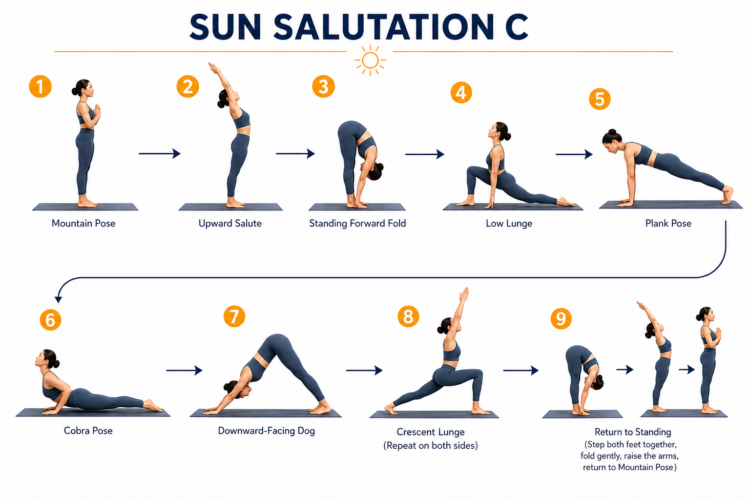
Steps of Sun Salutation C
Follow the sequence slowly.
Step1: Mountain Pose
- Stand with feet together.
- Relax the shoulders.
- Keep the spine straight.
- Breathe naturally.
Step2: Upward Salute
- Raise both arms.
- Lift the chest.
- Reach toward the ceiling.
- Look forward gently.
Step3: Standing Forward Fold
- Bend from the hips.
- Lower the hands.
- Relax the neck.
- Keep knees soft if needed.
Step4: Low Lunge
- Step one leg backward.
- Bend the front knee.
- Keep the back leg straight.
- Lift the chest.
- Open the hips.
Step5: Plank Pose
- Step the front foot back.
- Keep the body straight.
- Tighten the core.
- Support with both hands.
Step6: Cobra Pose
- Lower the body gently.
- Lift the chest.
- Keep elbows slightly bent.
- Relax the shoulders.
Step7: Downward-Facing Dog
- Lift the hips upward.
- Lengthen the spine.
- Press heels downward.
- Hold for several breaths.
Step8: Crescent Lunge
- Step one foot forward.
- Raise both arms.
- Lift the chest.
- Stretch the hips.
- Repeat on both sides.
Step9: Return to Standing
- Step both feet together.
- Fold gently.
- Raise the arms.
- Return to Mountain Pose.
Repeat the sequence smoothly.
Benefits of Sun Salutation C
Improves Flexibility
The sequence stretches:
- Hips.
- Hamstrings.
- Spine.
- Shoulders.
- Chest.
Improves Mobility
Gentle movements help:
- Increase joint movement.
- Reduce stiffness.
- Improve posture.
- Support daily activities.
- Improve body awareness.
Encourages Relaxation
Slow transitions promote calmness.
Benefits include:
- Better focus.
- Reduced stress.
- Improved breathing.
- Mental clarity.
- Relaxation.
Adds Variety
Different poses prevent monotony.
Variety helps:
- Challenge the body.
- Improve motivation.
- Build confidence.
- Develop new skills.
- Maintain interest.
Difference Between Sun Salutation A, B and C
| Feature | Sun Salutation A | Sun Salutation B | Sun Salutation C |
|---|---|---|---|
| Difficulty | Beginner | Intermediate | Beginner to Advanced |
| Main Focus | Basic flow | Strength and endurance | Flexibility and variety |
| Extra Poses | None | Chair Pose, Warrior I | Lunges, twists, backbends |
| Intensity | Low | Moderate | Varies |
| Best For | Beginners | Regular practitioners | Mixed practice |
Which Sequence Should You Choose?
Choose according to your goals.
Choose Sequence A
Best for:
- Beginners.
- Daily warm-ups.
- Basic flexibility.
- Learning yoga.
Choose Sequence B
Best for:
- Building strength.
- Improving endurance.
- Challenging workouts.
- Intermediate practice.
Choose Sequence C
Best for:
- Improving flexibility.
- Variety.
- Longer sessions.
- Full-body stretching.
Tips for Practising Sun Salutation
Good technique improves every practice. Small adjustments increase comfort and safety. Consistency produces better results than speed. Always focus on smooth movements and controlled breathing.
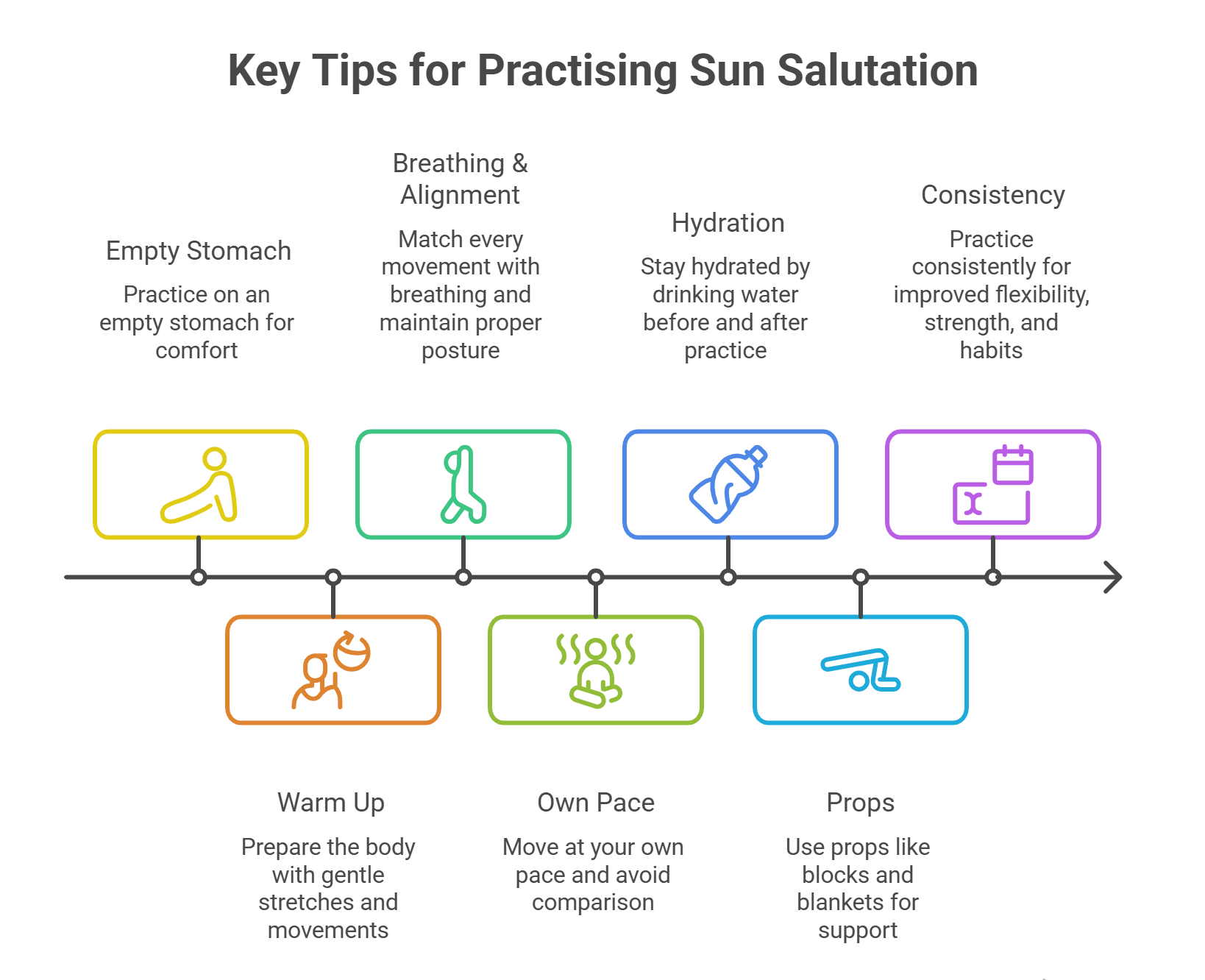
Practise on an Empty Stomach
Morning practice feels comfortable.
Wait before practising after meals.
Match Every Movement With Breathing
Breathing guides every posture.
Never rush the sequence.
Warm Up First
Prepare the body with:
- Gentle stretches.
- Neck rolls.
- Shoulder circles.
- Hip rotations.
- Light walking.
Maintain Proper Alignment
Correct posture prevents strain.
Focus on:
- Straight spine.
- Relaxed shoulders.
- Stable footing.
- Controlled movements.
Move at Your Own Pace
Everyone progresses differently.
Avoid comparing yourself with others.
Stay Hydrated
Drink water before and after practice.
Avoid excessive water during practice.
Use Props When Needed
Helpful props include:
- Yoga blocks.
- Blankets.
- Yoga straps.
- Bolsters.
Props improve comfort.
Join the best online yoga teacher training program of 2026! Register in Entri Elevate now!
Practise Consistently
Regular sessions help:
- Improve flexibility.
- Build strength.
- Increase endurance.
- Improve coordination.
- Support healthy habits.
Conclusion
Sun Salutation Sequences A, B, and C each offer unique benefits. Sequence A builds a strong foundation through simple movements. B increases strength, endurance, and balance with additional standing poses. Sequence C adds greater flexibility and variety through extra stretches and flowing transitions.
Choosing the right sequence depends on individual experience, flexibility, and fitness goals. Practising regularly with proper breathing and alignment improves strength, mobility, posture, and overall well-being. Progress gradually, listen to the body, and enjoy the journey toward a healthier yoga practice.
Become a Certified Yoga Instructor
Yoga Teacher Training Course by Entri App: Master authentic yoga techniques, earn certification, and build a successful career as a professional yoga instructor.
Join Now!Frequently Asked Questions
What is the difference between Sun Salutation A, B, and C?
Sun Salutation A focuses on basic movements, making it ideal for beginners, while Sun Salutation B adds Chair Pose and Warrior I for greater strength and endurance. Sun Salutation C includes additional stretches, lunges, twists, and backbends, offering more variety and flexibility.
Which Sun Salutation sequence is best for beginners?
Sun Salutation A is the best choice for beginners because it introduces the basic yoga poses and breathing pattern in a simple sequence. It helps develop flexibility, coordination, and confidence before progressing to more advanced variations.
How many rounds of Sun Salutation should beginners perform?
Beginners can start with three to five rounds while maintaining proper breathing and alignment throughout the practice. The number of rounds can gradually increase as strength, flexibility, and endurance improve.
Can Sun Salutation help with weight management?
Yes, regular Sun Salutation practice burns calories, improves muscle strength, and increases overall physical activity. When combined with a balanced diet and healthy lifestyle, it can support weight management goals.
What is the best time to practise Sun Salutation?
Morning is generally considered the best time because it energizes the body and prepares the mind for the day. However, it can also be practised in the evening if the stomach is relatively empty and the body feels comfortable.
Is breathing important during Sun Salutation?
Yes, breathing is an essential part of every Sun Salutation sequence because it coordinates each movement and improves oxygen flow. Steady breathing also promotes relaxation, focus, and smoother transitions between poses.
Can Sun Salutation improve flexibility?
Yes, regular practice stretches the hamstrings, hips, shoulders, spine, and chest, gradually improving overall flexibility. Consistent practice also increases joint mobility and reduces muscle stiffness.
Is Sun Salutation suitable for older adults?
Yes, many older adults can practise Sun Salutation with suitable modifications and guidance from a qualified yoga instructor. Using props and moving slowly helps improve safety and comfort during the practice.
Should Sun Salutation be practised every day?
Daily practice is beneficial for many people because it improves flexibility, strength, posture, and overall fitness. Beginners should start slowly and increase the frequency according to their comfort level and physical ability.
Who should avoid Sun Salutation?
People with recent surgeries, severe back pain, uncontrolled high blood pressure, serious joint injuries, or other medical conditions should seek professional advice before practising. Pregnant women should practise only under qualified supervision with appropriate modifications.