
Table of Contents
Sustainable printing reduces fashion’s environmental impact. It uses safer materials and cleaner processes. Popular methods include natural dye printing, digital printing, and water-based printing. These techniques reduce waste and conserve resources.
Key Takeaways
- Sustainable printing supports eco-friendly fashion.
- Natural dyes come from renewable sources.
- Digital printing reduces water usage.
- Water-based inks contain fewer harmful chemicals.
- Block printing supports traditional craftsmanship.
- Sustainable methods reduce textile waste.
- Eco-friendly printing improves brand value.
- Consumers increasingly prefer sustainable products.
- Responsible printing supports long-term growth.
- Sustainable fashion continues gaining popularity.
Learn Advanced Designing & Boutique Skills with Experts. Join Now!
🧵 Introduction
Fashion continues evolving every year. Sustainability now drives many industry decisions. Consumers expect greater environmental responsibility. Brands are responding to these expectations.
Textile printing plays a major role. Printed fabrics appear in many products. Dresses often feature printed patterns. Shirts commonly include printed graphics. Home textiles also use printed designs.
Traditional printing methods create challenges. Many require significant water usage. Some involve harmful chemicals. Others generate large amounts of waste. These concerns affect environmental sustainability.
Why this Matters
Sustainable printing offers better alternatives. These methods reduce environmental damage. They also support responsible production practices. Many techniques maintain excellent print quality. Some even improve production efficiency.
Fashion brands increasingly adopt sustainable methods. Consumers actively support these efforts. Designers also value environmentally responsible solutions. Sustainable printing now influences modern fashion significantly.
Understanding these techniques benefits fashion professionals. Students can learn responsible practices early. Designers can create greener collections. Brands can strengthen sustainability goals. This knowledge supports future industry growth.

Master Fashion Designing and Create Your Signature Style
Unlock your creative potential with our expert-led Fashion Designing course. Build in-demand skills and step confidently into the world of fashion!
Begin Your Fashion Career Today!🌿 What I=is Sustainable Printing in Fashion?
Sustainable printing uses environmentally responsible printing methods. These techniques reduce resource consumption. They also minimize harmful environmental effects. The goal remains responsible textile decoration.
Traditional printing often creates waste. Chemical usage can become excessive. Water consumption may also remain high. Sustainable methods address these concerns directly.
These techniques focus on cleaner production. Many use safer inks and dyes. Others reduce energy requirements. Some minimize fabric waste significantly.
Sustainable printing supports environmental protection. It also supports ethical manufacturing goals. Many fashion companies now prioritize these methods. Consumers increasingly expect responsible production practices.
🌎 Why Has Sustainable Printing Become Important?
Environmental concerns continue growing globally. Fashion companies face increasing scrutiny. Consumers want greater transparency today. Sustainability influences purchasing decisions regularly.
Textile production affects natural resources. Water consumption remains a major concern. Chemical pollution creates additional challenges. Waste management also requires attention.
Sustainable printing helps address these issues. Cleaner processes reduce environmental pressure. Resource conservation becomes easier. Long-term sustainability improves significantly.
👕 How Does Sustainable Printing Support Fashion?
Fashion requires continuous innovation. Sustainable printing encourages creative solutions. Designers can create beautiful products responsibly. Brands can align with consumer expectations.
Benefits include:
- Cleaner production.
- Reduced waste.
- Better resource management.
- Stronger environmental performance.
These advantages support industry transformation.
💡 Pro Tip
Choose printing methods during design planning.
🎨 Types of Sustainable Printing Techniques
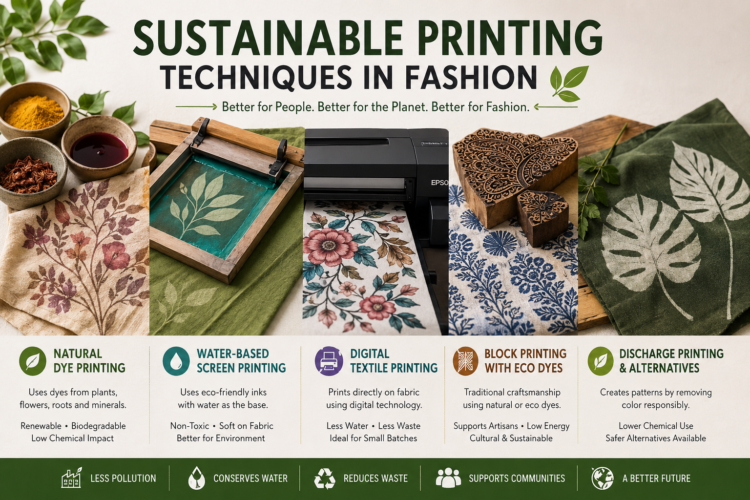
Several sustainable techniques exist today. Each method offers specific advantages. Some rely on modern technology. Others preserve traditional craftsmanship.
Popular sustainable methods include:
- Natural dye printing.
- Water-based screen printing.
- Digital textile printing.
- Eco-friendly block printing.
- Sustainable discharge alternatives.
Each technique serves different purposes. Designers should understand these differences. This knowledge improves decision-making.
🌱 Natural Dye Printing
Natural dye printing uses plant-based colour sources. This technique existed for centuries. Many cultures used natural dyes historically. Today, sustainable fashion embraces them again.
Natural dyes come from renewable materials. Plants provide many colour options. Flowers also create beautiful shades. Fruits produce unique colour variations. Minerals contribute additional possibilities.
These materials reduce chemical dependence. They also support environmentally responsible production.
🍃 How Does Natural Dye Printing Work?
Natural pigments require extraction first. Producers collect suitable raw materials. These materials undergo processing carefully. Colour pigments become ready afterward.
The extracted dyes reach fabrics later. Different printing methods remain possible. Results depend on material selection. Fabric type also influences outcomes.
Natural dye printing requires patience. However, many designers appreciate its authenticity. Unique colour variations add character. These qualities attract conscious consumers.
🌸 Common Sources of Natural Dyes
Many natural materials produce colours. Different sources create different shades. These colours often appear rich. They also feel naturally appealing.
Popular natural dye sources include:
- Indigo.
- Turmeric.
- Madder root.
- Pomegranate peels.
- Onion skins.
These materials remain widely used today.
🌿 Benefits of Natural Dye Printing
Natural dyes offer several advantages. They come from renewable resources. Many biodegrade naturally afterward. Environmental impact remains relatively low.
Additional benefits include:
- Reduced chemical pollution.
- Unique colour effects.
- Traditional craftsmanship support.
- Sustainable sourcing opportunities.
These factors drive growing popularity.
⚠️ Challenges of Natural Dye Printing
Natural dyes present some challenges. Colour consistency may vary. Production can take longer. Certain shades remain difficult.
Despite these limitations, interest continues growing. Sustainable fashion supports wider adoption. Many consumers appreciate natural aesthetics.
🎯 Fun Fact
Indigo remains among history’s oldest dyes.
Master Fashion Designing and Create Your Signature Style
Unlock your creative potential with our expert-led Fashion Designing course. Build in-demand skills and step confidently into the world of fashion!
Begin Your Fashion Career Today!💧 Water-Based Screen Printing
Screen printing remains highly popular. Many fashion brands use it. Traditional methods often use plastisol inks. Sustainable alternatives now exist.
Water-based screen printing replaces plastisol inks. These inks contain more water. Chemical content remains significantly lower. Environmental impact decreases considerably.
This method produces attractive results. Many designers prefer its appearance. Consumers often enjoy its comfort.
🖌️ How does Water-Based Printing Work?
The printing process remains familiar. Ink passes through a screen. The design transfers onto fabric. The primary difference involves ink composition.
Water-based inks absorb into fibers. They create softer finishes. Fabric remains more breathable afterward. Comfort levels often improve.
This quality appeals to consumers. Many sustainable brands prefer this method.
🌿 Why are Water-Based Inks Better?
Traditional inks may contain PVC. Some also contain harmful substances. Water-based alternatives reduce these concerns. Environmental performance improves noticeably.
Benefits include:
- Lower chemical content.
- Softer fabric feel.
- Better breathability.
- Reduced environmental impact.
These qualities support sustainable production.
👕 Where is Water-Based Printing Used?
Many garments use this technique. Casual clothing often benefits. Fashion collections also use it. Sustainable brands frequently adopt it.
Common applications include:
- T-shirts.
- Hoodies.
- Tote bags.
- Casual apparel.
The method remains highly versatile.
💡 Pro Tip
Water-based inks suit natural fabrics best.
🖥️ Digital Textile Printing
Digital printing transformed textile production. This technology offers impressive flexibility. Sustainability benefits remain significant. Many brands now prefer digital methods.
Unlike traditional methods, screens disappear completely. Designs transfer directly onto fabric. Computer software controls the process. Production becomes highly efficient.
This approach reduces resource consumption. Waste levels decrease considerably. Customization also becomes easier.
📱 What Makes Digital Printing Different?
Digital printing uses specialized printers. Designs move directly from computers. Manual screen preparation becomes unnecessary. Production steps decrease significantly.
This streamlined workflow saves resources. Time requirements also decrease. Small production runs become practical.
These advantages support sustainable fashion goals.
💦 How does Digital Printing Save Water?
Water conservation remains important today. Traditional methods often require large amounts. Digital printing reduces this requirement dramatically.
Benefits include:
- Lower water consumption.
- Reduced chemical usage.
- Less ink waste.
- Improved efficiency.
These improvements support environmental sustainability.
🎨 Why do Designers Prefer Digital Printing?
Design flexibility remains exceptional. Complex artwork prints easily. Detailed patterns remain possible. Colour accuracy also improves.
Designers appreciate these capabilities. Creative possibilities continue expanding. Custom production becomes more accessible.
Many modern brands rely heavily. Digital printing supports innovation effectively.
🚀 Supporting On-Demand Production
Overproduction creates fashion waste. Digital printing helps reduce this issue. Smaller quantities become economically viable.
Brands can print only needed quantities. Excess inventory decreases significantly. Waste reduction becomes easier.
This supports sustainable business models.
🎯 Fun Fact
Digital printing supports highly detailed artwork.
🪵 Block Printing with Eco-Friendly Dyes
Block printing remains a traditional technique. Artisans used it historically. Many continue practicing today. Sustainable fashion values this craftsmanship.
The process uses carved blocks. These blocks transfer patterns repeatedly. Each design requires careful preparation. Skilled artisans create remarkable results.
Eco-friendly dyes improve sustainability further. Combined methods create responsible production solutions.
🖐️ How does Block Printing Work?
Artisans carve designs into blocks. Dye coats the block surface. The block presses onto fabric. Patterns gradually emerge afterward.
Each print requires precision. Human skill remains essential. Small variations naturally occur. These variations create uniqueness.
Consumers often appreciate handcrafted qualities.
🌿 Why is Block Printing Sustainable?
Block printing uses limited machinery. Energy requirements remain relatively low. Eco-friendly dyes reduce environmental impact. Traditional techniques remain preserved.
Benefits include:
- Lower energy usage.
- Reduced industrial processing.
- Artisan support.
- Cultural preservation.
These advantages support responsible fashion.
🤝 Supporting Artisan Communities
Sustainability extends beyond environmental concerns. Social responsibility matters equally. Block printing supports skilled artisans. Traditional knowledge remains valuable.
Many communities depend on this work. Continued demand supports livelihoods. Cultural heritage remains protected.
Fashion benefits from this preservation.
🎨 Why do Consumers Like Block Prints?
Handmade products feel special. Small variations create uniqueness. Mass production cannot replicate these details.
Consumers increasingly value authenticity. Block printing provides exactly that. Sustainable fashion benefits significantly.
💡 Pro Tip
Handcrafted products often attract conscious buyers.
🌫️ Discharge Printing and Sustainable Alternatives
Discharge printing removes fabric colour selectively. This creates decorative patterns. Traditional methods may involve chemicals. Sustainable alternatives now exist.
Modern solutions focus on cleaner production. Environmental impact becomes lower. Safety standards improve considerably.
These alternatives support responsible manufacturing.
🧪 How does Traditional Discharge Printing Work?
Discharge agents remove colour locally. Lighter patterns appear afterward. The process creates soft designs. Fabric remains comfortable.
Many designers appreciate these results. However, environmental concerns remain. Sustainable alternatives address these issues.
🌱 What are Sustainable Alternatives?
Several eco-friendly options exist today. Technology continues improving steadily. Cleaner solutions become more accessible.
Popular alternatives include:
- Water-based systems.
- Digital printing.
- Low-impact dyes.
- Eco-certified inks.
These options reduce environmental impact.
👕 Why are Alternatives Important?
Consumer expectations continue changing. Sustainability matters more today. Brands must adapt accordingly. Cleaner methods support these goals.
Benefits include:
- Reduced chemical exposure.
- Improved workplace safety.
- Lower environmental impact.
- Better sustainability performance.
These advantages encourage adoption.
🔍 Choosing the Right Option
Different projects need different solutions. Fabric type matters significantly. Design complexity also matters. Production scale influences decisions.
Designers should evaluate requirements carefully. Sustainable choices improve long-term outcomes.
🎯 Fun Fact
Many alternatives match traditional print quality.
🌟 Benefits of Sustainable Printing Methods
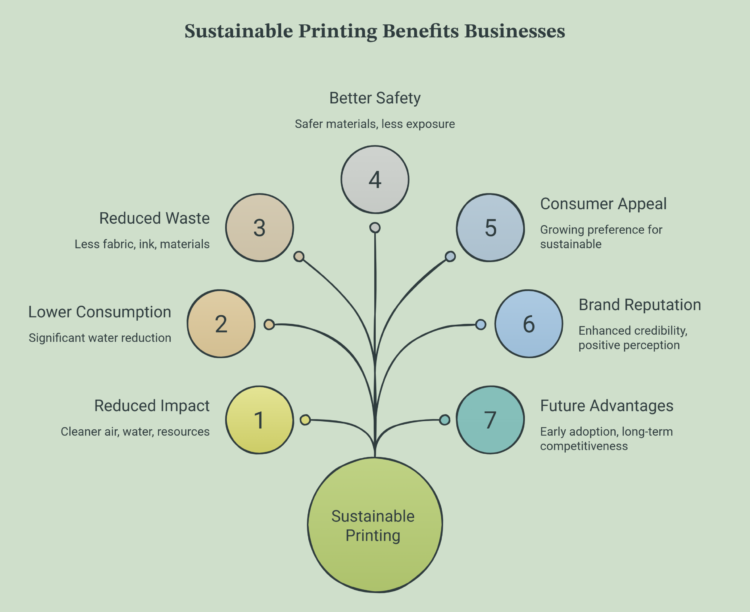
Sustainable printing offers many advantages. Environmental benefits remain important. Business benefits also exist. Consumers appreciate responsible production.
These methods support industry improvement. Long-term sustainability becomes achievable. Resource conservation improves significantly.
🌎 Reduced Environmental Impact
Cleaner production reduces pollution. Water contamination decreases considerably. Chemical waste becomes lower. Natural resources receive protection.
Environmental improvements benefit everyone. Sustainable methods support healthier ecosystems. Long-term effects remain positive.
💧 Lower Water Consumption
Water scarcity affects many regions. Sustainable printing reduces consumption significantly. Resource efficiency becomes easier.
Digital printing excels particularly here. Many brands value this advantage. Conservation efforts become stronger.
♻️ Reduced Waste Generation
Waste reduction remains important. Sustainable methods improve efficiency. Fewer materials become wasted.
Benefits include:
- Lower fabric waste.
- Reduced ink waste.
- Better resource usage.
These improvements support circular fashion.
🧍 Better Worker Safety
Safer materials improve workplaces. Chemical exposure decreases substantially. Working conditions often improve.
Employee well-being matters greatly. Sustainable methods support healthier environments. Ethical production becomes easier.
👕 Stronger Consumer Appeal
Consumers increasingly prefer sustainable products. Environmental awareness continues growing. Purchasing habits reflect these changes.
Responsible brands gain attention. Sustainable printing strengthens brand positioning. Customer trust improves significantly.
📈 Better Brand Reputation
Sustainability enhances credibility. Responsible practices create positive perceptions. Consumers appreciate transparency.
Many successful brands emphasize sustainability. Printing methods contribute significantly. Strong reputations support growth.
🚀 Future Business Advantages
Sustainability continues expanding globally. Regulations may become stricter. Consumer expectations will likely rise.
Early adoption creates advantages. Sustainable printing prepares businesses effectively. Long-term competitiveness improves.
💡 Pro Tip
Sustainability often strengthens customer loyalty.
Learn Advanced Designing & Boutique Skills with Experts. Join Now!
📝 Conclusion
Sustainable printing is reshaping modern fashion. These methods reduce environmental impact. They also support responsible production. Many brands now prioritize sustainable practices.
Natural dyes offer renewable colour sources. Water-based printing reduces chemical concerns. Digital printing conserves resources effectively. Block printing preserves traditional craftsmanship. Sustainable alternatives improve textile production further.
Fashion continues moving toward sustainability. Consumers increasingly support responsible brands. Designers must understand these developments. Sustainable printing will remain important. Its role will likely continue growing.
Master Fashion Designing and Create Your Signature Style
Unlock your creative potential with our expert-led Fashion Designing course. Build in-demand skills and step confidently into the world of fashion!
Begin Your Fashion Career Today!Frequently Asked Questions
What is sustainable printing in fashion?
Sustainable printing uses environmentally responsible methods to print designs on fabrics. These techniques reduce waste, lower chemical usage, and conserve resources compared to traditional printing methods.
Why is sustainable printing becoming important in the fashion industry?
Consumers are becoming more environmentally conscious and prefer responsibly made products. Sustainable printing helps brands reduce their environmental footprint while meeting growing customer expectations.
What are the advantages of natural dye printing?
Natural dye printing uses colours derived from plants, flowers, fruits, and minerals. It reduces dependence on synthetic chemicals and often creates unique shades that add character to fabrics.
How does digital textile printing support sustainability?
Digital textile printing applies designs directly onto fabrics without using screens. This process uses less water, produces less waste, and allows brands to print only the required quantities.
What makes water-based screen printing eco-friendly?
Water-based inks contain fewer harmful substances than traditional plastisol inks. They create softer prints, improve fabric breathability, and reduce environmental impact during production.
Is block printing considered a sustainable printing technique?
Yes, especially when combined with eco-friendly dyes and natural materials. Block printing requires minimal machinery and helps preserve traditional craftsmanship while supporting artisan communities.
What are sustainable alternatives to traditional discharge printing?
Sustainable alternatives include water-based discharge systems, low-impact dyes, eco-certified inks, and digital textile printing. These methods achieve similar visual effects while reducing chemical usage.
How do sustainable printing techniques benefit fashion brands?
Sustainable printing helps brands improve their environmental performance and strengthen customer trust. It can also enhance brand reputation and attract consumers who value ethical fashion practices.
Do sustainable printing methods affect the quality of printed fabrics?
Modern sustainable printing techniques can produce excellent colour quality and durability. Many methods offer results comparable to traditional printing while providing additional environmental benefits.
How can fashion design students learn sustainable printing techniques?
Students can explore workshops, textile courses, and practical projects focused on eco-friendly printing methods. Learning about sustainable materials and production processes helps build valuable industry skills.