Table of Contents
Synchro 4D BIM combines 3D BIM models with project schedules. It helps construction teams visualize building progress over time. The software improves construction planning, simulation, and project management. The Synchro 4D BIM meaning mainly refers to time-based BIM coordination.
- Links 3D models with construction timelines.
- Creates visual construction simulations.
- Improves project tracking and coordination.
Key Takeaways:
- Synchro 4D BIM combines 3D models with timelines.
- The software improves construction planning and sequencing.
- Teams can visualize project stages before execution.
- Real-time tracking improves project monitoring accuracy.
- Early clash detection reduces delays and costly rework.
- Visual workflows improve communication between teams.
- Infrastructure and commercial projects widely use Synchro.
- Better scheduling helps reduce project costs significantly.
- Civil engineers and BIM professionals benefit greatly.
- AI and cloud technology will expand 4D BIM growth.
Get Career-Oriented BIM Certification Course with Expert Mentors! Get a free demo here!
📘 Introduction
Construction projects involve many moving parts. Traditional planning often creates delays and confusion. Teams struggle with coordination and schedule management.
Synchro 4D BIM improves construction planning visually. It combines 3D models with project timelines. Teams can simulate construction before actual execution.
Today, many companies use 4D BIM workflows. Large projects depend heavily on visual planning tools.
- Improves construction scheduling accuracy.
- Helps visualize project progress clearly.
- Reduces delays and planning errors.
- Supports better team coordination.
- Improves project management decisions.
- Widely used in infrastructure projects.
- Creates realistic construction simulations.
- Helps monitor real-time project progress.
🧩 What is Synchro 4D BIM?
Synchro 4D BIM is construction planning software. It connects 3D BIM models with project schedules. The software creates time-based construction simulations. This helps teams visualize project progress clearly.
The term “4D” represents time integration. The first three dimensions represent the 3D model. The fourth dimension adds construction timelines.

🔹 How Synchro 4D BIM Works.
The software links construction tasks with BIM elements. Each activity follows a planned timeline. Teams can watch construction sequences virtually.
Managers can analyze every project stage visually. This improves planning and workflow understanding.
- Connects schedules with BIM models.
- Creates animated construction simulations.
- Shows project progress step-by-step.
- Improves sequencing and coordination.
🔹 Why Synchro 4D BIM Matters.
Traditional schedules use charts and spreadsheets. These methods often confuse project teams. Synchro provides visual construction planning instead.
Visual workflows improve communication greatly. Teams understand project timelines more easily.
- Improves construction visibility.
- Supports better project coordination.
- Helps avoid planning mistakes.
- Simplifies complex project schedules.
🔹 Main Purpose of Synchro 4D BIM.
The software mainly supports construction management. It helps teams plan, monitor, and optimize workflows efficiently.
- Supports project scheduling.
- Improves construction simulations.
- Enhances workflow management.
- Helps monitor project activities.
Master BIM and Elevate Your Career – Enroll Today!
Stay ahead in the construction and design industry with our comprehensive BIM Course! Learn Building Information Modeling (BIM) from experts, gain hands-on experience with top software, and boost your career prospects. Join now and become a certified BIM professional!
Know More⚙️ Key Features of Synchro 4D BIM
Synchro 4D BIM offers advanced construction planning features. These features improve project coordination and scheduling accuracy.
🔹 4D Construction Simulation.
Teams can visualize construction activities over time. This improves planning clarity greatly.
- Creates animated construction sequences.
- Shows project stages visually.
- Improves workflow understanding.
- Helps detect sequencing problems.
🔹 Schedule Integration.
The software connects schedules with BIM models directly.
- Links tasks with model components.
- Supports detailed construction timelines.
- Improves scheduling accuracy.
- Simplifies project tracking.
🔹 Real-Time Progress Tracking.
Managers can monitor project progress continuously.
- Tracks planned versus actual progress.
- Identifies delays quickly.
- Supports faster decision-making.
- Improves reporting accuracy.
🔹 Clash and Conflict Detection.
The software helps detect project conflicts early.
- Identifies scheduling clashes.
- Detects workflow overlaps.
- Reduces costly rework.
- Improves coordination efficiency.
🔹 Team Collaboration Tools.
Synchro improves communication between departments.
- Supports shared project access.
- Improves coordination between teams.
- Simplifies information sharing.
- Reduces communication gaps.
🔹 Data Integration Support.
The software supports multiple construction platforms.
- Integrates with BIM software.
- Supports Primavera schedules.
- Handles large project files.
- Improves workflow connectivity.
⚖️ Synchro 4D BIM vs Traditional Planning Methods
Construction planning methods evolved significantly over time. Traditional planning mainly uses Gantt charts, spreadsheets, and manual schedules. These methods often create confusion during project execution. Teams may struggle to understand complex workflows clearly.
Synchro 4D BIM provides a more advanced approach. It combines 3D BIM models with project timelines. This creates visual construction simulations. Teams can view project stages before actual construction begins.
Visual planning improves communication across departments. Managers, engineers, and clients understand workflows more easily. This reduces misunderstandings and improves coordination greatly.
| Feature | Synchro 4D BIM | Traditional Planning |
|---|---|---|
| Visualization. | 3D animated simulation. | Static charts. |
| Coordination. | Better team collaboration. | Limited coordination. |
| Error Detection. | Early issue identification. | Late problem detection. |
| Decision Making. | Faster decisions. | Slower approvals. |
| Client Understanding. | Easy visual explanation. | Difficult interpretation. |
| Project Tracking. | Real-time monitoring. | Manual tracking. |
🔹 Why Synchro 4D BIM Performs Better.
Traditional methods lack visual construction representation. Teams depend heavily on written schedules and reports. This increases communication gaps frequently.
- Improves workflow visibility clearly.
- Helps detect project conflicts early.
- Supports faster project approvals.
- Reduces delays and costly rework.
- Simplifies construction progress tracking.
- Improves collaboration between project teams.
🏗️ Applications of Synchro 4D BIM in Construction
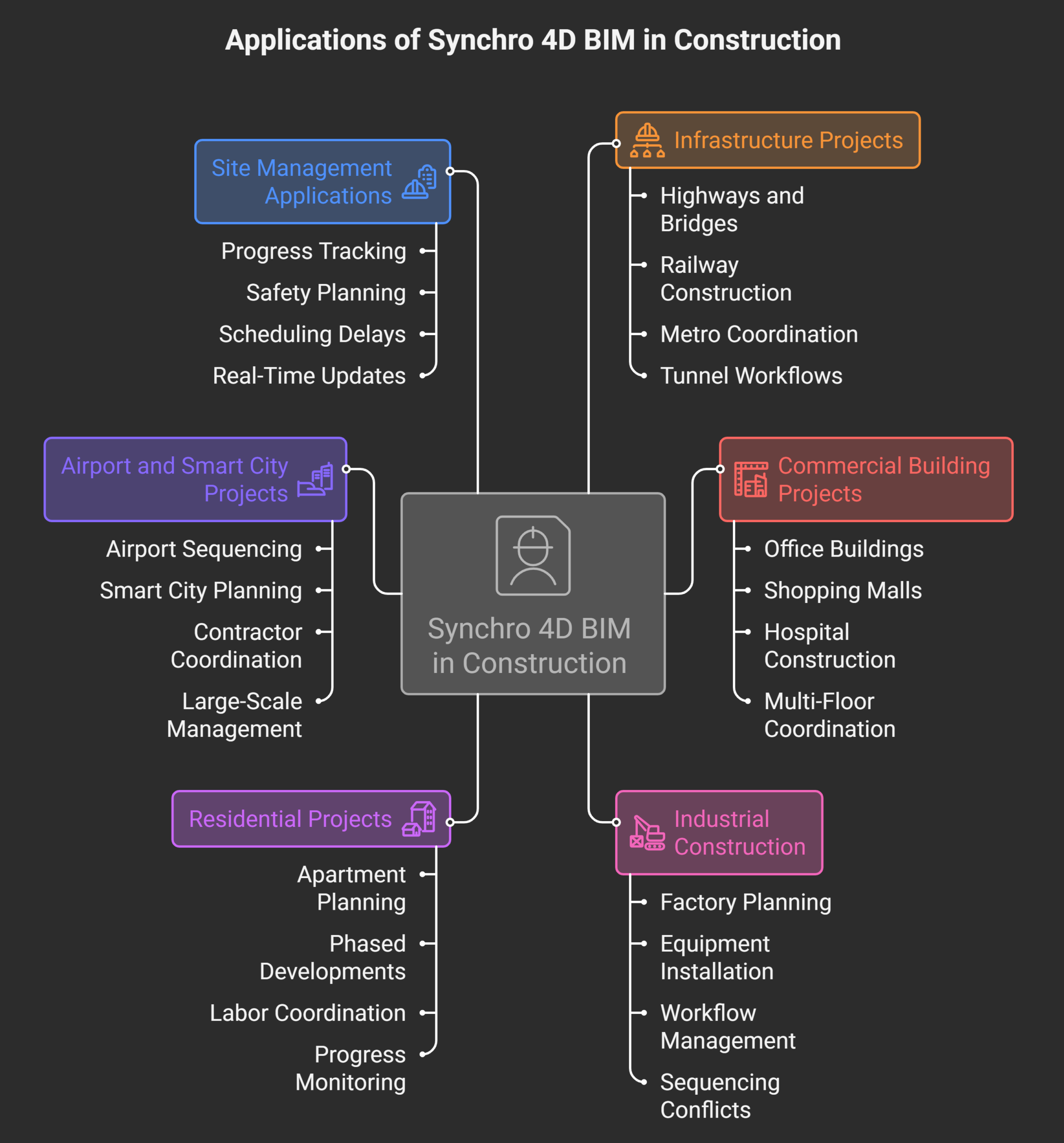
Synchro 4D BIM supports many construction sectors today. The software improves planning, coordination, and workflow management. Large projects depend heavily on visual construction simulations.
🔹 Infrastructure Projects.
Infrastructure projects involve complex construction activities. Synchro improves sequencing and project coordination significantly.
- Used for highways and bridges.
- Supports railway construction planning.
- Improves metro project coordination.
- Helps manage tunnel construction workflows.
🔹 Commercial Building Projects.
Commercial projects require accurate scheduling and monitoring.
- Supports office building construction.
- Improves shopping mall planning.
- Helps manage hospital construction stages.
- Simplifies multi-floor project coordination.
🔹 Industrial Construction.
Industrial projects involve heavy equipment and strict timelines.
- Supports factory construction planning.
- Helps equipment installation scheduling.
- Improves workflow management.
- Reduces construction sequencing conflicts.
🔹 Residential Projects.
Housing projects also benefit from 4D BIM workflows.
- Improves apartment construction planning.
- Helps manage phased developments.
- Supports better labor coordination.
- Improves project progress monitoring.
🔹 Airport and Smart City Projects.
Large public projects require advanced planning systems.
- Improves airport construction sequencing.
- Supports smart city infrastructure planning.
- Helps coordinate multiple contractors.
- Simplifies large-scale project management.
🔹 Site Management Applications.
Construction teams use Synchro for daily management activities.
- Tracks project progress visually.
- Improves safety planning workflows.
- Helps reduce scheduling delays.
- Supports real-time project updates.
Master BIM and Elevate Your Career – Enroll Today!
Stay ahead in the construction and design industry with our comprehensive BIM Course! Learn Building Information Modeling (BIM) from experts, gain hands-on experience with top software, and boost your career prospects. Join now and become a certified BIM professional!
Know More✅ Benefits of Using Synchro 4D BIM
Synchro 4D BIM provides many construction advantages. The software improves planning, coordination, and project execution. Many companies now prefer visual BIM workflows.
🔹 Better Project Visualization.
Visual simulations improve workflow understanding significantly.
- Shows construction stages clearly.
- Improves project transparency.
- Helps teams understand timelines faster.
- Simplifies complex construction activities.
🔹 Improved Scheduling Accuracy.
The software connects schedules with BIM models directly.
- Reduces scheduling confusion.
- Improves activity sequencing.
- Supports accurate timeline planning.
- Helps manage phased construction better.
🔹 Reduced Delays and Rework.
Early issue detection prevents costly project problems.
- Identifies clashes before construction.
- Helps avoid workflow conflicts.
- Reduces unnecessary rework.
- Improves construction efficiency.
🔹 Better Team Coordination.
Visual planning improves communication across departments.
- Supports smoother collaboration.
- Improves contractor coordination.
- Helps teams share updates easily.
- Reduces communication gaps.
🔹 Improved Decision-Making.
Managers can monitor projects more effectively.
- Supports faster approvals.
- Improves project monitoring.
- Helps track real-time progress.
- Simplifies project reporting tasks.
🔹 Enhanced Safety and Cost Control.
Better planning improves construction safety greatly.
- Reduces site-related risks.
- Improves safety sequencing.
- Helps control project expenses.
- Minimizes material wastage.

Master BIM and Elevate Your Career – Enroll Today!
Stay ahead in the construction and design industry with our comprehensive BIM Course! Learn Building Information Modeling (BIM) from experts, gain hands-on experience with top software, and boost your career prospects. Join now and become a certified BIM professional!
Know MoreFrequently Asked Questions
What is Synchro 4D BIM used for?
Synchro 4D BIM is used for construction planning, scheduling, and project visualization across different construction sectors. It helps teams simulate construction activities over time and improves coordination between engineers, managers, contractors, and stakeholders.
Why is 4D BIM important in construction?
4D BIM improves project planning by connecting construction schedules with 3D BIM models visually. This helps teams identify delays, sequencing conflicts, and coordination issues before actual construction work begins.
How does Synchro 4D BIM work?
The software links BIM model components with project timelines and scheduling activities. It then creates animated simulations that show how construction progresses during each project stage.
Which industries use Synchro 4D BIM?
Many industries use Synchro 4D BIM, including infrastructure, commercial construction, industrial plants, railways, airports, and residential developments. Large and complex projects benefit greatly from visual scheduling and simulation workflows.
What are the main benefits of Synchro 4D BIM?
Synchro improves construction visualization, workflow coordination, and project tracking significantly. It also helps reduce delays, rework, material wastage, and costly project errors.
Is Synchro 4D BIM difficult to learn?
Beginners may find the software challenging during the initial learning stages because of advanced BIM workflows and scheduling concepts. However, proper training and regular project practice help professionals understand the software much faster.
Who should learn Synchro 4D BIM?
Civil engineers, BIM engineers, architects, project managers, and construction managers should learn Synchro 4D BIM for better project management skills. Engineering students and fresh graduates can also improve career opportunities by learning BIM technologies.
Which software integrates with Synchro 4D BIM?
Synchro supports integration with popular construction and BIM software platforms like Revit, Navisworks, and Primavera. This improves workflow coordination and allows smoother data exchange between project teams.
What are the challenges of Synchro 4D BIM?
High software costs, training requirements, and hardware demands remain major challenges for many companies. Large projects also require careful data management and continuous workflow updates for better performance.
What is the future scope of 4D BIM?
The future scope of 4D BIM remains very strong because digital construction technologies continue growing globally. Advanced technologies like artificial intelligence, virtual reality, cloud collaboration, and smart city development will increase BIM adoption further.