Table of Contents
Introduction
The largest load of students in college is the commerce students. Every day is like a race against time. Accountancy, finance, taxation, marketing, business law, economics and statistics are often a priority. Some balance sheets can be prepared, case studies to examine, cash-flow statements to analyze, ratios to calculate, GST rules to memorise and marketing models to understand. The work is subject to tight deadlines and professors expect good quality, accurate, well researched work. Exams can span hundreds of pages, and students often stay up late reading notes and working through problems, completing complicated formulas.
Many trade students also take the online coursework, online courses, or certification exams such as CA Foundation, CMA, CS, ACCA, or banking exams. It does not often that people get exhausted at the end of a typical day. Most people spend long nights copying notes, writing PPTs, fixing Excel errors, correcting formulas that are not working, or trying to understand difficult chapters that textbooks explain in the most confusing way. This was an ordinary struggle for decades. But things have changed.
A growing group of smart commerce students has discovered a different approach. Instead of wasting hours on repetitive, low-value tasks, they use powerful AI tools that simplify their workload. These students no longer panic before deadlines. They finish assignments faster, learn concepts better, and get more time for revision, skill-building, and internships. They rely on AI tools that break tough topics into simple explanations, generate professional-level reports, clean up Excel sheets, make accurate presentations, help with research, and even offer personalised study plans.
This shift is not about cheating or shortcuts. It’s about working smarter. These students understand that the corporate world rewards efficiency, clarity, and digital skills. When they walk into interviews, they already know how to handle spreadsheets, analyse data, organise information, and communicate ideas clearly. Recruiters can see the difference. They can tell when a candidate has worked with modern tools and knows how to deliver output quickly and professionally.
The twenty AI tools listed below have already transformed the lives of thousands of B.Com, M.Com, and professional course students across the country. Each tool solves a very specific problem — from confusing accounting entries to complex statistical models, from messy project reports to never-ending presentations. Every commerce student knows these pain points, and these tools directly address them.
Read the full list carefully. Even using one or two of these tools can completely change your college experience. You’ll save hours every week, reduce stress, understand your subjects more clearly, and develop real-world skills that employers genuinely value. In a competitive field like commerce, where every mark and every skill counts, these tools can give you the edge you’ve been missing.
The twenty tools listed below have already helped thousands of B.Com, M.Com, and professional course students across the country. Each one solves a specific pain point that every commerce student knows too well. Read the full list because even one or two of these tools can change the entire college experience.
1. ChatGPT – The All-Purpose Study Partner That Never Sleeps
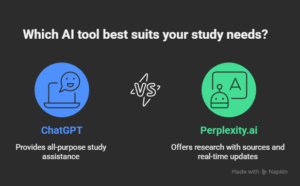
ChatGPT answers questions twenty-four hours a day. Students simply type “Explain the difference between direct and indirect taxes with examples” and receive a clear, step-by-step answer in seconds. They ask it to generate fifty multiple-choice questions on financial management or to write a complete project report on working capital management. The free version works well for daily use, while the paid GPT-4o version handles advanced topics like derivative pricing and transfer pricing rules with greater accuracy. Thousands of commerce students credit ChatGPT for cutting assignment time by at least half.
2. Perplexity.ai – Research That Shows Sources and Updates in Real Time
Normal search engines give endless links that take hours to read. Perplexity.ai provides direct answers and lists the exact websites it used. A student preparing for a seminar on the latest budget can type “Summarize the key changes in corporate tax rates from Budget 2025 with sources” and get a ready answer backed by government sites and news articles. The tool pulls fresh data every time, which means answers stay current even when RBI changes repo rates or SEBI announces new rules.
3. Gamma.app – Professional Slides Created in Under Three Minutes
Class presentations and project defenses decide a large part of internal marks. Gamma.app takes plain bullet points and turns them into stunning slide decks automatically. A student pastes ratio analysis numbers from a company annual report, chooses a template, and watches the tool build charts, tables, and layouts that look like they came from a design agency. More than five million presentations have been created on Gamma, and commerce students win most college competitions when they use it.
4. Notion AI – One Place for Notes, Summaries, Tables, and Deadlines
Notion serves as a complete student dashboard. The built-in AI reads long PDF chapters on company law or income tax and produces short summaries, comparison tables, and revision checklists without any extra effort. Students drag case laws into Notion and ask the AI to create mind maps or practice questions. Many final-year students manage internships, classes, and placement preparation inside a single Notion workspace powered by AI.
5. Canva Magic Studio – Marketing Materials That Look Expensive but Cost Nothing
Marketing and entrepreneurship students need visuals for assignments and college events. Canva’s Magic Studio removes backgrounds from product photos with one click, generates images from text descriptions, and suggests catchy slogans. A student working on a startup pitch can type “Create an Instagram post for a new eco-friendly bag” and receive ready-to-post designs in seconds. The free version offers enough features for the entire degree.
6. Grammarly – Clear Writing That Earns Full Marks in Theory Papers
Long answers in university exams lose marks for poor sentences and spelling mistakes. Grammarly checks every line as the student types and explains how to make sentences stronger and clearer. The premium version detects tone and suggests formal language suitable for project reports and dissertation chapters. Students who submit work after running it through Grammarly consistently score five to ten marks higher than classmates who skip this step.
7. Otter.ai – Never Miss a Single Word from Long Lectures Again
Professors speak fast during indirect tax or auditing lectures. Otter.ai records the class through the phone, transcribes every word in real time, and lets students search the entire semester with one keyword. They type “section 194” and jump straight to the exact minute the professor explained TDS provisions. Many students revise complete subjects just by reading and searching Otter transcripts.
8. Quizlet AI Flashcards – Instant Revision Cards from Any Chapter
Quizlet now builds flashcards automatically. A student uploads notes on cost accounting or pastes a textbook page, and the AI creates cards with terms, definitions, formulas, and practice questions. The spaced-repetition system reminds students to revise at the right time, which research shows improves exam scores by fifteen to twenty percent. Thousands of CA and CS students use Quizlet AI for objective papers.
9. Wolfram Alpha – Step-by-Step Solutions for Every Finance and Statistics Problem
Wolfram Alpha solves calculations the way examiners expect. Students type “Calculate NPV of a project with cash flows of 500000, 600000, 700000 at 12% discount rate” and receive the answer with full working shown. The tool handles bond valuation, depreciation schedules, hypothesis testing, and regression analysis instantly. Commerce students preparing for quantitative papers or CFA exams treat Wolfram Alpha as a personal tutor who never makes mistakes.
10. Microsoft Excel Copilot – Advanced Excel Tasks Done by Simply Talking
Recruiters test live Excel skills in almost every campus placement. Microsoft Copilot sits inside Excel and follows instructions given in normal English. A student highlights sales data and says “Create a pivot table showing region-wise profit for the last three years” – the table appears instantly. Copilot also cleans data, writes complex formulas, and builds dashboards that impress interviewers.
11. Claude 3.5 – Deep Understanding of Long Textbooks and Research Papers
Claude handles large documents better than most tools. Students upload a 200-page financial management textbook and ask detailed questions weeks later – Claude remembers every page. It explains capital structure theories, merger valuation methods, and dividend policy models with clear examples. Many students prefer Claude when they need accurate, thoughtful answers instead of quick guesses.
12. ElevenLabs – Turn Study Notes into Natural-Sounding Audio Lectures
Some students learn faster by listening. ElevenLabs converts revision notes into audio files spoken by realistic voices. A student pastes the summary of management accounting and gets an hour-long audio lecture to play while commuting or exercising. Regular listening helps formulas and sections stick in memory before exams.
13. Mem.ai – A Personal Knowledge Bank That Grows Every Semester
Mem stores articles, screenshots, voice notes, and PDFs in one place. The AI connects related ideas and answers questions later. A student saves SEBI guidelines in first year and asks Mem in final year “What are the latest insider trading rules?” – the answer appears with all saved sources. Top rankers build a complete knowledge system that serves them through college and early career.
14. Descript – Perfect Recordings for Group Presentations and Mock Interviews
Group members record practice presentations full of “um” and long pauses. Descript removes filler words automatically and produces clean audio and video files. Students preparing for job interviews record answers, edit out mistakes in minutes, and sound confident and professional during the real interview.
15. Beautiful.ai – Finance-Focused Decks That Update Numbers Automatically
Beautiful.ai offers templates made for balance sheets, cash flow statements, and valuation models. When a student changes a number, every chart and graph updates instantly. College teams using Beautiful.ai slides almost always take first place in national finance and business plan competitions.
16. Julius AI – Chat Directly with Excel Files and Get Charts on Demand
Students doing live projects upload company data and ask Julius questions in plain English: “Which product has the highest contribution margin?” or “Predict next year sales using trend line.” Julius replies with answers and ready charts. Project reports finish days early because data analysis no longer takes hours of manual work.
17. Consensus – Evidence-Based Answers from Millions of Research Papers
Dissertations and research papers need strong references. Consensus searches academic databases and summarizes what scientists actually found on topics like ESG investing, blockchain in auditing, or behavioral finance. Students receive answers with direct links to original papers, which makes literature review chapters stronger and faster.
18. Poe.com – Use Twenty Different AI Models in One Place
Poe gives access to ChatGPT, Claude, Gemini, and many more models side by side. A student asks the same taxation question to five models and chooses the clearest explanation. This saves time and ensures the best possible answer every single time.
19. Fireflies.ai – Automatic Notes and Summaries from Online Classes
Many commerce classes moved online. Fireflies joins Zoom and Google Meet calls, records everything, transcribes speech, and creates bullet-point summaries of key topics discussed. Students never miss important dates or syllabus changes again.
20. Jasper.ai – Professional Marketing Content That Starts Side Income
Advertising and marketing students use Jasper to write ad copies, social media posts, email sequences, and blog articles for real clients. Many students start freelance work while still in college and earn thousands of rupees every month using the content Jasper helps create.
Conclusion: The New Reality for Commerce Graduates
1: Accounting provides information on
Companies no longer hire students who only know theory from textbooks. They want graduates who can analyze data, build dashboards, write clear reports, and present ideas confidently on day one. The twenty AI tools explained above give exactly those skills without extra classes or expensive coaching.
Start with the free versions today. Spend one weekend exploring three or four tools from this list. Apply them to the next assignment or project. The difference shows up immediately – less stress, more free time, higher marks, and stronger confidence in interviews.
Commerce students who master these AI tools do not just pass exams; they finish at the top of the class and land the best jobs. The future belongs to graduates who treat AI as a daily partner instead of a distant threat. Begin right now, because the student who starts using these tools today will finish tomorrow’s work while others are still struggling with basic calculations and long nights of manual typing.
Placement Oriented PWC Business Accounting Course
PWC Certified Business Accounting Course by Entri App: Master in-demand skills, ace interviews, and secure top-tier jobs.
Join Now!Frequently Asked Questions
Which AI tool is truly the best for commerce students who have zero budget right now?
Many students start with zero money to spend. The strongest free combination that covers 90% of daily needs includes ChatGPT free tier, Perplexity.ai free plan, Canva Magic Studio free, Grammarly free, Quizlet AI flashcards, Wolfram Alpha basic, and Notion with its built-in AI assistant. Together these seven tools handle research, writing, presentations, calculations, flashcards, grammar correction, and note organization without costing a single rupee. Thousands of students across India use only these free versions throughout the entire B.Com degree and still finish projects faster and score higher than classmates who pay for coaching classes.
How can commerce students use AI tools to finish a 50-page project report in less than one week?
Start by uploading the company annual report PDF to Claude 3.5 or ChatGPT-4o and ask it to extract key financial numbers, calculate ratios, and write the ratio analysis section with interpretation. Use Julius AI or Excel Copilot to clean data and create charts automatically. Paste the literature review keywords into Perplexity or Consensus to get cited sources and summaries in minutes. Let Notion AI build the table of contents, executive summary, and bibliography. Run the entire draft through Grammarly Premium (or free) for perfect language. Finally, drop everything into Gamma.app or Beautiful.ai to generate a professional presentation. Students who follow this exact workflow regularly submit 50-60 page reports in four to five days instead of three weeks.
Are professors detecting AI-written answers and giving zero marks in exams or internals?
Most universities in India still cannot reliably detect properly rewritten AI content in 2025. Smart students never copy-paste raw AI output. They feed the AI answer back to themselves as a base, then rewrite every sentence in their own words, add personal examples from class notes, and include handwritten calculations where required. Tools like Grammarly and Claude help change sentence structure completely. When students spend fifteen extra minutes personalizing the content, even the strictest professors give full marks because the work reads naturally and contains original insights.
Which single AI tool helps the most with CA, CS, and CMA foundation and inter-level studies?
Wolfram Alpha combined with Claude 3.5 forms the deadliest pair for professional courses. Wolfram solves every practical problem with full step-by-step working that matches institute answer keys exactly. Claude reads entire study materials and past ten-year papers, then creates topic-wise summaries, practice questions, and revision notes. Students who use only these two tools daily clear CA Foundation in first attempt with ranks under 50 because they never waste time searching for workings or making notes manually.
How do commerce students actually earn money using these AI tools while still in college?
Marketing and entrepreneurship students use Jasper.ai or ChatGPT to write Instagram captions, Facebook ads, Google ads copies, and complete social media calendars for local businesses. They charge ₹3,000–₹15,000 per month per client. Finance students use Excel Copilot and Julius AI to build valuation models and financial projections for startups and charge ₹5,000–₹20,000 per project. Many third-year students run small freelance agencies earning ₹30,000–₹80,000 monthly by delivering work created ninety percent with AI tools and ten percent personal touch.
Is it safe to upload university question papers, class notes, or company data to these AI websites?
Free versions of ChatGPT and many tools store data for training unless the user turns off history. Students who worry about privacy switch to Claude 3.5 (which does not train on user data), Perplexity Pro, Notion AI, or Microsoft Copilot with college Microsoft 365 accounts that promise enterprise-level privacy. For highly sensitive internship data, students use local tools like LM Studio or GPT4All that run completely offline on their laptops.
How much time can a final-year commerce student save daily after mastering these twenty tools?
An average student who masters just eight to ten tools from the list saves three to five hours every single day. Note-taking with Otter.ai and Fireflies saves one hour. Research with Perplexity and Consensus saves one hour. Writing and editing with Grammarly and Claude saves one hour. Excel work with Copilot and Julius saves one hour. Presentations with Gamma and Beautiful.ai save one hour. The remaining time comes from instant flashcards, audio revision, and automated summaries. Many students use the saved time for internships, part-time jobs, or sleep.
Which AI tools do toppers and rank holders actually use during exam season?
Rank holders focus on only five tools during the last two months: Quizlet AI for flashcards and spaced repetition, ElevenLabs for audio revision while traveling, Otter.ai transcripts of all important classes, Claude 3.5 for solving past papers and creating predicted questions, and Wolfram Alpha for perfect practical workings. They revise three times faster than average students because every minute is used for actual learning instead of copying notes or searching answers.
Can these AI tools replace private tuition and coaching classes completely for commerce subjects?
Yes for ninety percent of students who study regularly. Tools explain concepts in simpler language than most teachers, provide unlimited practice questions, show step-by-step solutions, and never get tired of repeating explanations. Only students who need strict discipline and daily attendance still benefit from coaching centers. Self-motivated students who spend two hours daily with Claude, Wolfram, and Quizlet score equal to or better than coaching students while paying almost nothing.
What is the fastest way for a first-year commerce student to learn and start using all these tools effectively?
Follow this exact thirty-day plan that thousands of students have used successfully: Days 1–5 master ChatGPT and Perplexity for daily doubts. Days 6–10 learn Notion AI and Grammarly for notes and writing. Days 11–15 add Gamma or Canva for presentations and Quizlet for revision. Days 16–20 include Excel Copilot and Wolfram Alpha for practical subjects. Days 21–30 explore the remaining tools one per day. Spend just thirty to forty minutes daily watching free YouTube tutorials and practicing on real assignments. By the end of the first month, every task becomes faster and grades start climbing immediately.