Table of Contents
Introduction
Hand-stitching is one of the longest-standing and most fundamental skills that fashion designing has to offer. Years before sewing machines ever came along, clothes were labour of love. It needs a lot of time to be invested in order to stitch together from beginning to end. That too using just a needle and some thread. Even with machine stitching taking over, hand-stitches remain an essential part of the job. This is the case particularly when you need precision on delicate fabrics.
Are you stepping into fashion and looking to get inside the heads of hand stitching? Or maybe you’re a fashion design student looking to really hone your skills. No matter what, mastering hand-stitching is still going to have a huge impact on the overall quality of your work. From delicate invisible hems to real show-stopping embroidery works it is kind of an art. It depends over how things actually look, how tight or loose they are, and how the end finish turns out. There is just no way to replicate the level of control that hand-stitches give the designers. In this guide, we have a look at the hand stitches that are used most often – step-by-step – and where exactly those stitches come in handy on fashion projects.
Learn Advanced Designing & Boutique Skills with Experts. Join Now!
Why Learn Hand Stitches in Fashion Designing?
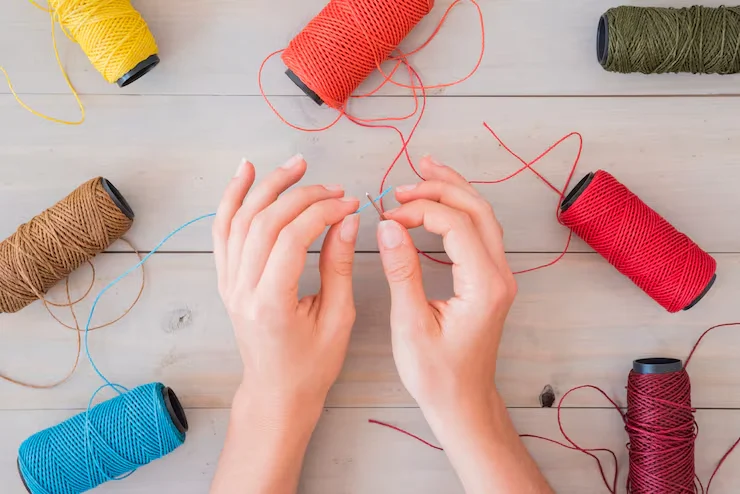 Hand stitching is not just a basic skill – it is a professional advantage.
- Essential for garment repairs, alterations, and haute couture work
- Ideal for delicate fabrics like silk, chiffon, lace, and leather
- Provides better control over tension and placement than machines
- Widely used in embroidery, beading, appliqué, and finishing
- Builds strong fundamentals for fashion design students and hobbyists
Learning hand stitches improves precision and adds a handcrafted, premium feel to garments – something machines simply cannot replicate.
Master Fashion Designing and Create Your Signature Style
Unlock your creative potential with our expert-led Fashion Designing course. Build in-demand skills and step confidently into the world of fashion!
Begin Your Fashion Career Today!Common Types of Hand Stitches and Their Uses
Below are the most important hand stitches used in fashion designing. The explanations will walk you through the steps that are easy to follow. Learn them along with their purpose and practical applications. 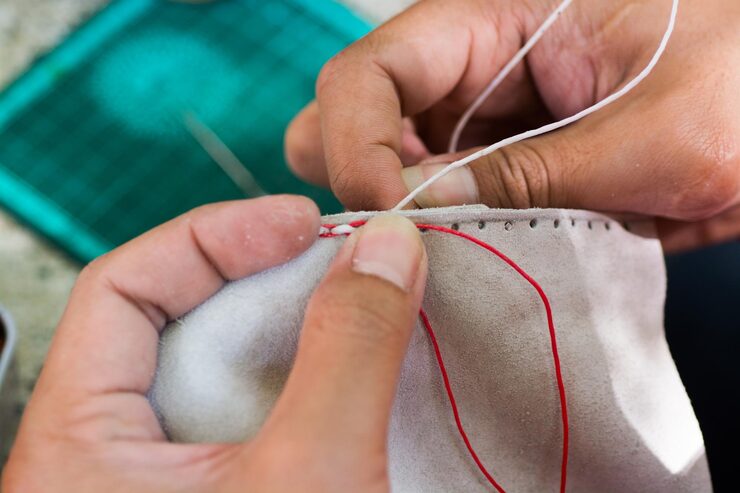
1. Running Stitch
Description:
The running stitch is the simplest and most commonly learned hand stitch. It creates a straight dashed line and is perfect for beginners.
Uses in Fashion Designing:
- Temporary basting of seams
- Gathering fabric for ruffles and skirts
- Quick hand-stitched hems for casual wear
Pro Tip: To avoid fabric puckering, keep stitch length even. Stick to this while working on lightweight fabrics.
2. Backstitch
Description:
Backstitch is one of the strongest hand stitches. This is more appealing as it closely resembles machine stitching.
Uses in Fashion Designing:
- Permanent seams on garments
- Reinforcing stress areas like armholes and waistlines
- Repairing denim, leather, or heavy fabrics
Pro Tip: Use consistent tension to maintain a neat, gap-free seam.
3. Whipstitch
Description:
A fast, diagonal stitch commonly used to join fabric edges.
Uses in Fashion Designing:
- Attaching appliqués or patches
- Finishing raw edges of felt or wool
- Joining lining or trims
Pro Tip: Keep stitches close as well as even for a clean finish.
4. Blanket Stitch (Buttonhole Stitch)
Description:
A decorative and functional stitch that prevents fabric edges from fraying.
Uses in Fashion Designing:
- Creating buttonholes
- Finishing blanket edges and wool garments
- Decorative edging on collars and cuffs
Pro Tip: Maintain equal spacing for durability and visual balance.
5. Slip Stitch (Ladder Stitch)
Description:
An invisible hand stitch used to close openings seamlessly.
Uses in Fashion Designing:
- Invisible hems on dresses and skirts
- Closing linings and facings
- Attaching pockets discreetly
Pro Tip: Use a fine needle and matching thread for best invisibility.
6. Chain Stitch
Description:
A decorative embroidery stitch that forms a looped chain pattern.
Uses in Fashion Designing:
- Surface embroidery on garments
- Floral motifs and borders
- Decorative outlines on ethnic and casual wear
Pro Tip: Vary loop sizes for texture and visual interest.
7. Satin Stitch
Description:
A smooth, dense stitch used to fill shapes with solid colour.
Uses in Fashion Designing:
- Filling embroidery motifs
- Monograms and logos
- Decorative appliqué work
Pro Tip: Keep fabric taut using a hoop to avoid uneven stitches.
8. French Knot
Description:
A small, raised knot stitch used to add texture and detail.
Uses in Fashion Designing:
- Adding dots and accents to embroidery
- Creating floral centres
- Decorative embellishment on evening wear
Pro Tip: in order to keep knots neat and secure, control the thread tension.
Tools and Materials for Hand Stitching
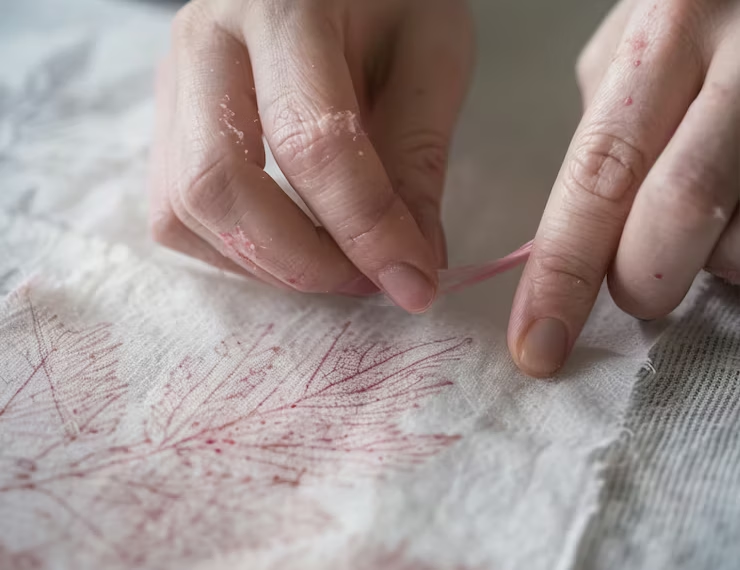
Essential Tools:
- Hand sewing needles (various sizes)
- Threads (cotton, polyester, silk)
- Scissors and thimble
Advanced Tools:
- Beeswax to prevent thread tangling
- Embroidery hoops
- Magnifying light for detailed work
Choosing the right tools can make the job feel easier. It surely improves stitch quality and comfort during long projects.
Tips for Perfect Hand Stitches
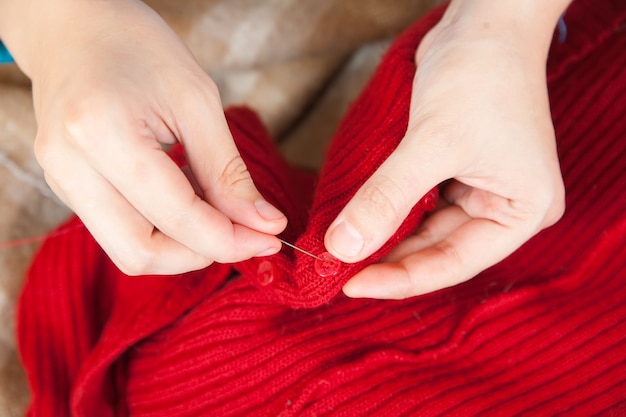
- Keep practising on fabric scraps before stitching garments
- Always match thread thickness to fabric weight
- For a smoother stitching experience, use waxed thread.
- Make it a habit to maintain consistent tension throughout
- Always knot securely and trim neatly
Master Fashion Designing and Create Your Signature Style
Unlock your creative potential with our expert-led Fashion Designing course. Build in-demand skills and step confidently into the world of fashion!
Begin Your Fashion Career Today!Quick Reference Table
| Hand Stitch Type | Primary Use | Best Fabrics | Strength Level | Visibility on Garment | Difficulty Level |
| Running Stitch | Temporary seams, basting, gathering | Cotton, linen, muslin | Low | Visible | Beginner |
| Backstitch | Permanent seams, repairs | Denim, leather, thick cotton | High | Visible | Beginner–Intermediate |
| Whipstitch | Joining edges, appliqué | Felt, wool, trims | Medium | Slightly visible | Beginner |
| Blanket Stitch | Buttonholes, edge finishing | Wool, fleece, heavy fabrics | High | Decorative | Intermediate |
| Slip Stitch (Ladder Stitch) | Invisible hems, lining closure | Silk, chiffon, satin | Medium | Invisible | Intermediate |
| Chain Stitch | Decorative embroidery | Denim, cotton, canvas | Medium | Highly visible | Intermediate |
| Satin Stitch | Filling embroidery motifs | Cotton, silk, blended fabrics | Low–Medium | Highly visible | Intermediate |
| French Knot | Texture, decorative dots | Linen, cotton, knits | Low | Visible | Intermediate–Advanced |
Learn Advanced Designing & Boutique Skills with Experts. Join Now!
Conclusion
When you’re just starting out in the fashion world, you need to start small. But do it right, or you’ll be learning from a lot of mistakes. The basics of fashion design are all about taking things one step at a time & being willing to put in the time – no short cuts here. One of the most fundamental skills a fashion designer needs to master is the different kinds of hand stitches – and just what they’re each used for.
Hand stitches are a big part of what separates a sloppily-made item from one that’s really first-class. From building the foundation of a garment to adding all the fancy details like embroidery, you can be a pro. The more you practice with patience, the faster your skills will improve and the more advanced design work you’ll be able to take on. Get these stitches down and every single garment you create is going to show off what you can do – that you care about doing a good job.
Master Fashion Designing and Create Your Signature Style
Unlock your creative potential with our expert-led Fashion Designing course. Build in-demand skills and step confidently into the world of fashion!
Begin Your Fashion Career Today!Frequently Asked Questions
Which hand stitch is the easiest for beginners?
The running stitch is probably the one easy to learn for beginners. It’s the first one most of us learn and gives a pretty good introduction to hand stitching.
Can hand stitching be as good as machine sewing?
Not really. Hand stitching is brilliant for getting into detail and tidying up a garment. But it is just not a substitute for machine sewing if you have a big batch.
Is hand stitching still a relevant necessity in everyday fashion?
Absolutely! Hand stitching is still around and has not at all gone out of style.
Which is the right type of hand stitch for making buttonholes?
The blanket stitch has been used for ages. It is still a great option for buttonholes. This works well especially when working with thick fabrics.
What's the simplest way to keep my thread from tangling?
A simple hack is to just try rubbing a bit of beeswax on your thread. This helps in keeping it from getting knotted up.
Are hand stitches really durable?
Hand stitches can last for years and years if you do them properly. If you are really good at it, you’ll never even notice they were there.