
Table of Contents
Introduction
Imagine a situation where you are all geared up to attend that awaited event. Then you find the dress you thought is the correct fit has its hems coming undone. The horror! If that sounds like a familiar tale of woe, you’re not alone. A whole bunch of sewing and fashion design newcomers say that it’s all because of bad fabric or a wonky machine. But in most cases, it just boils down to picking the wrong stitch.
Fabric stitches are the unsung heroes of the sewing world, the ones keeping our everyday T-shirts & kurtas from falling apart, to the high-tech activewear and high-end designer gowns that make style-lovers weak in the knees. The stitch you use is make-or-break – you need one that produces a garment that’s both sturdy and comfy-looking. Some pros reckon that a whopping 80% of all pro garment construction comes down to just 5 basic machine stitches. But you need to know when to use the right one for the job.
In this guide, you’ll get a closer look at the key machine stitches that really count. You can figure out when they’re best used and dish out some handy fashion design tricks that the experts rely on every day. Whether you’re just starting out, or an aspiring fashion designer, you will get a deep understanding on how to stitch like the pros do. You’ll be as confident as a pro in making a top-notch garment. So let’s get going & level up your garment-making skills.
Learn Advanced Designing & Boutique Skills with Experts. Join Now!
What Are Machine Stitches? Basics for Fashion Designing
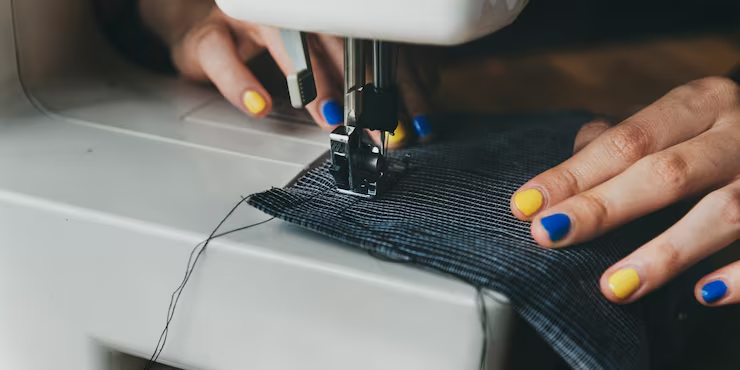 Machine stitches are a game-changing feat in the sewing scene that transformed the quality and time management in the field of fashion. Technically, it is formed when upper and lower threads interlock through a sewing machine, creating strong, uniform seams. Unlike hand stitches, machine stitches are faster, stronger, and most importantly, consistent, making them essential in garment production.
In fashion, machine stitches are used primarily to:
- Join fabric panels
- Finish raw edges
- Attach zippers, elastics, and buttons
- Add decorative detailing
- Reinforce stress areas like armholes and waistlines
Different fabrics require different stitch behaviour. For instance, woven fabrics like cotton and linen need more firm and straight stitches. On the other hand, knits and stretch fabrics need stitches that can expand without breaking.
Pro Tip: Always adjust stitch length and tension based specifically on fabric type. This is important as a stitch that works perfectly on denim may easily damage silk or jersey.
Master Fashion Designing and Create Your Signature Style
Unlock your creative potential with our expert-led Fashion Designing course. Build in-demand skills and step confidently into the world of fashion!
Begin Your Fashion Career Today!Types of Machine Stitches
Below are the most commonly used machine stitches in fashion designing and when to use them effectively.
1. Straight Stitch: The Foundation of All Seams
The straight stitch is the most basic and widely used machine stitch in sewing. Almost every garment begins with this stitch.
Best for:
- Basic seams
- Topstitching
- Quilting
- Hems on woven fabrics
Key Features:
- Single forward stitch line
- Stitch length usually between 2 to 5 mm
- Strong and neat on woven fabrics
When to Use in Fashion Designing:
- Shoulder and side seams in dresses and shirts
- Pant hems and skirt hems
- Zipper attachment
- Waistline seams
Pros:
- Strong and durable
- Beginner-friendly
- Clean professional finish
Cons:
- Not suitable for stretch fabrics
- Can break if fabric stretches
Straight stitch is perfect for everyday fashion sewing and garment construction.
2. Zigzag Stitch: Versatile for Stretch and Finishing
The zigzag stitch moves side-to-side, making it far more flexible than a straight stitch.
Best for:
- Stretch fabrics
- Edge finishing
- Appliqué work
Key Features:
- Adjustable width (1–5 mm) and length (1–4 mm)
- Prevents fabric fraying
When to Use:
- T-shirts and knit garments
- Finishing raw edges of chiffon or satin
- Decorative edging on scarves
- Buttonholes (narrow zigzag)
Pro Tip: Use a narrow zigzag when sewing elastic or attaching lace for better control.
3. Overlock Stitch (Serger Stitch): Professional Edges
The overlock stitch is commonly seen in ready-to-wear garments.
Best for:
- Seam finishing
- Trimming and enclosing raw edges
Key Features:
- Uses 3 or 4 threads
- Cuts and finishes fabric simultaneously
When to Use:
- T-shirts, jeans, casual wear
- Rolled hems for scarves and napkins
- Mass garment production
Requires a serger or overlock machine for true overlock results.
4. Stretch Stitch: For Activewear and Knit Garments
Stretch stitches are designed to expand and recover with fabric movement.
Best for:
- Knits
- Activewear
- Swimwear
Key Features:
- Lightning-bolt or reinforced zigzag pattern
- High elasticity
When to Use:
- Leggings and sports bras
- Neckbands and cuffs
- Elastic waist seams
Variation: Stretch blind hem stitch for knit trousers.
5. Buttonhole Stitch: Essential for Closures
Buttonholes are functional yet decorative elements in fashion garments.
Best for:
- Shirts, blouses, jackets
Key Features:
- Dense satin stitches around button opening
- Available in automatic and manual modes
Steps:
- Measure button size
- Mark placement
- Test on scrap fabric
- Stitch with buttonhole foot
Pro Tip: Stabilize lightweight fabrics with interfacing for neat buttonholes.
6. Blind Hem Stitch: Invisible Finishes
Blind hem stitches create almost invisible hems on the garment’s right side.
Best for:
- Formal trousers
- Skirts
- Curtains
Key Features:
- Tiny stitches catch the fold subtly
When to Use:
- Tailored pants
- Office wear
- Evening wear
7. Decorative Stitches: Adding Style to Fashion
Decorative stitches enhance visual appeal and elevate garment design.
Best for:
- Embellishments
- Surface design
Key Features:
- Satin, scallop, floral, geometric patterns
When to Use:
- Dress borders
- Bags and accessories
- Couture-inspired details
Pro Tip: Combine decorative stitches with appliqué for standout designs.
8. Topstitching Stitch: Strength Meets Style
Topstitching is both functional as well as decorative.
Best for:
- Reinforcement
- Design accents
When to Use:
- Jean pockets
- Collars and lapels
- Waistbands
Pro Tip: Use thicker thread or contrast colours for bold fashion statements.
Quick Comparison Table: Types of Machine Stitches at a Glance
| STITCH TYPE | BEST FABRIC | PRIMARY USE | STRETCH |
| Straight | Woven | Seams | No |
| Zig zag | Knit | Edges | Yes |
| Overlock | All | Finishing | Yes |
| Stretch | Elastic | Activewear | Yes |
| Buttonhole | Any | Closures | No |
| Blind Hem | Woven | Hems | Limited |
| Decorative | Any | Design | Varies |
| Topstitching | Denim | Reinforcements | No |
Common Mistakes and Troubleshooting Tips
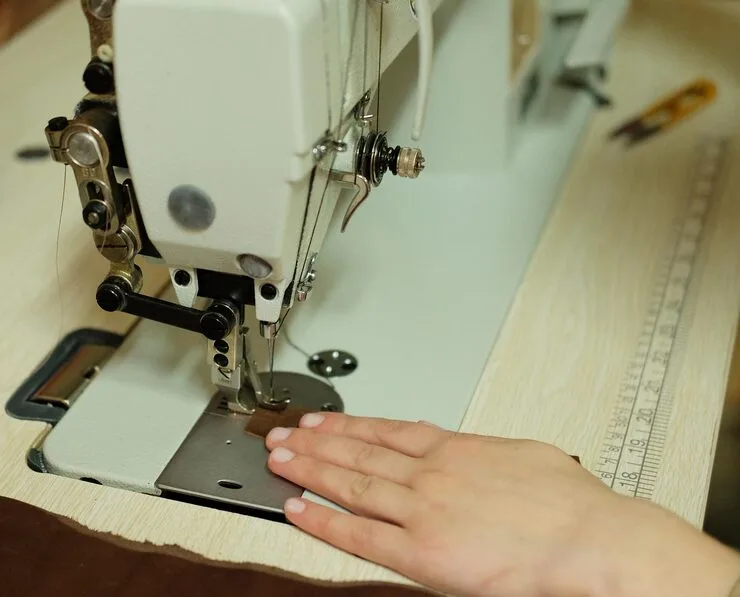 Once you feel that you have mastered the art of stitching, you might feel confident to try anything no matter your level of expertise. However, the lessons won’t turn out handy in unforeseen situations. That’s when you actually realize how things might go wrong. Here are a few heads up:
- Uneven stitches: Check thread tension
- Skipped stitches: Replace bent or wrong needle
- Fabric puckering: Reduce stitch length or tension
- Thread breakage: Match thread quality to fabric
- Stretch seams snapping: Use zigzag or stretch stitch
Through experience, tailors and fashion designers have noted that regular machine cleaning and choosing the correct needle can solve most stitching issues.
Start Your Fashion Journey Today! Learn Advanced Designing & Boutique Skills with Experts!
Master Fashion Designing and Create Your Signature Style
Unlock your creative potential with our expert-led Fashion Designing course. Build in-demand skills and step confidently into the world of fashion!
Begin Your Fashion Career Today!Conclusion
 Mastering different types of machine stitches is a game-changer in fashion designing. Each stitch obviously has a specific purpose. It depends on factors like strength and flexibility, along with invisibility, or decoration. Once you can identify when and where to use each of them, you’ll be able to create garments that look professional. Besides that you can prioritize the garments to last longer, and also feel comfortable to wear.Before you get ahead of yourself, make it a point to practice these stitches on scrap fabric. Traditionally, people chose paper to learn throughout the process. After covering the basics, experiment with tension and length, and soon your sewing projects will reflect true craftsmanship. Ready to stitch like a pro? Start applying these techniques in your next design.
Master Fashion Designing and Create Your Signature Style
Unlock your creative potential with our expert-led Fashion Designing course. Build in-demand skills and step confidently into the world of fashion!
Begin Your Fashion Career Today!Frequently Asked Questions
What is the strongest machine stitch for garments?
The strongest of machine stitches are straight and overlock stitches as they offer maximum durability.
Which stitches are ideal to start learning for beginners?
You can easily begin with straight stitch which will help you familiarize handling needles and placing stitches. Another choice is zigzag stitch.
Is it practical to replace zigzag with an overlock stitch?
Yes. This works primarily for home sewing and edge finishing.
What stitch prevents fabric from fraying?
There are two optimal choices – Zigzag or overlock stitch.
Which stitch is used for invisible hems?
That works well with blind hem stitch.
Can decorative stitches weaken fabric?
If overused on delicate fabric, yes.
How do I choose the right stitch?
Match the stitch with the fabric type first. It should also match with garment function, and movement needs.
What stitch is ideal for buttonholes?
It has got a specific stitch type called by the same name – Buttonhole stitch. This can be automatic or manual.
What stitch works best for elastic waistbands?
That has got stretch stitches in particular. But you can also try zigzag stitching.
What stitch is specifically meant for denim jeans?
Anything can go with a straight stitch. When it comes to denims, topstitching is also ideal.