Table of Contents
Crochet is a craft where you pull loops between loops of yarn with one hook. Unlike knitting which uses two needles, crochet uses only one tool to create a thicker and textured fabric. You can learn the basic stitch in fifteen minutes, and you can make a scarf in a few hours.
KEY TAKEAWAYS
- Crochet uses one hook to turn yarn into fabric by making interlocking loops.
- The craft is hundreds of years old but remains popular for clothes, blankets, and accessories.
- A beginner needs only a hook, some yarn, and basic instructions to start.
- Crochet makes thicker fabric than knitting. This fabric holds its shape well.
- Modern fashion designers use crochet for bags, tops, dresses, and coats.
- Learning crochet reduces stress, improves focus, and creates useful handmade items.
- The basic chain stitch is the foundation for everything else in crochet.
- Anyone can learn. Age and natural talent do not matter. Practice is all that counts.
Start Your Fashion Journey Today! Learn Advanced Designing & Boutique Skills with Experts!
INTRODUCTION
Take a look at that sweater someone gave you last winter. Or maybe think about that blanket that’s been draped over your couch for years. And don’t forget that bag hanging by your front door – someone probably picked that up at a store. But what you might not know is that someone else made all of those things with a craft called crochet – and it’s a lot easier than you think.
When most people think of crochet they picture those complicated loops and twisted yarn, and assume it’s something only grandma’s with years of experience can handle. They think of it as some kind of expert-level craft that’s way beyond them. But believe me – that’s just not true.
Master Fashion Designing and Create Your Signature Style
Unlock your creative potential with our expert-led Fashion Designing course. Build in-demand skills and step confidently into the world of fashion!
Begin Your Fashion Career Today!WHAT IS CROCHET?
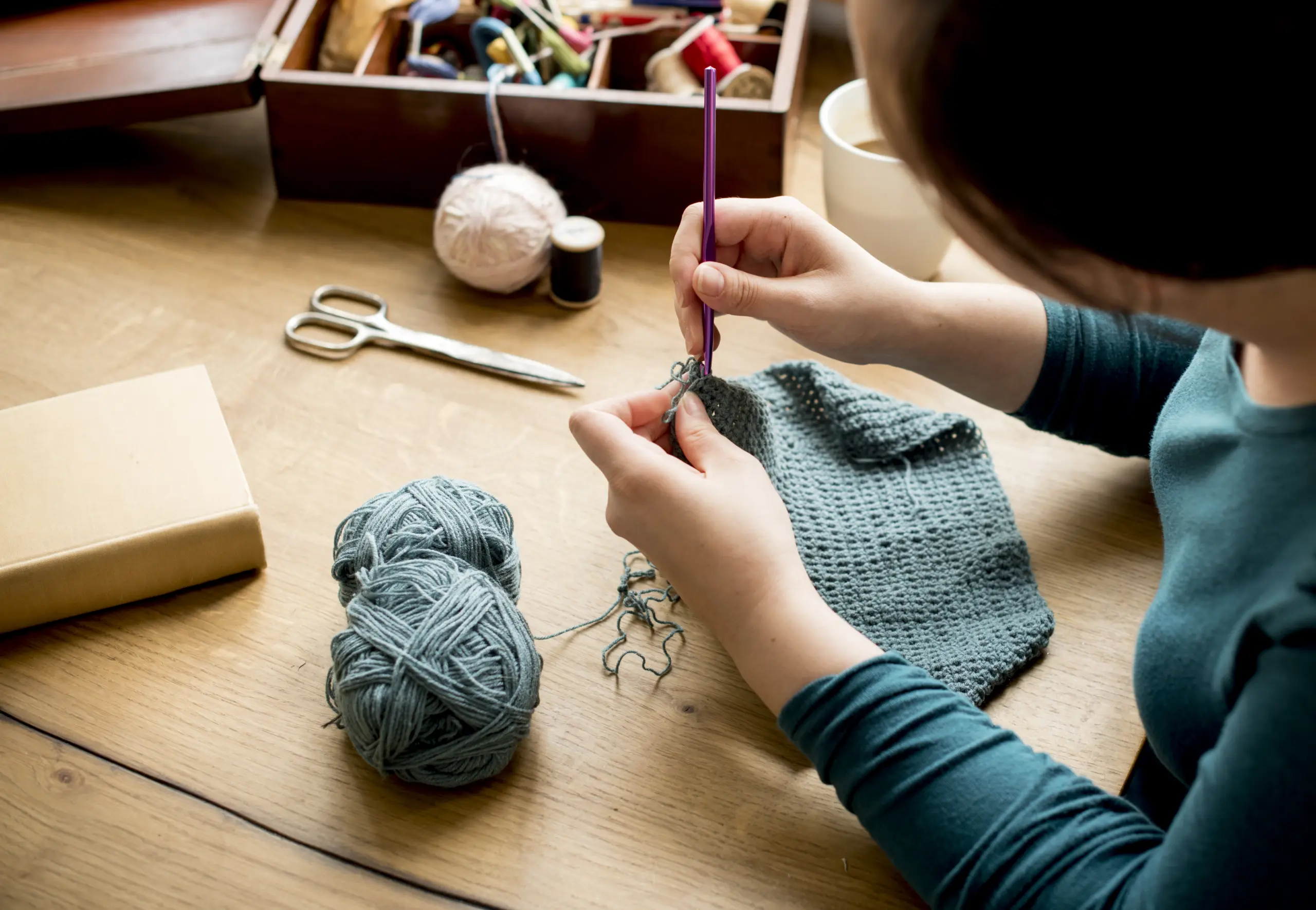
Crochet is basically making fabric from yarn or thread using a single hook. Yep, the hook – that’s where the name comes from (it’s French for hook by the way). And it’s really easy – you just hold the hook in one hand and the yarn in the other and go to town. With each move of the hook, you pull through a new loop and voila! you have a chain of connected knots that create a flexible, tough fabric – and that fabric can be flat like a blanket or shaped like a hat.
Now you may ask, what’s the difference between crochet and knitting?Well, whereas knitting uses two straight needles and multiple loops happening at once, crochet only uses one hook and one loop at a time.This makes it easier to fix if you mess up, because you can pull out the hook and rip some stitches. You couldn’t do that with knitting which has hundreds of active loops to untangle.
Crochet is also a much thicker, less stretchy fabric than knitting, so it works well for bags, baskets, and hats, and totally not so well for trying to knit a sweater or a pair of socks (though you can try).
HISTORY OF CROCHET
The exact origins of crochet are murky waters. Nobody knows who was the first one to grab a hook and loop together – it’s lost to history. But most historians agree that the craft started to take shape in Europe sometime in the 1700s.
Back then, crochet was something you did if you were rich. Only women with plenty of free time – either due to their wealth, or being part of the aristocracy – would learn to do it.
They used the priciest threads around – expensive silk and metal yarns – and created stunning, delicate items like lace collars and fancy trim.
But all that changed in the 1840s when the Irish potato famine hit. Families who could not support themselves, and most of Ireland, struggled to make ends meet. Many learned how to crochet, and soon were selling lace items. And the Irish crochet lace became known all over the world. Now this wasn’t just a hobby for the wealthy, it was also a way to make a living.
Crocheting faced hard times during the era of the industrial revolution. The mechanized process made the fabric production cheaper and faster than what even the most diligent person could do by hand. This type of crocheting became obsolete. Grandmothers were probably responsible for keeping crocheting alive.
Next came the craft revival movement of the late 60s and early 70s. There was a desire to have items that were homemade, and crocheting skills were passed down to younger generations by the older ones. Granny square afghans and crochet vests were very popular then.
HOW CROCHET WORKS
Crochet works by making linked loops that create a fabric. You’re basically just hooking a loop through the previous one. It’s that simple.
To start, you make a slipknot on the hook – that’s where the whole thing begins. Now hold the hook in your right hand – like you’re holding a pencil. Hold the yarn in your left hand, just with a bit of tension.
To create a chain, wrap your yarn over your hook. Now pull the new yarn through the loop on your hook. This forms one stitch. The process is repeated by wrapping the yarn over the hook and pulling the yarn through the loop. Soon, you will see a chain form right before your eyes. Most crochet projects begin with creating chains.
When your chain is of the required length, you need to turn the piece over. Insert your hook into the second chain from the hook, wrap the yarn over the hook and pull it through the chain. There are two loops on the hook now. Wrap your yarn over the hook and draw it through both loops. Thus, you will have formed a single crochet stitch.
At this point, you can just go ahead and use the same single crochet stitch through each chain until you reach the end of the row. Then you can do another chain stitch, flip the project, and work on the new row.
Your piece will continue growing row after row with more and more loops being added each time. Continue crocheting until your piece reaches the required size.
Master Fashion Designing and Create Your Signature Style
Unlock your creative potential with our expert-led Fashion Designing course. Build in-demand skills and step confidently into the world of fashion!
Begin Your Fashion Career Today!COMMON CROCHET TERMS
Learning to crochet is kind of like picking up a new language. You’ll be hearing these terms over and over again in every pattern and tutorial.
Chain – or ‘ch’ for short – is basically the most fundamental stitch in the game. It’s the foundation row for most projects and the starting point for almost all patterns. You might see something like ‘chain 20 to start’ in a pattern somewhere.
Slip stitch is a connecting stitch that sort of acts as a glue to hold things together. Its also handy for moving the yarn across a row without adding any height to your project.
Single Crochet – or ‘sc’ – is the shortest and tightest stitch out there. To do it, you just insert the hook, yarn over, pull through, yarn over and pull through two loops. It makes pretty dense, warm fabric.
A double crochet is basically double the height of a single crochet. The basic steps involved in performing this crochet stitch include yarn over, then inserting the hook, yarn over, pulling through, yarn over and pull through two loops, followed by another yarn over and pulling through two loops.
Treble Crochet – or ‘tr’ – is basically three times as tall again. You do yarn over twice before slipping the hook in. This stitch is great for creating open, airy fabric.
Gauge is a way to measure just how many stitches are going to fit into one inch. Lots of patterns will list a gauge so you can end up with a finished project that’s the right size.
When it comes to yarn weight – the thickness of the yarn – thicker yarns make bigger stitches and projects that work up a lot faster.
Popular Crochet Projects
If you’re just starting out, you should probably start with some small, flat projects. Scarves are by far the most common first project – they’re just long rectangles after all. No fuss about shaping or fitting.
Washcloths and dishcloths are also good for beginners. They’re small squares that teach you the basics of the stitches without tying you up for hours. You can knock out a cotton washcloth in about two hours.
Hats require a bit more skill. They need shaping at the top, but lots of hat patterns use simple stitches worked in a circular fashion. If you can manage that then you can probably finish a beanie over one weekend.
Blankets are the go-to project for experienced crocheters. A baby blanket takes a few weeks and a big adult one can take several months. They use basic stitches, which is great – but they get repeated thousands of times.
Bags are another great project to try. Crochet bags are strong and stretchy – perfect for grocery shopping or beach trips. A simple tote bag is just single crochet worked in a rectangle.
Amigurumi is the Japanese art of crocheting small stuffed animals and toys. They work in circles, so you have to be pretty careful with your stitch count. But the results are really cute and make excellent gifts.
Benefits of Learning to Crochet
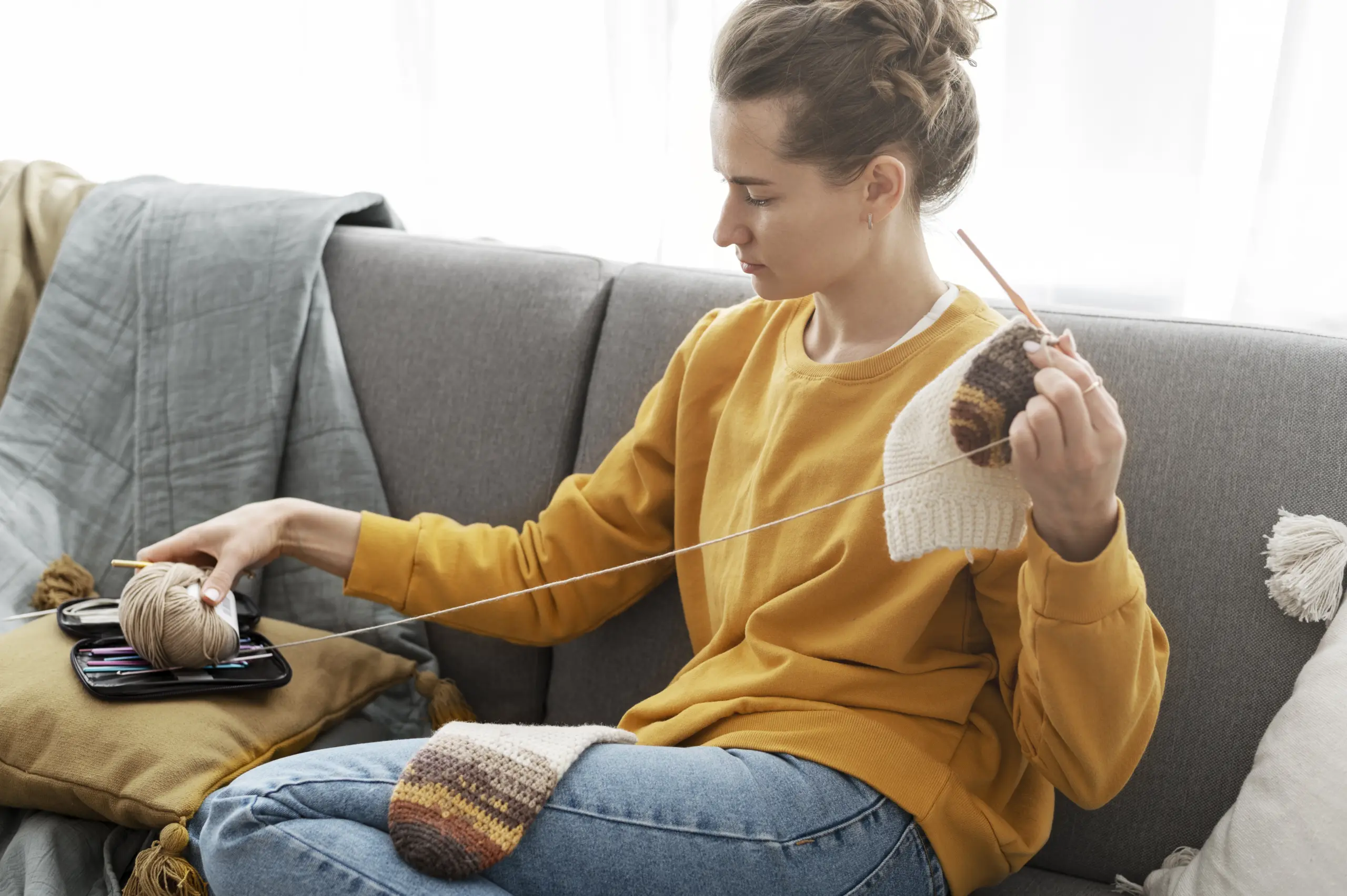
Crochet is about more than just making nice things – it can help with your mental and physical health in some pretty real ways too.
Reducing stress is one of the big benefits. The repetitive motion of crochet calms the nervous system. Your brain is just focused on the simple task at hand and your worries kind of fade into the background. In fact, lots of doctors will recommend crochet for patients with anxiety.
Another big benefit is improved focus. Crochet requires you to pay attention and count – your mind can’t wander too far. This gentle concentration actually helps to strengthen your brain’s ability to focus on other tasks.
Sense of accomplishment matters greatly. Finishing a crochet project feels good. Holding something you made with your hands builds confidence. Each completed project proves you can learn new skills.
Social connection happens through crochet. Local yarn stores host crochet groups. Online communities share patterns and support. Making things together builds friendships.
Practical savings add up over time. A handmade blanket costs less than a store bought one. A handmade hat costs less than buying one. The savings grow with each project.
CROCHET IN MODERN FASHION
Crochet is no longer just for those granny squares and blankets. High fashion designers are now using crochet in their collections.
Summer crochet tops sell like crazy. Those open stitches let a nice breeze through, so you stay cool in the heat. You can find them for sale from a lot of brands for 50 dollars or more.
Crochet bags are popping up in every fashion magazine I flip through. They’ve got that chunky textured look that’s so in right now. And whether it’s a small shoulder bag or a large beach tote, both are really popular.
Crochet cardigans and jackets have a handmade look that just can’t be replicated with mass produced clothes. That irregular texture is just eye-catching. Ive seen people stop dead in their tracks to take a second look at a crochet garment.
Even top designers like Chanel and Fendi have shown off crochet on their runways. And if they can make it fashionable, I guess handcraft has earned its place right alongside high end tailoring. Crochet is definitely fashion now.
CROCHET FOR BEGINNERS – It’s Easier than You Think
Getting into crochet isn’t that hard and it wont break the bank. A beginner only needs a few things.
A medium size crochet hook – H or 5mm is where most beginners start. Its comfy to hold and you can get a good one for around 3 bucks.
Some worsted weight yarn in a light colour. This type shows off the stitches nice and clear. You can get acrylic yarn for 4 to 6 bucks a skein.
Any scissors will do to snip off the yarn when you need to. Don’t feel like you need to shell out for the fancy ones as a beginner.
You don’t need to spend a fortune on supplies when you first start out. Basic supplies will still teach you the same skills. You can always upgrade later on if you decide you love it.
You can learn to crochet completely for free. There are thousands of YouTube tutorials to choose from. You can find crochet books at the library and plenty of classes at your local yarn store.
The most important thing is to not give up. Your first few rows are going to look like a mess. The tension will be all wonky and the edges might be a bit crooked. But that’s normal. Just keep on practicing.
Start Your Fashion Journey Today! Learn Advanced Designing & Boutique Skills with Experts!
CONCLUSION – You Really Can Do it
Crochet is a pretty simple craft with tons of possibilities. One little hook and a piece of yarn can make you a blanket, a dress, a bag, a toy or even some art. And the basic stitch – well, it takes about 15 minutes to learn. Your first project will take one evening to finish.
Anyone can learn to crochet. Its not about being a certain age or having a natural talent for it. Its all about putting in the practice. Your first row might look terrible. Your 10th row will look a bit better. Your 100th row will be something to be proud of.
Master Fashion Designing and Create Your Signature Style
Unlock your creative potential with our expert-led Fashion Designing course. Build in-demand skills and step confidently into the world of fashion!
Begin Your Fashion Career Today!Frequently Asked Questions
What is the difference between crochet and knitting?
Crochet uses one hook and works with one active loop at a time. Knitting uses two needles and keeps many loops active at once. Crochet fabric is thicker and holds its shape better. Knitting fabric is thinner and drapes more softly. Neither is better. They just serve different purposes.
How long does it take for a complete beginner to learn crochet?
A beginner can learn the basic chain stitch in fifteen minutes. The single crochet stitch takes another fifteen minutes to master. Most people finish their first small project like a washcloth within two to three hours of total practice time.
What supplies do I need to start crocheting as a beginner?
A beginner needs three things. One crochet hook in size H or 5mm. One skein of worsted weight yarn in a light colour. One pair of small scissors. Total cost is under ten dollars. Nothing else is required for the first project.
Is crochet an expensive hobby to maintain?
No. Crochet is one of the cheapest crafts. A basic hook costs three dollars and lasts for life. A skein of acrylic yarn costs four to six dollars and makes a hat or small bag. Even luxury natural yarns cost less than buying finished items from a store.
What is the easiest first project for someone who has never crocheted?
A simple scarf is the best first project. A scarf is just a long rectangle. No shaping, no fitting, and no complicated stitches are required. Make a chain as long as the scarf should be wide. Then work single crochet rows until the scarf reaches the desired length.
Can crochet be done by people with arthritis or hand pain?
Yes with some adjustments. Use ergonomic hooks with soft rubber handles. Choose smooth yarn that glides easily. Work for short periods with frequent breaks. Many people with hand pain find crochet actually improves their hand mobility over time.
Why does my crochet look uneven with holes and tight spots?
Uneven tension is the most common beginner problem. Practice making chains without thinking about tightness. Relax your grip on the hook and yarn. Consistent tension comes with time. Every beginner makes uneven work for the first few days of practice.
What types of yarn work best for beginners to learn on?
Worsted weight acrylic yarn in a light solid colour works best for beginners. Light colours like cream, yellow, or light blue show each stitch clearly. Dark colours hide the stitch details. Acrylic is cheap and forgiving. Save wool and cotton for later projects.
How do I fix a mistake without ripping out all my work?
Crochet makes fixing mistakes easy. Pull the hook out of the current loop. Gently pull the yarn to undo stitches one at a time. Stop when you reach the mistake. Insert the hook back into the correct loop. Resume crocheting. This process is called frogging.