

Table of Contents
Trading in the stock market has always been a big attraction for those who want to make quick money. But data and experience reveal a harsh reality: why Indian traders lose money is not about markets alone, often it’s about how they approach trading. Many enter with ambition, but without preparation or discipline. This blog explores the many reasons behind the fact that around 90% of Indian traders end up losing money, and what aspiring traders need to know to avoid falling into the same trap.
Learn trading from experts! Join today to learn the fundamentals of trading!
Common Reasons Traders Lose Money

1. Lack of Proper Research and Knowledge
One of the biggest reasons for losses is starting without sufficient understanding. Many retail investors invest simply based on a friend’s tip, social media advice, or hearsay rather than studying the company’s fundamentals, business model or market conditions. Without research, traders end up picking weak or overvalued companies. When markets correct or volatility spikes, these investments suffer, leaving traders with heavy losses.
2. Unrealistic Expectations & Quick-Rich Mindset
A common mistake among new traders is the hope to double their capital in a matter of weeks or months. Many approach the stock market like a lottery instead of treating it as a serious financial instrument. Since they do not make an attempt to understand the risks involved in it, they generally end up taking risky, short-term trades or speculative bets. When they do not get any instant gains from the market, they get disappointed, ultimately leading to rash decisions or quitting altogether.
3. Overtrading and Intraday/Derivative Overexposure
Many inexperienced Indian traders jump directly into intraday trading or derivatives (Futures & Options- F&O), seeking high returns.
Overtrading- constantly entering and exiting positions is another huge mistake. It increases transaction costs, reduces focus, and often leads to poor decision-making.
Derivatives trading, especially among retail investors, has been particularly risky. Industry data shows that a large share of F&O traders end up losing money, the leverage they employ turns profitable only for a small fraction.
4. Poor Risk Management and Over-Leverage
Though risk management is critical, many traders ignore it. Not using stop-loss orders, risking too much on a single trade, or over-leveraging positions can wipe out capital quickly. Leverage magnifies gains, but the market doesn’t have to move much against you for losses to snowball. Many traders don’t pay attention to this danger, leading to sudden and major capital erosion.
5. Emotional Decision-Making and Lack of Discipline
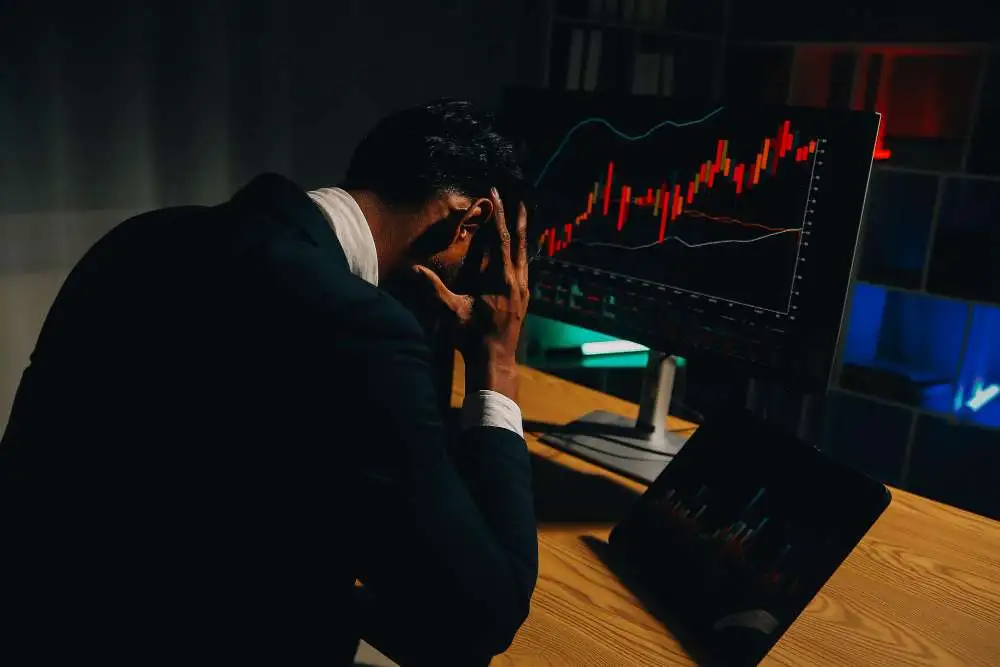
Trading is not just about numbers; it’s about psychology as well. Emotions like fear, greed, and impatience often rule and people give less importance to rational decision-making.
Some examples of such harmful behaviour are panicking during market dips and selling at losses, or impulsive buying during rallies purely due to FOMO (fear of missing out). Without discipline, in terms of when to enter or exit a trade, how much to risk, and when to stop, even a technically sound trade can become a failure.
6. Trading Without a Clear Strategy or Plan
Many traders start with no well-thought-out plan. They do not have a defined entry or exit criteria, risk-reward assessment, and consistent trading approach.
The problem with this lack of strategy is that it often translates into reactive trading: jumping into trades based on short-term market noise or tips and exiting when emotions run high. In short, without a plan, traders are essentially gambling, not investing.
7. High Transaction Costs, Fees and Hidden Costs
Frequent trading, especially in intraday or derivatives, incurs high costs. Brokerage fees, transaction charges, taxes and other charges can slowly erode gains or amplify losses. For many retail traders, these costs are not factored in before executing trades, leading to disappointing net returns. Over time, even if a few trades are profitable on paper, net profit may turn negative after accounting for all costs.
8. Ignoring Long-Term Approach and Market Fundamentals
Many traders treat trading as a short-term game and ignore long-term wealth creation, company fundamentals or macroeconomic conditions. Instead, they go behind short-term momentum, hot stocks, or market hype.
Ignoring the fundamentals makes them vulnerable when there is a correction in the markets or when hype fades. Sustainable profits rarely come from hype alone, but too many retail traders learn this the hard way.
Structural Challenges for Indian Retail Traders
1: What is a stock?
Beyond individual mistakes, there are structural and systemic factors that make trading especially hard for many Indian retail participants. These magnify the risks and skew the odds against inexperienced traders.
1. Complexity of Derivatives Market & Volatility
The derivatives market (particularly F&O) is complex, volatile, and highly leveraged. For many retail participants who may lack deep knowledge or experience, this complexity becomes a disadvantage.
Price movements in derivatives can be swift and unpredictable. What might look like a small move on a stock can lead to a large percentage loss or margin calls in a leveraged position, especially when traders are not prepared for volatility or lack a proper risk buffer.
2. Competitive Advantage of Institutional & Algorithmic Traders
Markets are increasingly dominated by institutional players, high-frequency traders, and algorithmic trading firms. These entities have an upper hand as they operate with better tools, faster execution, and deeper pockets. Thus, it becomes hard for the retail traders to compete with them.
Retail traders, who often trade on impulse or limited information, end up competing against far more sophisticated players. Due to this structural imbalance, the probability of success of retail traders will be reduced.

Key Takeaways
- A major reason “why Indian traders lose money” is not just lack of luck, it’s lack of preparation, discipline, and sound strategy.
- Overtrading, emotional decision-making, poor risk management, and unrealistic expectations, be it individually or collectively, is a dangerous combo that erodes capital steadily.
- The derivatives market often increases risks, especially for retail traders who may not completely understand volatility or leverage.
- High transaction costs and structural competition from institutions makes it difficult for most retail participants to sustain profit generation.
- Trading with no education, research, or a well-defined plan makes success equivalent to gambling and the odds are heavily stacked against retail traders.
- Long-term thinking, patience, and disciplined risk management are always the most reliable tools for anyone serious about trading or investing.
Join the Entri App stock market Course today itself and become a more confident investor!
Conclusion
Hope the article offers valuable insights into the common mistakes due to which 90% of Indian traders lose money. If you want to learn more about stock trading, all you need is a credible finance education platform and a team of expert mentors. Entri Finacademy is one such institution, a SEBI-compliant platform offering stock market, mutual fund and forex courses. With over 9 million students and 8 years in the industry, Entri is undoubtedly a class apart. Moreover, with features such as live and recorded classes and exclusive doubt clearance sessions, learning becomes pretty easy for students. To know more about Entri’s courses, click here.
Stock Market Training Reviewed & Monitored by SEBI Registered RA
Trusted, concepts to help you grow with confidence. Enroll now and learn to start investing the right way.
Know moreFrequently Asked Questions
Is it true that 90 % of Indian traders lose money?
Yes. Several studies and market reports show that a vast majority of retail traders, especially those active in derivatives or intraday trading end up with net losses. The high loss rate reflects both trading behaviour and structural market factors.
Does lack of experience really cause so many losses?
Absolutely. Trading without sufficient knowledge about market dynamics, risk management, valuation, and strategy significantly increases chances of making poor decisions and suffering losses.
Does applying a trading strategy improve my chances of success?
Yes. Having a clear plan with defined entry/exit points, risk limits and stop-loss placements helps reduce emotional decision-making and improves consistency. Discipline and risk management often make the difference between losing and surviving.
Are derivatives trading (F&O) always risky for retail traders?
Derivatives are inherently riskier due to leverage and volatility. For retail traders without strong risk buffers or experience, F&O trading can lead to rapid capital losses. That doesn’t mean derivatives are bad, but they require skill, caution, and discipline.
How do transaction costs affect profitability?
Frequent trading, especially intraday or short-term trading involves brokerage fees, taxes, and other charges. Over time, these costs reduce net returns substantially and can turn profitable trades into losses.
Why do traders often make emotional decisions? Isn’t trading about logic
In theory, yes. But in practice, emotions like fear, greed, impatience influence many retail traders. These emotions can override rational analysis, leading to impulsive trades, poor timing, or ignoring risk management.
What can an aspiring trader do to avoid being part of the 90 % who lose money?
Focus on education, build a disciplined trading plan, manage risk carefully (use stop-loss, avoid over-leverage), avoid unrealistic expectations, trade selectively (not too often), and think long-term. Patience, discipline, and a strategic mindset are key.