Table of Contents
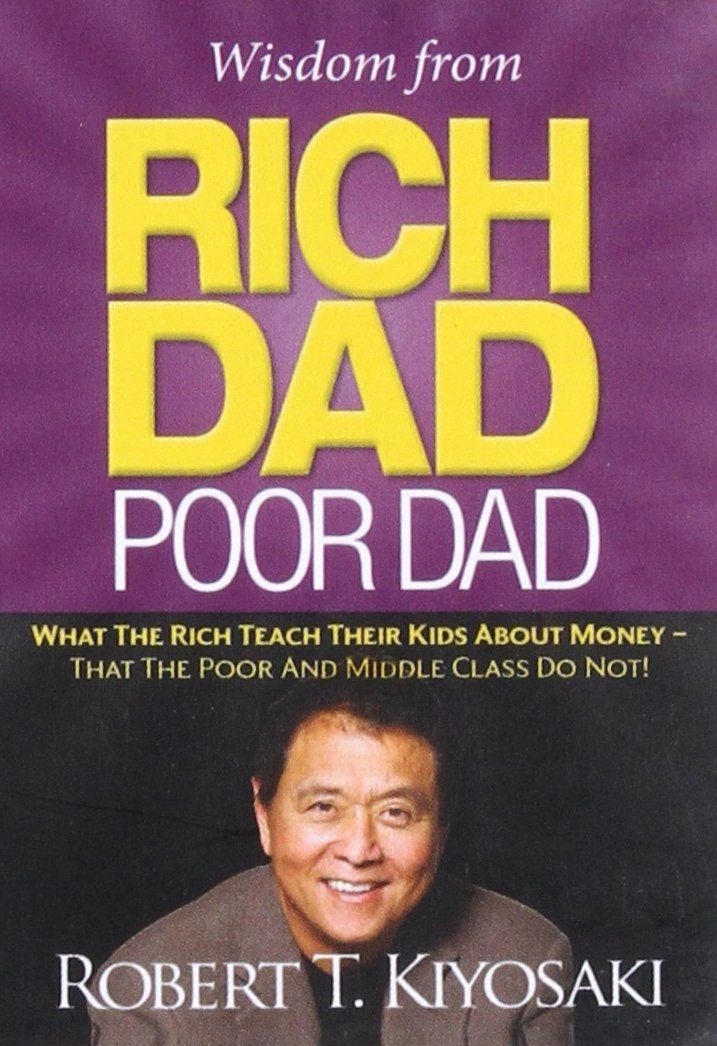
Robert Kiyosaki is a popular name among Indian readers as well as global book lovers. Kiyosaki’s famous book, “Rich Dad Poor Dad” has sold over 44 million copies and has been translated into a minimum of 43 languages.
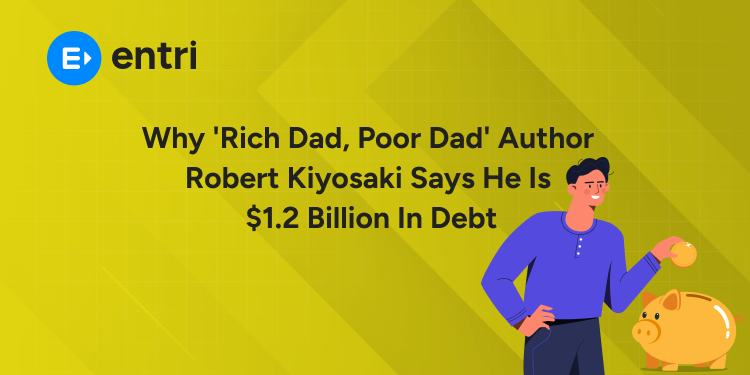
Several young Indians read this book as their first step into personal finance. Hence when Kiyosaki recently said he owes $1.2 billion, he became the centre of attraction. It naturally led to people wondering how a man who teaches financial wisdom could be in so much debt.
But the answer lies in his own thinking. He does not see this debt as a problem. He sees it as a tool. This is what many are now calling the Robert Kiyosaki debt strategy.
Ace your personal finance journey with Entri’s Personal Finance Online Course. Join Now!
Key Takeaways
- Robert Kiyosaki, the famous author of “Rich Dad Poor Dad,” has openly said he is $1.2 billion in debt.
- Most of this debt is not his alone. It is shared with business partners across about 1,500 apartment units and some hotels.
- Kiyosaki calls this his Robert Kiyosaki debt strategy — using borrowed money to buy assets, not liabilities.
- He believes that big loans become the bank’s problem, not his own problem.
- His personal share of the total debt is much smaller than the headline number suggests.
- Kiyosaki continues to invest in real estate, gold, silver, and Bitcoin using the same debt-based thinking.
- Financial experts remain divided on whether ordinary people should copy this approach.
What Exactly did Kiyosaki Say?
1: What is a stock?

Kiyosaki has repeated this claim many times in recent months. On a podcast, he plainly said, “I’m a billion two in debt.” This means $1.2 billion. He has said the same thing on social media too.
In one post, he compared his approach with another famous finance personality, Dave Ramsey. Ramsey believes in living debt-free and Kiyosaki disagrees with this philosophy. According to him, debt, when used correctly, can build wealth instead of destroying it. He explained his logic in simple words.
If you owe a bank $20 million and cannot repay it, that is your problem. But if you owe $1 billion and cannot repay it, he says, it becomes the bank’s problem. This bold statement is central to his entire outlook on money.
The Real Story Behind the $1.2 Billion
Here is where it gets interesting. The $1.2 billion is not money that Kiyosaki alone owes. It is a shared debt. His former wife and long-time business partner, Kim Kiyosaki, has clarified this point. She said the debt is spread across a group of real estate investors, including Kiyosaki, who together own around 1,500 apartment units and some hotel properties.
This means Kiyosaki’s personal share of the total debt is much smaller than the headline figure. According to Vanity Fair, Kiyosaki’s estimated share of the debt would be somewhere in the range of $30 million to $60 million going by his claim that he pulls in around $3 million a year.
That is still a huge number for most people. But it is nowhere close to $1.2 billion. This detail is often missed when people just see the big scary number in headlines.
The Logic Behind the Robert Kiyosaki Debt Strategy
Are you curious to know why Kiyosaki keeps repeating this $1.2 billion figure if it is not fully his own money? The simple reason is that he wants to make a point. His entire philosophy rests on the difference between good debt and bad debt.
According to him, bad debt is money borrowed to buy things that lose value. A car loan or a personal loan for a vacation would fall into this bucket. Good debt, on the other hand, is money borrowed to buy things that earn money. Rental apartments are a good example.
The rent from tenants pays back the loan every month. Over time, the property value may also increase. This is the heart of the Robert Kiyosaki debt strategy. He has also talked about refinancing. This means taking a new loan against a property that has grown in value, and using that fresh money to buy more properties.
As long as rent keeps flowing in and banks keep lending, this cycle can continue. Kiyosaki has used this method for decades to grow his real estate holdings.
Kiyosaki has also spoken about how debt helps him with taxes. He says that by using loans to buy real estate, he can legally reduce how much tax he pays. This is a common practice among large property investors across the world. Loan interest and depreciation on property can often be used to lower taxable income. This is another reason why the Robert Kiyosaki debt strategy focuses so heavily on real estate rather than cash savings. He often says that saving cash is not smart. He believes that since money is no longer backed by gold, its value keeps falling due to inflation. So instead of holding cash, he prefers holding hard assets like real estate, gold, and silver. In recent years, he has also become a strong supporter of Bitcoin, treating it the same way he treats gold, as protection against a weakening currency. One of Kiyosaki’s most unconventional investments is in Wagyu cattle. Trusted, concepts to help you grow with confidence. Enroll now and learn to start investing the right way.
Many readers may wonder if this billion-dollar debt puts his Bitcoin or gold holdings in danger. The answer, based on his own explanation, is no. The $1.2 billion in loans is tied to real estate properties like apartment buildings. It is not linked to his Bitcoin or gold investments. These loans are secured against the properties themselves, not against his other assets. So even if something went wrong with the real estate loans, his crypto and precious metal holdings would not automatically be affected. This is a big question for readers in India. Kiyosaki’s approach may sound exciting, but it comes with serious risks. He himself has faced financial trouble in the past. One of his companies filed for bankruptcy protection years ago after losing a legal case. This shows that even his own strategy has not always gone smoothly. For most people in India, taking on massive debt to buy assets is not practical or safe. Banks in India are also more cautious than in the US when it comes to lending such large sums for real estate. Interest rates, loan approval rules, and property markets work very differently here. That said, there is a smaller lesson that Indian readers can take away. Not all debt is bad. A home loan, if managed properly, can help build an asset over time. A loan for a small business, if used wisely, can help create income. The key idea from the Robert Kiyosaki debt strategy is not to blindly avoid all debt, but to understand the difference between borrowing for assets and borrowing for pure spending.At the same time, Indian investors should be extremely careful. Taking large loans without a clear repayment plan can lead to serious financial stress. Unlike Kiyosaki, most people do not have access to teams of accountants, lawyers, and business partners to manage such complex debt structures. Ace your personal finance journey with Entri’s Personal Finance Online Course. Join Now! Robert Kiyosaki’s $1.2 billion debt claim has once again put the spotlight on his unusual way of thinking about money. While the number sounds shocking, the reality is more complicated. Most of it is shared debt tied to a large real estate portfolio, not money he owes entirely on his own. His core message remains the same as it has been for years. He believes that debt, when used to buy income-generating assets, can be a powerful tool rather than a burden. This is the essence of the Robert Kiyosaki debt strategy. For Indian readers, the takeaway is not to copy this approach exactly, but to understand the underlying idea. Debt is not automatically bad. What matters is how it is used, and whether it is backed by a clear plan to repay it through income, not hope. Trusted, concepts to help you grow with confidence. Enroll now and learn to start investing the right way.
He says he is $1.2 billion in debt, mostly tied to real estate. No, it is shared with business partners across many properties. Using loans to buy income-generating assets like rental property. No, the loans are secured only against real estate. He believes large unpaid loans become the bank’s problem. Not directly, since risks and loan systems differ greatly here. Debt used to buy assets that generate regular income.Debt, Taxes, and Real Estate
Stock Market Training Reviewed & Monitored by SEBI Registered Investment Advisor
Is his Bitcoin or Gold at Risk?
Should Indian Investors Follow this Approach?
Conclusion
Stock Market Training Reviewed & Monitored by SEBI Registered Investment Advisor
Frequently Asked Questions
How much debt does Robert Kiyosaki have?
Is this debt only his personal debt?
What is the Robert Kiyosaki debt strategy?
Does this debt affect his Bitcoin or gold holdings?
Why doesn't Kiyosaki worry about this debt?
Should Indians copy this debt approach?
What is good debt according to Kiyosaki?