Table of Contents
Yoga poses such as Child’s Pose, Downward Dog and Legs-up-the-Wall really do a job of reducing body inflammation because they help calm down those stress hormones, get the blood flowing, and get your parasympathetic nervous system up and running.
Regular practice of yoga targets the underlying causes of chronic inflammation. When you look at the health problems associated with that, it’s a pretty big deal: cardiovascular disease, arthritis, diabetes and depression.
Want to step up? Join our Yoga Instructor Course Online!
Key Takeaways
- In 8 to 12 weeks, regular yoga can knock down those CRP and IL-6 inflammation markers.
- And one way it does that is by activating that parasympathetic nervous system to calm down those cortisol levels that are driving inflammation.
- If you’re looking for the best anti-inflammatory effects, you’ll want to dig in with restorative and gentle yoga that uses long holds and really focuses on your breath.
- Doing a 20 minute daily session, 3 to 5 times a week, can make a real difference and even reduce those inflammatory cytokines.
- Yoga is a great complement to medical treatment but it’s no substitute – so if you’re thinking of trying it, be sure to talk to your doctor first.
- Hip, spine, and chest poses seem to have the biggest anti-inflammatory benefits – partly because they help get the lymphatic system moving and get those joints loose and mobile.
What is Inflammation and How does Yoga Help?
1: Which of these is the primary goal of yoga practice?
| Aspect | Details |
| What is inflammation? | The immune system’s natural defence. It becomes harmful when chronic – causing joint pain, stiffness, brain fog, fatigue, swelling. |
| Main causes | Chronic stress, poor sleep, processed diet, sedentary lifestyle, hormonal changes. |
| How yoga helps | Lowers cortisol, reduces pro-inflammatory cytokines (IL-6, CRP, TNF-α), improves lymphatic drainage, activates rest-and-digest response. |
| Time to see results | 8 to 12 weeks of consistent practice shows measurable reductions in inflammatory markers. |
| Best yoga style | Gentle, restorative yoga with long holds, deep breathing, and relaxation focus. |
Studies have shown that yoga interventions tend to have a pretty consistent effect, whittling down those pro-inflammatory markers across a pretty diverse range of people.
What’s also been noticed is that regular yogis have a lot lower levels of IL-6. That’s the bad guy when it comes to inflammation. And they tend to have fewer IL-6 spikes in response to stress. This is in contrast to non-yogis who just don’t have these benefits.
So how does it all work? Well yoga just helps you modulate your hypothalamic-pituitary-adrenal (HPA) axis and reduces that cortisol cascade that sets off the whole systemic inflammation thing.
Become a Certified Yoga Instructor
Yoga Teacher Training Course by Entri App: Master authentic yoga techniques, earn certification, and build a successful career as a professional yoga instructor.
Join Now!11 Anti-Inflammatory Yoga Poses
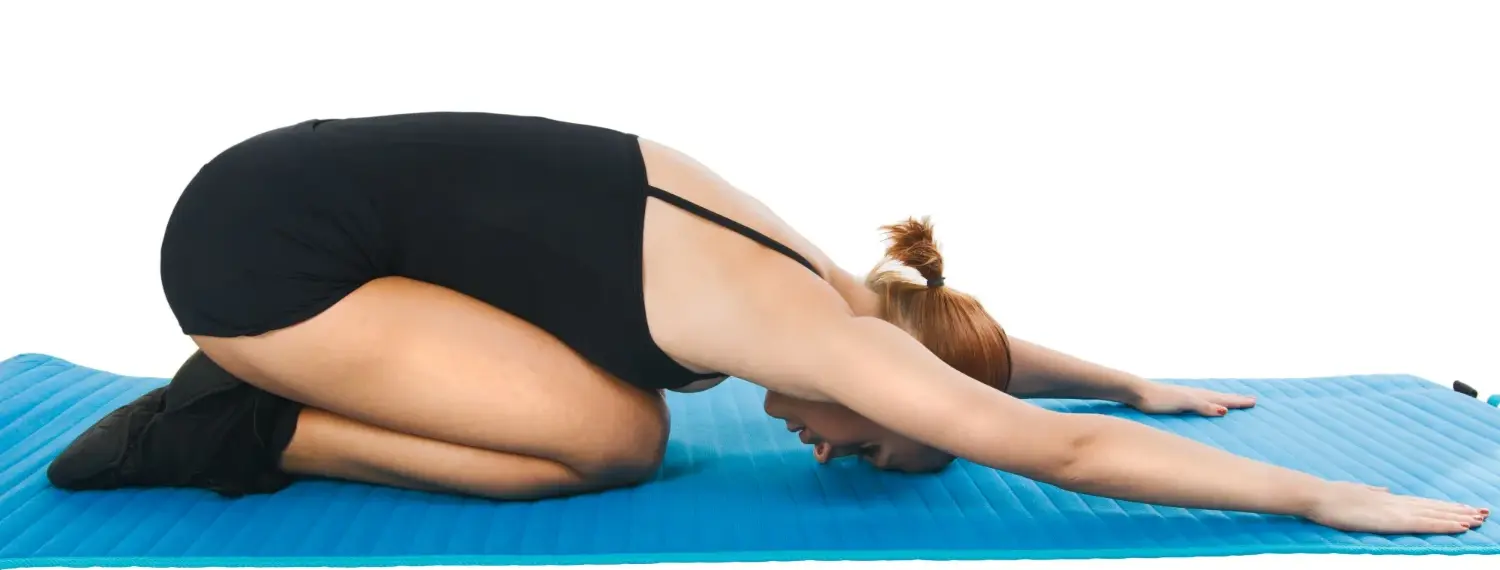
1. Balasana (Child’s Pose)
What it does:
Mainly it’ll calm you down and reduce stress-induced inflammation by activating the parasympathetic response. This is great for letting go of tension in the lower back and hips.
| Attribute | Details |
| Sanskrit Name | Balasana |
| Primary Benefit | Reduces stress, calms the mind, lowers cortisol |
| Inflammation Target | Stress-related inflammation, lower back pain |
| Hold Duration | 1 to 3 minutes |
| Difficulty | Beginner |
Steps:
- Kneel on the mat, big toes together, knees hip-width apart.
- Exhale and fold forward, resting your forehead on the mat.
- Arms extended forward or resting by your sides.
- Breathe deeply into the belly – 6 to 8 slow breaths per minute.
Modification:Place a folded blanket between your hips and heels for knee support. Contraindications:In the case of knee injury, use a cushion between hips and heels.
2. Adho Mukha Svanasana (Downward-Facing Dog)
What it does:
This one helps improve full-body circulation as well as lymphatic drainage. It also helps flush inflammatory waste from tissues and joints.
| Attribute | Details |
| Sanskrit Name | Adho Mukha Svanasana |
| Primary Benefit | Improves circulation, stretches the entire posterior chain |
| Inflammation Target | Joint stiffness, muscle inflammation |
| Hold Duration | 1 to 2 minutes (5 to 8 breaths) |
| Difficulty | Beginner to Intermediate |
Steps:
- Begin in tabletop position (hands under shoulders, knees under hips).
- Tuck toes, press into palms, and lift hips up and back.
- Form an inverted V-shape; press heels gently toward the floor.
- Relax the head between the arms; breathe steadily.
Modification:
Keep knees bent generously and heels lifted if hamstrings are tight.
Contraindications:
Wrist injury, uncontrolled high blood pressure.
3. Marjaryasana-Bitilasana (Cat-Cow Pose)
What it does:
It gently mobilises the entire spine, thereby reducing stiffness and inflammation in intervertebral joints. This happens while synchronising movement with breath to activate the parasympathetic nervous system.
| Attribute | Details |
| Sanskrit Name | Marjaryasana-Bitilasana |
| Primary Benefit | Spinal mobility, reduces back stiffness |
| Inflammation Target | Spinal inflammation, chronic lower back pain |
| Repetitions | 10 to 15 rounds |
| Difficulty | Beginner |
Steps:
- Start at the tabletop with your wrists under the shoulders and knees under hips.
- Cow: Inhale – drop belly, lift chest and tailbone.
- Cat: Exhale – round spine upward, tuck chin to chest.
- Flow smoothly, linking each movement to breath.
Modification:
Reduce range of motion if back is sensitive; move slower.
Contraindications:
In a case of neck injury, keep your gaze neutral, don’t throw the head back.
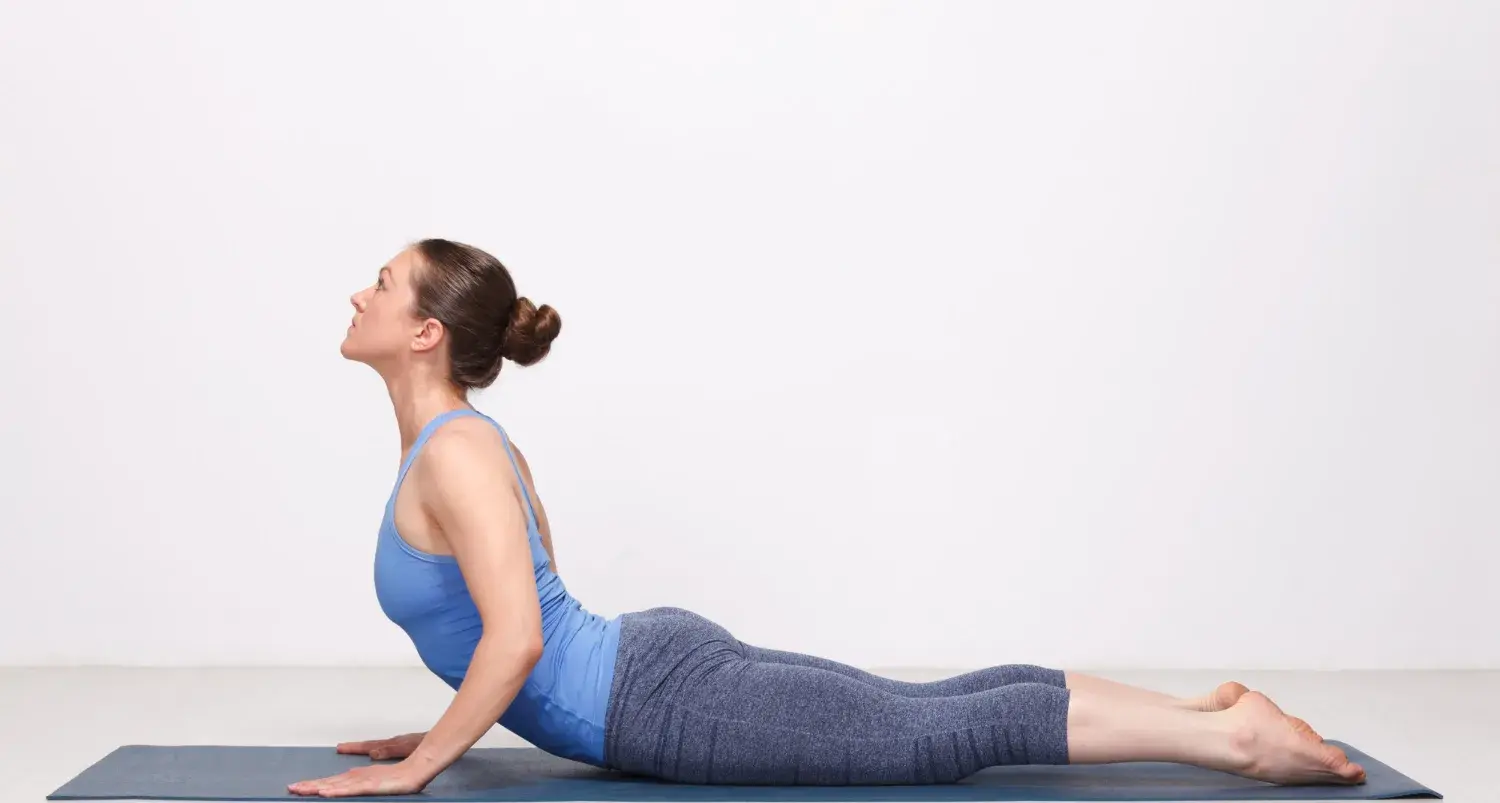
4. Bhujangasana (Cobra Pose)
What it does:
It primarily works in opening the chest, strengthens the spine’s erector muscles, and stimulates abdominal organs. This helps in reducing inflammation in both the back and the digestive system.
| Attribute | Details |
| Sanskrit Name | Bhujangasana |
| Primary Benefit | Chest opening, spinal extension, digestive stimulation |
| Inflammation Target | Back inflammation, digestive inflammation |
| Hold Duration | 30 seconds to 1 minute |
| Difficulty | Beginner to Intermediate |
Steps:
- Lie on your stomach with your hands placed under your shoulders.
- Press palms gently down and lift the chest off the mat.
- Keep the elbows slightly bent, shoulders rolled back and down.
- Hold, breathe steadily, then lower slowly.
Modification:
Use Sphinx Pose (forearms on ground) for a gentler backbend.
Contraindications:
Pregnancy, acute back injury, carpal tunnel syndrome.
5. Janu Sirsasana (Head-to-Knee Forward Bend)
What it does:
This one works in stretching the hamstrings and lower back while stimulating the liver and kidneys. These are the organs central to filtering inflammatory by-products from the bloodstream.
| Attribute | Details |
| Sanskrit Name | Janu Sirsasana |
| Primary Benefit | Hamstring release, kidney stimulation, nervous system calm |
| Inflammation Target | Leg inflammation, stress-related inflammation |
| Hold Duration | 1 to 2 minutes per side |
| Difficulty | Beginner to Intermediate |
Steps:
- Sit with legs extended. Bend the right knee and place the right foot against the inner left thigh.
- Inhale to lengthen the spine, then exhale to fold forward over the extended leg.
- Hold the shin, ankle, or foot. Use a strap if needed.
- Keep the spine long. Do avoid rounding aggressively through the lower back.
Modification:
Loop a yoga strap around the foot and bend the knee slightly.
Contraindications:
Hamstring tear, knee injury.
6. Supta Matsyendrasana (Supine Spinal Twist)
What it does:
Compresses and releases abdominal organs, stimulates lymphatic flow, and releases tension along the spine. All of this helps clear inflammatory waste from the body.
| Attribute | Details |
| Sanskrit Name | Supta Matsyendrasana |
| Primary Benefit | Detoxification, spinal mobility, organ massage |
| Inflammation Target | Digestive inflammation, spinal stiffness |
| Hold Duration | 1 to 2 minutes per side |
| Difficulty | Beginner |
Steps:
- Lie on your back and hug the right knee to your chest.
- Drop the right knee across the body to the left. Keep the arms in a T-shape.
- Turn your head gently to the right. Let both the shoulders stay on the mat.
- Breathe deeply into the twisted side for full duration.
Modification:
Place a pillow under the dropped knee to reduce hip strain.
Contraindications:
Recent spinal surgery, acute knee injury.
7. Vrikshasana (Tree Pose)
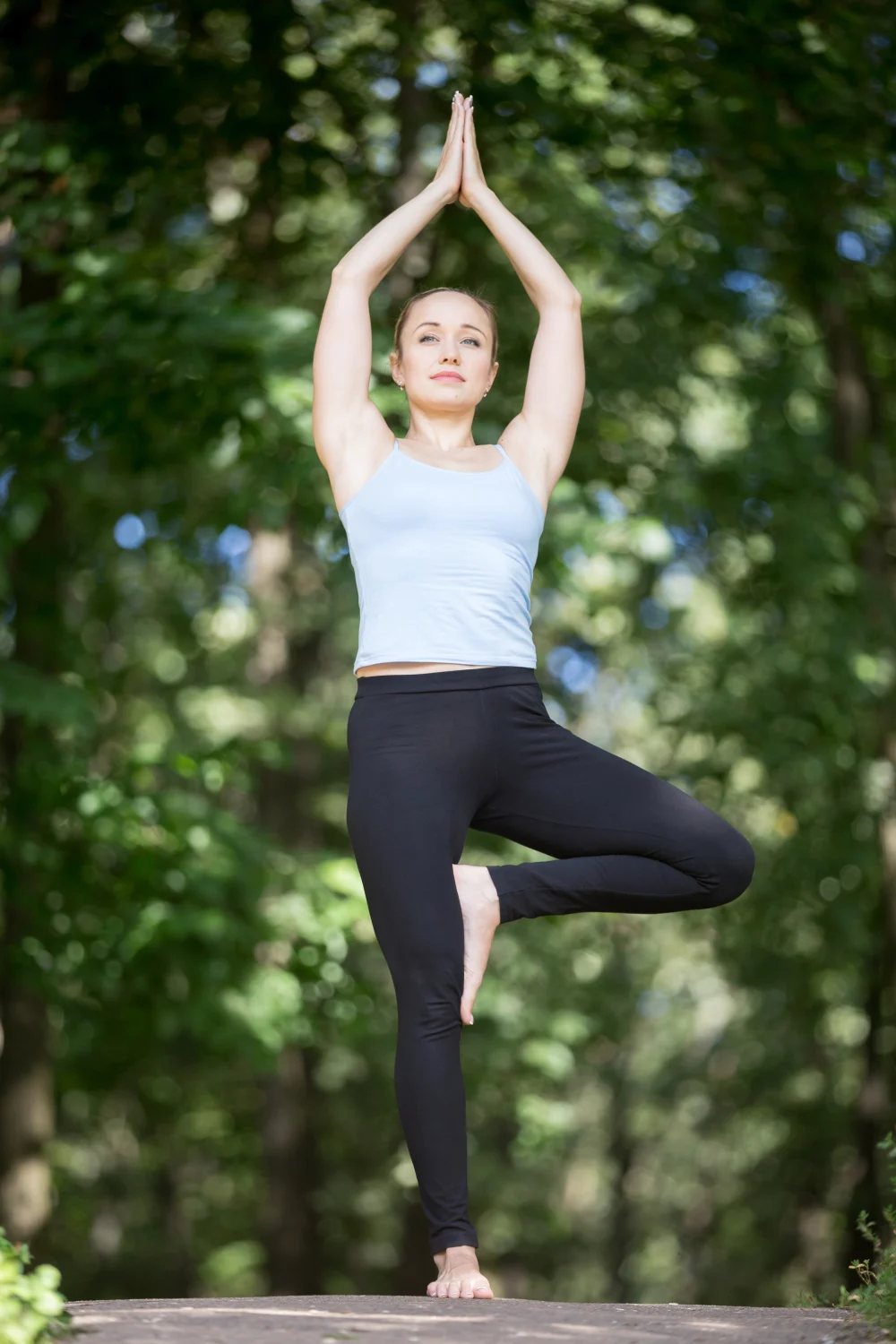
What it does:
This one primarily works in building leg strength. Not just that, it improves circulation in the lower limbs, and cultivates mindful focus. It helps reduce the cortisol output that feeds systemic inflammation as well.
| Attribute | Details |
| Sanskrit Name | Vrikshasana |
| Primary Benefit | Balance, leg strength, focused calm |
| Inflammation Target | Leg inflammation, stress-driven inflammation |
| Hold Duration | 30 seconds to 1 minute per side |
| Difficulty | Beginner to Intermediate |
Steps:
- Stand tall and gently shift weight onto the left foot.
- Place the right foot on the inner left thigh or calf (never on the knee).
- Bring palms together at the heart or raise arms overhead.
- Fix gaze on a still point and be mindful to breathe steadily.
Modification:
Keep toes lightly on the floor or use a wall for balance support instead.
Contraindications:
Ankle or knee instability.
8. Setu Bandha Sarvangasana (Bridge Pose)
What it does:
It opens the chest and hip flexors, gently stimulates the thyroid gland, and strengthens the posterior chain. The thyroid plays a direct role in regulating the body’s inflammatory response.
| Attribute | Details |
| Sanskrit Name | Setu Bandha Sarvangasana |
| Primary Benefit | Chest and hip opening, thyroid stimulation |
| Inflammation Target | Hip inflammation, thyroid-related inflammation |
| Hold Duration | 30 seconds to 1 minute |
| Difficulty | Beginner |
Steps:
- Lie on your back with knees bent, feet hip-width apart and flat on the mat.
- Press feet down firmly and lift hips toward the ceiling.
- Clasp hands underneath the back and roll shoulders beneath you.
- Keep your chest lifted. Do avoid overarching the lower back.
Modification:
Place a yoga block under the sacrum for supported Bridge (restorative version).
Contraindications:
Neck injury, shoulder impingement.
9. Ananda Balasana (Happy Baby Pose)
What it does:
This one works in releasing deep hip tension, decompresses the lower back, and gently stimulates the lymphatic vessels in the groin. This improves the body’s ability to clear inflammatory debris.
| Attribute | Details |
| Sanskrit Name | Ananda Balasana |
| Primary Benefit | Hip opening, lower back decompression, lymphatic drainage |
| Inflammation Target | Hip inflammation, lower back inflammation |
| Hold Duration | 1 to 2 minutes |
| Difficulty | Beginner |
Steps:
- Lie on your back and hug both knees into the chest.
- Grab the outer edges of both feet. Then guide your knees toward armpits.
- Flex the feet and gently rock side to side if you are comfortable with it.
- Keep the tailbone grounded and lower back softened on the mat.
Modification:
Loop a strap around the feet if hands can’t reach.
Contraindications:
Groin injury, acute knee pain.
10. Savasana (Corpse Pose)
What it does:
It primarily works in activating the parasympathetic nervous system more completely than any other pose. This produces the most significant drop in cortisol and pro-inflammatory cytokines in a single session.
| Attribute | Details |
| Sanskrit Name | Savasana |
| Primary Benefit | Complete nervous system reset, deep physiological relaxation |
| Inflammation Target | All stress-related and cortisol-driven inflammation |
| Hold Duration | 5 to 10 minutes |
| Difficulty | Beginner |
Steps:
- Lie flat on your back with legs slightly apart, arms by your sides and palms facing up.
- Close your eyes. Then consciously relax each body part from feet to face.
- Let the breath become natural and uncontrolled.
- Remain still for the full duration. This is not an optional rest, but the most important pose.
Modification:
Place a bolster under the knees or a folded blanket under the head for comfort.
Contraindications:
None. This pose is essential for every practitioner.
11. Viparita Karani (Legs-Up-The-Wall Pose)
What it does:
Uses gravity to reverse venous and lymphatic flow from the legs. This directly reduces swelling, varicose inflammation, and fatigue while calming the nervous system profoundly.
| Attribute | Details |
| Sanskrit Name | Viparita Karani |
| Primary Benefit | Reduces leg swelling, lymphatic return, nervous system calm |
| Inflammation Target | Leg inflammation, venous congestion, generalised stress |
| Hold Duration | 5 to 15 minutes |
| Difficulty | Beginner |
Steps:
- Sit sideways close to a wall. Then swing your legs up as you lower your back to the floor.
- Keep your hips close to (or touching) the wall with your arms resting by your sides.
- Close your eyes and take slow, deep breaths.
- Remain here for at least 5 minutes for meaningful benefit.
Modification:
Place a folded blanket or bolster under the hips to elevate the pelvis.
Contraindications:
In the case of glaucoma, uncontrolled high blood pressure, do consult your doctor first.
Quick Reference: All 11 Poses at a Glance
| # | Pose Name | Primary Inflammation Target | Hold Time | Difficulty |
| 1 | Balasana (Child’s Pose) | Stress, lower back | 1–3 min | Beginner |
| 2 | Adho Mukha Svanasana (Downward Dog) | Joint stiffness, muscles | 1–2 min | Beginner |
| 3 | Marjaryasana-Bitilasana (Cat-Cow) | Spinal inflammation | 10–15 reps | Beginner |
| 4 | Bhujangasana (Cobra) | Back, digestive | 30 sec–1 min | Beginner |
| 5 | Janu Sirsasana (Head-to-Knee) | Legs, kidneys, stress | 1–2 min/side | Beginner |
| 6 | Supta Matsyendrasana (Supine Twist) | Digestive, spinal | 1–2 min/side | Beginner |
| 7 | Vrikshasana (Tree Pose) | Legs, stress | 30 sec–1 min/side | Beginner |
| 8 | Setu Bandha Sarvangasana (Bridge) | Hips, thyroid | 30 sec–1 min | Beginner |
| 9 | Ananda Balasana (Happy Baby) | Hips, lower back | 1–2 min | Beginner |
| 10 | Savasana (Corpse Pose) | All stress inflammation | 5–10 min | Beginner |
| 11 | Viparita Karani (Legs-Up-Wall) | Leg swelling, fatigue | 5–15 min | Beginner |
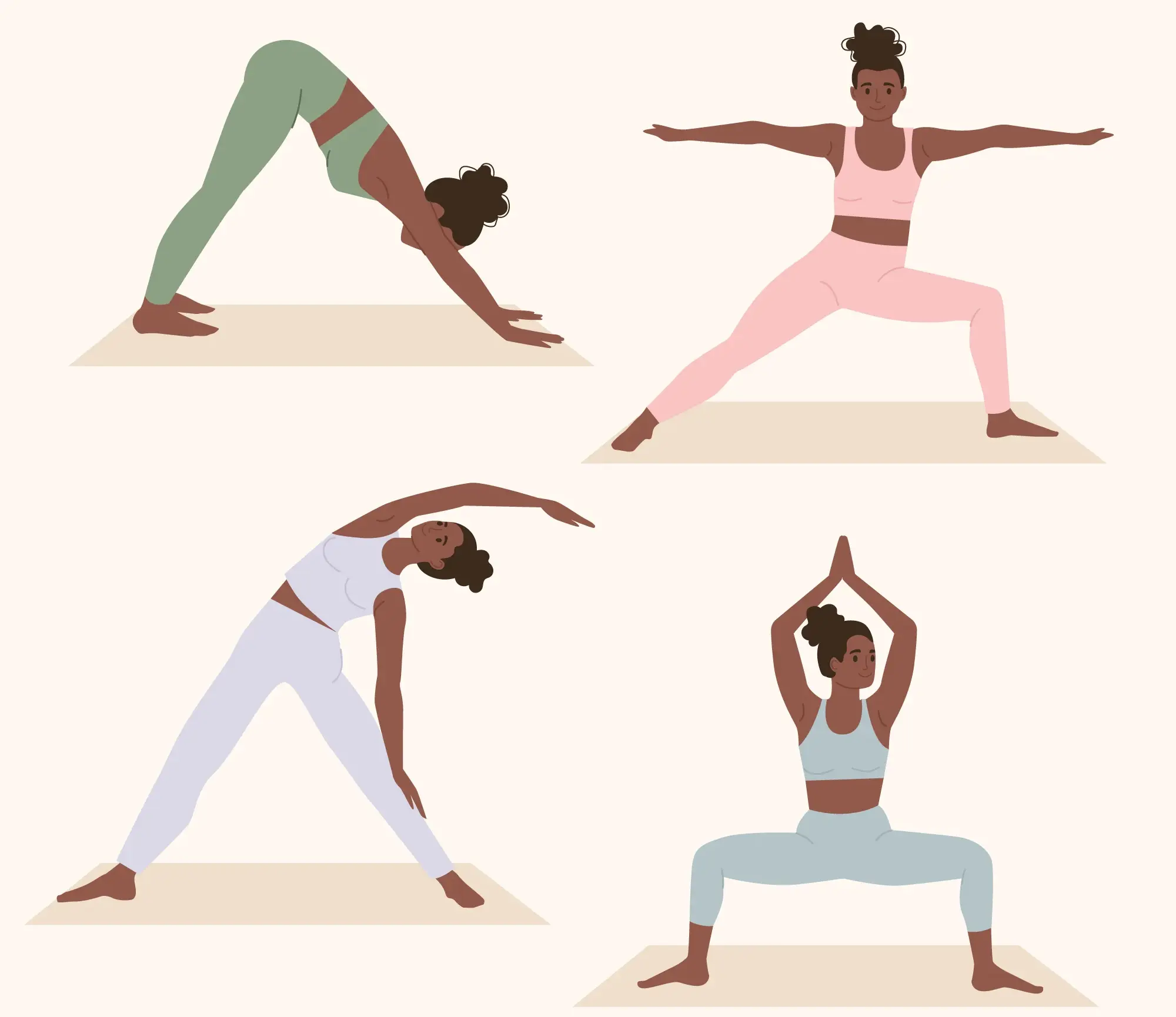
20-Minute Anti-Inflammatory Yoga Sequence
| Time | Pose | Duration |
| 0–2 min | Centering + Diaphragmatic Breathing | 2 min |
| 2–4 min | Cat-Cow | 2 min |
| 4–6 min | Downward-Facing Dog | 2 min |
| 6–8 min | Cobra Pose | 2 min |
| 8–11 min | Child’s Pose | 3 min |
| 11–14 min | Supine Spinal Twist (both sides) | 3 min |
| 14–16 min | Happy Baby | 2 min |
| 16–21 min | Legs-Up-The-Wall | 5 min |
| 21–25 min | Savasana | 4 min |
Pro tip:
Start with 3 sessions a week and build up to 5 over the course of a month. That way you can ease into it.
Consistency is what counts, not the length of time you commit. Even just 20 minutes a day can make a real difference when it comes to inflammatory markers within 8 to 12 weeks.
Want to step up? Join our Yoga Instructor Course Online!
Become a Certified Yoga Instructor
Yoga Teacher Training Course by Entri App: Master authentic yoga techniques, earn certification, and build a successful career as a professional yoga instructor.
Join Now!Conclusion
You don’t have to put up with chronic inflammation for the rest of your life. Try out these simple yoga poses and see how they can team up with you to tackle it at the source.
We’re talking about using yoga to lower cortisol, calm that nervous system of yours, give your lymphatic system a bit of a boost and get right to the heart of those pro-inflammatory cytokines that cause all this chronic pain and disease. The science on this is pretty clear cut.
All you need to do is build a regular yoga practice into your daily routine, and by that I mean start small and stick with it. It can be a total game-changer for managing inflammation without any meds – one of the most useful tools in the lifestyle toolbox out there.
|
RELATED POSTS |
|
| 20 Advanced Yoga Poses for your Body | |
| Yoga Poses for Shoulder and Neck Pain | |
| Simple Sitting Yoga Poses You Can Do at Home or Office | |
Become a Certified Yoga Instructor
Yoga Teacher Training Course by Entri App: Master authentic yoga techniques, earn certification, and build a successful career as a professional yoga instructor.
Join Now!Frequently Asked Questions
How quickly does yoga reduce inflammation?
Measurable reductions in IL-6 and CRP occur after 8 to 12 weeks of consistent practice. Some people feel less pain and stiffness within 2 to 4 weeks.
Which yoga pose is best for inflammation?
Savasana and Legs-Up-The-Wall best activate the parasympathetic system and lower cortisol. Cat-Cow and Cobra work best for spinal and joint inflammation.
How often should I practise anti-inflammatory yoga?
Practice 3 to 5 times per week for 20 to 30 minutes per session. Shorter, frequent sessions work better than infrequent long ones.
Is yoga safe for people with chronic inflammation?
Gentle and restorative yoga is safe for most people with chronic inflammatory conditions. Always get physician clearance first, especially for rheumatoid arthritis or IBD.
What type of yoga is best for inflammation?
Restorative, Yin, and gentle Hatha yoga with long holds and diaphragmatic breathing work best. Intense styles like hot yoga may temporarily increase inflammation in sensitive people.
Is breathing important for anti-inflammatory yoga?
Yes. Slow diaphragmatic breathing (6 to 8 breaths/min) activates the vagus nerve and parasympathetic system, suppressing inflammation. Never hold your breath during poses.
Does yoga help with autoimmune-related inflammation?
Research shows yoga can reduce inflammatory markers in lupus and rheumatoid arthritis. Gentle yoga is well-tolerated, but medical supervision is essential.
Can yoga reduce exercise-induced inflammation (DOMS)?
Yes. Gentle yoga improves circulation, aids lymphatic waste clearance, and reduces IL-6-driven inflammation from delayed onset muscle soreness.
Should I practise yoga during an inflammatory flare-up?
During acute flares, use passive poses only: Savasana, Legs-Up-The-Wall, and Supine Twist with props. Avoid loading inflamed joints and follow your doctor’s advice.
How does Savasana cut down on inflammation?
Well, it’s actually one of the most effective poses for activating the parasympathetic system – which helps to drop your cortisol and heart rate and blood pressure, and reduces pro-inflammatory cytokine production – the things that cause all that chronic pain and disease.