Table of Contents
Engine overhauls, electrical repairs, and cabin restorations can burn a hole in your pocket in no time. The simple reason is that it can easily cost thousands or even lakhs of rupees.
In such situations, it’s quite natural that car owners ask the question, does auto insurance cover flood damage? The quick answer is yes.
Key Takeaways
- Standard Third-Party insurance does not pay for any flood damage to your vehicle.
- A Comprehensive Policy covers damage for the car body, electricals, and interior caused by natural calamities.
- Water entering the engine (hydrostatic lock) is considered as consequential damage. Standard policies exclude this unless you buy an Engine Protect add-on.
- Never try to restart a submerged car. Starting the engine in deep water leads to instant claim rejection.
- Useful add-ons for monsoon season include Engine Protect, Zero Depreciation, Consumables Cover, and Roadside Assistance.
Introduction
1: What is a stock?
Monsoons are no doubt a big boon from the scorching summer heat in India. However, along with heavy rains, some major problems also arise. This includes flooded streets, submerged roads, and waterlogged basements.
During times of monsoon, thousands of car owners across Indian cities face severe financial stress every year. This happens due to floodwater entering their vehicles. It’s a real pain to repair a water-damaged car as this issue can quickly mount up into a major expense.
There are major conditions attached to it. Your payout depends entirely on the type of policy you hold and the extra covers you have chosen. Understanding your motor insurance terms before the heavy rains strike can save you from huge out-of-pocket expenses.
Ace your personal finance journey with Entri’s Personal Finance Online Course. Join Now!
Types of Car Insurance Policies in India
To understand flood coverage, you must first know how motor insurance works in India. Indian motor insurance is broadly divided into two main categories:
| Types Of Car Insurance | |
| 1. Third-Party Only (Mandatory by law) | Covers damage to other people & vehicles Excludes flood damage to your own car |
| 2. Comprehensive Cover (Recommended) | Covers third-party liabilities + natural calamities (floods) Excludes engine water ingress (unless add-on is bought) |
1. Third-Party Motor Insurance
In India, it is legally mandatory to buy third-party insurance for all vehicles. This insurance works in such a way that it protects you against legal liabilities if your car hurts someone else or damages third-party property.
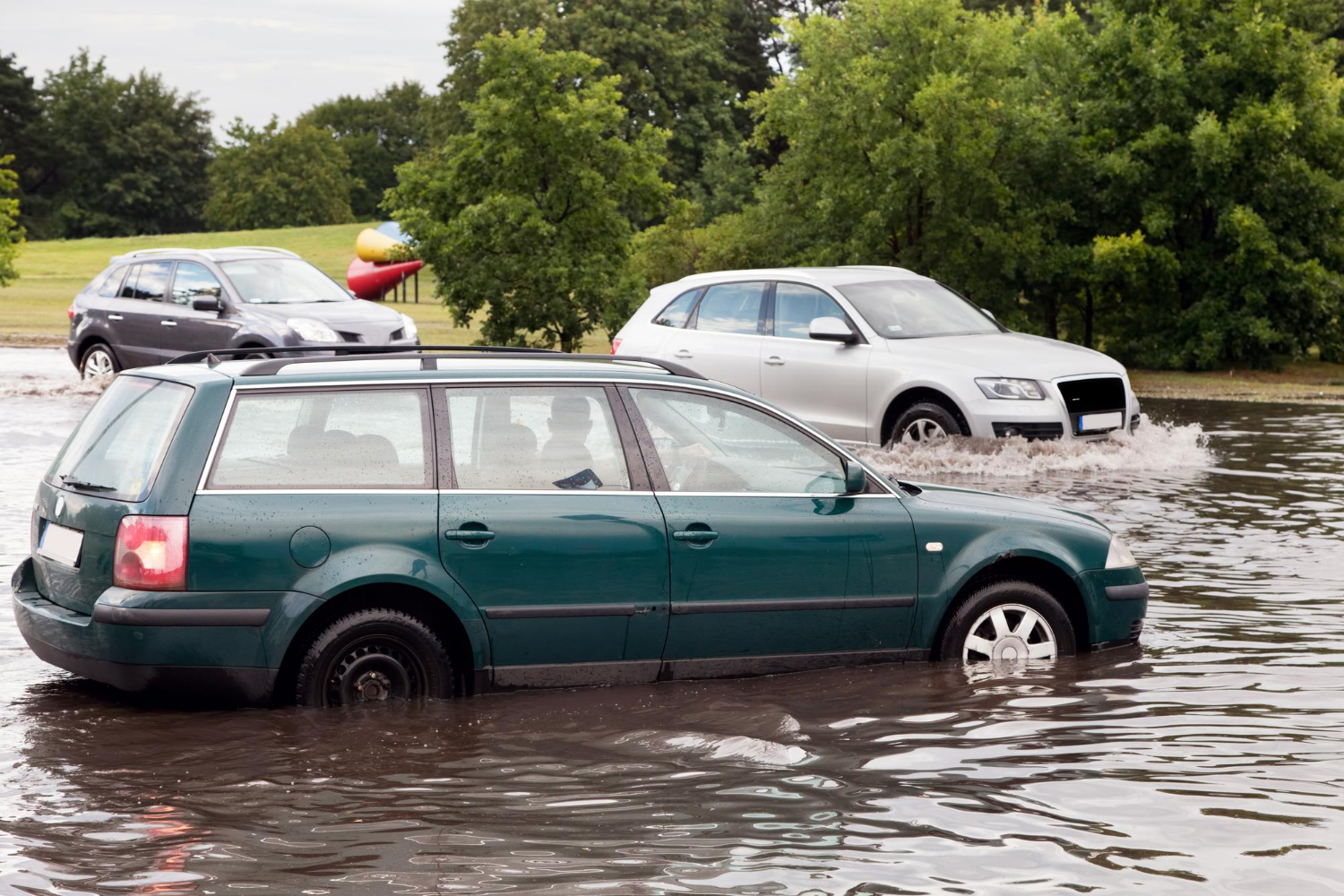
However, be aware that it offers zero protection for your own vehicle. If floodwater submerges your car under a third-party policy, you must pay all repair costs yourself.
2. Standalone Own-Damage Insurance
This policy covers loss or damage caused to your own car. It covers damage from fire, theft, accidents, and natural disasters like storms or floods.
3. Comprehensive Motor Insurance
A comprehensive policy combines the features of third-party protection with own-damage cover. It covers damages caused due to natural events such as floods, heavy rainfall, cyclones, and landslips.
Under this policy, your insurer pays for repairing bodywork, upholstery, headlights, and basic electrical systems damaged by floodwater.
Important Note:
Though a comprehensive plan covers physical damage, it does not automatically cover every single engine component. To be aware of this distinction is quite important during monsoon season.
How Standard Comprehensive Policies Handle Flood Damage
Many car owners assume that a basic comprehensive policy pays for everything. So, does auto insurance cover flood damage to all parts of your vehicle automatically?
Standard policies distinguish between two types of losses:
Direct Damage (Covered)
Direct damage refers to physical harm caused directly by natural floodwaters. Imagine a situation where rising water levels submerge your parked vehicle. As a result, the water will soak the seats, ruin the carpets, and corrupt the electronic control module (ECM).
Since this loss occurs naturally while the vehicle is stationary, a comprehensive policy covers the repair and cleaning costs.
Consequential Loss (Excluded by Default)
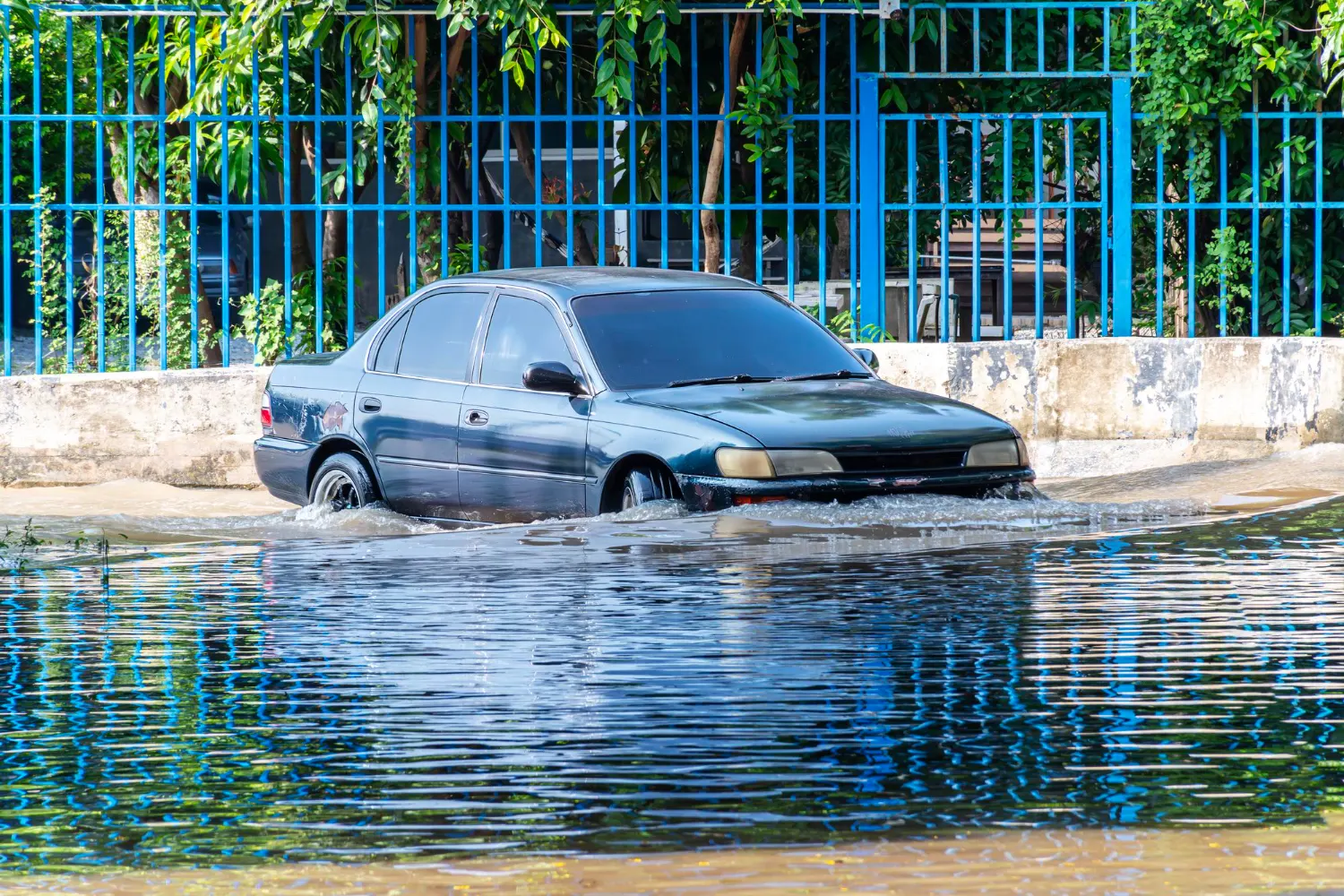
Consequential loss happens as an indirect result of an action taken after the initial event. In simple terms, if water enters your car engine and you try to start the ignition, water gets sucked deeper into the cylinders. Because water cannot compress, the internal engine parts bend or break instantly.
Insurers treat this as user-induced damage caused by negligence rather than direct flood loss. Consequently, they will reject engine repair claims under standard policies.
The Danger of Hydrostatic Lock
When water enters an engine’s combustion chamber, it creates a serious condition known as a hydrostatic lock (or hydro-lock).
| How Hydrostatic Lock Occurs: |
| Water Enters Air Intake ➔ Reaches Engine Cylinder ➔ Piston Tries to Compress Water ➔ Engine Seizes Up |
An internal combustion engine compresses a mixture of air and fuel inside its cylinders. Though air compresses easily, water does not compress.
Suppose you turn the key on a waterlogged car. Subsequently, the piston rises and hits a wall of uncompressible water. As a result, the tremendous force bends the connecting rods, cracks the engine block, and destroys internal valves.
To fix a hydro-locked engine, it requires replacing the entire engine assembly. Repair costs can easily come somewhere between ₹50,000 to over ₹3,000,000 depending on the vehicle model. Since insurers view starting a flooded vehicle as driver negligence, standard insurance will not cover hydrostatic lock repairs.
Stock Market Training Reviewed & Monitored by SEBI Registered Investment Advisor
Trusted, concepts to help you grow with confidence. Enroll now and learn to start investing the right way.
Know moreEssential Add-on Covers for Flood Protection
To protect yourself completely during monsoons, you must customize your comprehensive policy with specific riders. These extra add-ons fill the gaps present in standard policies.
| Add-on Cover | What It Does | Why You Need It in Floods |
| Engine Protection Cover | Pays for internal engine parts and gearbox repairs caused by water ingress. | Covers hydrostatic lock expenses that basic policies exclude. |
| Zero Depreciation Cover | Eliminates depreciation deductions on replaced rubber, plastic, and metal parts. | Ensures maximum claim payout without out-of-pocket deductions. |
| Consumables Cover | Pays for items like engine oil, gearbox oil, brake oil, nuts, and bolts. | It is mandatory to replace water-contaminated engine fluids after flooding. |
| Roadside Assistance (RSA) | Provides towing service to transport your stranded vehicle safely. | Gets rid of driving or cranking the car on flooded roads. |
| Return to Invoice (RTI) | Pays the full original invoice price if the car is declared a total loss. | Essential if floodwater submerges the entire car beyond repair. |
Why is Engine Protection Cover Essential?
Do you live in waterlogging-prone cities like Mumbai, Chennai, Bengaluru, or Kolkata? If yes, it is essential to buy the Engine Protection Cover. All it costs is only a small fraction of your base premium. Yet, it provides massive relief if your engine suffers water damage or hydrostatic lock.
So when asking, does auto insurance cover flood damage completely, the answer is yes—provided you add an Engine Protect cover to your plan.
When your car gets trapped in waterlogging or heavy rains, follow these steps to process your claim smoothly: The golden rule is never turn on the ignition or push-start the car under any circumstances. Keep the vehicle switched off. Capture clear photographs and short video clips of your parked vehicle showing the surrounding water level. Document the interior and exterior water marks carefully. Call your insurer’s toll-free helpline or raise a claim through their mobile app immediately. Register the claim and save the claim reference number. With your Roadside Assistance add-on or by reaching out to your insurer, ask them to send an official tow truck. Ensure that the vehicle is towed directly to an authorized network workshop. Never begin any repair work before the insurance surveyor inspects the car. The surveyor will check the physical condition, assess damages, and approve repair estimates. Knowing how to react when water level rises can prevent claim rejections and safeguard your wallet. Understanding rejection triggers helps you avoid costly mistakes during the claim process. Ace your personal finance journey with Entri’s Personal Finance Online Course. Join Now! Finally, here’s the answer for your question ‘does auto insurance cover flood damage to your car?’ Yes, provided you carry the right policy and riders. Even though a standard comprehensive insurance policy covers basic physical damage, it leaves your engine vulnerable to hydrostatic lock. Thus, buying add-ons like Engine Protection, Zero Depreciation, and Roadside Assistance assures true peace of mind during monsoons. Without fail, keep your policy updated, stay cautious during heavy rains, and also never crank a waterlogged engine. Trusted, concepts to help you grow with confidence. Enroll now and learn to start investing the right way.
No. Third-party insurance only covers damages caused to other people or vehicles. It offers zero protection for flood damage to your own car. No. Standard comprehensive insurance excludes engine water damage as a consequential loss. You need an Engine Protect add-on for this coverage. A hydrostatic lock happens when water enters the engine cylinders, stopping the pistons and causing severe engine failure. Never attempt to start the engine. Take photographs, inform your insurance company immediately, and arrange for a tow truck. Zero Depreciation covers full replacement costs of damaged body parts without deducting depreciation. However, it does not cover engine water ingress on its own. Yes. A comprehensive policy covers cleaning and repairing flood-damaged cabin interiors, upholstery, and electrical fittings. If the estimated repair cost exceeds 75% of your car’s Insured Declared Value (IDV), the insurer declares it a total loss.How to File a Flood Damage Claim?
1st Step: Never Start the Engine
2nd Step: Take Photos and Videos
3rd Step: Inform Your Insurance Company
4th Step: Arrange Towing Services
5th Step: Wait for the Surveyor Inspection
Critical Do’s and Don’ts During Car Flooding
What You Should Do (Do’s)
What You Should Avoid (Don’ts)
Top 4 Reasons for Rejection of Flood Claims
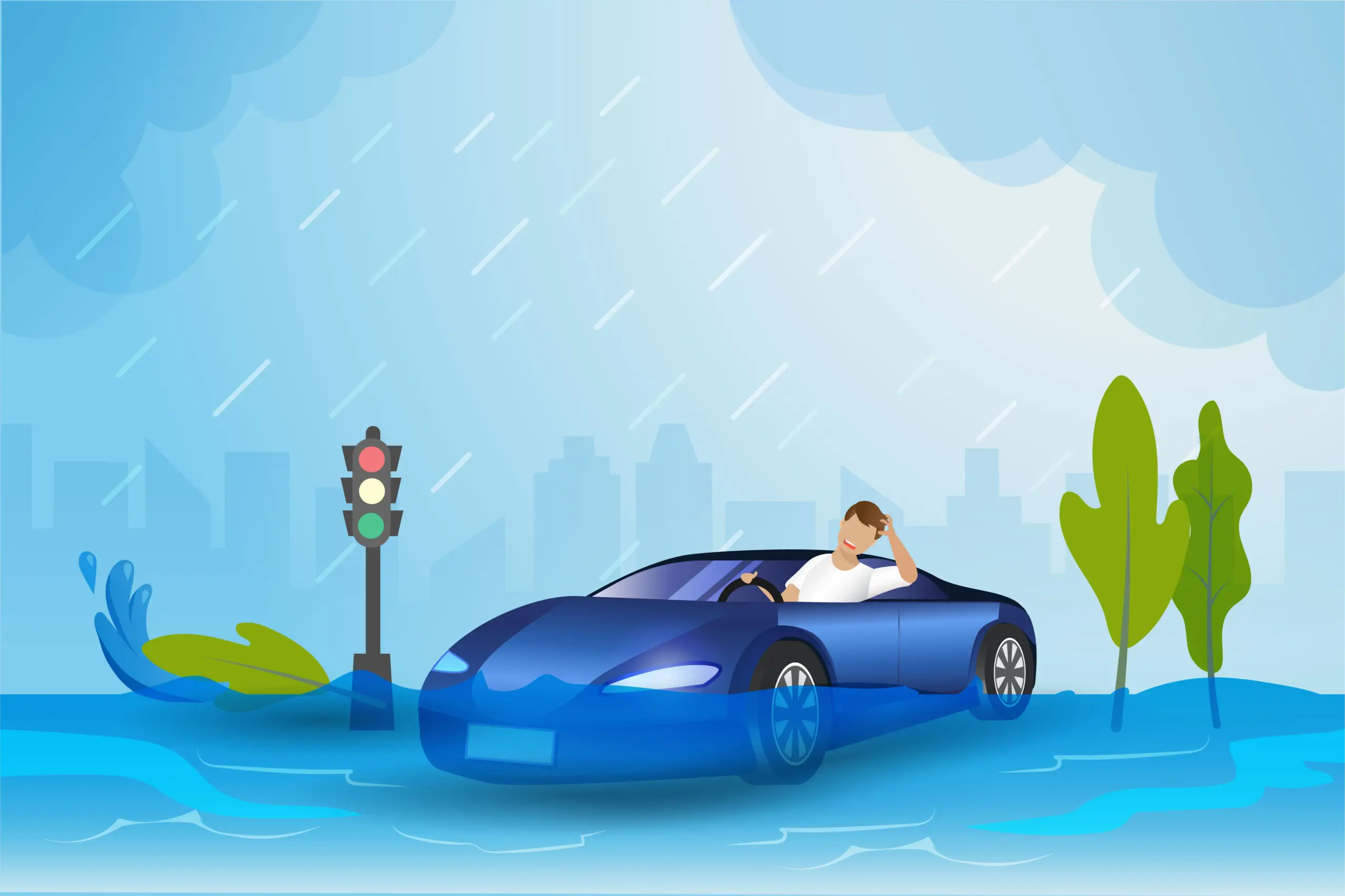
Top Claim Rejection Triggers
1. Cranking engine in deep water (Hydrostatic lock without Engine Protect)
2. Inordinate delay in informing the insurance company
3. Authorizing repairs before surveyor inspection
4. Deliberately driving through clearly inundated roads
Conclusion
Stock Market Training Reviewed & Monitored by SEBI Registered Investment Advisor
Frequently Asked Questions
Does basic Third-Party insurance cover flood damage?
Is engine water damage covered under a standard comprehensive policy?
What is a hydrostatic lock?
What should I do if my car gets submerged in floodwater?
Does Zero Depreciation cover flood damage repairs?
Will insurance pay if interior seats and wiring are ruined by water?
When is a flood-damaged car declared a Total Loss?