Table of Contents
Bedtime yoga is defined as a mild yoga routine performed prior to going to bed in order to relax the mind and body. It involves the use of relaxation postures, breathing and meditation practices to relax the nervous system and be prepared for good sleep.
Bedtime yoga has proven effective in boosting sleep duration up to two hours, increasing sleep efficiency up to 15% and shortening the time to fall asleep to thirty minutes. No special skills are required to practice bedtime yoga.
Want to step up? Join our Yoga Instructor Course Online!
Key Takeaways
- Bedtime yoga is different from regular yoga because it focuses on relaxation rather than building strength or flexibility.
- The practice works by activating your parasympathetic nervous system, which is responsible for rest and digestion.
- Even ten minutes of bedtime yoga can improve your sleep quality and help you fall asleep faster.
- Research confirms that yoga is an effective non-pharmacological treatment for insomnia and sleep disturbances.
- Consistent practice matters more than long sessions because short, daily routines build lasting benefits.
- You can do bedtime yoga on a mat or directly in your bed using pillows for support.
Introduction
1: Which of these is the primary goal of yoga practice?
You’ve tried just about everything to get a good night’s sleep. You splurged on a new mattress and blackout curtains, even bought a fancy white noise machine. Then you quit drinking coffee after noon and put your phone on silent an hour before bed – but still lie there, staring up at the ceiling as your mind goes into overdrive worrying about what you need to do tomorrow.
You are not alone in this struggle. The CDC says a whopping one in three grown-ups don’t get enough sleep and its not just a matter of not having a comfy enough mattress – its your nervous system getting in the way.
Think about it, after a long day of work, screens, and non-stop stimulation, your body is still stuck in fight or flight mode. Your heart is still speeding along, your muscles are still bunched up, and your brain is still racing. No amount of fancy blackout curtains is gonna fix that.
Become a Certified Yoga Instructor
Yoga Teacher Training Course by Entri App: Master authentic yoga techniques, earn certification, and build a successful career as a professional yoga instructor.
Join Now!What is Bedtime Yoga?
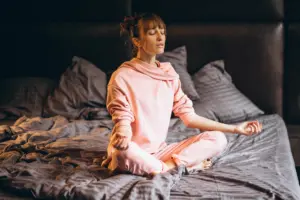
Bedtime yoga is a style of yoga specifically designed to be done right before bed – its not like that morning class that left you all fired up and energized. This is slow, easy-going, passively relaxing stuff.
The basic idea is to combine three key elements. You use slow stretches to let go of all the physical tension in your body. Then there’s deep breathing to really slow down that heart rate and get your parasympathetic system going – the one that says “hey, relax, its time to sleep”. And to round it all out, you get to do some meditation and mindfulness exercises to calm down that racing mind and get it ready for bed.
Yoga at night is pretty much a restorative practice – it helps your nervous system shift from the “fight or flight” mode to the “rest and digest” mode, which is pretty much the opposite of what we all need when we go to bed . Loads of people do it on a mat, but you can also do it right in bed using pillows to support yourself – the main thing is to let go of all that tension and just relax deeply.
How Yoga Helps Improve Sleep
Yoga can really help you sleep better – and the reasons for that are pretty clear.
First of all it calms you down, which is just what you need before bed. By doing some yoga at bedtime you’re triggering what they call the relaxation response – its opposite to the stress response. This tends to bring down your blood pressure, reduce the amount of cortisol in your system and generally leaves you feeling pretty chilled out. As a result you can wind down a lot quicker.
Secondly it can really help with anxiety and depression which can often be a major obstacle when it comes to getting a good night’s sleep. Yoga has a way of calming you down and breaking the cycle of worry that keeps you lying awake at night – all you’ve got to do is focus on your breath and your body.
Thirdly, its great at releasing all the tension you build up in your muscles during the day. Your neck, shoulders, back and hips can hold a lot of tension, especially if you’ve been sitting at a desk all day. Gentle yoga poses can really help to stretch out all those tight muscles and let you know that its okay to relax.
Finally yoga has been shown to increase the amount of melatonin in your system – and that’s the hormone thats in charge of regulating your sleep wake cycle.
Best Yoga Poses Before Bed
Evening Poses to Soothe the Mind and Body
These relaxing poses are perfect for unwinding in the evening – they calm your nervous system without giving you a second wind.
Child’s Pose (Balasana)
Get comfy on your heels with your knees spread wide and your big toes just about touching. Then , fold yourself forward and rest your forehead on the floor – or better yet, on a pillow for extra comfort. Next, stretch your arms out in front of you and just let them relax. This one’s a real winner for releasing all that pent-up tension in your back and shoulders – and it’s a great way to calm the mind too.
Seated Forward Fold
Kick back in a chair with your legs straight out in front of you and your feet flexed. Now, try to reach for your toes – but keep that back of yours straight as a rod. If you need some extra help, you can either rest your arms beside you or grab onto your heels. Forward folds are great for calming the nervous system and work out all those tight hamstrings of yours
Legs Up the Wall Pose
Get yourself nice and comfy against the wall , then slowly slide onto your back while swinging your legs up onto the wall. Think of it like this – your legs should form a nice right angle with your torso. Now, just chill out and let your arms rest by your sides. This one’s a real winner for getting the blood flowing, reducing swelling and general calmness
Reclining Butterfly Pose
Lie back and bring your soles together – letting your knees fall open in a big V. If it’s too tricky to support your knees yourself, just grab a couple of pillows to help you out. One hand on your heart and the other on your belly is a nice touch too. This gentle pose opens up your hips and makes for some lovely deep breathing.
Supported Bridge Pose
Lie on your back with those knees bent and feet firmly planted on the floor. Press down with your feet to get yourself up into a nice lift – then pop a couple of bolsters or pillows under your lower back for support. Slowly lower yourself onto the support and just feel all that tension in your lower back start to melt away – and those breathing exercises will get a whole lot easier too.
Supine Spinal Twist
Lie back on the floor and give your right knee a big hug towards your chest. Now slowly guide your right knee across your body – with your right arm extending out to the side as you go. Make sure those shoulders stay on the floor, don’t want to hurt our backs any more than we have to. Try this for a minute or so and switch sides – this one’s great for working out all the kinks along your spine.
Corpse Pose (Savasana)
Lie flat on your back – legs extended and arms just loose and relaxed by your sides. Get your palms facing upwards and those eyes shut tight – and don’t forget to dig that pillow right under your knees to support your lower back. This one’s the final showstopper – it really gets your body to soak up all the relaxation you’ve been working on and gets you ready for a great nights sleep.
Become a Certified Yoga Instructor
Yoga Teacher Training Course by Entri App: Master authentic yoga techniques, earn certification, and build a successful career as a professional yoga instructor.
Join Now!Simple Bedtime Yoga Routine
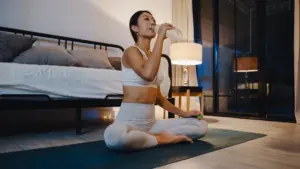
Start with this easy, ten minute routine that you can do on a mat or in your bed.
Constructive Rest (1 minute)
Begin by lying on your back with your knees bent and feet flat. Allow your knees to rest together gently. Rest your arms wherever they feel comfortable. Take slow, deep breaths through your nose .
Supported Bridge (2 minutes)
Press into your feet and lift your hips. Slide a pillow or folded blanket under your lower back. Let your weight sink into the support. Focus on slow, steady breathing .
Reclining Spinal Twist (1 minute per side)
Hug your right knee toward your chest and guide it across your body. Extend your right arm out to the side. Hold for one minute. Release and switch to the left side .
Legs Up with Support (2 minutes)
Send your feet toward the ceiling with the support still beneath you. Flex and point your toes or roll your ankles. Settle into stillness and focus on your breathing .
Corpse Pose (5 minutes)
Lift your hips to slide the support out and place it under your knees. Extend your legs and arms and settle into stillness. Close your eyes and let your body relax completely .
Tips for Better Relaxation and Sleep
These practical tips help you get the most benefit from your bedtime yoga practice.
Create a relaxing environment. Dim the lights and use a calming essential oil like lavender . Keep your room cool, quiet, and comfortable. Your environment tells your brain that it is time to sleep.
Practice at the same time each night. Consistency matters more than duration. A short routine every night builds the habit and trains your body to relax at the same time . Even ten minutes of daily practice will show clear improvement within two weeks.
Focus on your breath. Use slow, deep breaths through your nose. Exhale fully to activate your relaxation response. Ocean breathing, where you slightly constrict the back of your throat, adds a calming sound effect to your practice.
Use props for support. Pillows, blankets, and bolsters make poses more comfortable and allow you to relax more deeply. There is no need to stretch intensely or push through discomfort. Less is more for bedtime yoga.
Do not push yourself. If a pose feels too intense, back off or try a gentler variation. Bedtime yoga should never feel painful. You are looking for a mild stretch where you can breathe comfortably.
Stop scrolling. Put your phone away at least thirty minutes before your practice. The blue light from screens suppresses melatonin and keeps your brain alert. Let your practice be the last thing you do before getting into bed.
Be patient. It may take a few weeks of consistent practice to notice significant improvements in your sleep. Keep a simple journal to track your progress and determine which poses help you most.
Want to step up? Join our Yoga Instructor Course Online!
Conclusion
Bedtime yoga is probably the simplest and most effective way to start improving your sleep without having to reach for a sleeping pill. It does a number on your nervous system, chills out your stress and anxiety, unravels all that muscle tension, and basically gets your body and mind ready for a good long rest. And get this – science actually has some research that confirms regular practice gives you more sleep overall, makes the sleep you do get more efficient, and even helps you nod off faster.
But the really nice thing is how low-key it is to get started. No need for some special yoga gear or years of experience. Just find a comfy spot, pick out a few easy-as-pie poses, and pay some attention to how your breath is going. You can even do it on a mat, or just straight in bed with some pillows for support. Ten minutes each evening can be a real game-changer.
Become a Certified Yoga Instructor
Yoga Teacher Training Course by Entri App: Master authentic yoga techniques, earn certification, and build a successful career as a professional yoga instructor.
Join Now!Frequently Asked Questions
What exactly is bedtime yoga and how is it different from regular yoga?
Bedtime yoga is a gentle practice done right before sleep using slow poses and deep breathing. Regular yoga builds strength and energy, but bedtime yoga focuses entirely on relaxation and calming your nervous system. You do not sweat or push yourself during bedtime yoga.
Can I do bedtime yoga directly in my bed instead of on a mat?
Yes, you can absolutely do bedtime yoga in your bed. Many poses like child’s pose, reclining butterfly, and corpse pose work perfectly on a mattress. Use pillows for support and comfort. Just make sure your bed is firm enough to support your stretches.
How long should a bedtime yoga session last for good results?
Ten to fifteen minutes is enough to see real improvements in your sleep quality. You do not need long sessions because consistency matters more than duration. A short daily routine trains your body to relax at the same time each night. Even five minutes is better than nothing.
How soon before bed should I practice bedtime yoga?
Practice bedtime yoga immediately before getting into bed or within thirty minutes of your planned sleep time. The relaxation effects last long enough to help you fall asleep. Doing it too early means you might lose the calming benefits before you actually try to sleep.
Is bedtime yoga safe for people with injuries or medical conditions?
Bedtime yoga is very gentle and generally safe for most people. However, you should check with your doctor first if you have serious injuries, recent surgeries, or conditions like high blood pressure. Use extra pillows and support to avoid any pain or strain.
Can bedtime yoga help with insomnia and severe sleep problems?
Yes, research shows that yoga is an effective treatment for insomnia and sleep disturbances. A 2025 study found that regular yoga practice increased total sleep time by nearly two hours. It works without medications or side effects by addressing the root causes of poor sleep.
What if I cannot do the poses because I am not flexible?
You do not need any flexibility to practice bedtime yoga. The poses use pillows and support to make them comfortable for everyone. You are not trying to stretch deeply or push your limits. The goal is relaxation, not flexibility.
Will bedtime yoga make me more energized instead of sleepy?
No, because bedtime yoga uses slow, passive poses that calm your nervous system. Avoid fast movements and standing poses that build heat. The breathing techniques also slow your heart rate and prepare your body for rest.
What breathing techniques should I use during bedtime yoga?
Use slow, deep breaths through your nose with a longer exhale than inhale. Try four counts in and six counts out. Ocean breathing adds a calming sound by slightly constricting the back of your throat. Focus on your breath throughout the entire practice.