Table of Contents
A BSP Engineer develops and maintains Board Support Packages for embedded devices. The role connects hardware and software components. BSP Engineers enable operating systems to run correctly on hardware.
Strong knowledge of embedded Linux, device drivers, and hardware interfaces is essential. Demand continues growing across many technology industries.
Kickstart your embedded systems career and turn your tech passion into high-demand skills!
Key Takeaways:
- BSP Engineers Bridge Hardware and Software: They enable smooth hardware-software communication. Product functionality depends heavily on their work.
- Embedded Linux Knowledge Is Essential: Many BSP projects use Embedded Linux. Kernel and driver knowledge remain important.
- Device Driver Development Plays a Major Role: Drivers help hardware function correctly. Stable drivers improve system reliability.
- Hardware Debugging Is a Core Responsibility: Hardware issues require careful investigation. Strong troubleshooting skills remain valuable.
- Many Industries Hire BSP Engineers: Embedded systems power modern products. Demand continues growing across industries.
- Career Growth Opportunities Remain Strong: Specialized skills create valuable opportunities. Advanced technical roles become accessible.
🚀 Introduction
Embedded systems continue expanding rapidly worldwide. Modern devices rely on efficient hardware-software integration. This growth increases demand for skilled professionals.
Board Support Packages play a critical role. They help operating systems communicate with hardware. Without BSPs, embedded devices cannot function properly.
BSP Engineers ensure this communication works smoothly. Their work supports product stability and performance. They remain important throughout development.
⚙️ Understanding BSP (Board Support Package)
BSPs form the foundation of embedded platforms. They allow operating systems to run on specific hardware. Understanding BSP concepts remains essential.
What is a Board Support Package (BSP)?
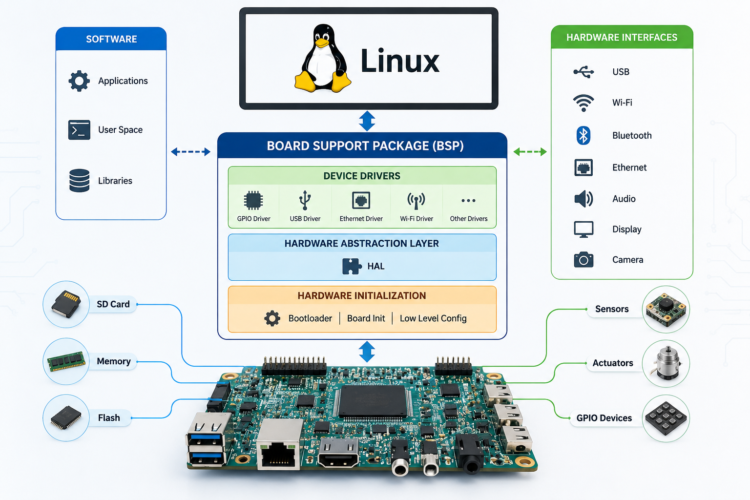
A Board Support Package supports hardware initialization. It provides software components required by a board. These components help operating systems function correctly.
A BSP acts as a bridge. Hardware and software communicate through it. Device functionality depends on proper BSP implementation.
Why BSP is Important in Embedded Systems
Embedded devices use different hardware platforms. Each platform requires proper software support. BSPs provide this support layer.
A BSP helps:
- Initialize hardware components.
- Support operating systems.
- Enable device communication.
- Improve system stability.
Without BSPs, operating systems cannot interact effectively.
Components of a BSP
Several components form a typical BSP.
Bootloader
Bootloaders start the system. Hardware initialization begins here.
Device Drivers
Drivers control hardware devices. They enable communication with peripherals.
Operating System Support
Operating system support ensures compatibility. Hardware resources become accessible.
Hardware Initialization
Initialization prepares hardware components. Proper startup depends on this process.
Middleware Components
Middleware supports communication between layers. System functionality improves through middleware.
👨💻 Who is a BSP Engineer?
BSP Engineers work close to hardware. They ensure software operates correctly on devices. Their role remains highly specialized.
Embedded systems depend heavily on their work. Product reliability often starts here.
Role of a BSP Engineer
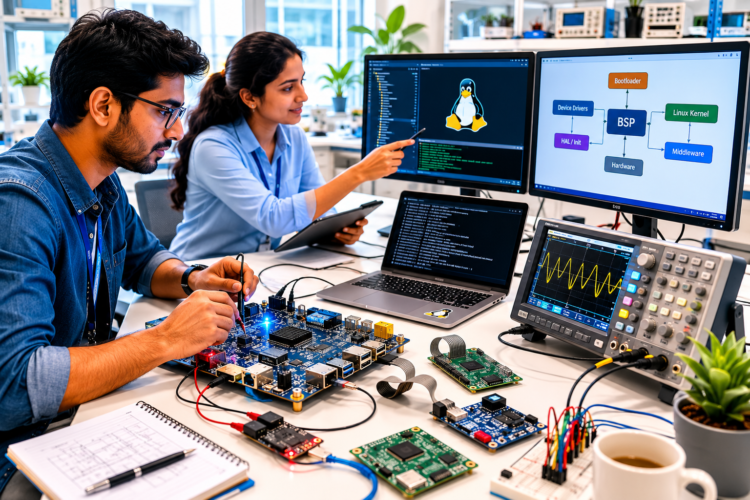
A BSP Engineer develops and maintains BSP software. Hardware and software integration becomes the primary focus.
Key responsibilities include:
- Hardware initialization.
- Driver development.
- BSP customization.
- System validation.
- Performance optimization.
The role combines software and hardware expertise.
Where BSP Engineers Work
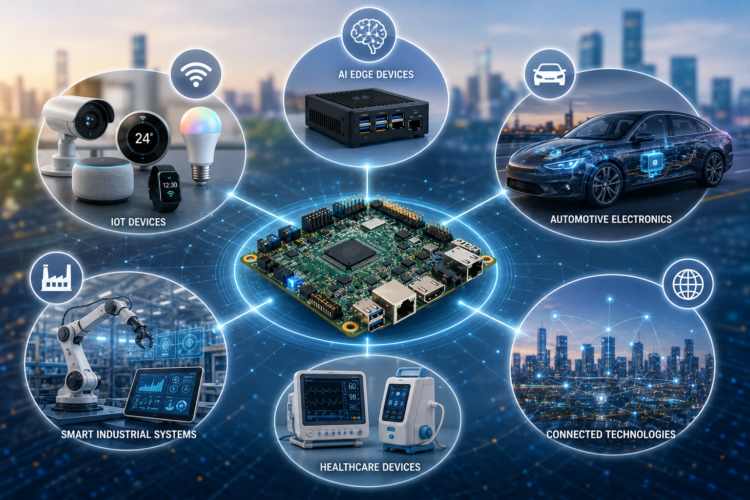
Many industries depend on BSP Engineers.
Consumer Electronics
Examples include:
- Smart televisions.
- Smartphones.
- Wearable devices.
- Smart appliances.
Automotive
Examples include:
- Infotainment systems.
- Driver assistance systems.
- Vehicle controllers.
- Connected vehicles.
IoT
Examples include:
- Smart sensors.
- Connected devices.
- Smart home systems.
- Industrial IoT products.
Telecommunications
Examples include:
- Networking equipment.
- Communication devices.
- Wireless platforms.
- Telecom infrastructure.
Medical Devices
Examples include:
- Monitoring systems.
- Diagnostic equipment.
- Portable medical devices.
- Healthcare electronics.
Industrial Automation
Examples include:
- Robotics systems.
- Control units.
- Industrial sensors.
- Manufacturing equipment.
Aerospace & Defense
Examples include:
- Navigation systems.
- Communication platforms.
- Defense electronics.
- Aerospace controllers.
Master Embedded Systems Programming!
Launch your tech career with our Embedded Systems Course, designed for hands-on learning and industry readiness.
Know More🛠️ Core Responsibilities of a BSP Engineer
BSP Engineers perform several technical tasks. Product functionality depends on successful execution.
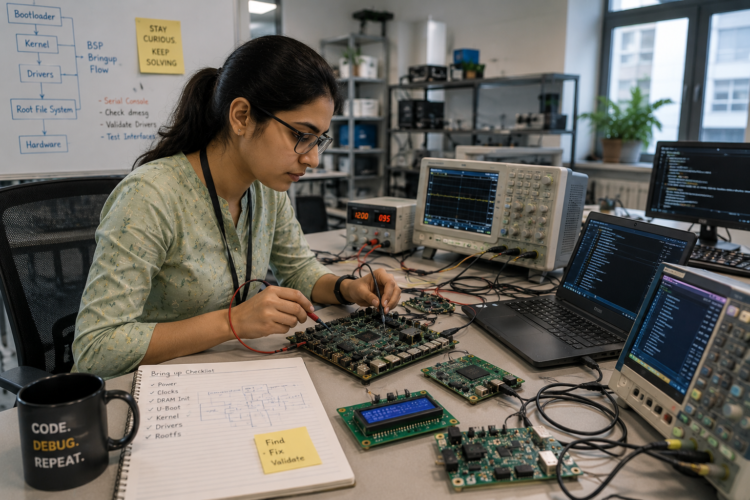
Hardware Bring-Up and Board Initialization
Hardware must operate correctly before development. Board bring-up begins this process.
Important activities include:
- Hardware verification.
- Peripheral configuration.
- Startup validation.
- Initial testing.
Successful bring-up supports future development.
Device Driver Development and Integration
Drivers enable hardware communication. Stable drivers improve system performance.
Common tasks include:
- Driver development.
- Driver customization.
- Peripheral integration.
- Driver validation.
Bootloader Development and Customization
Bootloaders prepare systems for operation.
Responsibilities include:
- Bootloader configuration.
- Startup optimization.
- Hardware initialization.
- Feature customization.
U-Boot remains widely used.
Linux/Android BSP Porting
Many devices use Linux or Android.
Porting activities include:
- Platform adaptation.
- Hardware support.
- Kernel integration.
- Driver compatibility.
Successful porting improves stability.
Kernel Configuration and Optimization
Kernel configuration affects performance.
Engineers often:
- Enable hardware support.
- Configure kernel options.
- Optimize resources.
- Improve boot times.
Optimization enhances efficiency.
Hardware Debugging and Troubleshooting
Hardware issues occur regularly. Effective debugging becomes essential.
Common activities include:
- Signal analysis.
- Driver debugging.
- Interface validation.
- Failure investigation.
Problem-solving skills remain valuable.
Performance Tuning and System Validation
Systems must perform efficiently.
Validation activities include:
- Stability testing.
- Performance evaluation.
- Resource analysis.
- System verification.
Reliable operation remains important.
Collaboration with Hardware and Software Teams
BSP Engineers work with multiple teams. Collaboration improves development efficiency.
Teams often include:
- Hardware engineers.
- Embedded developers.
- Validation engineers.
- Product teams.
Strong communication supports project success.
💡 Essential Technical Skills for BSP Engineers
Strong technical skills remain essential. BSP development requires broad knowledge.
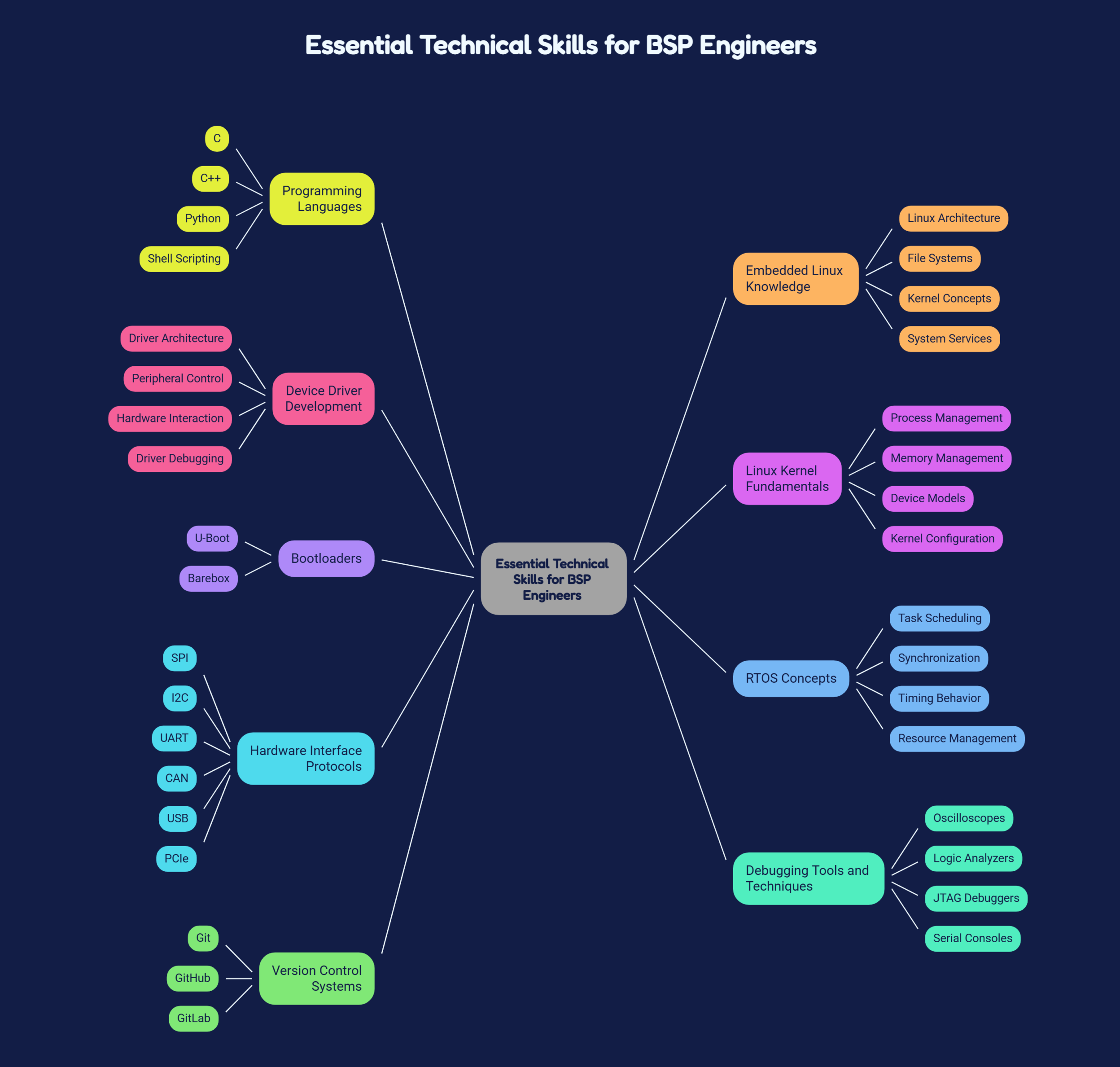
Programming Languages
Several programming languages support BSP development.
C
C remains the most important language. Many BSP components use C extensively.
C++
C++ appears in many embedded projects. Advanced applications often use it.
Python
Python supports automation activities. Development tasks become more efficient.
Shell Scripting
Shell scripts simplify system management. Automation becomes easier through scripting.
Embedded Linux Knowledge
Embedded Linux remains widely used. BSP Engineers often work with Linux platforms.
Important areas include:
- Linux architecture.
- File systems.
- Kernel concepts.
- System services.
Linux knowledge remains highly valuable.
Device Driver Development
Drivers enable communication with hardware. Strong driver knowledge improves effectiveness.
Important areas include:
- Driver architecture.
- Peripheral control.
- Hardware interaction.
- Driver debugging.
Linux Kernel Fundamentals
Kernel knowledge supports BSP development.
Important concepts include:
- Process management.
- Memory management.
- Device models.
- Kernel configuration.
Bootloaders (U-Boot, Barebox)
Bootloaders start embedded systems. Understanding them remains important.
Common examples include:
- U-Boot.
- Barebox.
Bootloader customization occurs frequently.
RTOS Concepts
Some products use RTOS platforms. Knowledge of real-time systems helps greatly.
Important concepts include:
- Task scheduling.
- Synchronization.
- Timing behavior.
- Resource management.
Hardware Interface Protocols
Hardware devices communicate through protocols.
Important protocols include:
- SPI.
- I2C.
- UART.
- CAN.
- USB.
- PCIe.
Protocol knowledge improves troubleshooting.
Debugging Tools and Techniques
Debugging remains a core responsibility.
Common tools include:
- Oscilloscopes.
- Logic analyzers.
- JTAG debuggers.
- Serial consoles.
These tools simplify investigations.
Version Control Systems
Modern development requires version control.
Common platforms include:
- Git.
- GitHub.
- GitLab.
Version control supports collaboration.
Master Embedded Systems Programming!
Launch your tech career with our Embedded Systems Course, designed for hands-on learning and industry readiness.
Know MoreFrequently Asked Questions
What does a BSP Engineer do?
A BSP Engineer develops and maintains Board Support Packages that enable operating systems to run on specific hardware platforms. The role involves hardware bring-up, device driver development, kernel configuration, debugging, and system optimization.
Is BSP Engineering a good career?
Yes, BSP Engineering is a strong career choice because embedded systems are used across many industries. The role offers technical specialization, continuous learning opportunities, and strong long-term demand.
What skills are required for BSP Engineers?
BSP Engineers need knowledge of embedded systems, device drivers, Linux kernels, bootloaders, and hardware interfaces. Strong debugging, problem-solving, and programming skills are also important for success.
What programming languages should BSP Engineers learn?
C is the most important language because most BSP components are developed using C. Knowledge of C++, Python, and Shell Scripting can further improve development and automation capabilities.
What is the difference between BSP and Embedded Engineering?
BSP Engineering focuses on hardware-software integration, operating system support, and device drivers. Embedded Engineering covers a broader scope that includes firmware, applications, middleware, and product development.
Do BSP Engineers need Linux knowledge?
Yes, Linux knowledge is essential because many BSP projects are built on Embedded Linux platforms. Understanding kernels, file systems, boot processes, and device drivers is highly valuable.
What industries hire BSP Engineers?
BSP Engineers are hired in automotive, consumer electronics, telecommunications, healthcare, industrial automation, aerospace, and IoT industries. These sectors depend heavily on embedded devices and hardware-software integration.
What is the average salary of a BSP Engineer?
Freshers typically earn between ₹4 LPA and ₹8 LPA, while experienced professionals can earn ₹12 LPA to ₹25+ LPA depending on skills and expertise. Salary often increases with experience in Linux, driver development, and BSP customization.
How can freshers become BSP Engineers?
Freshers can start by learning C programming, Embedded Linux, device drivers, and hardware fundamentals. Building hands-on projects and gaining experience with development boards can significantly improve job opportunities.
Is BSP Engineering in demand in the future?
Yes, BSP Engineering is expected to remain in demand because embedded systems continue expanding across industries. Growth in IoT, automotive software, AI edge devices, and connected technologies will create additional opportunities.