
Table of Contents
Cabin Baggage vs Check-in Baggage — Answer First
Cabin baggage stays with passengers onboard. Check-in baggage travels inside the aircraft hold. Cabin bags have stricter size limits. Checked bags usually allow greater weight.
Cabin baggage usually holds personal essentials. This includes electronics, medicines, documents, and valuables. Check-in baggage suits clothing and larger items. Certain dangerous items remain restricted in both.
Most Indian domestic flights allow around 7kg. This applies to standard cabin baggage. Checked allowances vary between airlines. Fare type can also change the allowance.
For example, IndiGo allows 7kg cabin baggage. Its standard allowance commonly includes checked baggage. However, specific fares can differ.
Air India allows 7kg cabin baggage. Some premium classes allow higher cabin weights. Its checked allowance depends on fare type.
Quick Baggage Comparison
| Feature | Cabin Baggage | Check-in Baggage |
|---|---|---|
| Location | Passenger cabin | Aircraft baggage hold |
| Access | Available during flight | Available after landing |
| Typical weight | Around 7kg | Around 15–25kg |
| Size | Smaller | Larger |
| Best for | Essentials | Clothes and larger items |
| Electronics | Usually suitable | Some restrictions apply |
| Medicines | Prefer cabin | Some items may be restricted |
| Valuables | Always keep nearby | Not recommended |
| Security screening | At passenger screening | At baggage screening |
| Collection | No collection needed | Collected at destination |
Airline rules can change by fare. Always check the booking details.

What Can Go Inside Cabin Baggage?
Cabin baggage can contain several essentials.
Common permitted items include:
- Clothing.
- Mobile phones.
- Laptops.
- Tablets.
- Cameras.
- Travel documents.
- Medicines.
- Small toiletries.
- Books.
- Personal accessories.
- Approved snacks.
Liquids have additional security restrictions. Containers above permitted limits can face rejection. Some medical items receive specific exceptions.
Power banks should remain in cabin baggage. Spare lithium batteries also require cabin transport. This rule helps reduce onboard fire risks.
What Goes Inside Check-in Baggage?
Checked baggage suits larger personal belongings.
Common examples include:
- Clothes.
- Shoes.
- Larger toiletries.
- Non-valuable accessories.
- Certain sports equipment.
- Larger personal items.
- Items unsuitable for cabin storage.
Some items remain prohibited altogether. Others require special airline approval.
What Is the Main Difference?
The biggest difference involves accessibility. Cabin baggage remains accessible during travel. Checked baggage becomes inaccessible after check-in.
Weight limits also differ significantly. Cabin bags generally have lower limits. Checked baggage usually permits greater weight.
Security rules also differ between both categories. Some items belong exclusively in cabin baggage. Others should remain inside checked luggage.
Why Does Understanding Baggage Rules Matter?
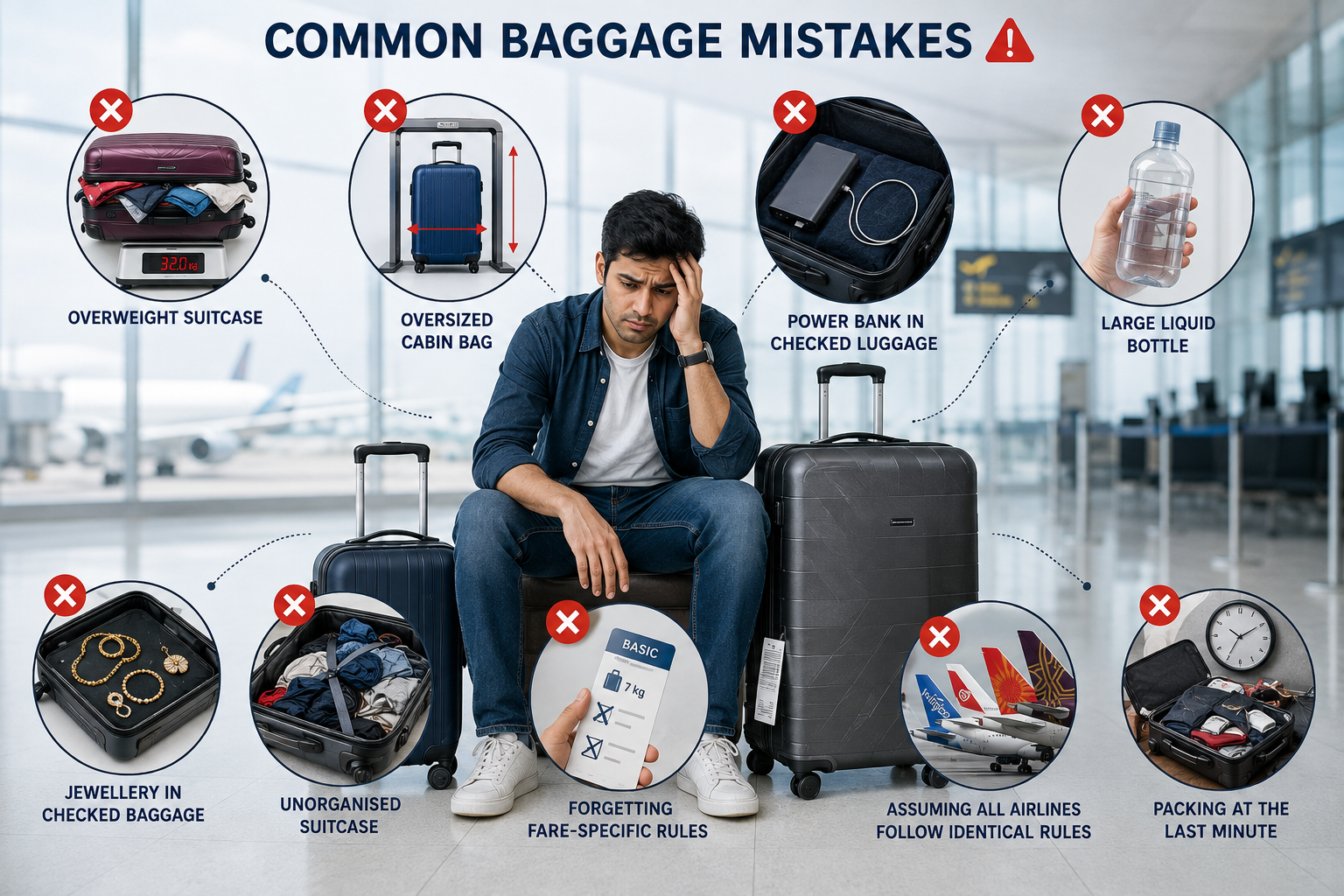
Baggage rules can affect the entire journey. Incorrect packing can cause airport delays. It can also result in additional charges.
Understanding Rules Helps Avoid
- Unexpected baggage fees.
- Security screening problems.
- Bag repacking at airports.
- Confiscation of restricted items.
- Boarding delays.
- Missing essential items.
- Damaged unsuitable items.
- Check-in complications.
Airlines may enforce weight limits strictly. Airport staff can require bags to be repacked.
Why Should Travelers Check Their Tickets?
Baggage allowances vary between airlines. Fare categories can also have different allowances.
Always check:
- Cabin baggage weight.
- Cabin baggage dimensions.
- Checked baggage weight.
- Number of checked bags.
- Personal item rules.
- Excess baggage charges.
- Restricted item rules.
Checking beforehand makes packing easier. It also reduces airport surprises.
✈️ Start Your Aviation Career Today
Explore career-focused insights on airport jobs, ground staff roles, and aviation training. Learn about salaries, skills, certifications, and hiring trends to start and grow your career in the aviation industry.
Join NowWhat Is Cabin Baggage?
Cabin baggage is luggage taken onboard. It stays inside the passenger cabin. It is also called hand baggage.
Passengers place cabin bags in overhead compartments. Smaller personal items fit under seats.
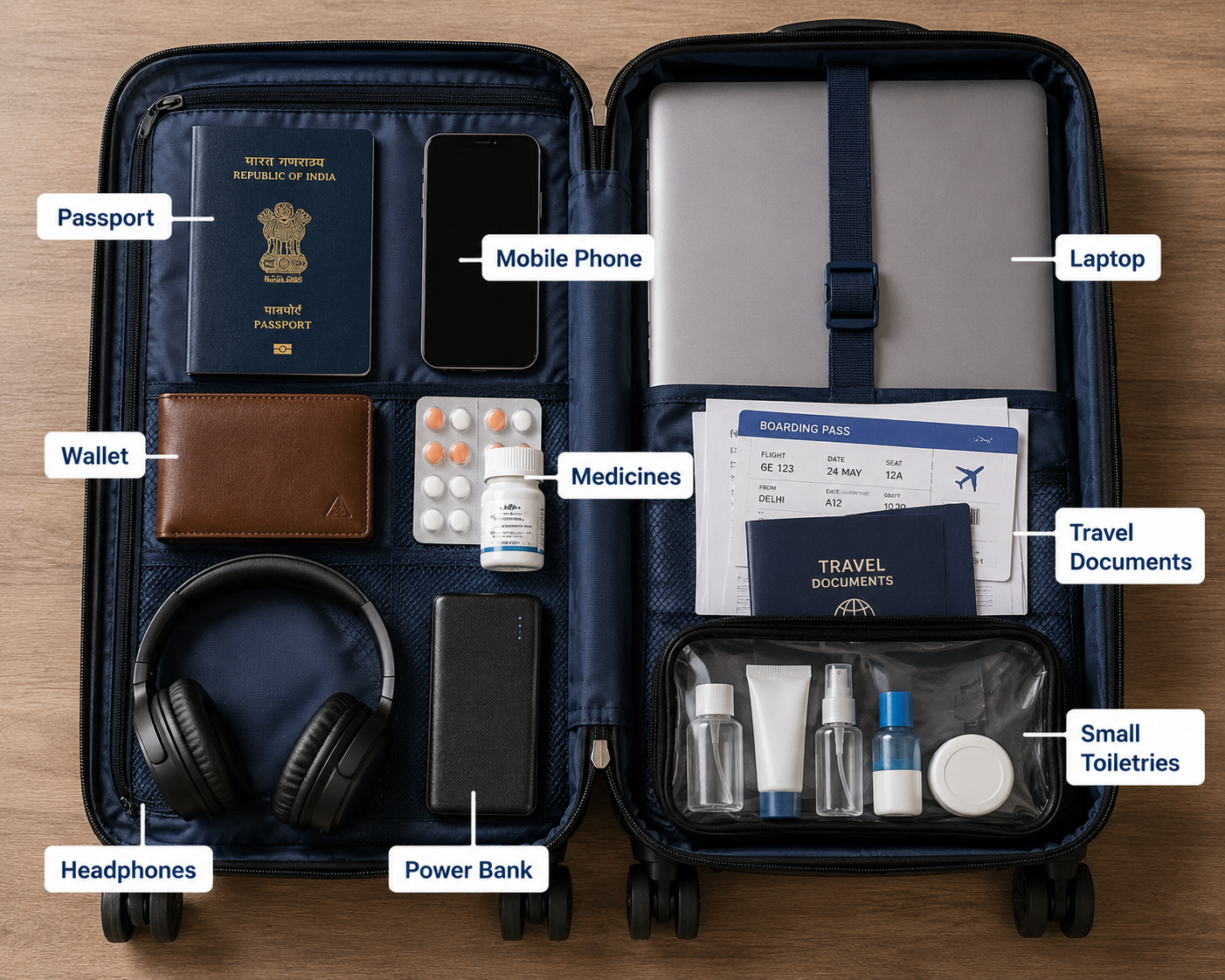
Typical Cabin Baggage Characteristics
- Lightweight construction.
- Compact dimensions.
- Easy passenger handling.
- Suitable for overhead storage.
- Usually limited to one main piece.
- Often includes a personal item.
Air India currently permits one cabin bag. Economy and premium economy allow 7kg. Business and first class allow higher weights. Its stated standard cabin dimensions are 55×40×20cm.
IndiGo also allows one cabin bag. Its limit is 7kg for standard cabin baggage. Its maximum dimensions are 55×35×25cm.
What Should Stay in Cabin Baggage?
Keep important items close during travel.
- Passport or identification documents.
- Boarding information.
- Mobile phone.
- Laptop.
- Camera.
- Prescription medicines.
- Essential personal medicines.
- Wallet.
- Jewellery.
- Important certificates.
- Small valuables.
- Power bank.
These items are safer when kept nearby.
Liquid Rules for Cabin Bags
Liquids receive stricter screening onboard. Containers above permitted limits may be rejected.
Generally, passengers should avoid liquids above 100ml. Small liquid containers should follow security requirements.
Common examples include:
- Shampoo.
- Toothpaste.
- Sunscreen.
- Moisturiser.
- Perfume.
- Liquid cosmetics.
- Drinks.
Essential medicines can receive exceptions. Baby food can also receive exceptions. Proper screening remains necessary.
Battery and Power Bank Rules
Power banks require special attention. They should remain inside cabin baggage.
Spare lithium batteries also require cabin transport. They should remain protected against short circuits.
Passengers should avoid placing power banks inside checked bags. This can create security problems during baggage screening.
What Is Check-in Baggage?
Check-in baggage is luggage handed over. It travels inside the aircraft hold. Passengers collect it after landing.
Checked bags usually support heavier packing. They also provide greater storage capacity.
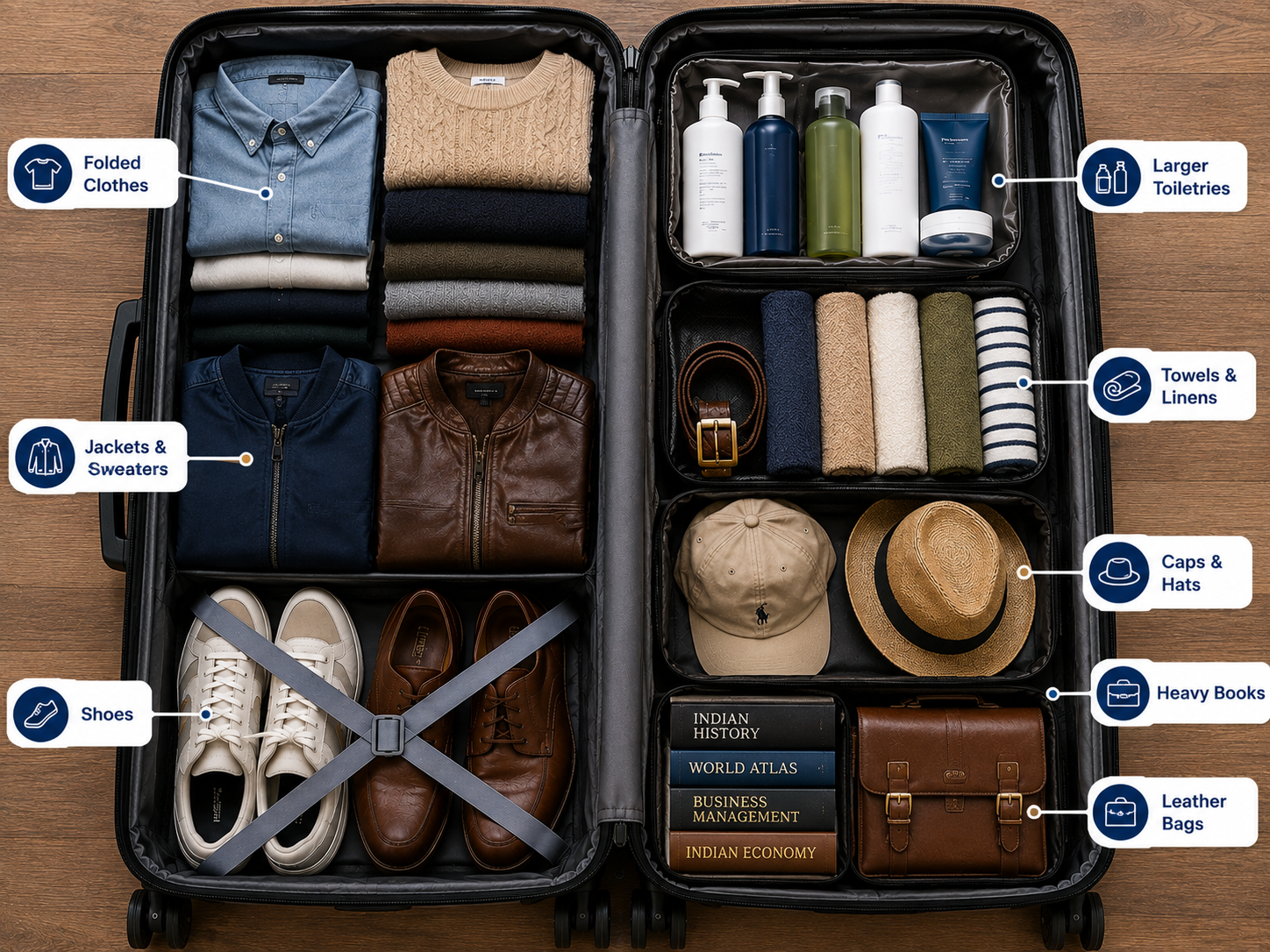
Typical Check-in Baggage Characteristics
- Larger dimensions.
- Higher weight allowance.
- Stored inside aircraft holds.
- Collected after landing.
- Suitable for clothing.
- Suitable for larger belongings.
- Subject to baggage screening.
Air India currently offers different checked allowances. Economy fares can provide 15kg, 20kg, or 25kg. Higher classes can provide larger allowances.
What Should Go Inside Check-in Bags?
Checked bags suit items not needed onboard.
Useful examples include:
- Extra clothing.
- Shoes.
- Jackets.
- Larger toiletries.
- Non-essential accessories.
- Packed gifts.
- Certain sports equipment.
- Larger personal items.
However, valuables should not go inside. Important documents should also remain accessible.
What Should Not Go Inside Checked Bags?
Some items require cabin transportation.
Avoid checking:
- Power banks.
- Spare lithium batteries.
- Essential medicines.
- Important documents.
- Cash.
- Jewellery.
- Valuable electronics.
- Irreplaceable personal items.
Certain dangerous goods remain prohibited. Airline-specific restrictions may also apply.
Cabin Baggage vs Check-in Baggage
Both baggage types serve different purposes. Choosing correctly makes travel much easier.
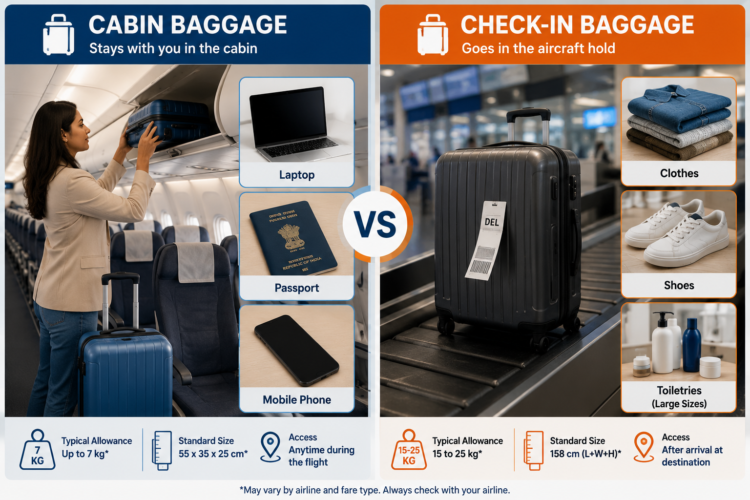
Cabin Baggage Works Best For
- Travel documents.
- Electronics.
- Medicines.
- Valuables.
- Essential toiletries.
- One change of clothes.
- Important personal items.
Check-in Baggage Works Best For
- Multiple clothing sets.
- Shoes.
- Larger toiletries.
- Heavy personal items.
- Non-essential accessories.
- Larger permitted belongings.
The Simplest Packing Rule
Keep essential items inside cabin baggage. Pack heavier items inside checked baggage. Keep valuables with you throughout travel.
This approach simplifies airport security checks. It also reduces risks during baggage handling.
✈️ Start Your Aviation Career Today
Explore career-focused insights on airport jobs, ground staff roles, and aviation training. Learn about salaries, skills, certifications, and hiring trends to start and grow your career in the aviation industry.
Join NowBaggage Rules for Domestic Flights in India
Domestic baggage rules vary by airline. Fare type can also change allowances.
Common Cabin Baggage Limit
A 7kg cabin allowance is common. IndiGo currently lists 7kg cabin baggage. Air India also lists 7kg for economy.
Common Checked Baggage Limit
A 15kg allowance is common. However, some fares provide higher limits.
Air India currently lists several domestic allowances. Economy options can range from 15kg to 25kg. Higher travel classes can receive more baggage.
Always Check Three Things
- Airline baggage allowance.
- Ticket fare category.
- Current baggage restrictions.
Rules can change without much notice. Booking details provide the safest reference.
| Related Links | |
| Airport Jobs Salary in Dubai (2026 Guide) | How to Check in Online for Flight? |
| Things You Should Never Pack in Your Checked Baggage | Top 7 Airline Companies in India |
✈️ Start Your Aviation Career Today
Explore career-focused insights on airport jobs, ground staff roles, and aviation training. Learn about salaries, skills, certifications, and hiring trends to start and grow your career in the aviation industry.
Join NowFrequently Asked Questions
What is the difference between cabin baggage and check-in baggage?
Cabin baggage stays with passengers during the flight, while check-in baggage travels inside the aircraft hold. Cabin bags have lower weight limits, while checked bags usually allow more weight.
How much cabin baggage is allowed on Indian flights?
Many Indian airlines allow around 7kg cabin baggage. However, exact allowances can vary by airline, fare type, and travel class.
How much check-in baggage is allowed on domestic flights?
A 15kg checked baggage allowance is common for domestic flights. Some airlines and higher fare categories provide larger allowances.
Can power banks go inside check-in baggage?
Power banks should not be packed inside check-in baggage. They should generally remain in cabin baggage because of aviation safety requirements.
Can laptops be carried in cabin baggage?
Laptops can generally be carried in cabin baggage. Keeping them in cabin luggage also makes security screening easier.
Can medicines be carried in cabin baggage?
Essential medicines should preferably remain in cabin baggage. Prescription medicines and certain medical supplies may require supporting documentation.
Are liquids allowed in cabin baggage on Indian flights?
Liquids are subject to security restrictions in cabin baggage. Larger liquid containers may need to be placed in check-in baggage, subject to applicable rules.
Can valuables be packed in check-in baggage?
Valuable items should preferably remain in cabin baggage. Cash, jewellery, important documents, and expensive electronics should not be placed in checked luggage.
What happens if cabin baggage exceeds the permitted limit?
The airline may require the bag to be checked in. Additional baggage charges may also apply depending on the airline and applicable allowance.
How can travelers avoid extra baggage fees?
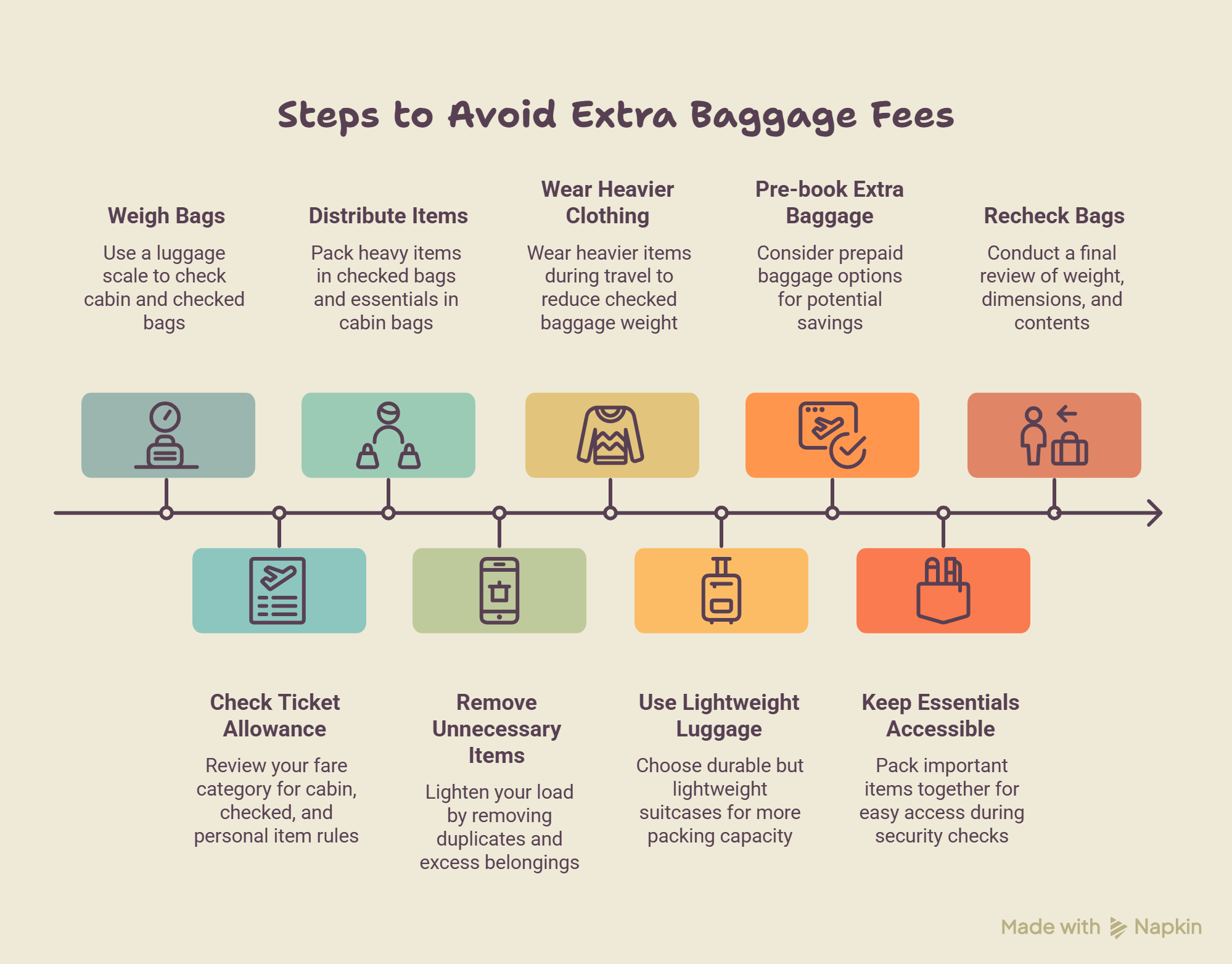
Travelers should check their fare allowance before packing. Weighing luggage, removing unnecessary items, and purchasing additional baggage in advance can help control costs.