Table of Contents
Yes, embedded systems can be self-learned. You will need the right approach. Learners can build strong skills through consistent effort. Basic knowledge of C programming is very important.
Simple electronics concepts are also needed for better understanding. Problem-solving skills help in handling problems. Regular practice improves speed. It also raises confidence. Small projects help apply concepts in real situations. Learning resources are available online today. This makes self-learning easier for beginners.
This blog explains how to start self-learning embedded systems. It covers the basic skills required for beginners. It also provides a clear learning path to follow. Useful tools and resources are discussed in detail.
The blog highlights career impact and practical benefits. It also explains common challenges during self-learning.
Kickstart your embedded systems career and turn your tech passion into high-demand skills!
Key Takeaways:
- Self-learning is possible with guidance.
- Basic programming and electronics knowledge is required.
- Online tools and resources support independent learning.
- Practical projects are essential for skill development.
Introduction
Embedded systems are used in many modern devices today. They control machines and perform specific tasks efficiently. These systems combine software and hardware components together. Learning embedded systems may seem difficult at first. Many learners think formal courses are necessary.
However, self-learning is now easier. As we have modern tools. Learners can study anytime. They can progress at their own pace. This makes learning more flexible. Regular practice and simple projects improve understanding over time.
📌 Why Self-Learning is Important
- Allows learning at a flexible pace.
- Removes need for formal classroom training.
- Makes learning accessible to more people.
- Helps focus on personal learning goals.
- Encourages regular practice and consistency.
- Learners can revise topics anytime.
- Weak areas can be improved gradually.
- Builds confidence through independent learning.
- Supports gradual and steady skill development.
📘 What this Blog Covers
- How to self-learn embedded systems effectively.
- Basic skills required for beginners.
- Step-by-step learning path to follow.
- Tools and resources for self-learning.
- Importance of projects and practice.
- Career impact of self-learning approach.
- Benefits of independent learning.
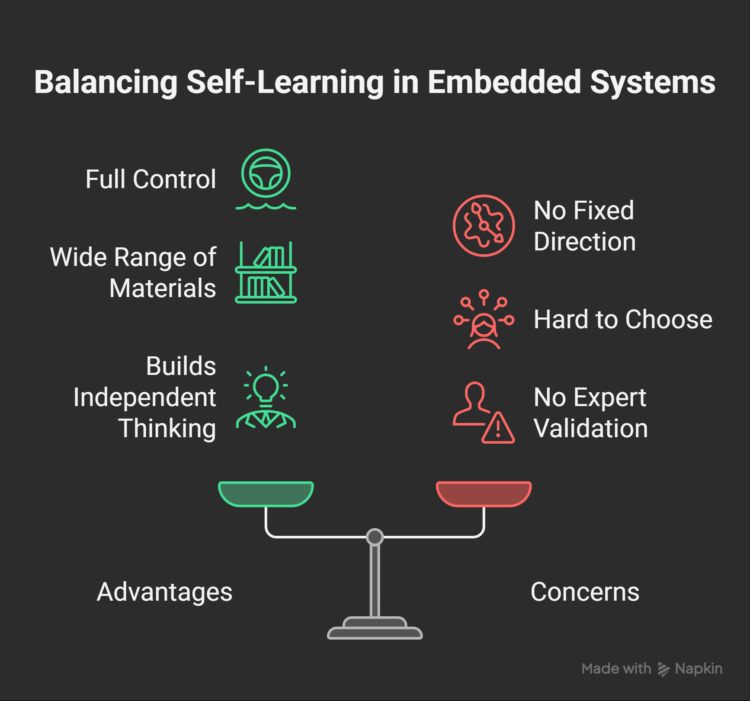
- Common challenges.
Master Embedded Systems Programming!
Launch your tech career with our Embedded Systems Course, designed for hands-on learning and industry readiness.
Know MoreFrequently Asked Questions
Can I really learn embedded systems on my own?
Yes, self-learning is possible with consistent effort and planning. Strong basics and regular practice help build skills over time.
What is the first thing to learn in embedded systems?
Start with C programming and basic concepts. These form the base for all further topics.
Do I need hardware from the beginning?
No, beginners can start without hardware initially. Hardware can be added after learning basic concepts.
How much time is needed to learn embedded systems?
Basic understanding can take a few months. Regular practice helps improve faster.
Is self-learning enough to get a job?
Self-learning can build strong skills and knowledge. Practical projects are needed to improve job chances.
Which programming language is important for embedded systems?
C is the most commonly used language. It is essential for writing efficient embedded code.
What kind of projects should beginners build?
Start with simple projects using basic concepts. Gradually move to more complex systems.
How can I stay consistent in self-learning?
Set small goals and follow a daily routine. Regular practice helps maintain progress.
Are online resources enough for learning?
Yes, many online resources provide complete learning support. They should be used with consistent practice.