
Table of Contents
Are you currently searching for ways by which you can do healthy weight loss? One of the popular myths about weight loss is that skipping meals or starving yourself can save you from gaining weight.
Yes, your food pattern can talk a lot about your weight loss journey. But it will take quality time. The weight loss never happens without constant effort; you have to maintain consistency.
No magic happens overnight. You can achieve healthy weight loss by following a calorie-deficit diet. You might be wondering what that really means. Read on to keep yourself full and healthy every time.
-Healthy weight loss depends on a calorie deficit
-Protein- and fibre-rich food can make you healthy and full at the same time
– Low-calorie food should be replaced with processed food
-Consistency in maintaining a healthy life habit is important for a future healthy life
The key to unlocking your weight loss journey is attaining a healthy calorie deficit. Productively losing weight can help you to get rid of unhealthy habits and keep you away from sickness. The extreme ways to lose weight will also result in muscle loss, fatigue, energy deficiency and so on.
Eating healthy can save you from less productive ways of losing fat. If you are planning to lose weight healthily, following a diet which keeps you full and energy-filled can help you in the long run.
What is a Calorie Deficit?
Wondering what a calorie deficit actually is? The answer is really simple. But you have to understand that a healthy calorie deficit is the key to unlocking your healthy food habits.
The healthy calorie deficit is the consumption of fewer calories than what your body burns to derive energy for its functions, while you still get enough of the nutrients and minerals to stay energetic.
Your body demands energy to work. It demands energy for various functions, including proper digestion, blood circulation, breathing and other physical activities, including workouts, swimming, walking, dancing, hiking, etc. The body needs energy for properly maintaining and balancing body temperature as well.
Consuming less energy than your body needs, your body will start using the stored fat, and this will lead to gradual weight loss.

Consuming fewer calories is best for your body. The high calories in the body will be used by the body to derive energy and maintain body weight. Maintaining a calorie deficit will allow you to lose weight.
For instance, imagine your daily intake of calories is 1800 and your body needs 2000 calories on a daily basis. The calorie deficit is 200, and the body uses the extra stored fat for energy.
You should never think of going for a high-calorie-deficient diet plan since it may exhaust the body. If the calories are not enough for the proper function of the body, the reserve fat can help you to function smoothly.
If you are using a low-calorie deficit plan, you can save yourself from muscle loss, malnutrition or exhaustion. Eating less than your body needs for burning and turning it into energy is important. The calorie deficit should be done in a balanced, systematic and healthy way to save your body from energy depletion.
Become a general fitness trainer and turn your passion into a profession!
Importance of Calorie Deficit for Weight Loss
If you are looking for weight loss, you have to practise a calorie deficit. Your eating habits are purely based on your food choices. You can consume food of your choice.
You have to consume fewer calories than you burn to lose fat. You have to be consistent while practising the food routine. Whether you choose a Mediterranean, intermittent or plant-based low-carb food pattern, you have to consume fewer calories to keep yourself healthy.
Fat loss
When your body loses essential calories, it will look for the stored fat. Because the body requires energy. This can result in weight loss. The fat loss will be increased, and this will help you to achieve your target.
Muscle mass preservation
An adequate protein intake will allow you to lose fat and preserve muscle. Regular strength training can help you as well.
Sustainable weight management support
The weight management will be more sustainable by keeping everything under control. The crash diets will be maintained with a moderate calorie deficit.
Total health benefits
The risk of high fatty liver disease, joint problems, type 2 diabetes, high blood pressure, heart disease, and sleep deficiency can be reduced.
Energy efficiency enhancement
The energy levels can be boosted with calorie restriction. The overall well-being of the human body can be enhanced. The balanced calorie deficit, along with the nutritious food, can aid in the dietary practice.
Become a general fitness trainer and turn your passion into a profession!
Turn Your Passion for Fitness into a Profession
Learn practical skills, get certified, and step into the growing fitness industry with confidence.
Join the CourseLow-Calorie Nutrient-Dense Foods
A calorie deficit means eating healthy and balanced meals. Starving yourself is never a solution. Choose your food wisely. Go for protein- and fibre-rich food items to keep yourself full.
The low-calorie food provides the body with adequate minerals, vitamins and protein, which can make you feel full and healthy. Try avoiding the overprocessed and high-calorie food items, which can only lead to weight gain.
| Low-calorie food category | Low-calorie food items | Health benefits |
| Leafy green vegetables | Kale
Spinach Lettuce Fenugreek |
Low in calories
Rich in calcium, iron and antioxidants Fibre-rich Full of essential nutrients and vitamins Keeps you full the entire day |
| Cruciferous vegetables | Broccoli
Cabbage Brussels sprouts Cauliflower |
High in fibre
Low calories Rich in nutrients Enhance digestion Keeps you full |
| Water-rich fruits | Apples
Watermelon Berries Oranges papaya |
Storehouse of vitamins
Less in calories richFibre Alternative to sugary food Nutrient-rich |
| Lean protein sources | Tofu
Greek yogurt Eggs Chicken Fish Skinless chicken breast |
Reduce unnecessary snacking
Protein-rich Enhances muscle strength Boosts energy Promotes weight loss |
| Water-rich vegetables | Celery
Tomatoes Zucchini Cucumber |
Low calorie
Controls appetite Hydrating |
| Legumes | Chickpeas
Kidney beans Lentils |
Protein-rich
Rich in fibre Blood sugar level stabilises |
| Nuts and healthy fats | Almonds
Chia seeds Pistachio Walnuts avocados |
Provides healthy fats
Enhances essential nutrients High in calories; consume in moderation |
| Soups and broths | Clear chicken broth
Vegetable soup |
Low in calorie
Use as starters or appetisers Energy-rich Fibre-rich |
Become a general fitness trainer and turn your passion into a profession!
Foods That Keep You Full Longer
Weight loss plans are basically abandoned by people due to the feeling of constant hunger. High satiety food can help you with diet planning. Foods which keep you feeling full should be consumed to prevent weight gain. Here is the list of food items that can keep you full for the entire day.
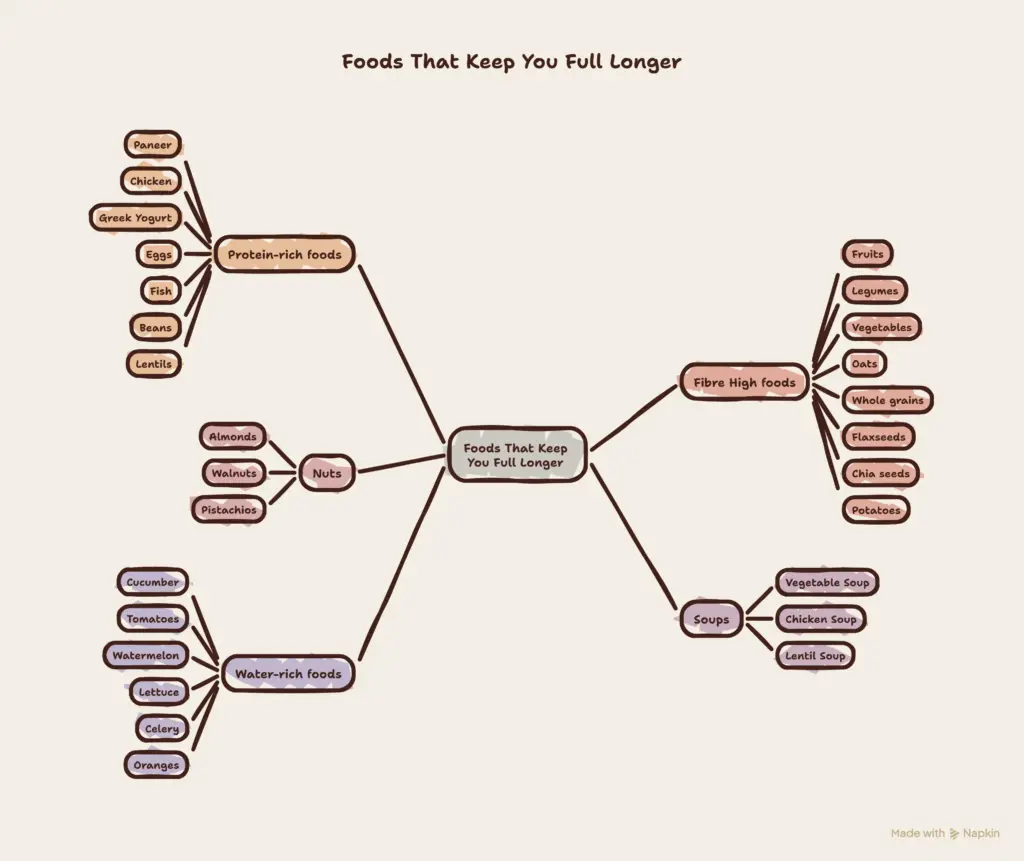
Protein-rich foods
Among all other macronutrients, protein adds value to the food habit. Always try to include protein-rich foods in your diet to keep yourself healthy.
- Paneer
- Chicken
- Greek Yogurt
- Eggs
- Fish
- Beans
- Lentils
Fibre High foods
The fibre slows down digestion, and the fullness will be maintained. The fibre-sourced food includes
- Fruits
- Legumes
- Vegetables
- Oats
- Whole grains
- Flaxseeds
- Chia seeds
- Potatoes
The potatoes have a high satiety index, which makes them a food item which keeps you full. Deep frying potatoes, on the other hand, is not good for health.
Nuts
The calorie-dense nuts can control hunger but should be used in small quantities.
Soups
The soups are low in calories, and this can be used as a good choice for a starter.
Water-rich foods
Always choose food with higher water quality that will keep your hunger under control.
- Cucumber
- Tomatoes
- Watermelon
- Lettuce
- Celery
- Oranges
Make sure that enough water is consumed on a daily basis to prevent unnecessary snacking at regular time intervals.
Sample Meal Ideas
Your calorie goals can be effectively achieved with the aid of a healthy diet plan. You can make use of lentils, oatmeal, fruits, vegetables, nuts, and healthy fats to keep yourself healthy and nutrition-filled. Here is a sample healthy meal idea you can follow
Breakfast
- Rolled oatmeal cooked in low-fat milk with berries
- Chia or flak seeds spread on the top
- Greek yoghurt on top
- Garnished with fruits and nuts
- Pair it with an omelette.
Lunch
- A bowl of brown rice
- Mixed salad with topping of your preference
- lemon and olive oil dressing
- Vegetable soup
- Grilled chicken with cucumber, tomato, carrot and bell peppers
Healthy snack
- Peanut butter with apple slices.
- Almonds or walnuts
- Greek yogurt
- Fresh fruits
- Chickpeas roasted
- Slices of cucumber
Dinner
- Steamed vegetables
- Grilled fish or chicken
- Vegetable soup
- brown rice (small portion)
- Broccoli-mushroom salad
- Sweet potato
- Chicken breast (baked)
- Steamed green beans
Combine protein, fibre, and healthy fat for a balanced diet plan.
Tips for Maintaining a Healthy Calorie Deficit
Your daily habits can influence the way you plan your diet. Make sure that you are following a balanced diet by consuming food rich in nutrients, vitamins and healthy fat. Cutting your calories is never going to help you lose fat content from the body.
- Your calorie goal should be realistic
- Closely watch your daily routine and habits and make a plan based on these
- Enrich your meals with proteins and fibres
- Consume fruits and vegetables in plenty
- Drink water in regular intervals
- Cut processed snacks and sugary drinks
- Find protein source and add to your diet
- Portion control should be practiced and prioritised
- Get atleast 8 hours of sleep
- Prevent overeating
- Stay physically active through walking, cycling, swimming, or strength training.
- Track your meal patterns and consult a dietitian before starting a diet
- Include cardio along with strength training
These small habits make a big difference over time and help create sustainable weight-loss results.
Turn Your Passion for Fitness into a Profession
Learn practical skills, get certified, and step into the growing fitness industry with confidence.
Join the CourseCommon Mistakes to Avoid
Many people skip meals to limit the overeating patterns. But this is not going to help you reduce weight.
- Healthy snacking habits can help you to remain healthy. Skipping the meals will also result in unhealthy food habits or overeating
- Never expect quick results from the calorie-deficit practice. Healthy weight loss is always time-consuming. Consistency is really important to maintain a healthy diet.
- The drastic calorie cut is only resulting in fatigue and slower metabolism. The nutrients, iron and fibre deficiencies will result in extreme weakness.
- Never avoid healthy fats from your diet. The essential fats allow you to balance the body functions and promote overall health.
- Never neglect portion control and depend on large portion consumption of food
- Never fully depend upon exercise for calorie burning. A balanced diet should be maintained
- Flavoured coffee and sugary drinks should be mandatorily avoided to maintained a healthy and balanced diet pattern
Get enough sleep to regulate and manage the hormones and regulate the proper function.
Conclusion
If you wish for sustainable weight loss, a healthy calorie deficit can be a better option. Your goal should be eating rich food with less calories and reduce weight through the balanced diet control.
Consume only what the body needs. Include lentils, nuts, fruits, soups, and protein-rich and fibre-rich food items in the daily routine. Keep yourself hydrated and keep your body nourished.
For the healthy functioning of the body, you need to provide the essential nutrients and proteins. Start your healthy calorie deficit habits to start your weight loss journey today itself.
Turn Your Passion for Fitness into a Profession
Learn practical skills, get certified, and step into the growing fitness industry with confidence.
Join the CourseFrequently Asked Questions
What is a calorie deficit?
Consuming fewer calories than your body burns in a day is what you generally refer to as a calorie deficit. Your body needs energy for respiration, digestion, circulation and physical activity.
Are potatoes good for keeping yourself full?
Yes.The potatoes have a high satiety index, which makes them a food item which keeps you full. Deep frying potatoes, on the other hand, is not good for health.
Are Cucumber and tomatoes low in calories?
Yes. Cucumber and tomatoes are refreshing, hydrating, and low in calories. They are easy to include in salads, sandwiches, and snacks, making them ideal for anyone trying to reduce calorie intake.
How can oats help in digestion?
Oats make an excellent breakfast choice because they contain soluble fibre that slows digestion and keeps you feeling full throughout the morning.
What is the signifcance of calorie deficit in keeping you healthy?
A calorie deficit does not mean to undereat or starve yourself; it means choosing your food wisely. If you are choosing food which is high in protein, fibre, vitamins, and minerals, you will feel full and stay on a low-calorie diet.