Table of Contents
The Indian textile and apparel industry is one of the fastest growing sectors. Notably, It is the world’s second largest textile manufacturer and exporter. Besides, it is not just about the tradition that the Indian textile industry holds. It is a high tech and sustainability driven competitive powerhouse on a global level.
Its range goes from digital textile printing to export targets and government backed mega parks. As you are planning to step into this you should be assured that the industry has much in hold for you and for you to contribute.
Start Your Fashion Journey Today! Learn Advanced Designing & Boutique Skills with Experts!
Key Takeaways
- The Indian textile market is forecasted to hit an impressive USD 656.31B by 2034, with a growth rate of 11.38% CAGR.
- The textile industry makes up a chunk of the country – 2.3% of GDP, and 12% of exports.
- Sustainable fibres, non-woven materials, digital printing, and advanced manufacturing are all hot on the radar.
- With medical textiles on the rise, we’re seeing a whole new direction emerging in the Indian market.
- India is second only to China when it comes to personal protective equipment (PPE) production, and the medical textiles sector is really taking off.
- The government’s production-linked incentive (PLI) scheme has given a boost to the industry.
- There are plans to set up seven MITRA Parks, a massive project worth ₹70,000 crore with the potential to create 20 million new jobs.
- Export Figures – USD 32.63 billion in exports in just FY26 (that’s April to February), with a target of USD 100 billion by 2030.
- The digital textile printing market is expected to grow to USD 3.8 billion by 2030, with a growth rate of 9.9% CAGR.
The Indian Textile Industry: Numbers that Tell the Story
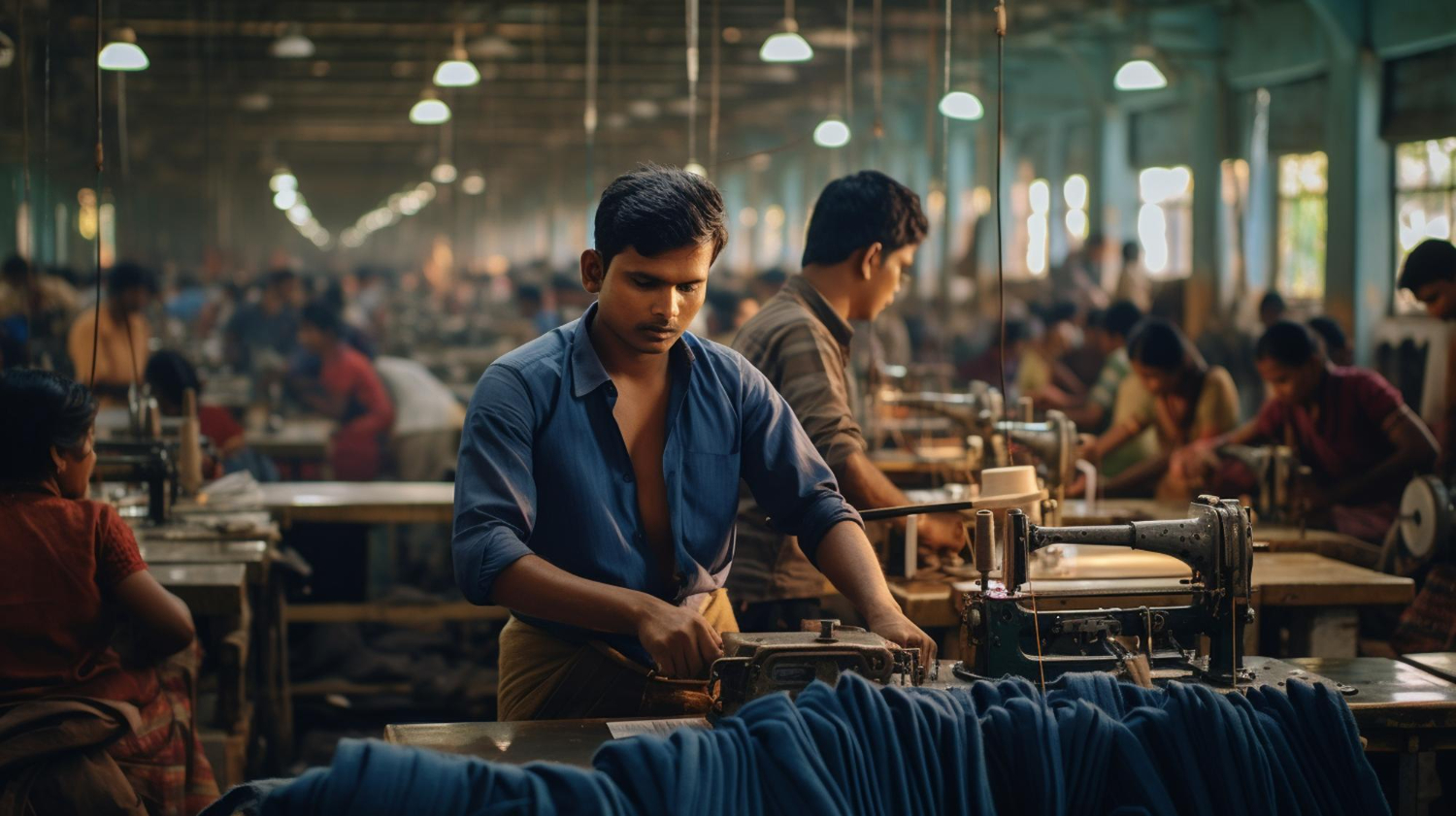
The glory of India’s textile industry is not about how large it is. Precisely, the strong point is it being significantly structured. The textile sector acts as the second-largest employer in the country after agriculture.
Significantly, it is held together with about 45 million direct workers along with 27 million women employed across weaving, spinning, dyeing and garmenting units.
India is also the world’s largest cotton producer and also cotton alone accounts for a major share of the textile raw material market in 2025.
Master Fashion Designing and Create Your Signature Style
Unlock your creative potential with our expert-led Fashion Designing course. Build in-demand skills and step confidently into the world of fashion!
Begin Your Fashion Career Today!Top 5 Growth Trends Shaping the Indian Textile Industry
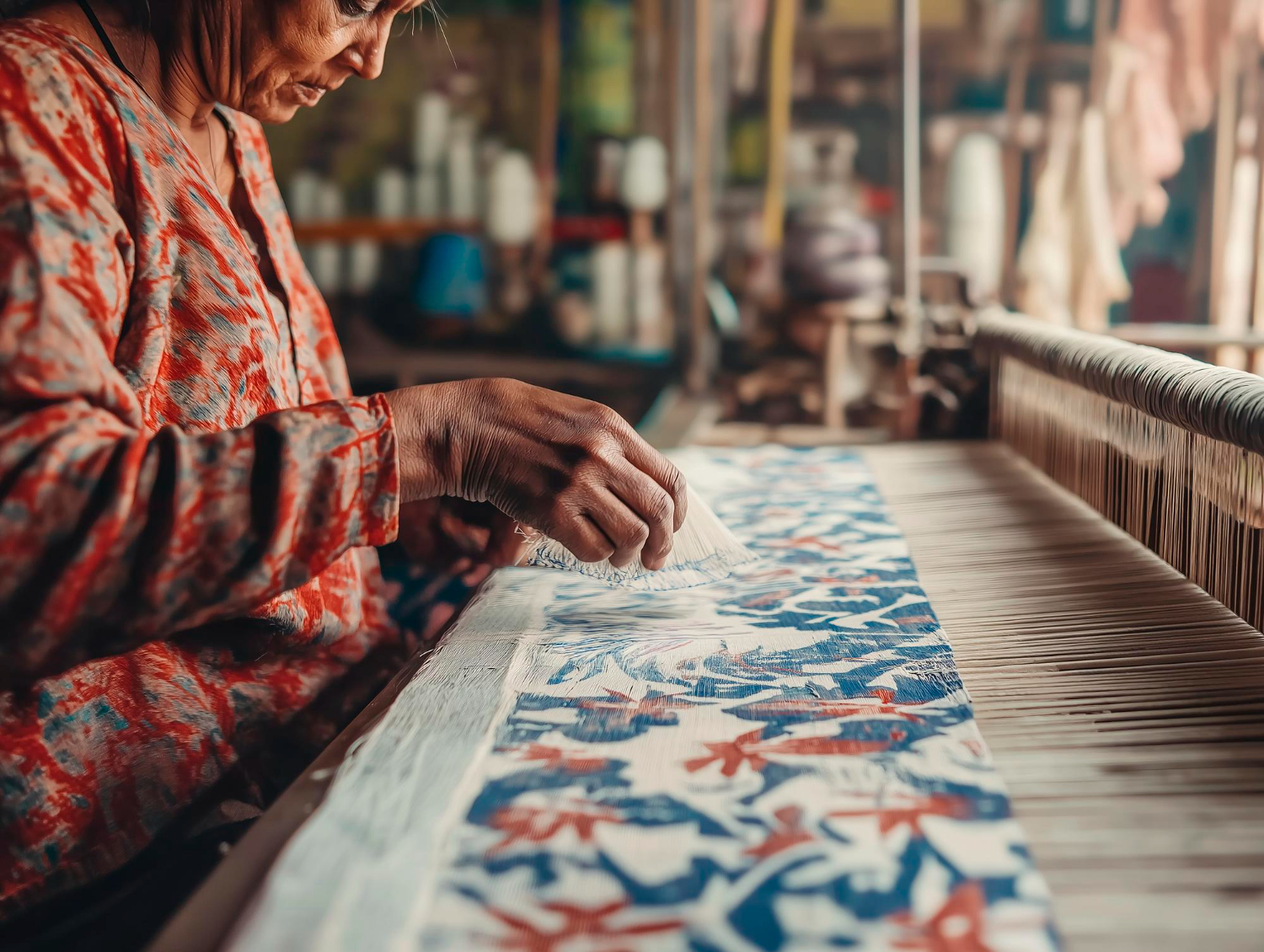
Trend 1: The Rise of Sustainable and Natural Fibres
Sustainability – it’s no longer just a buzzword, it’s an absolute must. The Indian textile industry is shifting away from linear production models and towards circular value chains that integrate sustainability from the very start – right down to post-consumer recycling.
And it’s not just big business that’s on board – consumers, especially Gen-Z and millennials, are increasingly seeking out organic cotton, linen, bamboo fibre, and recycled polyester.
This shift is driving investment in certifications like GOTS (Global Organic Textile Standard) and OEKO-TEX. It makes Indian exporters more competitive in European and North American markets.
Trend 2: Non-Woven Fabrics Are Redefining Product Applications
Non-woven fabrics have gone mainstream once it is considered niche. As they have a unique combination of strength, absorbency, liquid repellence, and cost-effectiveness, they have multiple scope of application. Thus, they are used across home furnishings, healthcare, hygiene, and industrial sectors.
It was a turning point when India emerged as the world’s second-largest PPE producer during the pandemic. India has achieved the manufacturing base and know-how to sustain this growth in peacetime demand too. This is accelerated by having 600 certified PPE manufacturers.
| Application Area | Key Products |
| Home & Furnishings | Bed linen, carpet backing, laundry dryer sheets |
| Medical & Hygiene | Diapers, PPE kits, surgical drapes, wound care |
| Industrial & Utility | Filtration fabric, geotextiles, automotive liners |
Trend 3: Digital Textile Printing is the New Standard
Digital Textile Printing (DTP) is now transforming how fabric is designed and produced. Inkjet-based systems enable
- real-time design updates
- small-batch production
- dramatically reduced water and dye wastage compared to traditional screen printing
For small as well as medium businesses in India, DTP is a game-changer. This eliminates minimum order quantities and also allows faster trend response.
Cities like Surat, Tiruppur, and Jaipur are rapidly adopting digital printing infrastructure to cater to fast fashion and export buyers who need speed and customisation.
Trend 4: Technology is Transforming Manufacturing
Textile manufacturing in India is undergoing a quiet yet significant technological revolution. The key advances include:
- Thermal energy solutions
They replace conventional electricity in dye plants. Subsequently, this reduces operational costs as well as power dependency.
- Automation and AI
They are adopted in spinning and weaving for quality control and predictive maintenance.
- IoT-enabled factories tracking real-time output and energy consumption.
- ERP and supply chain digitisation allowing better inventory and order management.
The West and Central India cluster — particularly Surat’s synthetic textile ecosystem — is the fastest-growing region in terms of technology adoption, supported by proximity to ports and a dense supplier network.
Trend 5: Medical Textiles Are a High-Growth Frontier
Medical textiles — also called “medtech textiles” — represent one of the fastest-growing subsegments globally and in India. These include sensor-based smart textiles, antimicrobial fabrics, compostable wound care products, and biocompatible implant materials.
| Medical Textile Type | Key Benefit |
| Sensor-Based Smart Textiles | Real-time health monitoring |
| Antimicrobial Textiles | Infection prevention in clinical settings |
| Compostable Textiles | Eco-friendly disposal post use |
| Biocompatible Materials | Better integration with human tissue |
Government Initiatives Driving Textile Growth
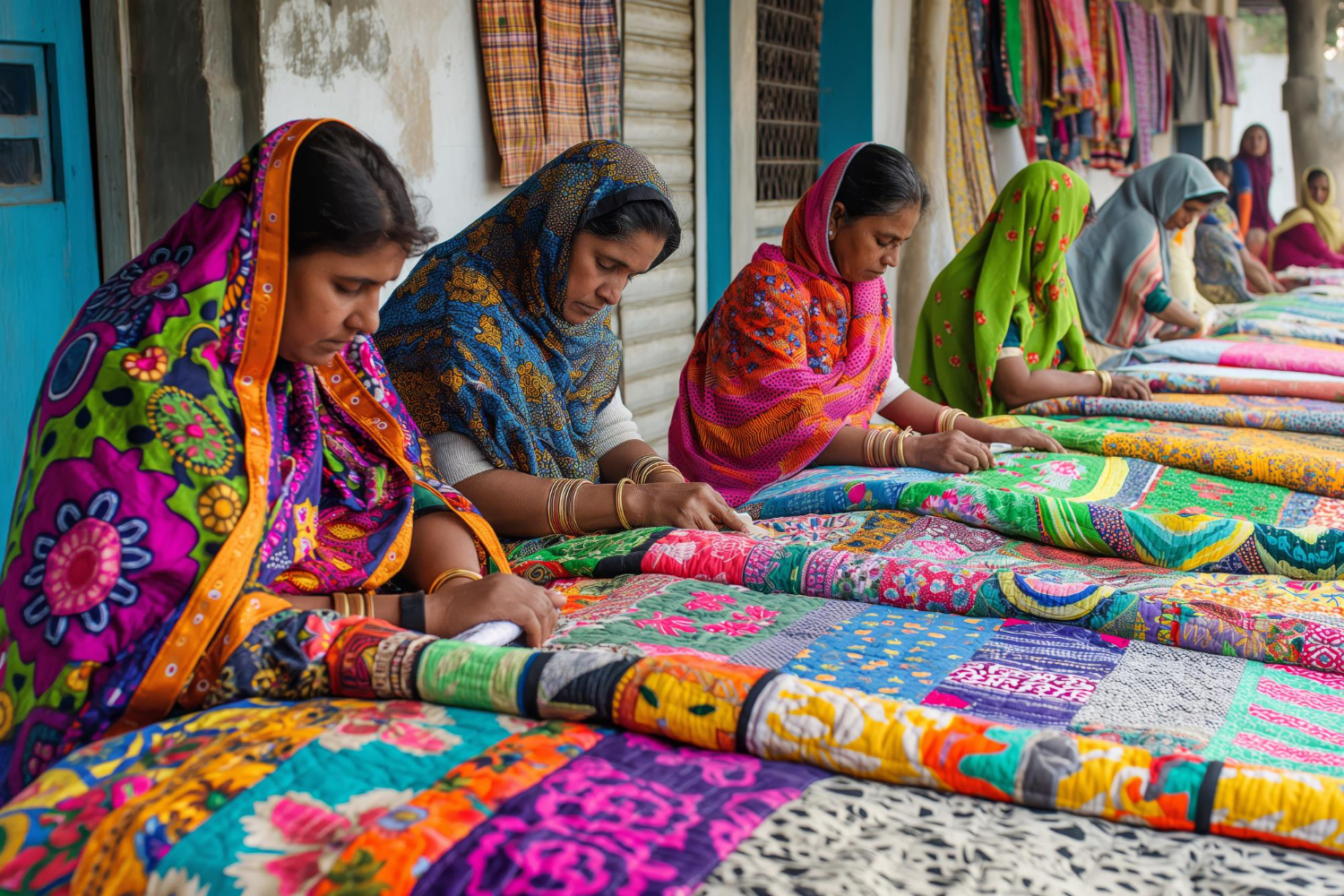
The Indian government has placed textiles at the core of its manufacturing-led growth strategy. Two flagship schemes are reshaping the investment landscape. This includes the PLI Scheme and PM MITRA Parks.
PLI Scheme for Textiles
The Production Linked Incentive (PLI) scheme for textiles focuses on Man-Made Fibre (MMF) apparel, MMF fabrics, and technical textiles. As of September 30, 2025:
- 74 applications have been approved under the scheme
- Total proposed investment: ₹28,711 crore
- Projected turnover: ₹2,16,760 crore
- Projected employment generation: 2,59,164 jobs
- Total reported investment (as of Q2 FY26): ₹7,731 crore
PM MITRA Parks
Seven PM Mega Integrated Textile Region and Apparel (PM MITRA) Parks are being developed at an outlay of ₹4,445 crore over seven years (up to 2027–28), across:
- Tamil Nadu (Virudhunagar)
- Telangana (Warangal)
- Gujarat (Navsari)
- Karnataka (Kalaburagi)
- Madhya Pradesh (Dhar)
- Uttar Pradesh (Lucknow)
- Maharashtra (Amravati)
Each park, once operational, is expected to generate 3 lakh direct and indirect jobs. Total investment interest across all parks has already crossed ₹63,177 crore — a strong signal of private-sector confidence.
| Government Scheme | Outlay / Target | Key Focus |
| PLI Scheme (Textiles) | ₹28,711 crore proposed investment | MMF apparel, technical textiles |
| PM MITRA Parks | ₹4,445 crore (govt outlay) + ₹70,000 crore target investment | Integrated textile ecosystems |
| National Technical Textiles Mission | ₹1,480 crore (2020–2026) | R&D, skilling, export promotion |
| Union Budget 2025–26 (Textiles) | ₹5,272 crore (~19% increase) | Cotton Mission, MSME competitiveness |
| FDI Policy | 100% automatic route | Global investment attraction |
Note:
The Union Budget 2026–27 announced the development of additional Mega Textile Parks in challenge mode, with a focus on value addition in technical textiles. This indicates that the government’s commitment to the sector is only accelerating.
India’s Export Momentum
India’s textile exports are on a clear upward trajectory. In FY26 (April–February 2026), total textile and apparel exports (including handicrafts) stood at USD 32.63 billion.
| Export Category | Value (FY26 Apr–Feb 2026) | Share |
| Ready-Made Garments (RMG) | USD 14.53 billion | 45% |
| Cotton Textiles | USD 9.36 billion | 29% |
| Man-Made Textiles | USD 4.82 billion | 15% |
| Total (incl. handicrafts) | USD 32.63 billion | — |
Master Fashion Designing and Create Your Signature Style
Unlock your creative potential with our expert-led Fashion Designing course. Build in-demand skills and step confidently into the world of fashion!
Begin Your Fashion Career Today!Key Textile Hubs in India
India’s textile strength is geographically diverse, with distinct regional specialisations.
| State | Strengths |
| Gujarat | Cotton production, synthetic textiles (Surat), MMF |
| Tamil Nadu | Knitting, garmenting, technical textiles (Tiruppur, Coimbatore) |
| Maharashtra | Textile processing, printing, fashion hubs (Mumbai, Amravati) |
| Uttar Pradesh | Textile parks, handloom clusters (Lucknow, Varanasi) |
| Karnataka | Integrated parks, IT-integrated manufacturing (Kalaburagi) |
| West Bengal | Jute production, traditional textiles |
| Rajasthan | Handicrafts, block printing, silk weaving |
| Telangana | PM MITRA park (Warangal), growing manufacturing base |
Career Opportunities in Textile Design
India’s textile boom is creating strong demand for skilled professionals – designers, sustainability consultants, production engineers, and digital print specialists.
| Degree | Focus Areas | Career Paths |
| B.Des. in Textile Design | Creative + technical skills, smart textiles, surface design | Fashion designer, textile developer, product consultant |
| M.Des. in Textile Design | Sustainability, material science, advanced innovation | Research scientist, sustainability lead, educator |
| Diploma in Textile Technology | Weaving, processing, machinery operations | Production supervisor, quality controller |
Thanks to government initiatives like SAMARTH (which I think is short for Scheme for Capacity Building in Textiles) which offers work placements across the textiles sector, the talent pool is getting a boost. And for students who are passionate about fashion and design, the textiles industry offers one of the most exciting and resilient career paths in India right now.
Start Your Fashion Journey Today! Learn Advanced Designing & Boutique Skills with Experts!
Conclusion
India’s textile industry is at a turning point. All the right factors are coming together – government support (PLI, PM MITRA), export demand on the rise, innovation driven by a need to be more sustainable, and a digital revolution that’s changing everything. Favourably, it’s creating an amazing growth environment – one that we haven’t seen before.
The market is tipped to hit USD 656 billion by 2034 and textile exports are looking to reach USD 100 billion by 2030. So the opportunities are massive for businesses, investors, and designers alike.
For anyone thinking of building a career in this field, now’s the perfect time. We don’t just need more factories churning out stuff, we need more people who are innovative, who can tell a story and who are passionate about sustainability. People who will shape what the Indians wear and what the rest of the world buys from India.
Master Fashion Designing and Create Your Signature Style
Unlock your creative potential with our expert-led Fashion Designing course. Build in-demand skills and step confidently into the world of fashion!
Begin Your Fashion Career Today!Frequently Asked Questions
What are the top growth trends in the Indian textile industry in 2025?
Sustainable/natural fibres, non-woven fabrics, digital textile printing, advanced manufacturing, and medical textiles — all reshaping design, production, and exports.
How many jobs will the PM MITRA Parks create?
Each park ~3 lakh jobs; all seven target ~20 lakh direct and indirect jobs.
What is the value of India's technical textiles market?
Valued at USD 29 billion in 2024; projected ~USD 45 billion by 2026 and USD 123 billion by 2035.
What is the growth outlook for digital textile printing in India?
The printing market is expected to reach USD 3,844 million by 2030 (CAGR 9.9%), with digital printing the fastest-growing segment.
What is India's rank in global textile production?
India is the world’s second-largest textile manufacturer and exporter, largest cotton producer, and second-largest silk producer.
What role does sustainability play in India's textile industry growth?
Sustainability is a key driver, with organic textiles and circular practices growing rapidly to meet global buyer standards.
What career opportunities does the Indian textile industry offer?
Careers include fashion/textile design, production management, sustainability consulting, and digital-print specialization, with strong demand for skilled designers.