Table of Contents
Introduction
Muscles can be built at home. Expensive gym equipment not required. Bodyweight exercises is used for building strength. They help in muscle growth. Push-ups help in the improvement of the chest and arms. Squats provides strength to the legs. Planks is the most famous exercise. It gives core strength.
A simple routine can bring progress. Practicing regularly to builds strength. Good food provides muscle repair. Rest recovers muscles. Beginners should start slowly. Start with light exercises. Then shift to difficult ones.
Key Takeaways:
- Simple exercises at home build muscles.
- All muscle groups need to be worked on.
- light exercises can be learnt at home.
- Increase the frequency slowly as you learn.
- Take lot of protein in each meal.
- Ensure you are getting proper sleep.
- Drink required amount of water
- Take proper rest.
- Have a workout routine.
Become a General Fitness Trainer and turn your passion into a Profession!
Can You Build Muscle With Home Workouts?
Yes, one can build muscles from home itself. You can try bodyweight exercises. They provide natural resistance. Muscles adapt slowly. Repeating challenges help. Difficulty needs to increase slowly.
1. Benefits of Home Workouts
Home workouts offer several benefits. They can fit different daily schedules. They can also make exercise more accessible.
Low Cost
- No gym membership.
- Less equipment.
- No travel costs.
- Simple workout space.
- Comfortable workout clothes.
- Free exercise routines.
- Fewer extra expenses.
- Flexible exercise choices.
Flexible Schedule
- Morning workouts.
- Evening sessions.
- Short exercise breaks.
- Convenient workout times.
- Indoor training.
- Weekend practice.
- Adjustable session lengths.
- Regular routines.
Benefits
- Stronger muscles.
- Better balance.
- Improved body control.
- Greater strength.
- Better movement.
- Stronger core.
- Improved exercise confidence.
- Slow fitness progress.
2. Try Progressive Overload
Muscles need lots of challenges. These challenges help them in grow stronger. One can increase the difficulty level slowly. This is what is known as the progressive overload.
Simple Methods
- More repetitions.
- Additional sets.
- Harder variations.
- Slower movements.
- Better control.
- Less assistance.
- Resistance bands.
- Progress tracking.
Simple Progression
- Try knee push-ups.
- Work on proper position.
- Complete manageable repetitions.
- Rest between sets.
- Build strength gradually.
- Try standard push-ups later.
- Increase the count slowly
- Uphold the technique.
Signs of Progress
- Easier exercise movements.
- Better body control.
- More completed repetitions.
- Longer plank holds.
- Improved balance.
- Less exercise assistance.
- Better movement quality.
- Steady gains in strength .
Increase difficulty quickly. Work on good form first. Rest when required.
3. Train Different Muscle Groups
The whole body is trained with the help of a good routine. Each exercise is for a different muscle.
| Muscle group | Suitable exercises |
| Chest and triceps |
|
| Shoulders |
|
| Back and biceps |
|
| Legs and glutes |
|
| Core muscles |
|
Training Reminders
- Train the chest.
- Strengthen the back.
- Exercise the shoulders.
- Build stronger legs.
- Train the glutes.
- Strengthen the core.
- Allow enough recovery.
- Stop when pain develops.
4. Eat Nutritious Foods
One must look for nutritious food. They support the growth of muscles. Protein work on muscle tissue. They repair them. Carbohydrates generates energy as wanted by the body. Other factors are taken care of by the healthy fats.
Protein Sources
- Eggs.
- Milk.
- Yoghurt.
- Fish.
- Chicken.
- Beans.
- Lentils.
- Nuts.
Energy Foods
- Rice.
- Oats.
- Grains.
- Bananas.
- Apples.
- Potatoes.
- Vegetables.
- Seeds.
Healthy Habits
- Taking balanced meals every day.
- Drinking enough amount of water.
- Eating protein every day.
- No skipping meals.
- Eating enough food.
- Including varied food groups.
- Sleeping enough hours.
- Allowing proper recovery.
Turn Your Passion for Fitness into a Profession
Learn practical skills, get certified, and step into the growing fitness industry with confidence.
Join the CourseTop 10 Home Workouts to Build Muscle
These exercises will help in training all the muscle groups. Most require little equipment. Beginners can start with light weight exercises. Techniques has to be learnt first.
1. Push-Ups
It is used for strengthening the chest and arms. The shoulders also help during movement. The core keeps the body stable.
Starting Position
- Hands on floor.
- Hands shoulder-width apart.
- Fingers spread comfortably.
- Legs extended backward.
- Feet hip-width apart.
- Body kept straight.
Lowering Movement
- Elbows bent slowly.
- Chest lowered gently.
- Abdomen kept tight.
- Neck kept neutral.
- Hips kept level.
- Back kept straight.
Pushing Movement
- Palms pressed downward.
- Body pushed upward.
- Arms straightened carefully.
- Back kept straight.
- Breathing kept stabilized.
- Head kept aligned.
2. Incline and Decline Push-Ups
These variations change exercise difficulty. Both train the chest and arms. The shoulders also help.
Incline Starting Position
- Sturdy raised surface.
- Hands placed firmly.
- Feet kept grounded.
- Body kept straight.
- Arms fully extended.
- Head kept neutral.
Incline Movement
- Elbows bent slowly.
- Chest lowered forward.
- Body pushed upward.
- Arms straightened carefully.
- Hips kept level.
- Movements kept controlled.
Decline Starting Position
- Stable raised platform.
- Feet placed securely.
- Hands on floor.
- Body kept straight.
- Abdomen muscles tightened.
- Head kept aligned.
Decline Movement
- Elbows bent carefully.
- Chest lowered slowly.
- Body pushed upward.
- Hips kept level.
- Back kept straight.
- Breathing kept stabilized.
Beginners should start with incline push-ups. Decline push-ups require greater strength. Difficulty should be increased gradually.
3. Chair Dips
Chair dips mainly train the triceps. These muscles sit behind the upper arms. The shoulders also assist during movement.
Starting Position
- Sturdy chair.
- Chair against wall.
- Hands beside hips.
- Fingers facing forward.
- Feet firmly planted.
- Hips near chair edge.
Lowering Movement
- Hips moved forward.
- Elbows bent gently.
- Body lowered slightly.
- Shoulders kept comfortable.
- Feet kept steady.
- Chest kept lifted.
Pushing Movement
- Palms pressed downward.
- Body raised carefully.
- Elbows straightened gently.
- Hips moved upward.
- Movement kept controlled.
- Shoulders kept relaxed.
Chair dips may strain the shoulders. You should stop doing it if you get shoulder pain. Incline push-ups are much more easier.
4. Pull-Ups
Pull-ups help in strengthening the back. It also improves biceps. The griping strength increases. On may require extra support in the starting.
Starting Position
- Secure pull-up bar.
- Firm hand grip.
- Comfortable hand spacing.
- Arms extended carefully.
- Body hanging steadily.
- Shoulders kept controlled.
Pulling Movement
- Shoulder blades pulled downward.
- Elbows bent.
- Body raised upward.
- Chest lifted slightly.
- Chin moved toward bar.
- Legs kept controlled.
Lowering Movement
- Body lowered slowly.
- Arms extended gradually.
- Grip maintained firmly.
- Swinging avoided completely.
- Shoulders kept controlled.
- Feet kept clear.
Beginner Options
- Assisted pull-ups.
- Resistance-band assistance.
- Controlled hanging.
- Rowing exercises.
- Grip-strength.
- Short exercise sets.
- Regular resting periods.
- Gradual progress.
Become a General Fitness Trainer and turn your passion into a Profession!
5. Pike Push-Ups
Pike push-ups is used to strengthen shoulders. The triceps also assist during movement.
Starting Position
- High plank position.
- Hands firmly planted.
- Feet moved closer.
- Hips raised upward.
- Inverted V shape.
- Head between the arms.
Lowering Movement
- Elbows bent slowly.
- Head lowered carefully.
- Hips kept raised.
- Neck kept comfortable.
- Back kept controlled.
Pushing Movement
- Palms pressed downward.
- Body pushed upward.
- Arms straightened carefully.
- Hips kept elevated.
- Movement kept steady.
Do not force your head down. Level can be increased when one is ready.
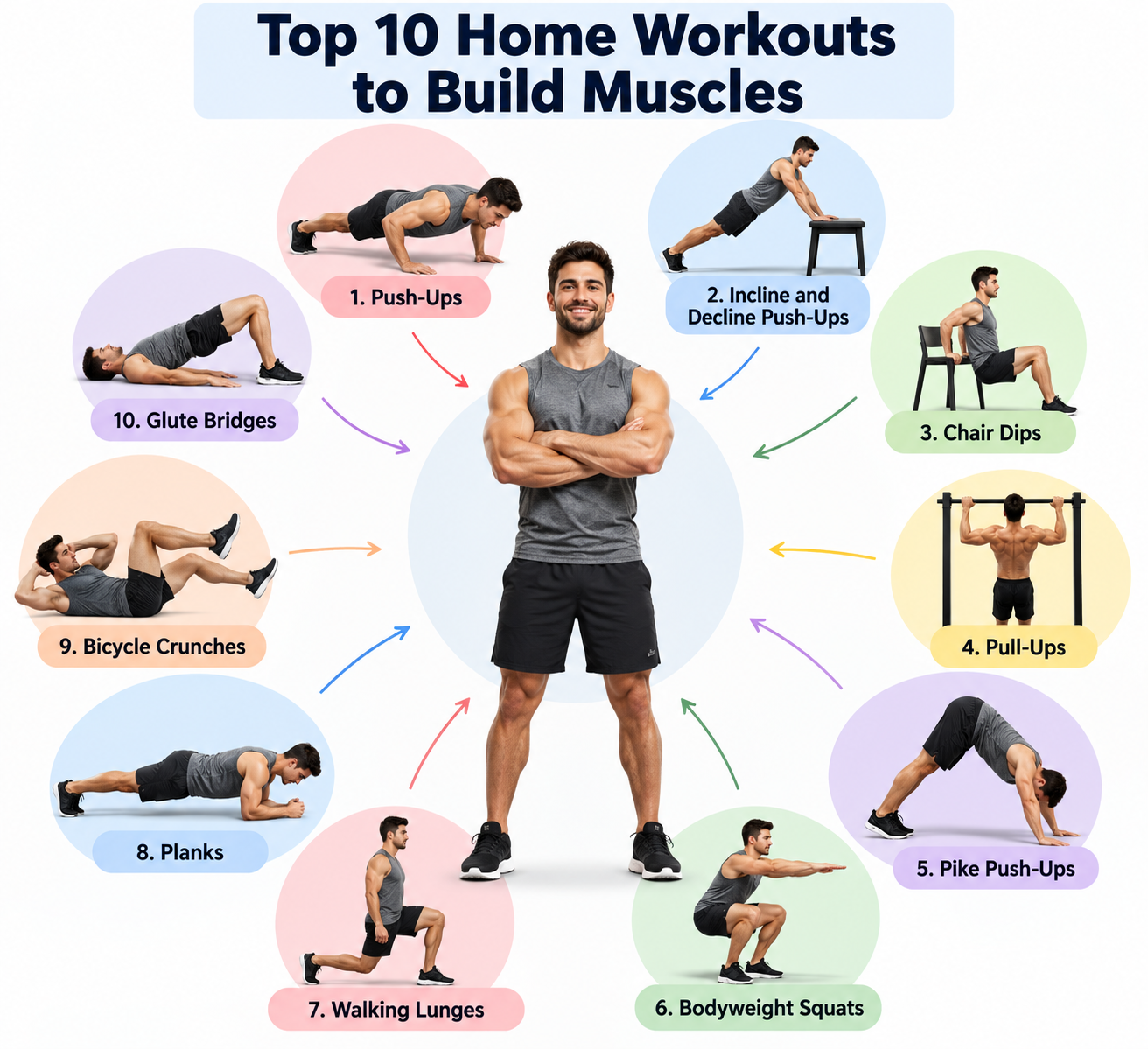
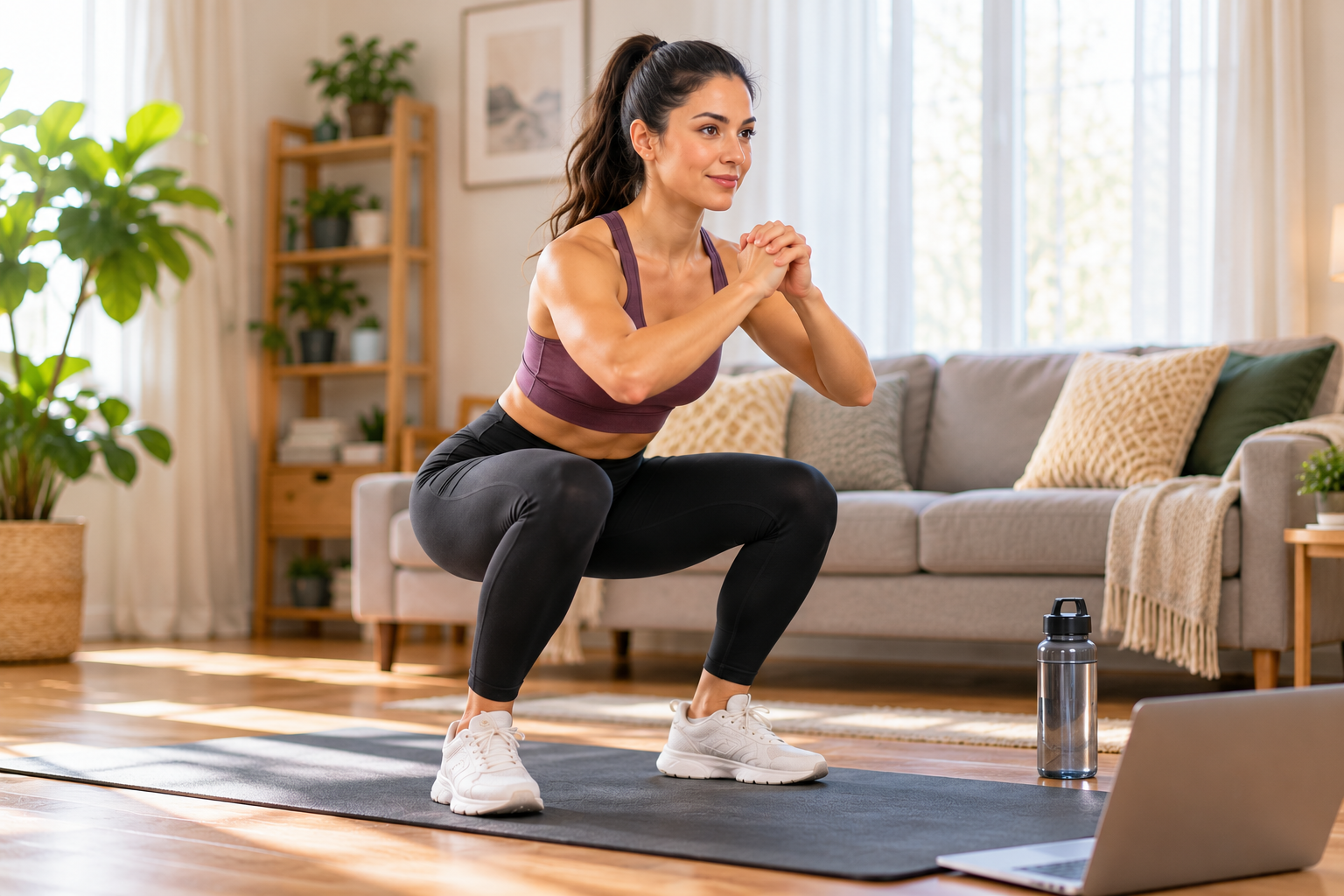
6. Bodyweight Squats
It is the lower body which gains strength from squats. Thighs and glutes are stengthened. The core helps maintain balance. No weights are needed initially.
Starting Position
- Feet shoulder-width apart.
- Toes turned slightly outward.
- Chest lifted comfortably.
- Back kept neutral.
- Arms extended forward.
- Eyes facing forward.
Lowering Movement
- Hips moved backward.
- Knees bent slowly.
- Body lowered carefully.
- Heels kept grounded.
- Knees aligned with toes.
- Chest kept lifted.
Standing Movement
- Feet pressed downward.
- Hips moved forward.
- Body raised smoothly.
- Knees straightened gently.
- Balance maintained throughout.
- Breathing kept stabilized.
Knees should not get collapsed inward. Please stop if it starts paining.
7. Walking Lunges
Walking lunges is used for strengthening the legs and glutes. It helps in developing balance and coordination. Each repetition is used for strengthening one leg.
Starting Position
- Stand upright.
- Feet hip-width apart.
- Hands on hips.
- Chest lifted.
- Eyes facing forward.
- Abdomen muscles tightened.
Forward Step
- Take one large step.
- Place the front foot firmly.
- Bend both knees.
- Lower the hips carefully.
- Keep the torso upright.
- Keep the front heel grounded.
Moving Forward
- Push through the front foot.
- Bring the back foot forward.
- Take another controlled step.
- Alternate both legs.
- Maintain steady balance.
- Keep movements smooth.
Do not let the front knee collapse inward. Move slowly in a controlled manner.
8. Planks
It is the core muscles that gets strength from planks. The abdomen gets tightened. The back stabilizes. The shoulders also support this position.
Starting Position
- Place forearms on the mat.
- Keep elbows beneath shoulders.
- Extend both legs backward.
- Place toes on the floor.
- Keep the body straight.
- Keep the head aligned.
Holding Position
- Tighten abdominal muscles.
- Squeeze the glutes gently.
- Keep hips level.
- Look toward the floor.
- Breathe normally.
- Avoid raising the hips.
- Avoid dropping the lower back.
- Maintain a steady position.
Finishing Movement
- Lower the knees gently.
- Release the core muscles.
- Rest before repeating.
- Maintain comfortable breathing.
It is essential to hold for at least one-minute. Duration is not as important as the technique.
9. Bicycle Crunches
Abdominal muscles gets trained by the bicycle crunches. The side abdominal muscles also work. These muscles are called the obliques.
Starting Position
- Lie on your back.
- Bend both knees.
- Place hands beside the head.
- Keep elbows open.
- Lift shoulders slightly.
- Keep the neck relaxed.
First Movement
- Bring the right knee inward.
- Extend the left leg.
- Turn the left shoulder gently.
- Move toward the right knee.
- Avoid pulling the neck.
- Keep movements controlled.
Alternating Movement
- Switch the leg positions.
- Bring the left knee inward.
- Turn the right shoulder gently.
- Extend the right leg.
- Continue at a steady pace.
- Breathe throughout the exercise.
Do not pull the head forward. Keep the movements controlled.
10. Glute Bridges
Glute muscles get the strength with the help of glute bridges. The hamstrings also help during movement. Hips and lower body gets stronger.
Starting Position
- Lie on your back.
- Bend both knees.
- Place feet flat.
- Keep feet hip-width apart.
- Rest arms beside the body.
- Keep the head relaxed.
Lifting Movement
- Tighten the abdominal muscles.
- Press through both feet.
- Lift the hips upward.
- Squeeze the glutes gently.
- Keep the ribs relaxed.
- Avoid excessive back arching.
Lowering Movement
- Lower the hips slowly.
- Keep movements controlled.
- Return to the floor.
- Relax briefly.
- Repeat when ready.
Stop if sharp back pain develops. Seek advice when pain continues.
How Often Should You Work Out at Home?
Muscles need training and recovery. Beginners can start with three weekly sessions. Four sessions may suit some people. The right schedule depends on fitness and recovery.
Weekly Training Plan
| Day | Workout |
| Monday | Full-body workout |
| Tuesday | Rest or gentle walking |
| Wednesday | Full-body workout |
| Thursday | Rest and recovery |
| Friday | Full-body workout |
| Saturday | Optional light activity |
| Sunday | Rest |
Training Guidelines
Workout Length
- Start with twenty minutes.
- Extend sessions gradually.
- Include warm-up movements.
- Finish with gentle cooldowns.
- Adjust duration to fitness.
- Take breaks when needed.
Recovery Habits
- Allow muscles to rest.
- Get enough sleep.
- Drink enough water.
- Eat balanced meals.
- Avoid training through pain.
- Watch for unusual fatigue.
- Reduce intensity when needed.
- Return gradually after breaks.
Beginner Home Workout Routine for Building Muscle
A simple routine can reduce confusion. Each exercise should be performed carefully. Rest should be taken between sets.
Full-Body Routine
| Exercise | Starting target |
| Push-ups | 2 sets of 5–10 |
| Bodyweight squats | 2 sets of 10 |
| Glute bridges | 2 sets of 10 |
| Planks | 2 holds of 10–20 seconds |
| Walking lunges | 1–2 sets per leg |
How to Follow the Routine
Before Training
- Clear the workout space.
- Wear comfortable clothing.
- Keep water nearby.
- Warm up for five minutes.
- Check the exercise area.
- Choose suitable exercise variations.
During Training
- Follow the exercise order.
- Move slowly and carefully.
- Rest between sets.
- Keep proper form.
- Adjust repetitions when needed.
- Avoid holding the breath.
- Stop if sharp pain occurs.
- Record completed repetitions.
After Training
- Walk gently.
- Drink some water.
- Eat a balanced meal.
- Allow time for recovery.
- Stretch gently if comfortable.
- Note any unusual pain.
Start with easier variations. Increase difficulty when movements feel manageable. Consistency matters more than rushing.
Turn Your Passion for Fitness into a Profession
Learn practical skills, get certified, and step into the growing fitness industry with confidence.
Join the CourseNutrition Tips to Support Muscle Growth
Muscle growth requires enough food and rest. Protein supports muscle repair. Carbohydrates provide energy for workouts. Healthy fats support normal body functions.
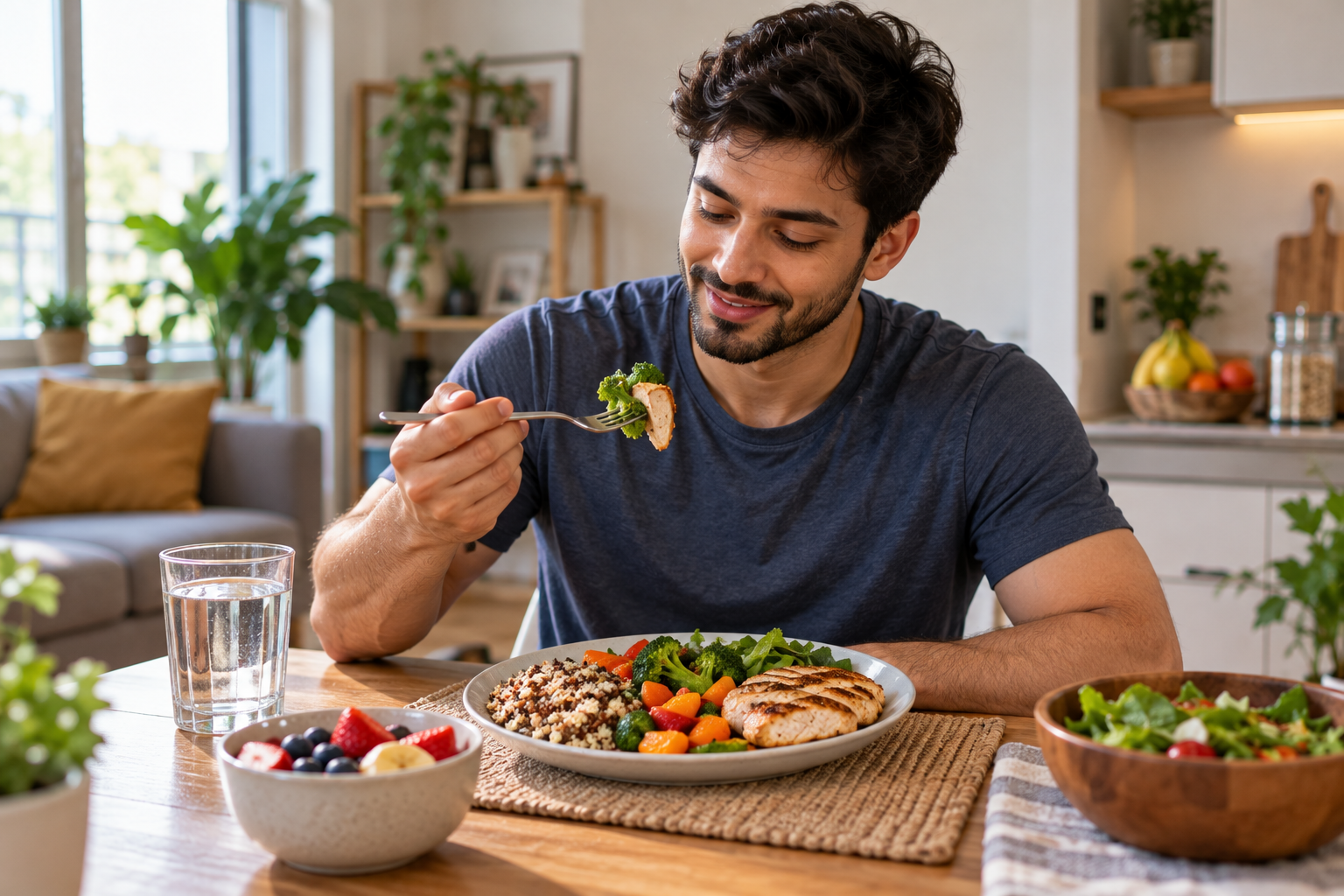
Include Protein-Rich Foods
Animal Sources
- Eggs.
- Fish.
- Chicken.
- Milk.
- Yoghurt.
- Cheese.
Plant Sources
- Lentils.
- Chickpeas.
- Beans.
- Tofu.
- Nuts.
- Seeds.
Build Balanced Meals
Energy Foods
- Rice.
- Oats.
- Whole-grain bread.
- Potatoes.
- Fruits.
- Whole grains.
Other Nutrients
- Green vegetables.
- Seeds.
- Nuts.
- Healthy oils.
- Dairy foods.
- Different coloured vegetables.
Support Recovery
- Eat regular meals.
- Include protein regularly.
- Drink enough water.
- Avoid extreme diets.
- Get sufficient sleep.
- Allow rest days.
- Eat enough overall food.
- Choose varied foods.
Supplements are not essential for everyone. Balanced meals can provide many nutrients. Food needs vary between individuals.
Common Mistakes to Avoid During Home Workouts
Small mistakes can affect progress. Safe habits help make training more effective.
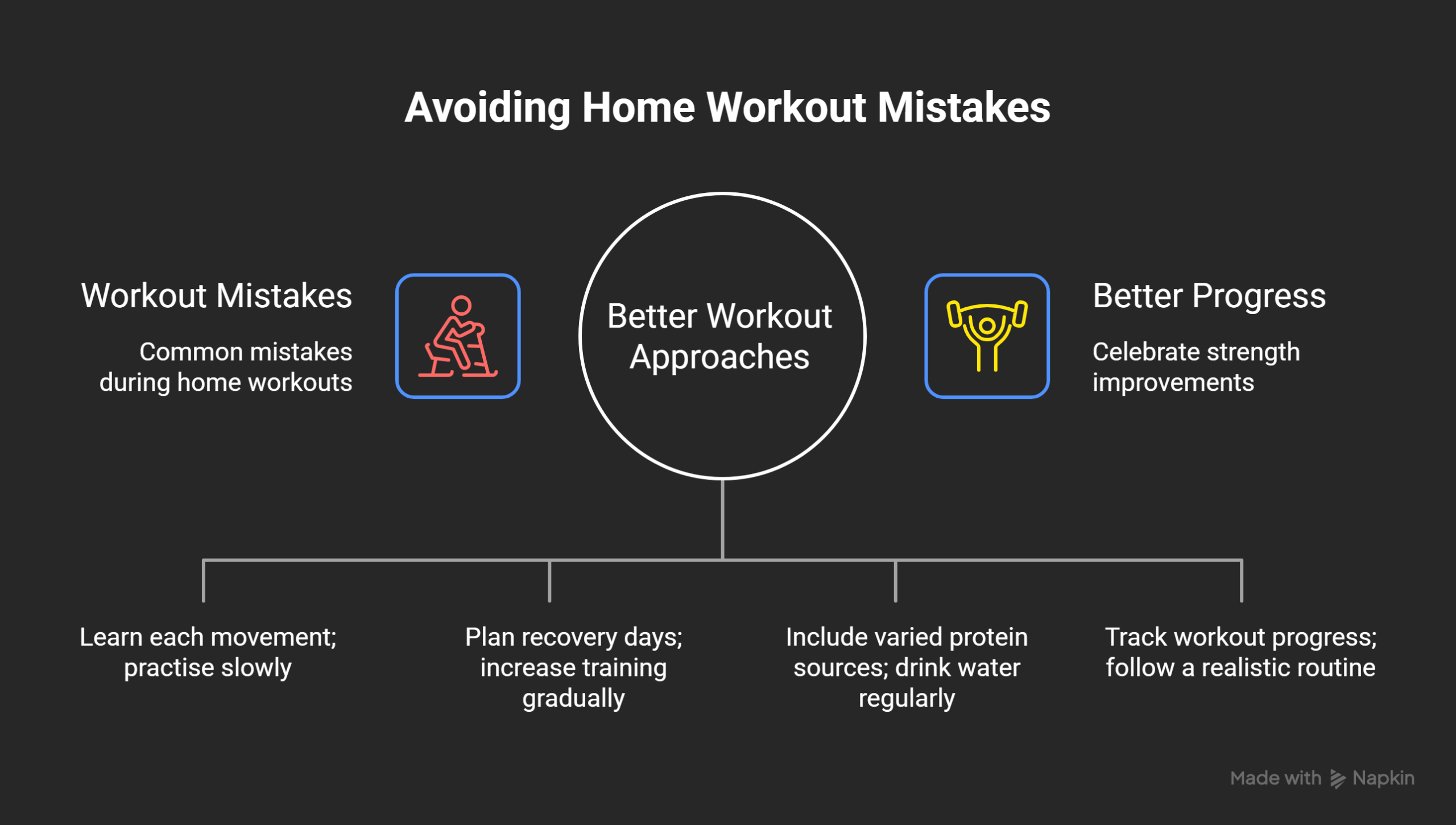
1. Poor Technique
Common Mistakes
- Rushing each repetition.
- Using incorrect body positions.
- Holding the breath.
- Ignoring sharp pain.
- Moving too quickly.
- Using unstable furniture.
Better Approach
- Learn each movement.
- Practise slowly.
- Keep the body aligned.
- Stop when technique breaks down.
- Use stable equipment.
- Choose manageable variations.
2. Training Too Much
Common Mistakes
- Exercising hard every day.
- Ignoring muscle soreness.
- Skipping rest days.
- Increasing difficulty too quickly.
- Repeating the same muscles daily.
- Training while exhausted.
Better Approach
- Plan recovery days.
- Increase training gradually.
- Sleep enough.
- Adjust sessions when tired.
- Reduce intensity when needed.
- Allow time for recovery.
3. Ignoring Nutrition
Common Mistakes
- Skipping regular meals.
- Eating too little.
- Avoiding protein-rich foods.
- Drinking too little water.
- Relying on snacks alone.
- Following extreme diets.
Better Approach
- Eat balanced meals.
- Include varied protein sources.
- Drink water regularly.
- Eat enough for daily needs.
- Include fruits and vegetables.
- Choose a varied diet.
4. Expecting Quick Results
Common Mistakes
- Comparing different bodies.
- Changing routines too often.
- Giving up too early.
- Ignoring small improvements.
- Increasing difficulty too quickly.
- Expecting instant muscle growth.
Better Approach
- Track workout progress.
- Focus on correct technique.
- Practise consistently.
- Increase challenges gradually.
- Celebrate strength improvements.
- Follow a realistic routine.
Conclusion
Muscle growth can begin at home. Simple exercises can strengthen the whole body. Push-ups train the upper body. Squats and lunges strengthen the legs. Planks improve core stability. Glute bridges train the hips.
Remember these key habits.
- Start with easy exercises.
- Practise correct technique.
- Train consistently.
- Eat balanced meals.
- Get enough rest.
- Increase difficulty gradually.
- Track progress over time.
- Allow muscles to recover.
A simple routine can support progress. Patience and consistency are important. Safe training habits should always come first.
Turn Your Passion for Fitness into a Profession
Learn practical skills, get certified, and step into the growing fitness industry with confidence.
Join the CourseFrequently Asked Questions
Can muscles be built through home workouts?
Yes, muscles can be built through home workouts. Regular training, proper nutrition, and enough rest support muscle growth.
What are the best home workouts for muscle growth?
Push-ups, squats, lunges, and pull-ups are effective choices. Planks, glute bridges, and chair dips also help.
How many days should home workouts be done weekly?
Home workouts can be done around four days weekly. Rest days should be included to support muscle recovery.
Can beginners build muscles without gym equipment?
Yes, beginners can build muscles using bodyweight exercises. Push-ups, squats, and glute bridges are useful starting options.
How long should a home workout last?
A home workout can last around 30–45 minutes. The duration should match fitness levels and workout intensity.
How many repetitions should be performed per exercise?
Beginners can start with 8–12 repetitions per set. The number can be increased as strength improves.
Which foods support muscle growth?
Protein-rich foods help repair and build muscles. Eggs, fish, beans, milk, and lentils are useful choices.
Are push-ups effective for building upper-body muscles?
Yes, push-ups help strengthen the chest, shoulders, and triceps. Easier variations can be used until strength improves.
Is rest important for muscle growth?
Yes, muscles need time to recover after training. Adequate sleep and rest days support this process.