Table of Contents
Mechatronics is one of those careers that is going to be totally in demand going forward. It combines not just mechanical systems and electronics but the whole – control engineering and software all wrapped up into one amazing field.
It’s at the heart of everything that’s high tech – robotics, industrial automation, electric vehicles and smart manufacturing. So no wonder companies across all sectors are actively on the hunt for people with mechatronics skills.
And the stats are pretty telling – over 4,000 mechatronics engineering jobs are currently up on LinkedIn in India alone and that number is growing every day.
If you want to build a career where you get to work where hardware and software meet and get to build machines that can think and sense and move, then mechatronics is the career for you.
New to Robotics? Start from the Basics. Join Now!
Key Takeaways
- Mechatronics is the fusion of mechanical design, electronics, control and software.
- If you want to get into mechatronics then a B.Tech or B.E. in Mechatronics is ideal
- Also Mechanical, Electrical, Electrical and Electronics (EE) and Instrumentation grads can get in with the right project work and certifications.
- What employers are really looking for is people with practical experience – projects, internships and a good handle on programming languages.
- Straight out of college you can expect around ₹3.5-₹6 LPA, but if you get hired in R&D or in top companies you can look to earn ₹10 LPA+.
- By 2026 and beyond mechatronics is going to be the driving force behind Industry 4.0, Electric vehicles and smart manufacturing so if you can get into this field now you’ll be in a great position for the future.
- Also nice to have certifications in areas like PLC, ROS, and embedded systems to give your career a bit of a boost
What is Mechatronics Engineering?
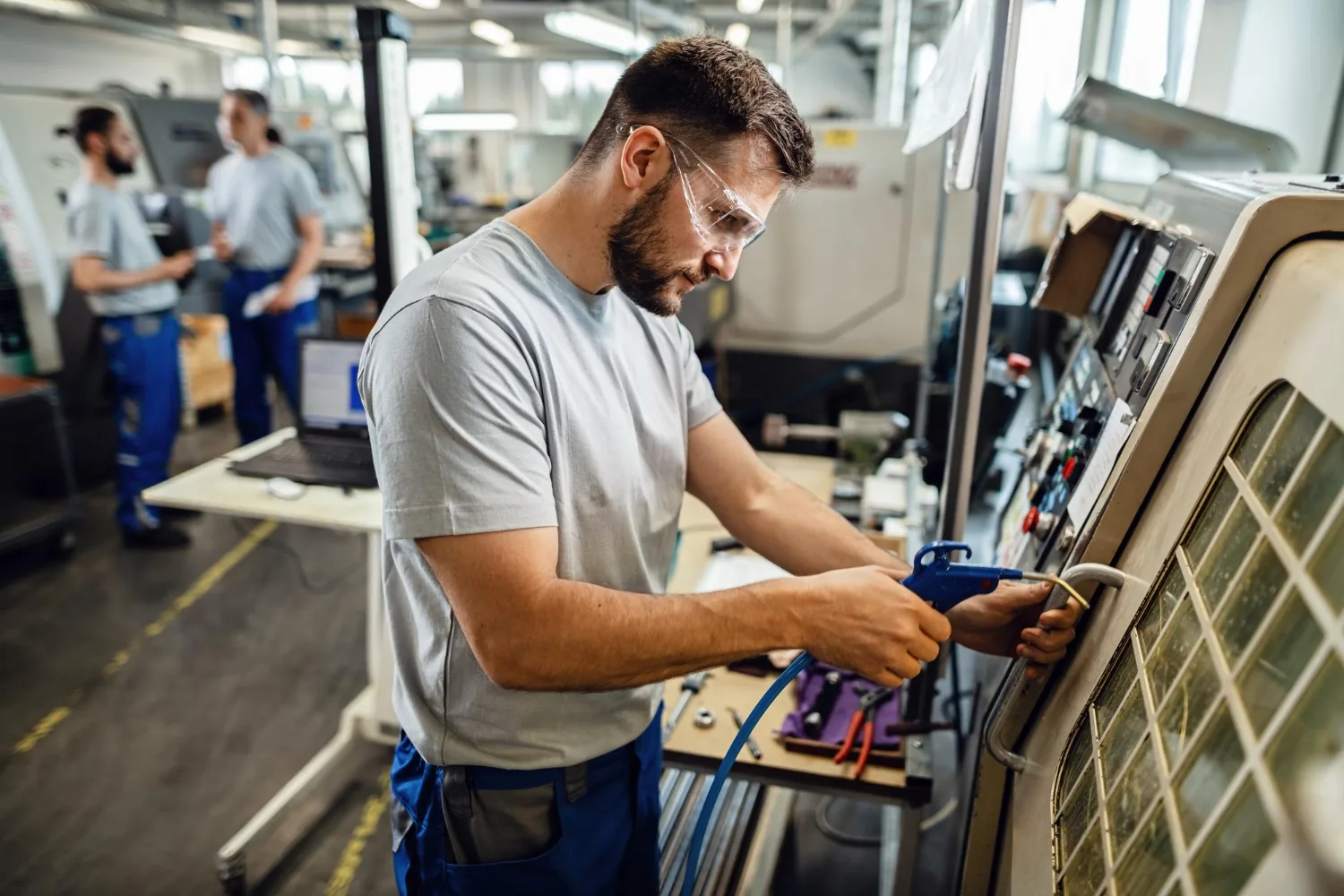
Mechatronics engineering is all about taking mechanical design, electronics, computing and control systems and using them to build machines that can think, move and operate on their own.
Think of it like this – mechanical engineering is the body and computer science is the brain, mechatronics is the nervous system that connects them all together.
Take for example the anti-lock braking systems in your car or those robotic surgical tools in hospitals – almost every advanced machine out there is a mechatronic system. And these are the kind of machines that are in high demand in industries like industrial automation, robotics, automotive electronics and smart manufacturing.
All of these are growing fast in India right now.Why does it matter for your career?
- It helps you develop the skills you need to approach problems in a really more interdisciplinary way. Something a lot of pure engineering disciplines just aren’t going to teach you.
- Gives you a chance to get your hands dirty with both hardware and software – which makes you a heck of a lot more versatile in the long run.
- Opens the door to some really cool roles like robotics, automation, EV systems, product development – the list goes on
Master Robotics and AI!
Ready to build the future? Join our comprehensive robotics course to bridge the gap between complex code and physical motion. You’ll gain hands-on experience giving you the technical edge needed to lead in the age of automation.
Know MoreHow to Become a Mechatronics Engineer
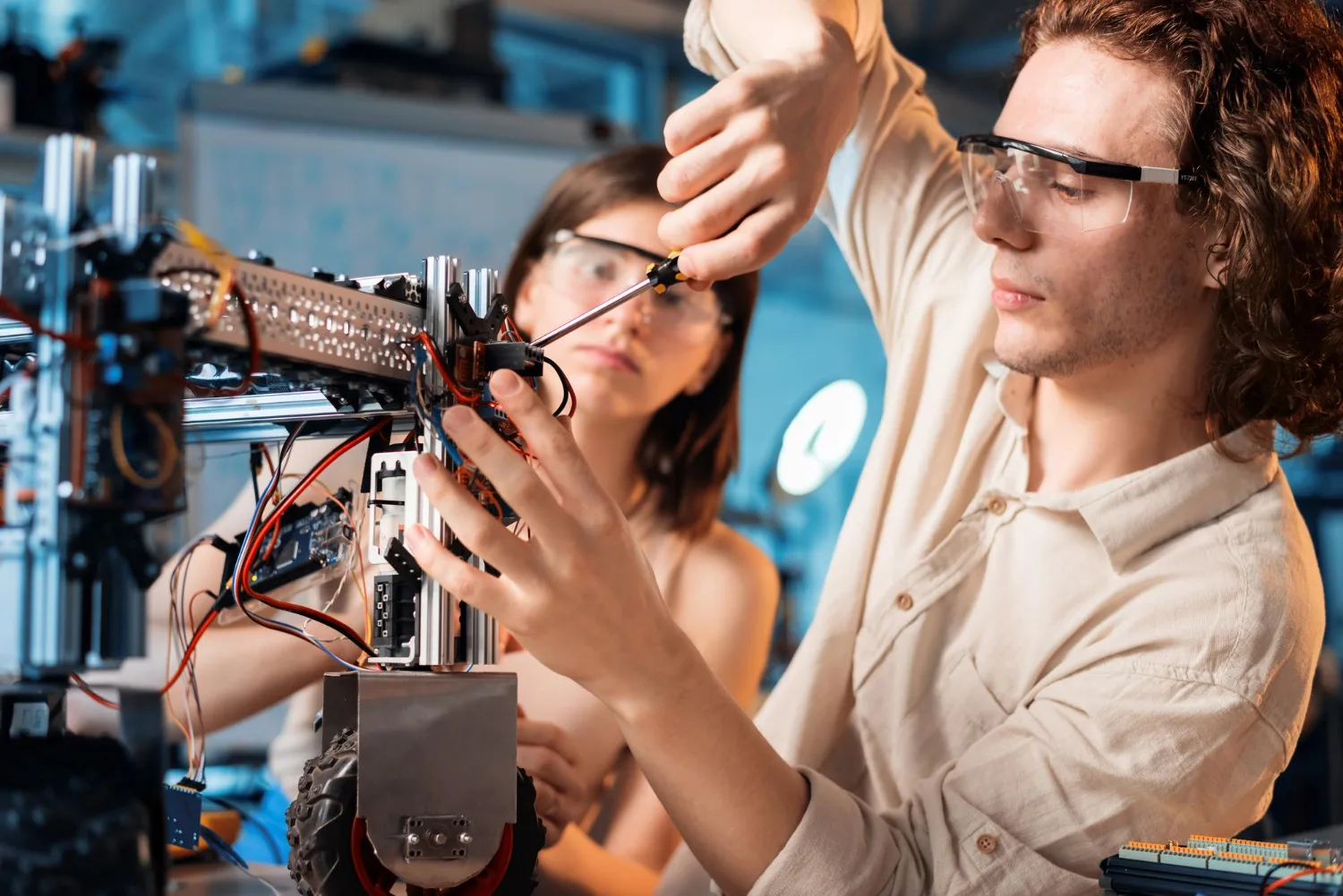
Step 1: Choose the Right Degree
The most straightforward route is a Bachelors in Mechatronics Engineering but if I’m being honest a B.Tech or B.E. in any one of Mechanical, Electrical, Electronics & Communications (ECE), or Instrumentation engineering will also qualify you for Mechatronics roles. As long as you’re putting in the effort through electives, projects and getting a few certifications under your belt.
But if you really want to be a big shot – working in R&D, advanced robotics, then you’re going to want to go for that M.Tech or MS in Robotics, Control Systems or Embedded Systems
| Qualification | Best For | Career Outcome |
| B.Tech / B.E. in Mechatronics | Direct entry into the field | Junior mechatronics or automation engineer |
| B.Tech in Mechanical / Electrical / ECE | Students wanting a broader base | Specialised roles after projects and certs |
| Diploma in Mechatronics | Early workforce entry | Technician or junior support roles |
| M.Tech / MS in Robotics or Control | Advanced specialisation | Senior technical or R&D roles |
Top entrance exams to aim for include JEE Advanced (IITs), VITEEE (VIT Vellore), MET (Manipal), and MHT-CET/TNEA for state-level institutions.
Step 2: Build Core Technical Skills
Employers don’t just want a degree. They want proof that you can integrate sensors, motors, circuits, and control logic into a working system. The skill set expected of a mechatronics engineer spans four domains.
| Skill Area | What to Learn | Why It Matters |
| Mechanical | CAD, kinematics, machine design | Helps design and analyse moving parts |
| Electronics | Sensors, actuators, motor drivers | Needed to interface hardware correctly |
| Control Systems | PID control, feedback loops, system tuning | Core to robotics and automation |
| Embedded Systems | C/C++, microcontrollers, RTOS basics | Used in real-world machine control |
| Software Tools | Python, MATLAB, Git, ROS basics | Supports coding, testing, and robot systems |
| Soft Skills | Teamwork, documentation, communication | Essential for team-based engineering projects |
Programming ability, especially in Python, C++, or MATLAB, is consistently flagged by recruiters as a deciding factor in shortlisting candidates.
Step 3: Work on Projects Early
Project experience is often the single strongest signal of job readiness at the fresher level. Recruiters want to see that you can solve real problems, not just pass exams.
Build 2 to 3 solid projects that integrate mechanics, electronics, and software. Then document each one clearly on GitHub or a personal portfolio site.
| Project | Skills Used | Difficulty | What to Show Recruiters |
| Line-following robot | Sensors, motor control, embedded coding | Beginner | Working demo video and source code |
| Robotic arm | Actuators, kinematics, control logic | Intermediate | CAD model, assembly, and control code |
| Automated sorting system | Sensors, PLC basics, logic control | Intermediate | System diagram and test results |
| Vision-based pick-and-place | Computer vision, robotics, control | Advanced | Code, camera feed, and performance metrics |
Step 4: Get Internship Experience
Internships are where you put all your textbook learning into practice. They throw you in the deep end so you can get a feel for real engineering. This includes getting to know what tools are used, how the workflow works and what it’s like to work in a team.
And even a short internship will make a big difference to your resume if you can clearly explain the systems you worked on and what you actually managed to contribute.Where to look:
- Automation and robotics companies like Siemens, ABB, Bosch and Fanuc India
- Robotics startups and product development firms
- Companies that supply the automotive industry or make EVs
- Manufacturing plants and smart factory setups
- And finally the odd university lab or government research centre like the DRDO, ISRO or CSIR
Step 5: Add Relevant Certifications
Certifications work best when they directly reinforce the skills required for your target role. Don’t collect credentials for the sake of it. Pick the ones that align with where you want to work.
| Certification | Focus Area | Best For |
| ROS Basics / ROS Developer Training | Robot software framework | Robotics roles |
| PLC and SCADA | Industrial automation | Factory and plant automation |
| Embedded Systems | Microcontrollers and firmware | Embedded hardware roles |
| MATLAB / Simulink | Modelling and control | Control and systems engineering |
| SolidWorks / CAD | Mechanical design | Design and prototyping roles |
| OpenCV / Machine Vision | Vision-based automation | Robot perception and inspection |
Step 6: Apply for Entry-Level Jobs
Once you have your degree, a portfolio of projects, and at least one internship, you are ready to apply. Focus on roles where you can clearly match your skills to the job description, and be prepared to explain your projects and technical decisions in interviews.
| Job Title | Primary Work |
| Junior Mechatronics Engineer | Design support, testing, and system integration |
| Automation Engineer | Build and maintain automated production systems |
| Robotics Engineer | Develop robot hardware and control software |
| Embedded Systems Engineer | Write firmware and interface hardware components |
| Controls Engineer | Tune and manage control systems in industrial settings |
Top hiring companies include Siemens, Bosch, Honeywell, ABB, Schneider Electric, Tata Motors, Mahindra & Mahindra, Fanuc India, GreyOrange, Addverb, TCS, Infosys, and government organisations like DRDO and ISRO.
Key hiring cities include Bengaluru, Pune, Chennai, Hyderabad, and industrial hubs like Coimbatore, Hosur, and Ahmedabad.
Mechatronics Engineer Salary in India (2026)
Salary varies based on your skills, city, employer type, and experience. Here is a realistic breakdown based on current market data:
| Experience Level | Approximate Salary (India) |
| Fresher (0–2 years) | ₹3.5–6 LPA |
| Mid-Level (3–5 years) | ₹7–12 LPA |
| Senior (5–10 years) | ₹14–25 LPA |
| Senior / Managerial (10+ years) | ₹35 LPA+ |
Engineers who specialise in Python, C++, machine learning and robotics tend to earn better money and have a stronger demand from multinationals and high-growth start-ups.
This fact is even more pronounced in tech hubs like Bangalore, where the salary range for mechatronics engineers far outstrips the national average.
Growth Areas and Career Scope
Mechatronics engineering is a rapidly expanding field in India right now, with automation and intelligent systems on the uptake across manufacturing, automotive, healthcare and logistics. And with this expansion we see a few things that are really starting to take shape.The highest-demand growth areas right now include:
- Robotics and autonomous systems
- Industrial automation and Industry 4.0 / smart manufacturing
- Electric vehicle (EV) powertrains and electronic control units
- Embedded product design and IoT-enabled systems
- Machine vision and AI-enabled control systems
- Medical robotics and diagnostic automation
Master Robotics and AI!
Ready to build the future? Join our comprehensive robotics course to bridge the gap between complex code and physical motion. You’ll gain hands-on experience giving you the technical edge needed to lead in the age of automation.
Know MoreWhat Recruiters Actually Look for
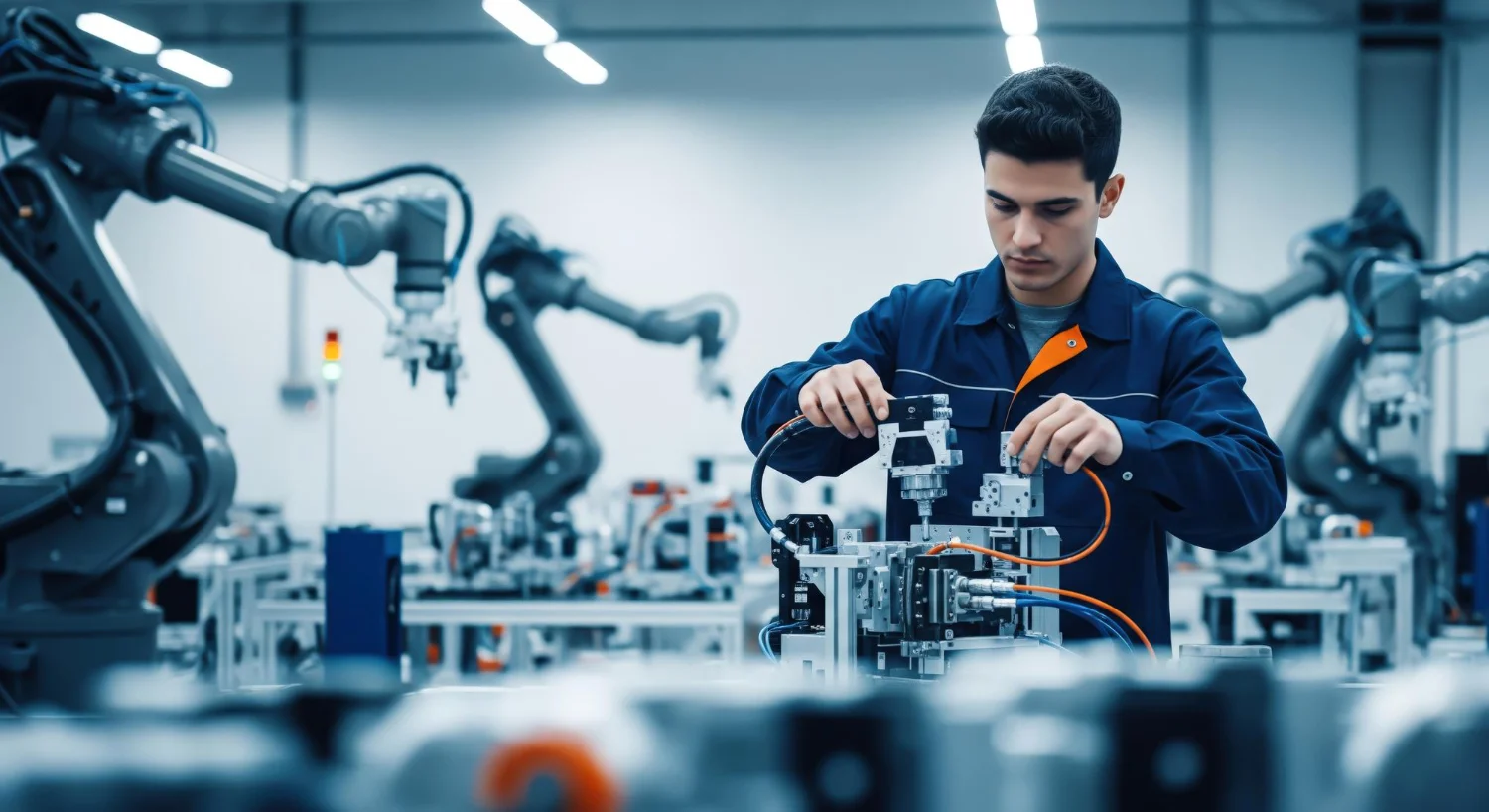
For all the qualifications in the world, hiring managers are going to be looking for a combination of depth in the technical aspects and the ability to solve problems with your hands.
We’ve looked across job listings in India and it seems that the following are the things that are going to keep coming up:
- Strong fundamentals in mechanics, electronics, and control systems
- Demonstrable hands-on project work with documented outcomes
- Coding ability in Python, C++, or MATLAB; and the ability to debug under pressure
- Working knowledge of sensors, actuators, PLCs, and embedded controllers
- Clear communication and technical documentation skills
The ones who really make the cut are those who can spin a coherent yarn about a project they’ve worked on. It’s got to be about what problem they solved, what tools they used, and what they took away from the whole experience.
New to Robotics? Start from the Basics. Join Now!
Conclusion
Mechatronics engineering is no longer some obscure specialisation. It’s a fundamental discipline that’s going to drive the future of India’s industrial and technological landscape. If you’re in this field you’re in line to reap the benefits of that.
Robots and automation, electric vehicles and smart manufacturing all taking off at the same time. The engineers who can bridge the worlds of hardware and software are the ones who are going to be most in demand. If you can tick that box then you’ve got the makings of a very attractive professional.
So if you want to make a success of yourself in this field, the path is clear. Get the right degree to start with, build some projects that you can talk about, get in some internships, and keep on building your skills. Your portfolio will be the thing that gets you noticed.
Master Robotics and AI!
Ready to build the future? Join our comprehensive robotics course to bridge the gap between complex code and physical motion. You’ll gain hands-on experience giving you the technical edge needed to lead in the age of automation.
Know MoreFrequently Asked Questions
Is mechatronics the same as robotics engineering?
No. Robotics is a major application of mechatronics, but mechatronics covers broader integration of mechanical, electronics, control, and software across many industries.
Is coding necessary for a mechatronics career?
Yes. Embedded systems, robot control, automation logic, and simulation tools all require programming commonly in C/C++, Python, or MATLAB.
Can a mechanical engineering student become a mechatronics engineer?
Yes. Mechanical students can transition by doing targeted embedded/automation projects, internships, and certifications like PLC, ROS, or control systems.
What skills should I learn first as a beginner?
Begin with basic electronics, embedded programming (C/C++), and CAD tools. Then learn sensors, actuators, control theory, and experiment with platforms like Arduino or Raspberry Pi.
What certifications are most useful for mechatronics jobs?
Practical certifications include PLC/SCADA, ROS, embedded systems, MATLAB/Simulink, and SolidWorks/CAD. These demonstrate hands-on capability employers screen for.
Which cities in India have the most mechatronics jobs?
Bengaluru, Pune, Chennai, Hyderabad, and Mumbai have the highest job volumes. Industrial hubs like Coimbatore, Hosur, Ahmedabad, and Noida also hire actively.
What industries hire mechatronics engineers?
Major sectors are industrial automation, robotics, automotive/EV manufacturing, aerospace, medical devices, smart manufacturing, and logistics tech. These industries use integrated mechanical-electronic-control systems heavily.
What projects should I build to get my first mechatronics job?
Build practical items like a line-following robot, a computer-controlled robotic arm, an automated sorting system, or a vision-based pick-and-place setup. Document everything on GitHub and prepare to explain design choices in interviews.