Table of Contents
Introduction
Yoga butt is a common pain felt near the hip or butt area. It usually happens when the muscles and soft tissues around the hip are stretched too much.
👉 This pain often starts after too much stretching.
How Does Yoga Butt Start?
Yoga butt usually starts slowly. At first , a person may feel only small discomfort. Later, the pain may become stronger.
It may begin after:
- Deep stretching
- Hard yoga poses
- Repeated exercise
- Long workout sessions
👉 Small pain can grow if ignored.
Why Is It Called Yoga Butt?
This pain became common in people who practice yoga often. Because of that, many people started calling it yoga butt.
Some yoga poses put extra pressure on the hip area.
👉 The name came from yoga-related pain.
What Happens in the Body?
When the body stretches too far, the hip area can become sore. Muscles or tendons may get strained.
This may cause:
- Pain
- Tightness
- Soreness
- Discomfort
👉 Too much strain can irritate the body.
Why Should You Know About It?
Knowing about yoga butt early can help the body heal faster.
It helps you:
- Notice pain early
- Avoid more injury
- Practice safely
👉 Knowing the problem helps prevent bigger pain.
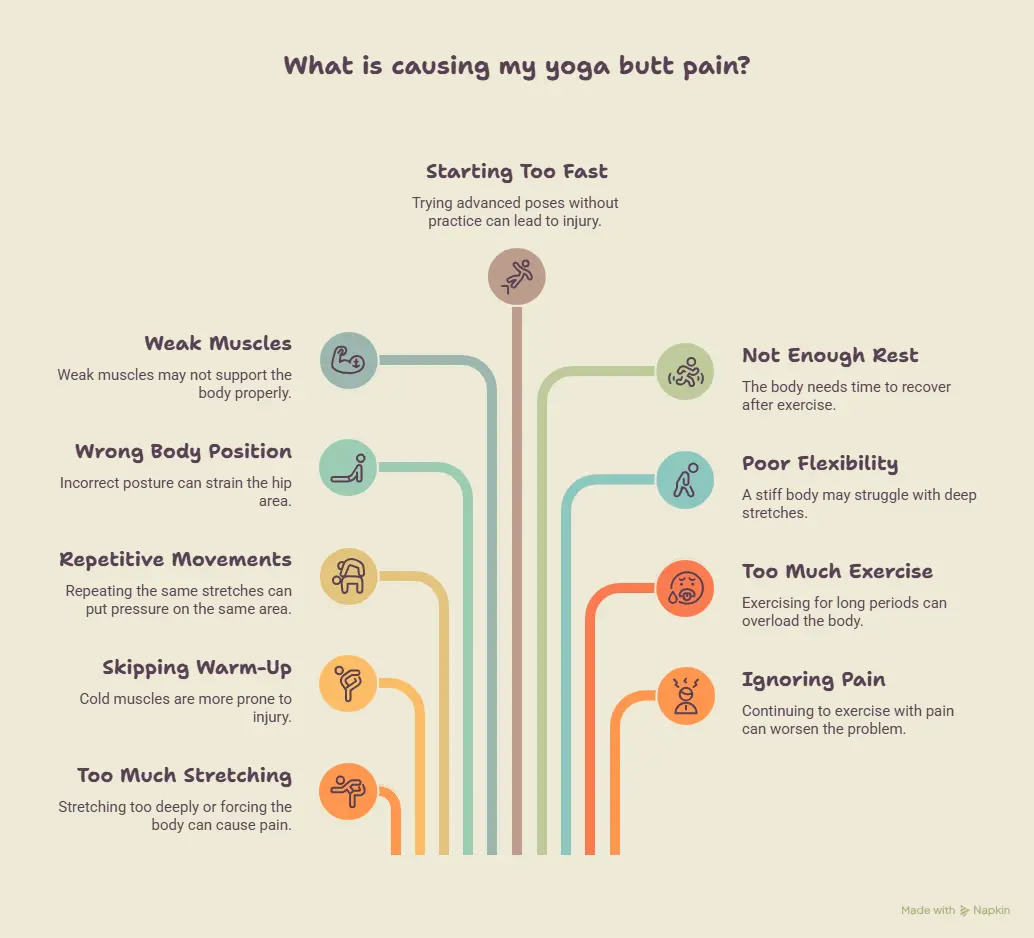
Common Causes of Yoga Butt
Yoga butt can happen when the hip area gets too much pressure or stretching. Many people get this pain without knowing the reason.
👉 Small mistakes during yoga or exercise can lead to yoga butt.
Too Much Stretching
Stretching is good, but stretching too far can cause pain.
This may happen when you:
- Stretch very deeply
- Force the body
- Try difficult poses too soon
👉 Too much stretching is a common reason.
Skipping Warm-Up
Warm-up helps prepare the body before exercise.
Without warm-up:
- Muscles stay tight
- Body feels stiff
- Injury risk increases
👉 Cold muscles get hurt more easily.
Doing the Same Movements Again and Again
Repeating the same stretches every day can put pressure on the same area.
Examples:
- Daily deep stretching
- Repeated yoga poses
- Long exercise sessions
👉 Too much repetition can cause pain.
Wrong Body Position
Doing poses in the wrong way can strain the hip area.
This may happen when:
- Posture is incorrect
- Body balance is poor
- Movements are not controlled
👉 Good posture is important.
Weak Muscles
Weak muscles may not support the body properly.
This can happen when:
- Core muscles are weak
- Hip muscles are weak
- Leg muscles are weak
👉 Weak muscles can increase body strain.
Starting Too Fast
Some people try advanced poses without enough practice.
This can lead to:
- Overstretching
- Muscle strain
- Hip pain
👉 It is better to progress slowly.
Not Taking Enough Rest
The body needs time to recover after exercise.
Without rest:
- Muscles stay tired
- Pain may increase
- Recovery becomes slower
👉 Rest is important for healing.
Poor Flexibility
A stiff body may struggle with deep stretches.
This can cause:
- Tight muscles
- Discomfort
- Strain during movement
👉 Flexibility improves slowly with practice.
Doing Too Much Exercise
Exercising for long periods can overload the body.
This may lead to:
- Muscle soreness
- Hip discomfort
- Extra pressure on joints
👉 Balance is important.
Ignoring Small Pain
Some people continue exercising even when they feel pain.
This can make the problem worse.
👉 Listen to your body and stop if something hurts.
Signs and Symptoms
Yoga butt can cause different types of pain and discomfort. Some people may feel mild pain, while others may feel stronger pain.
👉 The signs can be different from person to person.
1. Pain Near the Hip
This is the most common sign.
You may feel:
- Pain near the hip
- Pain near the butt area
- Pain in the upper leg
👉 Pain is usually felt on one side.
2. Tight Feeling in the Leg
The muscles may feel tight.
You may notice:
- Tightness in the upper leg
- Stiff feeling during movement
- Less flexibility
👉 The leg may not move comfortably.
3. Pain While Sitting
Some people feel pain when sitting for a long time.
It may happen:
- While working
- While travelling
- While resting
👉 Sitting may feel uncomfortable.
4. Pain During Stretching
Stretching can make the pain worse.
You may feel pain while:
- Bending forward
- Stretching the legs
- Doing yoga poses
👉 Deep stretches may feel difficult.
5. Pain While Walking
Some people notice pain during walking.
It may happen:
- While walking fast
- While climbing stairs
- During long walks
👉 Movement may increase discomfort.
6. Soreness in the Hip Area
The area may feel sore or sensitive.
You may feel:
- Mild soreness
- Tenderness
- Discomfort when touched
👉 The area may feel painful.
7. Reduced Movement
Pain may make movement difficult.
You may find it hard to:
- Bend easily
- Stretch fully
- Move freely
👉 The body may feel restricted.
8. Pain After Exercise
The pain may become stronger after activity.
It may happen after:
- Yoga practice
- Running
- Exercise sessions
👉 Pain often increases after physical activity.
How Yoga Practice Can Contribute to Hamstring Injuries
Yoga is good for the body. But sometimes hamstring injuries can happen during yoga.
Going Too Deep in a Pose
Some people bend or stretch too much.
This can:
- Pull the muscle
- Cause pain
- Hurt the leg
Trying to Improve Too Fast
Some people want quick results.
They may:
- Stretch too hard
- Do difficult poses
- Push the body too much
Holding Poses for a Long Time
Staying in one pose for too long can stress the muscles.
This may:
- Make muscles tired
- Cause soreness
- Create discomfort
Practicing Every Day Without Rest
The body needs rest after exercise.
Without rest:
- Muscles stay tired
- Pain may develop
- Recovery becomes slower
Moving Too Fast
Fast movements can strain the muscles.
This may:
- Pull the leg muscles
- Cause tightness
- Lead to injury
Ignoring Body Signals
The body often gives warning signs.
Common signs are:
- Tight feeling
- Small pain
- Muscle discomfort
Doing More Than the Body Can Handle
Every body is different.
Doing too much can:
- Stress the muscles
- Cause strain
- Increase pain
Exercises to Help Recovery
Some simple exercises may help the body recover from yoga butt. These exercises should be done slowly and gently.
Gentle Walking
Walking is a simple way to keep the body moving.
It may help to:
- Improve movement
- Reduce stiffness
- Keep muscles active
👉 Walk at a comfortable speed.
Easy Leg Stretch
A simple stretch may help.
It may help to:
- Reduce tightness
- Help the body move better
- Relax the muscles
👉 Stretch slowly.
Hip Movement Exercises
Simple hip movements can help the area stay active.
It may help to:
- Improve hip movement
- Reduce stiffness
- Support recovery
👉 Move gently without forcing the body.
Glute Strength Exercises
Strong glute muscles help support the hips.
It may help to:
- Support the hip area
- Improve strength
- Reduce extra pressure on muscles
👉 Start with easy exercises.
Light Core Exercises
Core muscles help support body movement.
It may help to:
- Improve balance
- Support the lower body
- Increase stability
👉 Keep the movements simple.
Gentle Yoga Poses
Some easy yoga poses may help recovery.
They may help to:
- Improve flexibility
- Relax the body
- Reduce muscle tightness
👉 Avoid deep stretches until the pain improves.
Slow Breathing Exercises
Breathing exercises can help the body relax.
They may help to:
- Reduce stress
- Relax muscles
- Improve comfort
👉 Slow breathing helps the body feel calm.
Easy Mobility Exercises
Simple mobility exercises help the joints and muscles move better.
They may help to:
- Improve movement
- Reduce stiffness
- Support healing
👉 Gentle movement is often better than complete rest.
Yoga Poses to Avoid During Recovery
When recovering from yoga butt, some yoga poses may make the pain worse. It is better to avoid poses that put too much stretch on the hip and leg area.
👉 Give the body time to heal.
Deep Forward Bends
These poses stretch the back of the legs a lot.
They may:
- Increase pain
- Pull the muscles too much
- Slow recovery
👉 Avoid deep bending.
Full Splits
Splits put a very big stretch on the legs.
They may:
- Strain the muscles
- Increase discomfort
- Make healing slower
👉 Do not force splits during recovery.
Standing Forward Fold
This pose stretches the hamstring muscles deeply.
It may:
- Cause pain
- Increase tightness
- Stress the injured area
👉 Be careful with this pose.
Wide Leg Forward Bend
This pose stretches both legs at the same time.
It may:
- Put pressure on the muscles
- Make pain worse
- Cause discomfort
👉 Avoid deep stretching.
Intense Stretching Poses
Any pose that feels too deep should be avoided.
This includes poses that:
- Pull the legs strongly
- Cause pain
- Feel uncomfortable
👉 Pain is a sign to stop.
Advanced Yoga Poses
Difficult poses need more flexibility and strength.
They may:
- Stress the body
- Increase strain
- Delay healing
👉 Choose easy poses instead.
Long Hold Stretches
Holding stretches for a long time can irritate the area.
This may:
- Increase soreness
- Cause discomfort
- Slow recovery
👉 Keep movements gentle.
Strengthening and Mobility Techniques
Strengthening and mobility exercises can help the body move better. They can also help support the hip and leg area during recovery.
👉 Strong and flexible muscles help the body work better.
1. Strengthen the Hip Muscles
Strong hip muscles help support body movement.
It may help to:
- Support the hips
- Improve stability
- Reduce extra strain
👉 Strong hips help protect the body.
2. Strengthen the Glute Muscles
The glute muscles are important for movement.
It may help to:
- Support the lower body
- Improve strength
- Help daily activities
👉 Strong glutes support the hip area.
3. Improve Core Strength
Core muscles help keep the body balanced.
It may help to:
- Improve balance
- Support posture
- Make movement easier
👉 A strong core supports the whole body.
4. Do Gentle Mobility Exercises
Mobility means how well the body can move.
It may help to:
- Improve movement
- Reduce stiffness
- Keep joints active
👉 Better movement helps recovery.
5. Move the Body Slowly
Slow movements are safer during recovery.
This may help to:
- Avoid extra strain
- Reduce discomfort
- Improve control
👉 Slow movements protect the muscles.
6. Improve Hip Movement
Easy hip exercises can help the body move comfortably.
It may help to:
- Increase flexibility
- Improve movement
- Reduce tightness
👉 Healthy hips move more easily.
7. Practice Regularly
Small amounts of practice can help over time.
It may help to:
- Build strength slowly
- Improve movement gradually
- Support healing
👉 Regular practice brings better results.
8. Listen to Your Body
The body gives signs when something is wrong.
Always:
- Stop if you feel pain
- Move at a comfortable level
- Rest when needed
👉 Recovery should never be rushed.
Preventing Yoga Butt in the Future
Yoga butt can often be prevented by practicing safely. Small changes in your routine can help protect the hip and leg area.
👉 Prevention is easier than recovery.
Warm Up Before Yoga
Always prepare the body before starting yoga.
A warm-up may help to:
- Loosen the muscles
- Improve movement
- Prepare the body for stretching
👉 Warm muscles are safer to stretch.
Stretch Slowly
Do not rush into deep stretches.
Try to:
- Move slowly
- Stretch gently
- Stay comfortable
👉 Slow stretching helps protect the muscles.
Do Not Force a Pose
Every body is different.
Always:
- Work within your limit
- Stop if something hurts
- Respect your body’s ability
👉 Never force the body into a pose.
Improve Strength
Strong muscles help support the body.
It may help to:
- Support the hips
- Protect the legs
- Reduce strain during yoga
👉 Strength helps prevent injuries.
Take Rest Days
The body needs time to recover.
Rest can help:
- Reduce muscle stress
- Prevent overuse
- Support recovery
👉 Rest is part of healthy exercise.
Use Proper Form
Good posture is important during yoga.
Try to:
- Follow correct alignment
- Learn poses properly
- Practice carefully
👉 Good form helps keep the body safe.
Increase Difficulty Slowly
Do not try advanced poses too quickly.
Instead:
- Learn basic poses first
- Improve step by step
- Build flexibility slowly
👉 Progress takes time.
Want to step up? Join our Yoga Instructor Course Online!
Listen to Your Body
The body often gives warning signs.
Pay attention to:
- Pain
- Tightness
- Discomfort
👉 Stop and adjust when needed.
Stay Consistent
Regular practice is better than doing too much at once.
It may help to:
- Improve flexibility safely
- Build strength gradually
- Reduce injury risk
👉 Small progress is better than rushing.
Learn From a Trainer
A trainer can help you practice correctly.
They may help to:
- Correct mistakes
- Improve posture
- Teach safe movements
👉 Proper guidance can prevent problems.
Conclusion
1: Which of these is the primary goal of yoga practice?
Become a Certified Yoga Instructor
Yoga Teacher Training Course by Entri App: Master authentic yoga techniques, earn certification, and build a successful career as a professional yoga instructor.
Join Now!Frequently Asked Questions
What is yoga butt?
Yoga butt is a pain that is usually felt near the hip, butt area, or upper leg. It often happens when the muscles or tendons in that area are stretched too much.
👉 It is a common problem in people who do a lot of stretching.
What causes yoga butt?
Yoga butt can happen for many reasons.
Some common causes are:
- Too much stretching
- Deep yoga poses
- Poor posture
- No warm-up before exercise
- Repeating the same stretches often
👉 Too much pressure on the hip area can lead to pain.
What are the signs of yoga butt?
The symptoms can be different for each person.
Common signs include:
- Pain near the hip
- Pain in the upper leg
- Tight muscles
- Pain while stretching
- Discomfort while sitting
👉 The pain may be mild or strong.
Can beginners get yoga butt?
Yes. Beginners can get yoga butt if they stretch more than their body can handle.
Beginners should:
- Start slowly
- Learn proper poses
- Avoid forcing the body
👉 Slow progress is safer.
How can yoga butt be treated?
Many people recover with simple care.
Helpful steps include:
- Taking rest
- Avoiding painful stretches
- Doing gentle movements
- Following recovery exercises
👉 Giving the body time to heal is important.
Which yoga poses should be avoided during recovery?
It is better to avoid poses that put a deep stretch on the legs and hips.
Examples include:
- Forward bends
- Splits
- Deep stretching poses
👉 Painful poses should be avoided until recovery.