Table of Contents
To become a BSP Engineer, learn programming, embedded systems, and Linux fundamentals. Build knowledge of device drivers, bootloaders, and hardware interfaces.
Practice with development boards and embedded Linux platforms. Hands-on projects help strengthen technical skills. Continuous learning and practical experience support long-term career growth.
Kickstart your embedded systems career and turn your tech passion into high-demand skills!
Key Takeaways:
- Linux Knowledge Is Essential: BSP development relies heavily on Linux. Kernel concepts remain especially important.
- Programming Builds Strong Foundations: C remains the primary language. Scripting skills improve productivity.
- Hardware Knowledge Supports BSP Development: Hardware and software work together closely. Strong fundamentals improve troubleshooting abilities.
- Hands-On Projects Accelerate Learning: Practical experience develops technical confidence. Real hardware improves understanding significantly.
- Multiple Industries Hire BSP Engineers: Embedded systems appear everywhere today. Demand continues growing across sectors.
- Career Growth Opportunities Remain Strong: Specialized skills create valuable opportunities. Technical leadership roles become accessible.
👨💻 Understanding the BSP Engineer Role
BSP Engineers help hardware and software communicate effectively. Their work allows operating systems to run properly on hardware platforms. Product functionality depends heavily on BSP development.
Modern embedded devices require reliable system support. BSP Engineers provide this critical foundation.
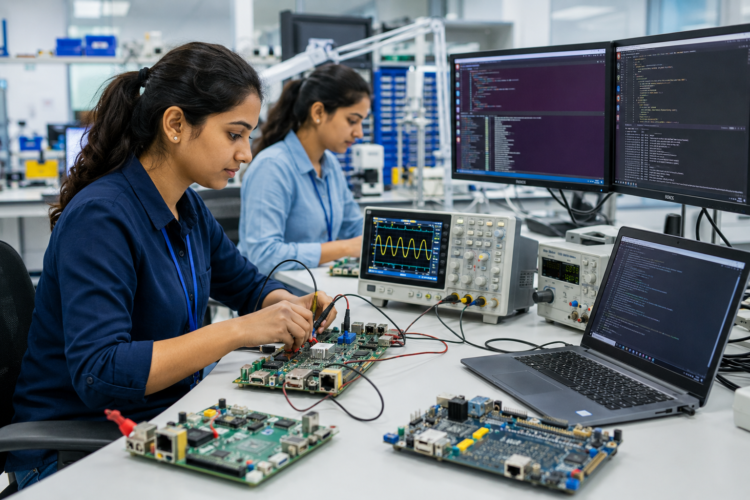
What is a BSP Engineer?
A BSP Engineer develops and maintains Board Support Packages. These packages help operating systems interact with hardware.
The role combines:
- Embedded software development.
- Linux system knowledge.
- Hardware understanding.
- System integration.
BSP Engineers often work close to hardware teams. They also collaborate with software developers regularly.
What does BSP Stand for?
BSP stands for Board Support Package.
A Board Support Package contains software components required for hardware operation. It enables operating systems to function correctly on specific boards.
A BSP typically supports:
- Hardware initialization.
- Device communication.
- Operating system integration.
- Driver functionality.
Without a BSP, hardware cannot operate properly.
Key Responsibilities of a BSP Engineer
BSP Engineers perform several important tasks.
Common responsibilities include:
- Hardware bring-up.
- BSP customization.
- Device driver development.
- Bootloader configuration.
- Linux kernel integration.
- System validation.
- Hardware debugging.
- Performance optimization.
These activities support reliable product development.
Industries that Hire BSP Engineers
Many industries depend on embedded systems. BSP Engineers remain valuable across these sectors.
Consumer Electronics
Examples include:
- Smartphones.
- Smart televisions.
- Wearable devices.
- Smart appliances.
Automotive
Examples include:
- Infotainment systems.
- Electric vehicles.
- Driver assistance systems.
- Vehicle controllers.
IoT
Examples include:
- Smart home devices.
- Connected sensors.
- Industrial IoT products.
- Smart gateways.
Telecommunications
Examples include:
- Networking equipment.
- Communication devices.
- Wireless platforms.
- Telecom infrastructure.
Medical Devices
Examples include:
- Diagnostic equipment.
- Monitoring systems.
- Portable medical devices.
- Healthcare electronics.
Industrial Automation
Examples include:
- Robotics systems.
- Control units.
- Manufacturing equipment.
- Industrial sensors.
📈 Why BSP Engineers are in Demand
Demand for BSP Engineers continues increasing. Embedded technology now powers countless products. Hardware-software integration remains essential.
Organizations need professionals who understand both domains. BSP Engineers help bridge this gap.
Growth of Embedded Systems and IoT
Embedded systems appear in everyday products. Their adoption continues expanding rapidly.
Examples include:
- Smart devices.
- Wearable technology.
- Connected appliances.
- Industrial systems.
Growing adoption creates additional opportunities.
Demand Across Automotive, Consumer Electronics, and Industrial Automation
Several industries continue investing heavily in embedded technologies.
Strong demand exists in:
- Automotive.
- Consumer electronics.
- Telecommunications.
- Healthcare.
- Industrial automation.
These industries require reliable BSP development.
Role of BSP Engineers in Product Development
BSP Engineers support products from the beginning. Hardware platforms require software support before development progresses.
Their work helps:
- Enable operating systems.
- Support device communication.
- Improve system stability.
- Optimize performance.
Successful products often depend on strong BSP foundations.
Master Embedded Systems Programming!
Launch your tech career with our Embedded Systems Course, designed for hands-on learning and industry readiness.
Know More🎓 Educational Requirements to become a BSP Engineer
Education helps build technical fundamentals. However, practical experience remains equally important.
Strong foundations improve long-term career growth.
Relevant Degree Programs
Several degrees support BSP careers.
Popular options include:
- Electronics Engineering.
- Electrical Engineering.
- Computer Engineering.
- Embedded Systems Engineering.
- Instrumentation Engineering.
These programs provide relevant technical knowledge.
Certifications that Add Value
Certifications help strengthen technical skills. They also improve industry readiness.
Useful certification areas include:
- Embedded Linux.
- Linux Kernel Development.
- Device Driver Development.
- Embedded Systems.
- IoT Technologies.
Certifications complement practical experience.
Is a Degree Mandatory?
No, a degree is not always mandatory. Skills and project experience often matter greatly.
Many employers value:
- Practical knowledge.
- Technical portfolios.
- Linux expertise.
- Embedded projects.
Strong skills can create opportunities.
💡 Core Skills Every BSP Engineer Must Learn
Technical skills form the foundation of BSP development. Both hardware and software knowledge remain important.
A balanced skill set improves employability.
Programming Languages
Programming remains essential for BSP development.
C
C is the most important language. Many BSP components use C extensively.
C++
C++ appears in many embedded projects. Advanced software components often use it.
Shell Scripting
Shell scripts automate repetitive tasks. Development workflows become more efficient.
Linux Fundamentals
Linux remains central to BSP development. Many embedded platforms use Linux-based systems.
Important topics include:
- Linux commands.
- File systems.
- Processes.
- System services.
Strong Linux knowledge remains valuable.
Embedded Systems Concepts
BSP Engineers work with embedded devices daily. Understanding embedded architecture remains important.
Important concepts include:
- Microcontrollers.
- Processors.
- Memory systems.
- Peripheral interfaces.
These fundamentals support development activities.
Operating System Internals
Operating systems manage hardware resources. BSP Engineers often work close to the OS layer.
Important areas include:
- Process scheduling.
- Memory management.
- Interrupt handling.
- System initialization.
Knowledge improves troubleshooting effectiveness.
Device Driver Development
Drivers enable communication with hardware devices. Driver knowledge remains essential.
Important topics include:
- Driver architecture.
- Peripheral communication.
- Driver integration.
- Driver debugging.
Strong driver skills improve career opportunities.
Bootloaders and Firmware Basics
Bootloaders prepare systems during startup. Firmware controls low-level hardware behavior.
Common bootloader examples include:
- U-Boot.
- Barebox.
Understanding startup processes remains important.
Hardware Debugging Skills
Hardware issues occur frequently during development. Effective debugging helps identify root causes quickly.
Important tools include:
- Oscilloscopes.
- Logic analyzers.
- JTAG debuggers.
- Serial consoles.
Strong debugging abilities remain highly valuable.
🛠️ Technologies and Tools Used by BSP Engineers
BSP Engineers work with various tools daily. These tools support development, debugging, and system integration activities.
Development Tools
Common development tools include:
- STM32CubeIDE.
- Eclipse.
- Visual Studio Code.
- ARM Development Studio.
- Keil MDK.
These tools support coding and system development.
Debugging Tools
Debugging remains a major responsibility.
Common tools include:
- Oscilloscopes.
- Logic analyzers.
- JTAG debuggers.
- Serial consoles.
- Multimeters.
These tools help identify hardware and software issues.
Version Control Systems
Version control supports collaboration and code management.
Popular platforms include:
- Git.
- GitHub.
- GitLab.
- Bitbucket.
These platforms improve project tracking.
Embedded Linux Distributions
Many BSP projects use Embedded Linux.
Common distributions include:
- Yocto Project.
- Buildroot.
- Ubuntu Embedded.
- Debian Embedded.
Linux knowledge remains highly valuable.
Common Hardware Platforms
BSP Engineers often work with development boards.
Popular platforms include:
- Raspberry Pi.
- BeagleBone.
- STM32 boards.
- NXP i.MX boards.
- NVIDIA Jetson.
Hands-on experience improves technical skills.
Master Embedded Systems Programming!
Launch your tech career with our Embedded Systems Course, designed for hands-on learning and industry readiness.
Know More🛣️ Step-by-Step Roadmap to Become a BSP Engineer
A structured roadmap simplifies learning. Each step builds important technical knowledge.
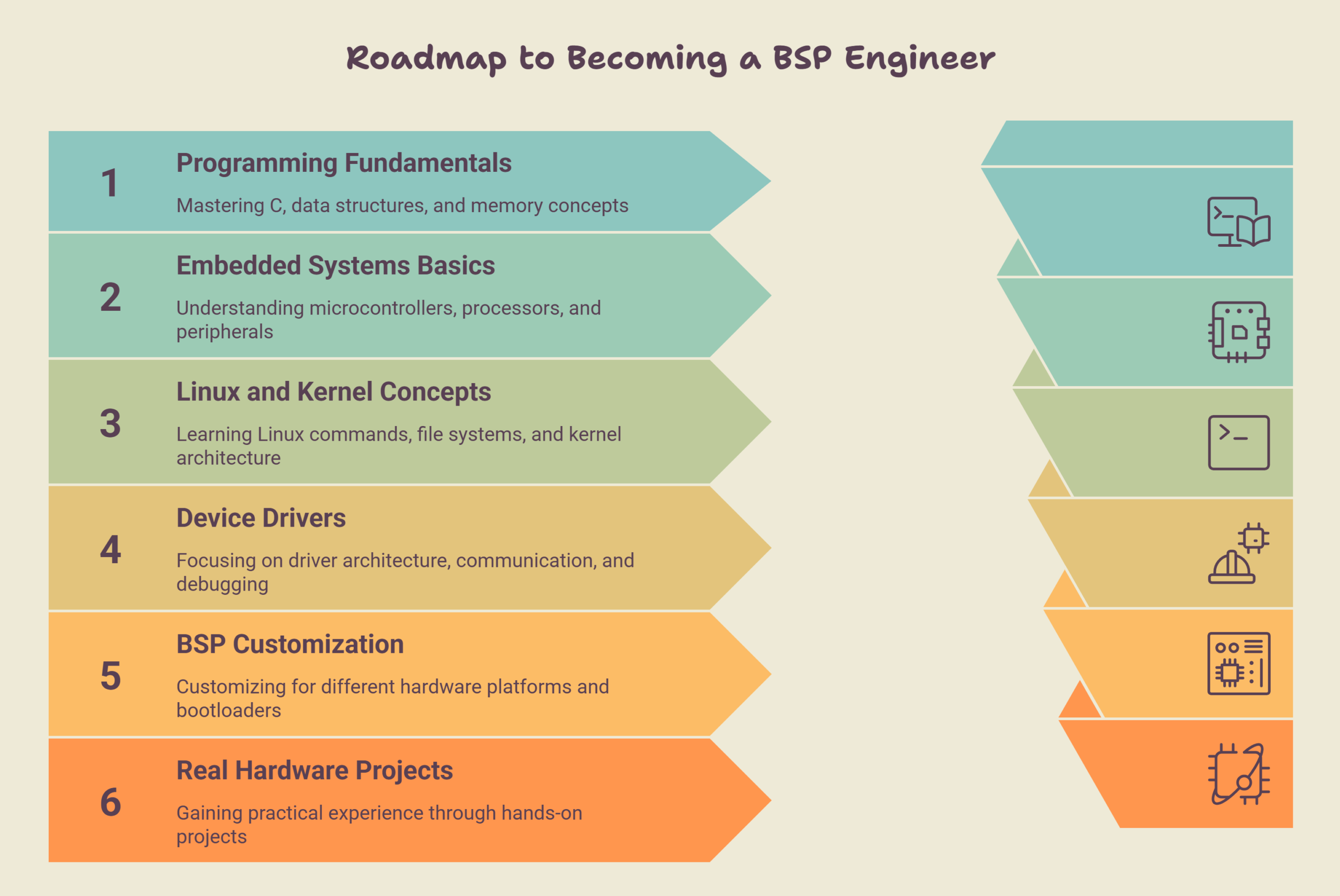
Step 1 – Build Strong Programming Fundamentals
Programming forms the foundation of BSP development.
Focus on:
- C programming.
- Data structures.
- Memory concepts.
- Problem-solving skills.
Step 2 – Learn Embedded Systems Basics
Embedded systems knowledge remains essential.
Learn about:
- Microcontrollers.
- Processors.
- Memory architecture.
- Peripheral interfaces.
Step 3 – Master Linux and Kernel Concepts
Linux knowledge supports most BSP projects.
Important areas include:
- Linux commands.
- File systems.
- Kernel architecture.
- Boot processes.
Step 4 – Understand Device Drivers
Drivers connect software and hardware.
Focus on:
- Driver architecture.
- Peripheral communication.
- Driver debugging.
- Driver integration.
Step 5 – Learn BSP Customization
Customization supports different hardware platforms.
Important areas include:
- Board configuration.
- Kernel modifications.
- Driver integration.
- Bootloader customization.
Step 6 – Work on Real Hardware Projects
Projects improve practical understanding.
Examples include:
- Linux board setup.
- Driver development.
- Hardware bring-up.
- IoT devices.
Step 7 – Create a Technical Portfolio
A strong portfolio demonstrates practical skills.
Include:
- BSP projects.
- Driver projects.
- Linux customization work.
- Hardware integration examples.
Step 8 – Apply for Entry-Level Roles
Practical knowledge improves employability.
Common entry-level positions include:
- Junior BSP Engineer.
- Embedded Engineer.
- Linux Engineer.
- Firmware Engineer.
📈 BSP Engineer Career Path
Career growth remains strong in this field. Technical expertise creates many opportunities.
Entry-Level Roles
Most professionals begin with:
- Junior BSP Engineer.
- Embedded Engineer.
- Linux Engineer.
- Firmware Engineer.
Mid-Level Growth Opportunities
Experience leads to broader responsibilities.
Common roles include:
- BSP Engineer.
- Senior BSP Engineer.
- Platform Engineer.
- Linux Engineer.
Senior and Specialist Positions
Advanced professionals often specialize further.
Examples include:
- Kernel Developer.
- Platform Architect.
- Device Driver Specialist.
- Embedded Linux Specialist.
Leadership Opportunities
Leadership roles become available with experience.
Examples include:
- Technical Lead.
- Engineering Manager.
- Solution Architect.
- Platform Manager.
Typical Career Progression
Engineering Graduate
⬇
Junior BSP Engineer
⬇
BSP Engineer
⬇
Senior BSP Engineer
⬇
Technical Lead
⬇
Engineering Manager
⚖️ BSP Engineer vs Embedded Software Engineer
Both roles support embedded products. However, their focus areas differ.
| Feature | BSP Engineer | Embedded Software Engineer |
|---|---|---|
| Primary Focus | Hardware-software integration | Embedded applications |
| Hardware Interaction | Extensive | Moderate |
| Operating System Work | Extensive | Limited |
| Driver Development | Core responsibility | Occasional |
| Application Development | Limited | Primary responsibility |
| Typical Projects | BSPs, kernels, drivers | Applications and features |
🌍 Real-World Applications of BSP Engineering
BSP Engineers contribute to many modern technologies.
Automotive Systems
Examples include:
- Electric vehicles.
- Infotainment systems.
- Driver assistance systems.
Smartphones and Consumer Devices
Examples include:
- Smartphones.
- Smart televisions.
- Wearable devices.
Medical Equipment
Examples include:
- Monitoring systems.
- Diagnostic devices.
- Portable healthcare equipment.
Industrial Automation
Examples include:
- Robotics systems.
- Industrial controllers.
- Manufacturing equipment.
IoT Products
Examples include:
- Smart home devices.
- Connected sensors.
- Industrial IoT platforms.
💰 Salary and Job Opportunities for BSP Engineers
BSP Engineers earn competitive salaries. Earnings increase with skills and experience.
Entry-Level Salary Expectations
Freshers typically earn between ₹4 LPA and ₹8 LPA. Strong projects can improve starting packages.
Mid-Career Salary Range
Experienced professionals often earn ₹8 LPA to ₹20+ LPA. Specialized expertise can increase compensation further.
Factors Affecting Salary
Important factors include:
- Technical skills.
- Linux expertise.
- Industry.
- Location.
- Certifications.
- Project experience.
Top Recruiters and Hiring Industries
Common recruiters include:
- Qualcomm.
- Samsung.
- Intel.
- NXP.
- Bosch.
- Continental.
- Tata Elxsi.
- HCLTech.
Hiring industries include:
- Automotive.
- Consumer electronics.
- Telecommunications.
- Healthcare.
- Industrial automation.
🌟 Benefits and Challenges of Becoming a BSP Engineer
The role offers several advantages. However, some challenges also exist.
Advantages of This Career
Benefits include:
- Strong industry demand.
- Excellent learning opportunities.
- Technical specialization.
- Diverse industry exposure.
- Long-term career growth.
Common Challenges
Challenges include:
- Complex debugging tasks.
- Driver compatibility issues.
- Tight project deadlines.
- Continuous technology changes.
- Hardware dependency.
🚫 Mistakes Beginners Should Avoid
Avoiding common mistakes improves career growth.
Focusing Only on Programming
Programming alone is not enough. Hardware knowledge remains equally important.
Ignoring Hardware Fundamentals
Strong hardware understanding improves troubleshooting. Weak fundamentals create learning difficulties.
Skipping Linux Knowledge
Linux remains central to BSP development. Limited Linux knowledge can restrict opportunities.
Lack of Hands-On Projects
Projects demonstrate practical abilities. Employers often value real experience highly.
Not Learning Debugging Techniques
Debugging remains a core responsibility. Strong troubleshooting skills improve effectiveness.
Kickstart your embedded systems career and turn your tech passion into high-demand skills!
📚 Best Resources to Learn BSP Development
Learning resources help build technical expertise.
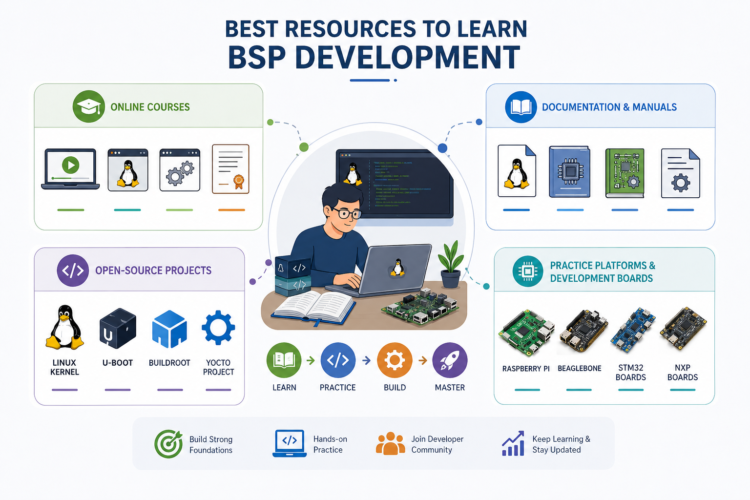
Online Courses
Useful learning options include:
- Embedded Linux courses.
- Linux Kernel courses.
- Device Driver courses.
- Embedded Systems programs.
Documentation and Manuals
Important resources include:
- Linux Kernel Documentation.
- Processor manuals.
- Board documentation.
- Driver documentation.
Open-Source Projects
Useful projects include:
- Linux Kernel.
- U-Boot.
- Buildroot.
- Yocto Project.
Practice Platforms and Development Boards
Popular learning platforms include:
- Raspberry Pi.
- BeagleBone.
- STM32 boards.
- NXP development boards.
🏁 Final Thoughts
BSP Engineering offers a rewarding and highly specialized career path. Strong knowledge of Linux, embedded systems, device drivers, and hardware fundamentals remains essential for success.
Demand continues growing across automotive, IoT, healthcare, telecommunications, and consumer electronics industries. For professionals interested in low-level development and hardware-software integration, BSP Engineering provides excellent long-term career opportunities.
Master Embedded Systems Programming!
Launch your tech career with our Embedded Systems Course, designed for hands-on learning and industry readiness.
Know MoreFrequently Asked Questions
What qualifications are needed to become a BSP Engineer?
Most employers prefer candidates with degrees in Electronics, Electrical Engineering, Computer Engineering, or Embedded Systems. However, strong skills in Linux, embedded systems, programming, and hardware debugging can also create opportunities.
Is BSP development a good career in 2026?
Yes, BSP development remains a strong career choice because embedded systems continue expanding across industries. Growth in IoT, automotive software, industrial automation, and connected devices is expected to increase demand for BSP Engineers.
What programming language is most important for BSP Engineers?
C is considered the most important programming language because bootloaders, device drivers, kernels, and BSP components are commonly developed using C. Knowledge of C++, Python, and Shell Scripting can further improve productivity and career prospects.
Can freshers become BSP Engineers?
Yes, freshers can enter the field by building strong foundations in C programming, Linux, embedded systems, and hardware concepts. Hands-on projects using development boards can significantly improve employability.
How long does it take to learn BSP development?
The timeline varies depending on prior knowledge and learning consistency. Most learners can develop core BSP skills within six months to one year through structured learning and practical experience.
What is the difference between BSP and device driver development?
BSP development covers hardware initialization, bootloaders, operating system support, kernel integration, and device drivers. Device driver development is one part of BSP development that focuses specifically on enabling communication between hardware and software.
Is Linux mandatory for BSP Engineers?
Linux knowledge is highly important because many embedded products use Embedded Linux platforms. Understanding Linux commands, kernels, file systems, and boot processes can greatly improve effectiveness in BSP-related roles.
What is the average salary of a BSP Engineer?
Freshers typically earn between ₹4 LPA and ₹8 LPA, while experienced professionals can earn ₹12 LPA to ₹25+ LPA or more. Salary growth depends on technical expertise, industry, project experience, and specialization.
Which companies hire BSP Engineers?
Companies such as Qualcomm, Samsung, Intel, NXP, Bosch, Continental, Tata Elxsi, HCLTech, Wipro, and Infosys regularly hire BSP Engineers. Opportunities are also available in semiconductor companies, embedded product firms, automotive companies, and IoT startups.
What projects should beginners build?
Beginners should work on Embedded Linux setup projects, bootloader customization, device driver development, and hardware bring-up exercises. Projects using Raspberry Pi, STM32, BeagleBone, ESP32, or IoT platforms can help build practical skills and strengthen technical portfolios.