Table of Contents
Key Takeaways:
- HR Analysts use data.
- Many companies need HR Analysts.
- Learn new HR skills.
- Experience increases salary.
- HR Analytics is growing.
What Does an HR Analyst Do? (Answer First)
An HR Analyst works with employee data. They collect, study, and understand HR information.
Their main work includes:
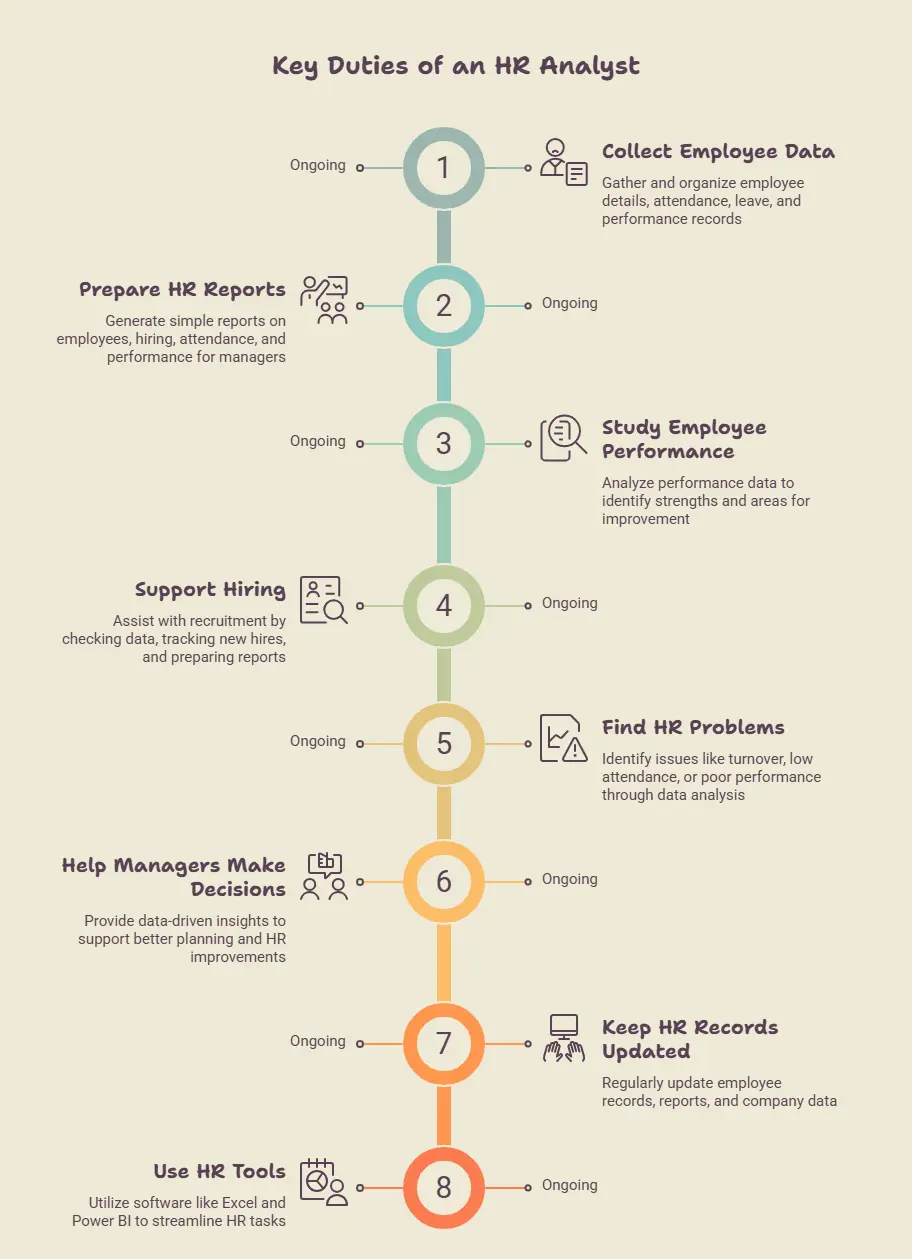
- Collect employee data.
- Prepare HR reports.
- Study employee performance.
- Support the HR team.
- Help managers make better decisions.
Is being an HR Analyst your dream? Enrol now for our course on Human Resource!
Why HR Analysts Are Essential in Modern Organizations
HR Analysts are very important in today’s companies. They help companies use employee data to make better decisions.
They Help Make Better Decisions
HR Analysts study employee data.
They help managers:
- Make better plans.
- Solve HR problems.
- Take better decisions.
👉 Good data helps companies make better choices.
They Improve Hiring
HR Analysts help companies:
- Find the right people.
- Improve hiring.
- Reduce hiring mistakes.
👉 Better hiring helps the company grow.
They Improve Employee Performance
HR Analysts check employee data.
They help companies:
- Find employees who need support.
- Improve performance.
- Reward good work.
👉 Employees can perform better.
They Help Keep Employees Happy
HR Analysts study employee feedback.
They help companies:
- Improve the workplace.
- Increase employee satisfaction.
- Reduce employee turnover.
👉 Happy employees often stay longer.
They Save Time
HR reports help HR teams work faster.
They can:
- Find information quickly.
- Prepare reports easily.
- Reduce manual work.
👉 This saves time for the HR team.
They Support Company Growth
Good HR decisions help the company grow.
HR Analysts help companies:
- Plan better.
- Manage employees better.
- Improve overall HR work.
👉 They play an important role in business success.
Main Duties of an HR Analyst
Core Skills Every HR Analyst Should Have
Tools Commonly Used by HR Analysts
HR Analysts use different tools to make their work easier. These tools help them collect, study, and share employee data.
Microsoft Excel
Excel is one of the most common tools.
It is used to:
- Store employee data.
- Make tables.
- Create simple reports.
- Calculate numbers.
👉 Almost every HR Analyst uses Excel.
Power BI
Power BI helps show data in a simple way.
It is used to:
- Make dashboards.
- Create charts.
- Share reports.
👉 It helps managers understand data easily.
Tableau
Tableau is another reporting tool.
It helps to:
- Show employee data.
- Make graphs.
- Create visual reports.
👉 It makes reports easy to read.
HR Software
Many companies use HR software.
It helps to manage:
- Employee records.
- Attendance.
- Leave.
- Payroll.
👉 HR software keeps all employee data in one place.
Google Sheets
Some companies use Google Sheets.
It helps to:
- Save employee data.
- Share files.
- Work with the HR team online.
👉 Many people can work on the same file together.
Microsoft PowerPoint
PowerPoint is used to:
- Prepare presentations.
- Show HR reports.
- Share company updates.
👉 It helps explain data clearly.
Microsoft Word
Word is used to:
- Write reports.
- Prepare HR documents.
- Create letters.
👉 It is useful for daily HR work.
HR Analyst vs HR Generalist
HR Analyst and HR Generalist are both HR jobs. An HR Analyst mainly works with employee data. An HR Generalist mainly handles daily HR activities.
HR Analyst
An HR Analyst mainly studies employee data.
Their work includes:
- Collect employee data.
- Prepare reports.
- Study employee performance.
- Help managers make better decisions.
👉 Their main focus is on data.
HR Generalist
An HR Generalist looks after daily HR work.
Their work includes:
- Hiring employees.
- Managing attendance.
- Handling leave.
- Supporting employees.
👉 Their main focus is on people and HR activities.
Main Difference
The biggest difference is their work.
HR Analyst
- Works with employee data.
- Makes reports.
- Studies HR information.
👉 Focuses on data.
HR Generalist
- Handles daily HR work.
- Talks with employees.
- Solves employee issues.
👉 Focuses on HR operations.
Skills Needed
The skills are also different.
HR Analyst
Needs skills like:
- Excel.
- HR Analytics.
- Power BI.
- Data analysis.
👉 Data skills are very important.
HR Generalist
Needs skills like:
- Communication.
- Recruitment.
- Employee management.
- HR policies.
👉 People skills are very important.
Career Growth
Both careers have good growth.
An HR Analyst can become:
- Senior HR Analyst.
- HR Analytics Manager.
- HR Business Partner.
An HR Generalist can become:
- HR Executive.
- HR Manager.
- HR Head.
👉 Both careers offer good opportunities.
| HR Analyst | HR Generalist |
|---|---|
| Works with employee data. | Handles daily HR work. |
| Makes reports. | Manages employees. |
| Uses Excel and HR tools. | Handles hiring and employee support. |
| Focuses on data. | Focuses on people. |
| Helps managers with reports. | Helps employees with HR activities. |
Qualifications and Career Path
To become an HR Analyst, you need the right education and skills. You can grow step by step in your career.
Education
You can study:
- BBA.
- BCom.
- BA.
- MBA in HR.
👉 A degree helps you get HR jobs.
Learn HR Skills
Learn simple skills like:
- HR Analytics.
- Excel.
- Power BI.
- HR software.
👉 These skills are useful.
Complete Courses
You can also join:
- HR Analytics course.
- Excel course.
- Power BI course.
👉 Courses help you learn more.
Start with a Small Job
Many people start as:
- HR Intern.
- HR Assistant.
- HR Executive.
👉 These jobs give experience.
Become an HR Analyst
After gaining experience, you can become an HR Analyst.
Your work is to:
- Study employee data.
- Make reports.
- Help the HR team.
👉 This is the next step.
Grow to Higher Jobs
Later, you can become:
- Senior HR Analyst.
- HR Manager.
- HR Business Partner.
👉 Higher jobs usually offer better salary.
Keep Learning
Always learn new things.
- Learn new tools.
- Improve your skills.
- Gain experience.
👉 Learning helps your career grow.
Simple Career Path
- HR Intern
- HR Assistant
- HR Executive
- HR Analyst
- Senior HR Analyst
- HR Manager
👉 You can grow one step at a time.
Salary of an HR Analyst
Benefits of Choosing an HR Analyst Career
An HR Analyst career has many benefits. It is a good career for people who like HR and data.
Good Job Opportunities
Many companies hire HR Analysts.
You can work in:
- IT companies.
- Banks.
- Hospitals.
- Schools.
- Retail companies.
👉 There are many job openings.
Good Salary
HR Analysts can earn a good salary.
Your salary can increase with:
- Experience.
- Skills.
- Better job roles.
👉 You can earn more as you grow.
Career Growth
There are many chances to grow.
You can become:
- Senior HR Analyst.
- HR Manager.
- HR Business Partner.
👉 You can move to higher positions.
Learn New Skills
You can learn useful skills like:
- HR Analytics.
- Excel.
- Power BI.
- HR software.
👉 These skills are useful in many companies.
Work in Different Industries
HR Analysts are needed in many industries.
For example:
- IT.
- Banking.
- Healthcare.
- Manufacturing.
- Retail.
👉 You can choose the industry you like.
Help the Company
HR Analysts help companies:
- Hire better people.
- Improve employee performance.
- Make better HR decisions.
👉 Your work helps the company grow.
A Future Career
HR Analytics is growing every year. More companies are using employee data.
👉 This means more job opportunities in the future.
Easy Career Growth
If you keep learning:
- Your skills improve.
- Your salary increases.
- Your career grows.
👉 Learning new skills helps you succeed.
Challenges HR Analysts Face
HR Analysts have many responsibilities. They may also face a few challenges.
Working with Large Data
HR Analysts work with a lot of employee data.
They should:
- Check data carefully.
- Keep records correct.
👉 Wrong data can cause problems.
Learning New Tools
They need to learn tools like:
- Excel.
- Power BI.
- HR software.
👉 Learning takes time.
Keeping Data Safe
Employee data is private.
HR Analysts should:
- Keep data safe.
- Protect employee information.
👉 Data safety is very important.
Preparing Reports
They prepare many HR reports.
They should:
- Check reports.
- Avoid mistakes.
👉 Correct reports help managers.
Keeping Skills Updated
HR Analytics keeps changing.
They should:
- Learn new skills.
- Learn new tools.
👉 Learning helps them grow.
Working with Deadlines
Some reports must be finished on time.
They should:
- Finish work quickly.
- Plan their time well.
👉 Good time management is important.
Industries Hiring HR Analysts
Many industries hire HR Analysts. Almost every company needs an HR team.
IT Companies
IT companies hire many HR Analysts.
They help with:
- Hiring.
- Employee data.
- HR reports.
👉 IT has many HR jobs.
Banking
Banks also hire HR Analysts.
They help to:
- Manage employee records.
- Prepare HR reports.
👉 Banks need HR professionals.
Healthcare
Hospitals and healthcare companies hire HR Analysts.
They help with:
- Employee records.
- HR planning.
👉 Healthcare has many HR jobs.
Manufacturing
Manufacturing companies also need HR Analysts.
They help to:
- Manage workers.
- Keep employee data.
👉 Large factories have HR teams.
Retail
Retail companies hire HR Analysts.
They help with:
- Hiring staff.
- Managing employee information.
👉 Big retail companies need HR support.
Education
Schools and colleges also hire HR professionals.
They help to:
- Manage staff records.
- Support HR work.
👉 Education also offers HR jobs.
Many Job Opportunities
HR Analysts are needed in many industries.
👉 This gives you more job options.
Is HR Analytics a Good Career in 2026?
Yes, HR Analytics is a good career in 2026. More companies are using employee data to make better HR decisions.
More Jobs
Many companies are hiring HR Analysts.
You can find jobs in:
- IT.
- Banking.
- Healthcare.
- Retail.
👉 Job opportunities are increasing.
Good Salary
HR Analytics offers a good salary.
Your salary can grow with:
- Experience.
- Skills.
- Better job roles.
👉 You can earn more over time.
Career Growth
You can move to higher positions like:
- Senior HR Analyst.
- HR Manager.
- HR Business Partner.
👉 There are many chances to grow.
Learn Useful Skills
You can learn:
- HR Analytics.
- Excel.
- Power BI.
- HR software.
👉 These skills are useful in many companies.
Future Demand
More companies are using HR Analytics every year.
👉 The demand for HR Analysts is expected to grow.
Good Career Choice
If you like:
- HR.
- Data.
- Reports.
- Solving problems.
👉 HR Analytics can be a good career for you.
Is being an HR your dream? Enrol now for our course on Human Resource!
Final Thoughts
HR Analytics is a good career with many job opportunities. Learn the right skills, gain experience, and keep learning new tools.
It offers:
- Good job opportunities.
- Good salary.
- Career growth.
- Useful skills.
👉 This can help you build a successful HR career.
Related Articles |
|
| HR Analyst Salary in India | How to Become an HR Analyst? |
| What is HR Analytics? Tools, Types and Benefits | |
Become an HR Expert – Enroll in Our HR Management Course Today!
Unlock the secrets to effective Human Resource Management with our expert-led course! Learn recruitment, employee relations, performance management, and more to build a thriving workplace. Start your journey toward a successful HR career today!
Know MoreFrequently Asked Questions
What does an HR Analyst do?
An HR Analyst works with employee data. They prepare reports, study HR information, and help the HR team make better decisions.
What are the main responsibilities of an HR Analyst?
An HR Analyst usually:
- Collects employee data.
- Prepares HR reports.
- Studies employee performance.
- Supports the HR team.
- Helps managers make decisions.
What skills should an HR Analyst have?
Some useful skills are:
- HR knowledge.
- Microsoft Excel.
- HR Analytics.
- Power BI.
- Communication skills.
What is the difference between an HR Analyst and an HR Generalist?
An HR Analyst mainly works with employee data and reports. An HR Generalist handles daily HR work like hiring, leave, and employee support.
Which tools do HR Analysts use?
HR Analysts commonly use:
- Microsoft Excel.
- Power BI.
- Tableau.
- HR software.
- Google Sheets.
Where can an HR Analyst work?
HR Analysts can work in many industries, such as:
- IT.
- Banking.
- Healthcare.
- Retail.
- Manufacturing.
Is HR Analyst a good career?
Yes. It offers good job opportunities, career growth, and the chance to work in different industries.
How can I become an HR Analyst?
You can become an HR Analyst by:
- Completing a degree.
- Learning HR Analytics.
- Learning Excel and HR tools.
- Gaining HR experience.
- Applying for HR Analyst jobs.