Table of Contents
Key Takeaways:
- HR Analytics uses employee data.
- It helps HR make better decisions.
- It improves hiring.
- It helps employees work better.
- HR Analytics is a useful HR skill.
HR Analytics Explained
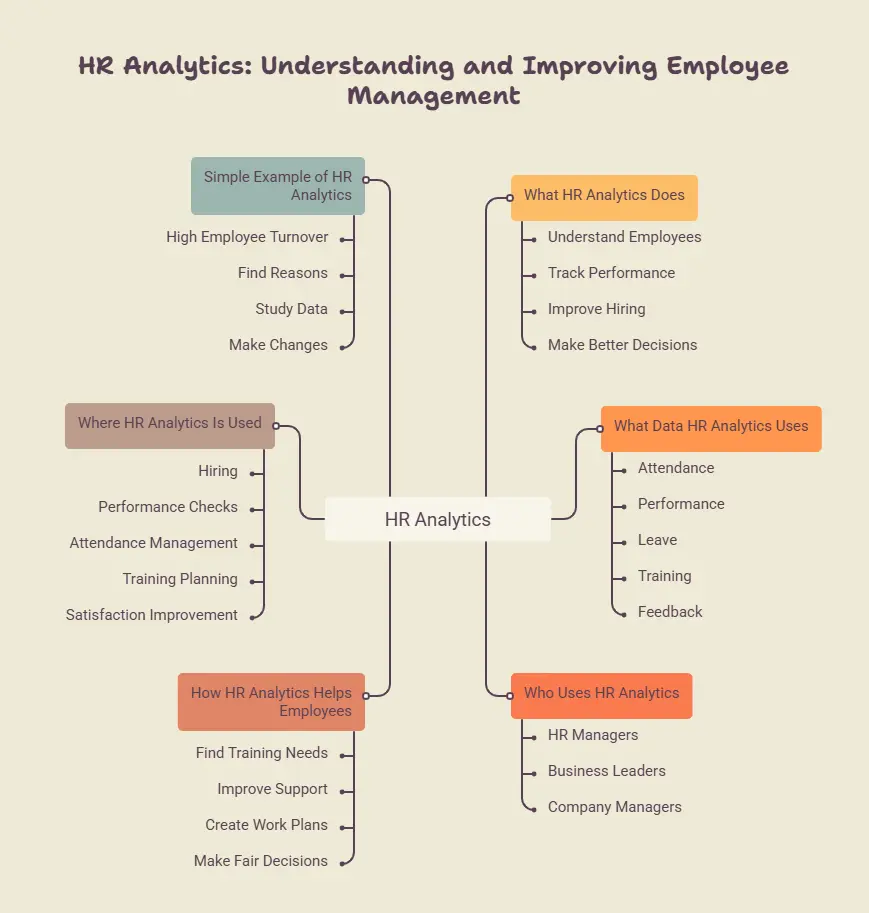
HR Analytics is the process of using employee data to make better HR decisions.
With HR Analytics, businesses can:
- Understand employee performance.
- Track attendance.
- Measure employee satisfaction.
- Reduce employee turnover.
- Make better hiring decisions.
👉 HR Analytics helps HR teams make smarter decisions using data instead of guessing.
Is being an HR professional your dream? Enrol now for our course on Human Resource!
Why HR Analytics Has Become Essential
What is HR Analytics?
Types of HR Analytics
Popular HR Analytics Tools
HR Analytics tools help companies collect and study employee data.
👉 They make HR work easier and faster.
Microsoft Excel
Excel is one of the most common HR tools.
It helps HR teams:
- Store employee data.
- Make simple reports.
- Create charts.
- Compare employee information.
👉 Many companies use Excel every day.
Microsoft Power BI
Power BI helps HR teams see data clearly.
It can:
- Create dashboards.
- Show charts.
- Track employee performance.
- Display HR reports.
👉 It makes data easy to understand.
Tableau
Tableau is another reporting tool.
It helps HR teams:
- Create graphs.
- Compare employee data.
- Understand HR reports.
👉 It turns data into simple visuals.
SAP SuccessFactors
This is a complete HR software.
It helps companies:
- Manage employees.
- Track attendance.
- Check performance.
- Plan employee training.
👉 Large companies often use this tool.
Workday
Workday is a popular HR management system.
It helps with:
- Employee records.
- Payroll.
- Hiring.
- Performance tracking.
👉 It keeps HR information in one place.
Oracle HCM Cloud
Oracle HCM Cloud helps companies manage HR work.
It can help with:
- Hiring new employees.
- Employee records.
- Leave management.
- Performance reviews.
👉 It is used by many large businesses.
Zoho People
Zoho People is simple HR software.
It helps HR teams:
- Record attendance.
- Manage leave.
- Store employee details.
- Track daily HR work.
👉 It is easy to use for small and medium businesses.
Common HR Metrics Tracked Through Analytics
HR teams use different metrics to understand employees better.
👉 These metrics help companies make better HR decisions.
Employee Attendance
HR teams check:
- Daily attendance.
- Late arrivals.
- Absent days.
- Leave records.
👉 This helps them know employee attendance.
Employee Performance
Companies also track:
- Work quality.
- Work targets.
- Employee progress.
- Performance reviews.
👉 This helps managers understand how employees are working.
Employee Turnover
HR teams check:
- How many employees leave.
- How often employees leave.
- Reasons for leaving.
👉 This helps companies improve employee retention.
Employee Satisfaction
Companies collect employee feedback.
They check:
- Employee happiness.
- Job satisfaction.
- Workplace experience.
👉 Happy employees usually work better.
Hiring Metrics
HR teams also track:
- Number of new employees.
- Time taken to hire.
- Hiring progress.
- Recruitment results.
👉 This helps improve the hiring process.
Training Records
Companies check:
- Training completed.
- Skills learned.
- Employee improvement.
- Training progress.
👉 This helps employees learn new skills.
Leave Records
HR teams record:
- Sick leave.
- Paid leave.
- Casual leave.
- Total leave used.
👉 This helps manage employee leave easily.
Employee Growth
Companies also check:
- Promotions.
- New skills.
- Career progress.
- Employee development.
👉 This helps the company support employee growth.
HR Analytics vs People Analytics vs Workforce Analytics
| Feature | HR Analytics | People Analytics | Workforce Analytics |
|---|---|---|---|
| Main Focus | HR work | Employees | Whole workforce |
| Looks At | HR data | Employee data | Workforce data |
| Main Goal | Improve HR decisions | Improve employee performance | Improve workforce planning |
| Used By | HR team | HR managers and business leaders | HR managers and company leaders |
| Helps In | Hiring, attendance, performance | Employee growth, engagement, satisfaction | Workforce planning, productivity, future hiring |
| Uses Employee Data | Yes | Yes | Yes |
| Helps Improve | HR processes | Employee experience | Business and workforce planning |
| Example | Tracking attendance | Measuring employee performance | Planning future employee needs |
HR Analytics
HR Analytics mainly helps the HR department.
It is used to:
- Track attendance.
- Improve hiring.
- Check employee performance.
- Prepare HR reports.
👉 It helps HR teams make better decisions.
People Analytics
People Analytics focuses on employees.
It helps companies:
- Understand employee behaviour.
- Improve employee performance.
- Increase employee satisfaction.
- Support employee growth.
👉 It helps employees perform better.
Workforce Analytics
Workforce Analytics looks at the complete workforce.
It helps companies:
- Plan future hiring.
- Manage workforce needs.
- Improve productivity.
- Build better workforce plans.
👉 It helps businesses plan for the future.
Benefits of HR Analytics
Challenges of Implementing HR Analytics
HR Analytics is helpful.
👉 But companies may face some simple problems.
Wrong Data
Sometimes the data is:
- Wrong.
- Old.
- Missing.
👉 Wrong data gives wrong results.
Keeping Data Safe
Employee information should be safe.
Companies should:
- Protect employee data.
- Share it only when needed.
👉 Employee privacy is important.
Learning New Skills
Some HR staff may not know HR Analytics.
They need:
- Training.
- Practice.
👉 Learning takes time.
Different HR Systems
Some companies use many HR systems.
So:
- Data may be in different places.
- Reports may be confusing.
👉 Keeping data together is easier.
High Cost
Some HR tools cost more.
Companies may spend money on:
- Software.
- Training.
👉 This can be difficult for small companies.
Accepting New Changes
Some employees may not like new systems.
They may need:
- Time.
- Support.
👉 Slowly they will get used to it.
Updating Data
Employee information changes often.
Companies should update:
- Attendance.
- Leave.
- Employee details.
👉 Updated data helps HR make better decisions.
Best Practices for Using HR Analytics
Using HR Analytics in the right way gives better results.
👉 Follow these simple practices.
Use Correct Data
Always use:
- Correct data.
- Updated data.
- Complete data.
👉 Good data gives better results.
Set Clear Goals
Know what you want to improve.
For example:
- Hiring.
- Attendance.
- Employee performance.
- Employee satisfaction.
👉 Clear goals make work easier.
Check Data Regularly
Update employee data often.
Check:
- Attendance.
- Performance.
- Leave records.
- Employee details.
👉 Updated data is more useful.
Protect Employee Information
Keep employee data safe.
Do not share private information.
👉 Employee privacy is important.
Use the Right HR Tools
Choose tools that are easy to use.
They should help you:
- Store data.
- Track employees.
- Create reports.
👉 Good tools save time.
Train the HR Team
Teach HR employees how to use HR Analytics.
They should know:
- How to read data.
- How to prepare reports.
- How to make better decisions.
👉 Training improves HR work.

Who Should Learn HR Analytics?
HR Analytics is useful for many people.
It is a good skill to learn if you are:
- HR students.
- HR professionals.
- Recruiters.
- HR managers.
- Team leaders.
- Business managers.
👉 Anyone who works with employees can benefit from learning HR Analytics.
Future of HR Analytics
Conclusion
HR Analytics helps companies understand employees better. It helps improve hiring, employee performance, and HR work. Learn the basics, know the different tools and types, and use employee data wisely.
👉 HR Analytics is a useful skill for anyone working in HR.
| Related Articles | |
| Top Human Resource Blogs to Follow | How to build a remote HR career |
| HR Certification vs HR Degree | Which one to choose? | 15 HR Intern Interview Questions and Sample Answers |
Become an HR Expert – Enroll in Our HR Management Course Today!
Unlock the secrets to effective Human Resource Management with our expert-led course! Learn recruitment, employee relations, performance management, and more to build a thriving workplace. Start your journey toward a successful HR career today!
Know MoreFrequently Asked Questions
What is HR Analytics?
HR Analytics is the process of using employee data to make better HR decisions. It helps companies improve hiring, employee performance, and workplace planning.
Why is HR Analytics important?
HR Analytics helps companies understand employees better. It supports better hiring, improves employee performance, and helps solve workplace problems using data.
What are the main types of HR Analytics?
The four main types are:
- Descriptive Analytics
- Diagnostic Analytics
- Predictive Analytics
- Prescriptive Analytics
Each type helps HR teams in a different way.
What are some popular HR Analytics tools?
Some commonly used HR Analytics tools are:
- Microsoft Excel
- Power BI
- Tableau
- SAP SuccessFactors
- Workday
- Zoho People
These tools help HR teams manage and understand employee data.
What are the benefits of HR Analytics?
HR Analytics helps companies:
- Improve hiring
- Improve employee performance
- Keep employees happy
- Make better HR decisions
- Plan future workforce needs
What challenges do companies face while using HR Analytics?
Some common challenges are:
- Wrong or missing data
- Keeping employee data safe
- Learning new tools
- High software costs
- Updating employee information regularly
Who should learn HR Analytics?
HR Analytics is useful for:
- HR students
- HR professionals
- Recruiters
- HR managers
- Team leaders
- Business managers
Is HR Analytics a good career skill?
Yes. HR Analytics is a valuable HR skill. Many companies need people who can understand employee data and make better HR decisions. Learning this skill can improve your career opportunities.