Table of Contents
The highly anticipated SpaceX IPO has concluded its primary fundraising round, successfully securing $75 billion in the largest public market debut the world has ever witnessed.
Led by visionary billionaire Elon Musk, the company set its final share price at $135, immediately thrusting it into the elite top tier of global mega-corporations.
Learn Stock Marketing with a Share Trading Expert! Explore Here!
Key Takeaways
- Historic Milestone: Elon Musk’s rocket, satellite, and artificial intelligence company has successfully completed the largest initial public offering (IPO) in global history, raising a staggering $75 billion.
- Massive Valuation: By pricing 555.6 million shares at $135 each, the company’s total market valuation has hit an unbelievable $1.77 trillion, making it the seventh-largest publicly traded firm in the United States.
- Beating Global Records: This historic debut has completely shattered the previous world record held by Saudi Arabia’s state oil giant, which raised $25.6 billion during its listing back in 2019.
- Heavy Retail Demand: Individual and small-scale retail investors poured more than $100 billion in orders into the offering, proving the intense public interest surrounding Musk’s business empire.
- Fueling the Future: The gigantic $75 billion pool of fresh capital will be directly utilized to fund next-generation satellite internet constellations, orbital AI data centers, and the development of the massive Starship rocket system.
Introduction
1: What is a stock?
History has officially been scripted on Wall Street. Space Exploration Technologies Corp., universally known as SpaceX, has officially transitioned from a private aerospace pioneer into a public market titan.
For millions of tech enthusiasts and stock market observers around the globe, this listing represents a monumental shift in how the space economy is financed.
By opening its doors to public investors, the company has not only secured the capital needed to fund its multi-planetary ambitions but has also set a brand new benchmark for global financial markets.
Breaking Down the Record-Breaking Numbers
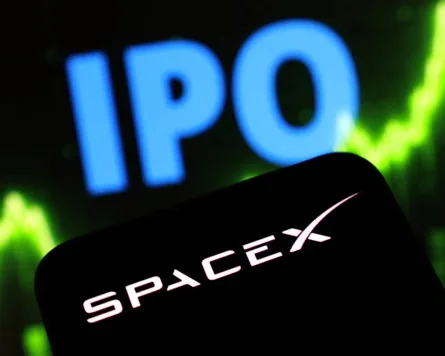
The financial scale of this market debut is nothing short of breath-taking. To fully comprehend how massive this event is, one needs to look at the numbers compared to prior history. Before this listing, the crown for the world’s largest corporate debut belonged to the state-backed oil monopoly of Saudi Arabia, which brought in $25.6 billion in late 2019.
Musk’s aerospace firm did not just break that record; it nearly tripled it by pocketing a clean $75 billion from the initial sale of 555.6 million shares. To elaborate, SpaceX successfully sold 555,555,555 shares of its Class A common stock, at a rate of $135.00 per share. Furthermore, if the underwriting investment banks decide to exercise their over-allotment options (colloquially called a “greenshoe option” to sell additional shares due to high demand), the total amount of money raised could easily skyrocket past $86 billion in the coming weeks.
According to Reuters reports, once the SpaceX stock begins trading Friday, Musk’s net worth will jump to over $1.1 trillion making him the world’s first trillionaire. It is to be noted that the majority of Musk’s wealth is now with SpaceX as he is holding a stake worth around $866 billion.
At the launch price of $135 per share, the company’s implied market capitalization sits comfortably at $1.77 trillion. When accounting for employee stock choices and restricted stock units, the fully diluted valuation reaches closer to $1.8 trillion.
This means that upon entering the Nasdaq exchange, this single space company is worth more than historic financial institutions like JPMorgan Chase, massive conglomerates like Berkshire Hathaway, and even tech giants like Meta Platforms.
The Hype: Why Everyone Wanted a Piece of the Action
When institutional book building began, the demand from investors was absolutely overwhelming. Reports indicate that the overall demand for shares crossed $250 billion, making the entire offering three to four times oversubscribed.
Financial institutions, sovereign wealth funds from the Middle East, and large global asset management firms aggressively fought to secure allocations. However, the real differentiator in this story was the common public. Elon Musk has cultivated a legendary, deeply passionate fan base among everyday retail traders over the last decade. The response from the public was deafening.
Small-scale everyday investors placed more than $100 billion worth of orders, far outstripping the capacity allocated for them. This massive wave of retail excitement ensured that the SpaceX IPO became an absolute cultural phenomenon, drawing structural comparisons to the early days of public trading for popular electric vehicle stock choices.
However, unlike the earlier expectations that SpaceX would reserve nearly 30% of its shares for retail investors, it has cut its retail IPO allocation to a low 20% range.
Where Will the $75 Billion Go?
Running a cutting-edge aerospace corporation that intends to colonize Mars is an extraordinarily expensive business model. While standard tech companies might require capital for office spaces and software development, rocket engineering requires high-end physical infrastructure, massive launch pads, and thousands of expendable parts.The company plans to deploy this newly acquired wealth across three major pillars:
1. Starship Development
The giant Starship rocket system is the centrepiece of the company’s long-term survival and commercial viability. As the largest and most powerful flying vehicle ever built, Starship is designed to be fully and rapidly reusable. Perfecting this technology requires continuous test flights, orbital refuelling trials, and structural changes.
The fresh capital ensures that these capital-intensive testing phases can continue at rapid speed without financial bottlenecks.
2. Upgrading Starlink Infrastructure
Starlink, the company’s highly successful satellite broadband internet arm, is currently the primary engine driving its commercial revenues. With over 10.3 million active consumer subscribers globally, the network requires a constant stream of new, advanced satellites to maintain speed and expand regional coverage.
A significant portion of the funds will be directed toward building and launching the new V3 satellites, which will dramatically boost global data capacity and support upcoming direct-to-cell mobile features.
3. Space-Based Artificial Intelligence (AI) Data Centers
In a fascinating twist that surprised many conservative market analysts, the company revealed deep integration with artificial intelligence operations. Building large AI data centres on Earth requires an immense amount of electricity and land, which often creates severe local energy limitations.
Musk’s strategy involves launching custom orbital AI data centres into space. These massive data satellites, equipped with gigantic 70-meter wingspans for solar power, will utilize the natural chill of outer space for cooling and tap directly into solar energy, opening up an entirely new market segment.
Stock Market Training Reviewed & Monitored by SEBI Registered Investment Advisor
Trusted, concepts to help you grow with confidence. Enroll now and learn to start investing the right way.
Know moreThe Debate on Profitability vs. Valuation

Despite the immense celebratory atmosphere surrounding the Wall Street launch, the historic event has also drawn a fair share of skepticism from veteran financial experts and short-sellers. The primary point of contention is a classic stock market dilemma: a sky-high valuation versus current profitability.
Public financial filings revealed that while the company brought in more than $18.5 billion in revenue over the past year, it actually recorded a net loss of nearly $5 billion. The massive infrastructure spending on Starship, combined with the heavy integration costs of merging Musk’s specialized artificial intelligence businesses into the aerospace firm, has resulted in high short-term cash burn.
Skeptics argue that trading at over 90 times its past annual revenue makes the stock highly speculative and dangerous for conservative retail investors. They call it a “hopes-and-dreams” valuation based entirely on future possibilities rather than current balance-sheet realities.
On the flip side, bullish investment bankers project that if the orbital AI infrastructure and satellite internet businesses achieve full global scale, the company’s annual revenues could easily grow more than ten-fold by 2030, justifying every bit of the current price tag.
What the SpaceX IPO Means for Indian Investors
The buzz surrounding the landmark SpaceX IPO has been felt intensely across the Indian financial ecosystem. Over the past few years, the participation of Indian retail investors in international equity markets has grown dramatically.
Millions of tech-savvy Indian investors who already track global electric car companies and consumer tech stocks were closely monitoring this space debut.
Because international equity investing has become highly accessible via modern wealth-management mobile apps in India, local traders have been eager to capture a slice of the global space race. While direct allocation during the initial US book building phase is usually difficult for international retail investors due to complex regulatory boundaries and cross-border currency clearings, the opening of secondary market trading on the Nasdaq exchange under the ticker SPCX provides a direct pathway for Indian capital.
Furthermore, this successful public listing is expected to create a massive positive ripple effect within the domestic Indian space tech ecosystem. India’s homegrown private space sector has been booming, with dozens of young start-ups building launch vehicles, imaging satellites, and automated tracking systems.
The fact that a space venture can command a $1.77 trillion valuation on Wall Street proves to domestic venture capitalists and institutional funds that aerospace technology is a highly viable, deeply lucrative asset class. It paves the way for future domestic space tech public listings right here in India.
Learn Stock Marketing with a Share Trading Expert! Explore Here!
Conclusion
The historic SpaceX IPO will undoubtedly be remembered as a structural turning point for global financial markets and the future of human space exploration. By securing $75 billion, Elon Musk has given his aerospace empire the financial shield required to execute its most daring projects without being entirely dependent on government contracts or private venture rounds.
While the debate regarding its heavy net losses and highly speculative trillion-dollar valuation will continue to play out across trading desks for months to come, the sheer volume of investor demand highlights an undeniable truth: the world is incredibly eager to bank on the future of the space economy.
For investors globally, including the rapidly expanding trading community in India, this launch marks the beginning of an exciting, unpredictable journey into the final frontier of wealth creation.
Stock Market Training Reviewed & Monitored by SEBI Registered Investment Advisor
Trusted, concepts to help you grow with confidence. Enroll now and learn to start investing the right way.
Know moreFrequently Asked Questions
How much money did the SpaceX IPO raise?
The historic public market debut successfully raised $75 billion by selling 555.6 million shares to global investors.
What was the final issue price per share?
The company officially fixed its initial public offering price at $135 per share for its Nasdaq exchange debut.
What is the total market value of the company now?
At the initial issue price, the company commands a massive market valuation of approximately $1.77 trillion.
Can retail investors in India buy these shares?
Yes, Indian retail investors can buy the shares on the Nasdaq exchange using international investing accounts and authorized wealth apps.
Is the company currently making a profit?
No, despite strong revenues from satellite internet, heavy investments in rockets and artificial intelligence led to a net loss last year.
What is the stock ticker symbol for the company?
The company’s shares are actively listed and traded on the Nasdaq stock market under the ticker symbol SPCX.
Whose previous global record did this listing break?
This listing broke the all-time record of Saudi Arabia’s state oil company, which raised $25.6 billion in 2019.