Table of Contents
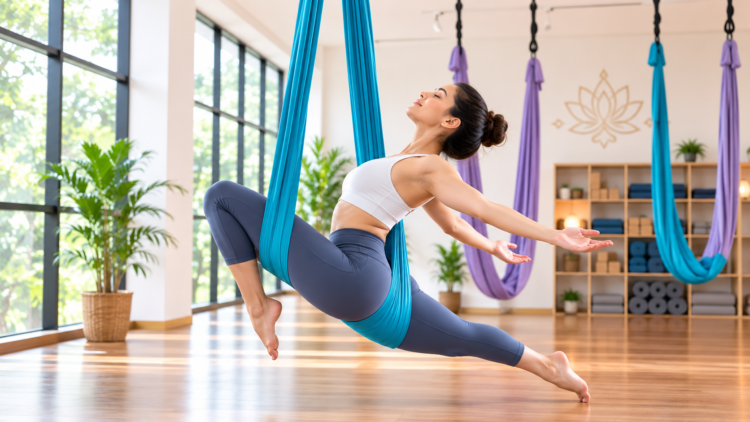
Aerial yoga uses a hammock. Its usually a soft fabric. Which hangs from the ceiling. It supports the body safely. Traditional yoga poses become easier. Some poses happen above the floor. Others stay close to it.
The hammock reduces joint pressure. It also improves flexibility. It provides balance. Regular practice builds strength. Beginners can learn safely. Proper guidance remains important.
Join the best online yoga teacher training program of 2026! Register in Entri Elevate now!
How does Aerial Yoga Work?
It combines yoga with suspension. A soft hammock supports the body. The fabric carries part body weight. This reduces pressure on joints. Movements are lighter. They are also smoother. The body moves with control. Every movement follows steady breathing.
Some poses stay on the floor. Others use full suspension. The hammock helps maintain balance. It also supports difficult positions. Beginners often feel more confident. Regular practice improves awareness of the body.
Most classes begin gently. Warm-up exercises prepare the muscles. The body slowly adapts. The instructor explains every movement. Each pose becomes easier with practice.
The Role of the Hammock
The hammock supports many movements.
It helps:
- Reduce body weight.
- Improve body alignment.
- Increase movement control.
- Support deeper stretches.
- Improve overall stability.
- Build confidence safely.
The fabric feels soft. It also remains strong. Good hammocks support heavy loads. Professional studios inspect them regularly.
Types of Movements
1: Which of these is the primary goal of yoga practice?
Aerial yoga includes different movements.
Standing Poses
These improve stability.
They help:
- Build leg strength.
- Improve posture.
- Increase balance.
- Develop coordination.
Seated Poses
These feel relaxing.
They help:
- Stretch the hips.
- Open the lower back.
- Improve flexibility.
- Reduce muscle tightness.
Supported Stretches
The hammock supports body weight.
This allows:
- Deeper stretching.
- Better muscle relaxation.
- Less joint pressure.
- Improved mobility.
Inversions
Some poses turn upside down.
The hammock provides support.
Benefits include:
- Spine decompression.
- Better body awareness.
- Improved balance.
- Increased confidence.
Beginners should practise carefully.
Core Exercises
Many poses activate the core.
Core strength improves:
- Stability.
- Posture.
- Body control.
- Balance.
Relaxation Poses
Most classes finish calmly.
The hammock supports full relaxation.
These poses help:
- Relax muscles.
- Calm the mind.
- Reduce stress.
- Improve breathing.
Why Breathing Matters
Breathing guides every movement.
Slow breathing helps:
- Improve concentration.
- Relax the muscles.
- Control every pose.
- Maintain steady movement.
Never hold the breath.
Breathe naturally throughout practice.
Become a Certified Yoga Instructor
Yoga Teacher Training Course by Entri App: Master authentic yoga techniques, earn certification, and build a successful career as a professional yoga instructor.
Join Now!What Happens During a Class?
Aerial yoga classes follow a simple routine. Every session begins slowly. The instructor explains each step. Beginners learn basic movements first. The difficulty increases gradually. Classes usually last 45 to 60 minutes.
Warm-Up
Every class starts with a warm-up.
The instructor may include:
- Neck rolls.
- Shoulder circles.
- Arm stretches.
- Hip rotations.
- Gentle side bends.
- Light leg stretches.
The warm-up prepares the muscles. It also reduces injury risk.
Getting Comfortable with the Hammock
Beginners first learn hammock safety.
They practise:
- Holding the hammock.
- Adjusting body position.
- Finding proper balance.
- Entering simple poses.
- Exiting safely.
This builds confidence before harder movements.
Main Practice
The main session includes different poses.
These may include:
- Standing poses.
- Supported stretches.
- Balance exercises.
- Core-strengthening movements.
- Gentle inversions.
- Relaxation poses.
The instructor demonstrates every pose. Students move at their own pace. Breathing stays slow and steady.
Breathing and Alignment
Good breathing improves every movement.
The instructor reminds students to:
- Breathe naturally.
- Keep the spine straight.
- Relax the shoulders.
- Engage the core.
- Move with control.
Proper alignment improves safety.
Cool-Down and Relaxation
The class ends with gentle movements.
Students usually perform:
- Light stretching.
- Deep breathing.
- Floating relaxation.
- Short meditation.
The body gradually relaxes. Muscles recover naturally. Most people leave feeling refreshed and calm.
Equipment Used in Aerial Yoga
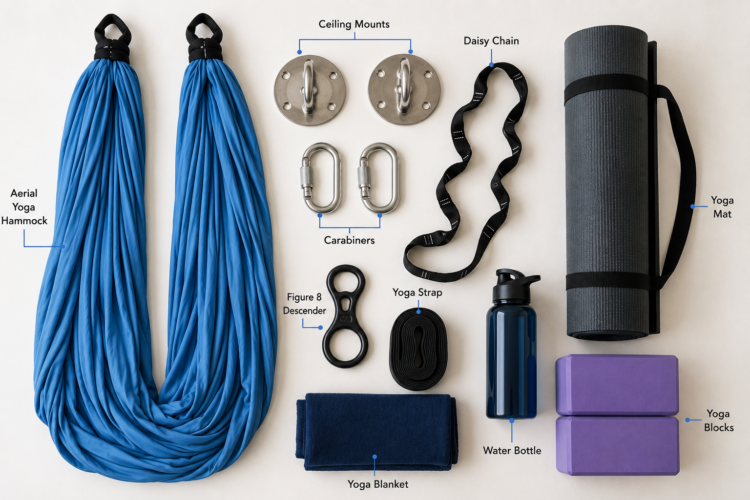
Aerial yoga uses simple equipment. Every item has an important role. Good equipment improves comfort and safety. It also makes every pose easier. Always use high-quality equipment. Professional studios inspect their equipment regularly.
Aerial Hammock
The hammock is the most important equipment.
It should be:
- Strong.
- Soft.
- Durable.
- Comfortable.
- Adjustable.
The hammock supports body weight. It reduces pressure on joints. It also helps perform different poses safely.
Ceiling Mounts
The hammock attaches to ceiling anchors.
These mounts should be:
- Strong.
- Secure.
- Professionally installed.
- Regularly inspected.
Weak supports are dangerous. Always use proper mounting systems.
Carabiners
Carabiners connect the hammock to the ceiling.
Good carabiners should be:
- Strong.
- Rust-resistant.
- Securely locked.
- Designed for heavy loads.
They help keep the hammock stable.
Daisy Chains and Straps
Strong straps adjust hammock height.
They also:
- Improve safety.
- Support different heights.
- Allow easy adjustments.
- Keep the hammock secure.
The correct height improves comfort.
Yoga Mat
Many classes also use a yoga mat.
It helps during:
- Warm-up exercises.
- Standing poses.
- Floor stretches.
- Cool-down movements.
- Balance practice.
A non-slip mat prevents slipping.
Comfortable Clothing
Proper clothing improves movement.
Choose:
- Stretch leggings.
- Yoga pants.
- Athletic tops.
- Fitted T-shirts.
Avoid:
- Loose clothing.
- Zippers.
- Belts.
- Clothing with sharp buttons.
Loose fabric may catch the hammock.
Bare Feet
Most aerial yoga classes use bare feet.
Bare feet provide:
- Better grip.
- Better balance.
- More stability.
- Greater control.
Avoid wearing slippery socks.
Remove Jewellery
Remove accessories before practice.
This includes:
- Rings.
- Watches.
- Bracelets.
- Necklaces.
- Large earrings.
Jewellery may damage the hammock. It may also cause injuries.
Water Bottle
Keep a water bottle nearby.
Drink water:
- Before class.
- After class.
- During breaks if needed.
Avoid drinking too much during practice.
Clean Equipment
Clean equipment improves hygiene.
Studios usually clean:
- Hammocks.
- Yoga mats.
- Props.
- Floors.
Clean equipment feels more comfortable.
Optional Yoga Props
Some classes use extra props.
These include:
- Yoga blocks.
- Blankets.
- Bolsters.
- Yoga straps.
These props provide extra support. They also improve comfort during stretching.
Safety Checks
Always inspect equipment before class.
Look for:
- Torn fabric.
- Loose straps.
- Damaged carabiners.
- Weak ceiling mounts.
- Worn-out stitching.
Never use damaged equipment.
Choosing a Safe Studio
A good studio improves learning.
Look for:
- Certified instructors.
- High-quality hammocks.
- Strong ceiling anchors.
- Small class sizes.
- Regular equipment inspections.
- Clean practice spaces.
A safe environment builds confidence. It also makes every class more enjoyable.
Benefits of Aerial Yoga
Aerial yoga offers many health benefits. It supports both body and mind. Regular practice improves overall fitness. It also makes yoga more enjoyable.
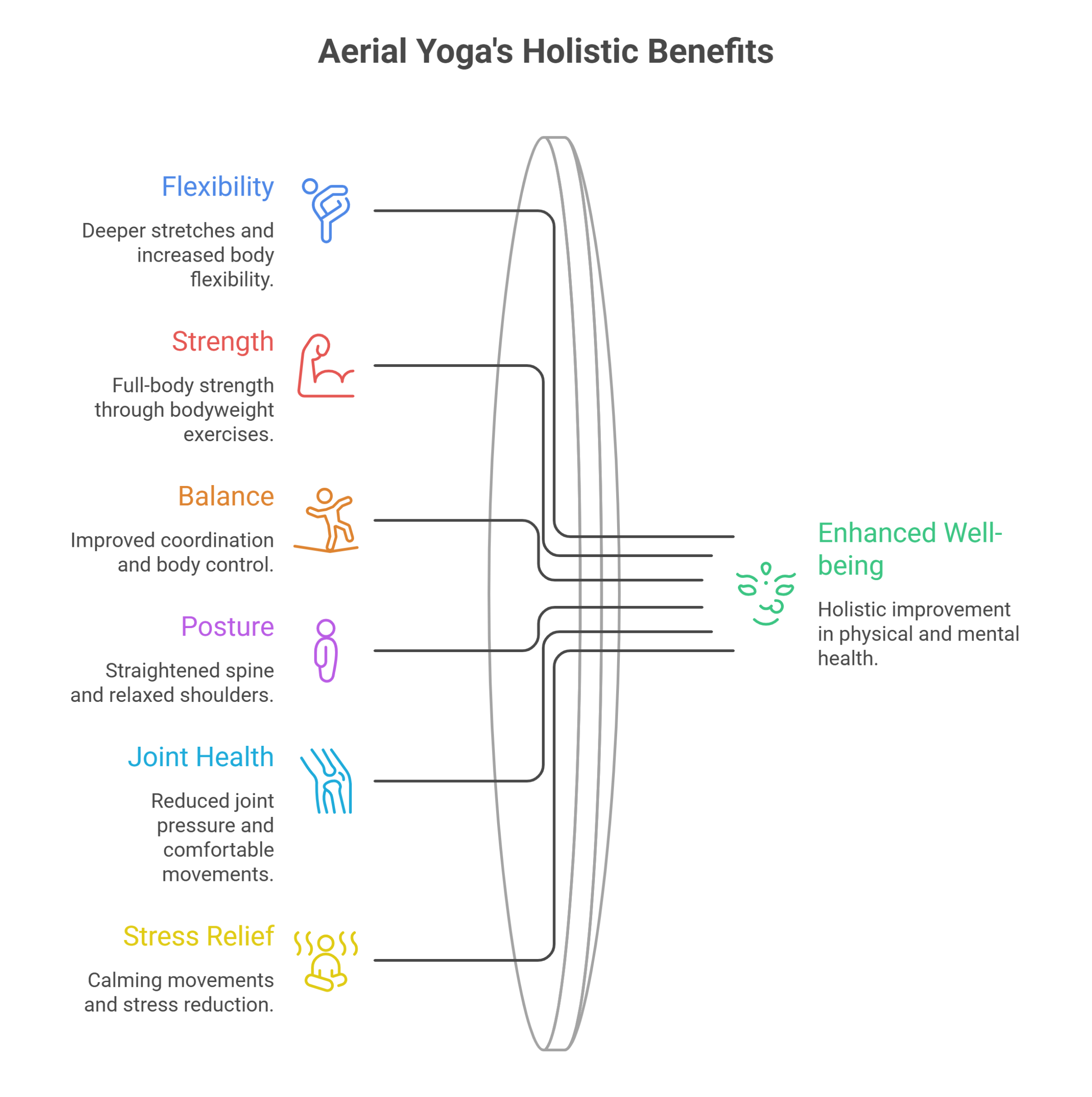
Improves Flexibility
The hammock supports deeper stretches.
It helps:
- Stretch tight muscles.
- Improve joint movement.
- Increase body flexibility.
- Reduce muscle stiffness.
The body moves more freely.
Flexibility improves gradually.
Builds Full-Body Strength
Many poses use body weight.
This strengthens:
- Arms.
- Shoulders.
- Back.
- Core.
- Legs.
Muscles become stronger over time.
Daily activities also become easier.
Improves Balance
The hammock creates gentle movement.
The body learns stability.
Benefits include:
- Better coordination.
- Improved body control.
- Faster reactions.
- Greater confidence.
Balance improves with practice.
Improves Posture
Poor posture causes discomfort.
Aerial yoga strengthens supporting muscles.
It helps:
- Straighten the spine.
- Open the chest.
- Relax tight shoulders.
- Improve body alignment.
Standing feels more comfortable.
Reduces Joint Pressure
The hammock supports body weight.
Less pressure reaches the joints.
This helps:
- Knees.
- Hips.
- Ankles.
- Spine.
- Shoulders.
Many poses feel more comfortable.
Relieves Back Tension
The hammock gently supports the spine.
Some poses stretch the back.
Regular practice may help:
- Reduce stiffness.
- Relax muscles.
- Improve spinal movement.
- Ease daily discomfort.
Move slowly during every pose.
Improves Breathing
Every movement follows breathing.
Controlled breathing helps:
- Relax the body.
- Improve focus.
- Increase oxygen flow.
- Support smooth movements.
Breathing becomes more natural.
Supports Blood Circulation
Movement improves circulation.
Better circulation helps:
- Deliver oxygen.
- Support muscles.
- Improve recovery.
- Increase energy.
The body feels refreshed.
Reduces Stress
Aerial yoga feels calming.
Slow movements relax the mind.
Practice may help:
- Reduce stress.
- Lower tension.
- Improve mood.
- Increase relaxation.
Many people feel peaceful afterwards.
Improves Focus
Every pose needs attention.
Practice improves:
- Concentration.
- Body awareness.
- Mental clarity.
- Mind-body connection.
Focus improves naturally.
Supports Better Sleep
Relaxation continues after practice.
Many people experience:
- Better sleep quality.
- Easier relaxation.
- Less restlessness.
- Improved recovery.
Regular practice brings lasting benefits.
Become a Certified Yoga Instructor
Yoga Teacher Training Course by Entri App: Master authentic yoga techniques, earn certification, and build a successful career as a professional yoga instructor.
Join Now!Best Aerial Yoga Poses for Beginners
Beginners should start slowly. Learn simple poses first. Build confidence gradually. Always follow instructor guidance.
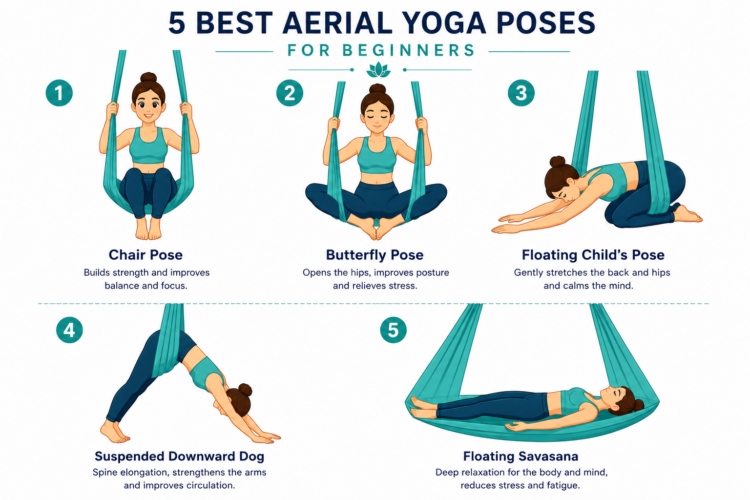
Aerial Chair Pose
This pose feels stable.
Benefits include:
- Stronger legs.
- Better balance.
- Improved posture.
- Core activation.
Butterfly Pose
Sit inside the hammock.
Bring the feet together.
This pose helps:
- Open the hips.
- Stretch inner thighs.
- Improve flexibility.
- Relax the body.
Floating Child’s Pose
The hammock supports the body.
This pose helps:
- Relax the back.
- Stretch shoulders.
- Reduce tension.
- Calm the mind.
Many beginners enjoy this pose.
Suspended Downward Dog
The hammock supports the hips.
Benefits include:
- Stretching the spine.
- Opening shoulders.
- Strengthening arms.
- Improving flexibility.
Move slowly into position.
Floating Savasana
This pose ends many classes.
The hammock supports full relaxation.
Benefits include:
- Deep relaxation.
- Stress relief.
- Muscle recovery.
- Better breathing.
Remain still and comfortable.
Standing Balance Pose
One foot stays grounded.
The hammock provides support.
This pose improves:
- Balance.
- Stability.
- Coordination.
- Confidence.
Practise both sides equally.
Who Should Avoid Aerial Yoga?
Aerial yoga suits many people. However, it is not suitable for everyone. Some health conditions increase the risk of injury. Always speak with a healthcare professional before starting. Inform the instructor about any medical concerns.
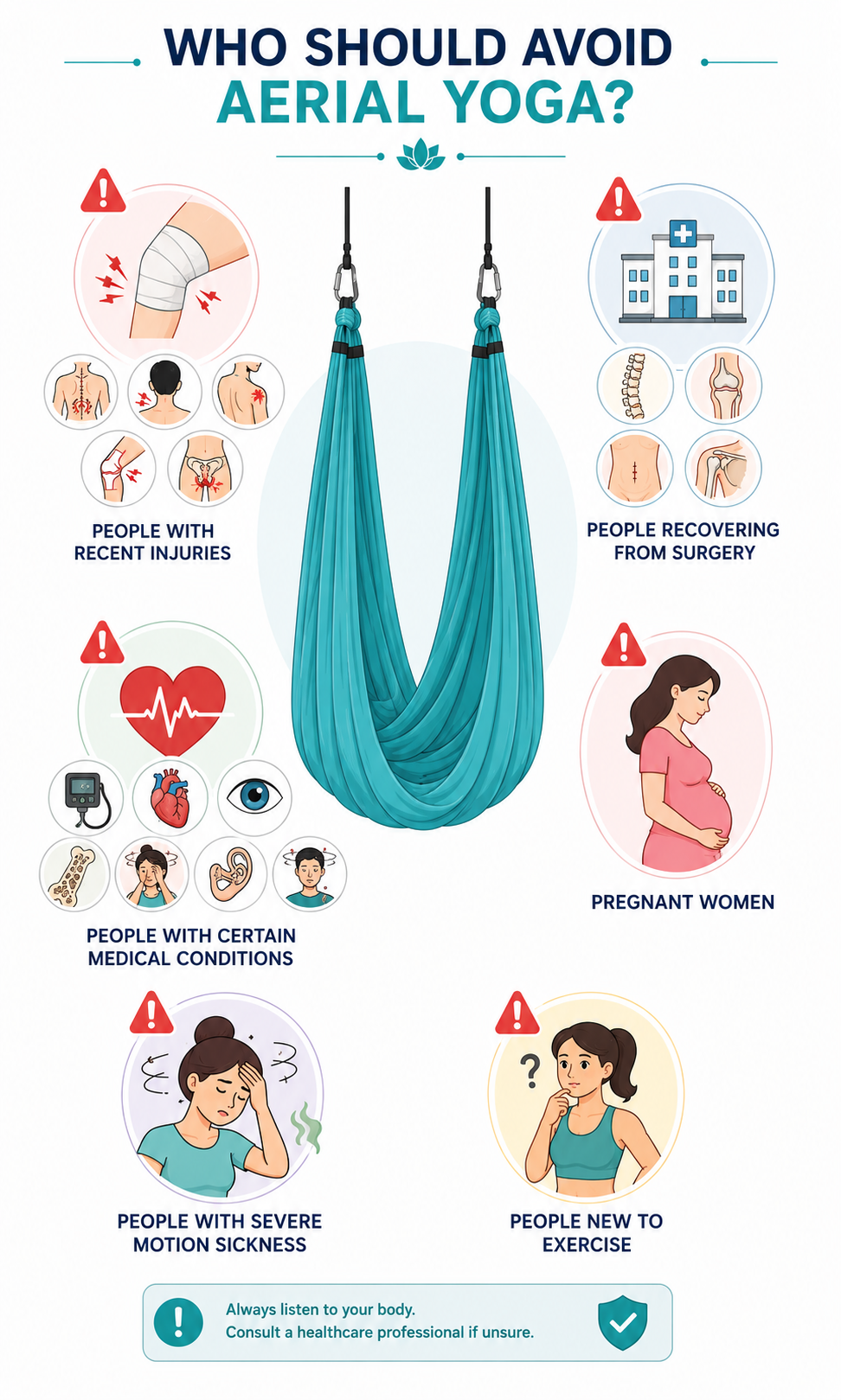
People with Recent Injuries
Avoid aerial yoga after recent injuries.
This includes:
- Back injuries.
- Neck injuries.
- Shoulder injuries.
- Knee injuries.
- Hip injuries.
Allow the body to heal first.
People Recovering from Surgery
Recent surgery needs proper recovery.
Avoid aerial yoga after:
- Spine surgery.
- Joint surgery.
- Abdominal surgery.
- Shoulder surgery.
Return only with medical approval.
People with Certain Medical Conditions
Some conditions need extra care.
These include:
- Uncontrolled high blood pressure.
- Serious heart disease.
- Glaucoma.
- Severe osteoporosis.
- Frequent dizziness.
- Vertigo.
- Inner ear disorders.
The hammock may increase discomfort.
Pregnant Women
- Pregnancy changes body balance.
- Some aerial poses may feel unsafe.
- Always consult a doctor first.
- Choose pregnancy-safe yoga instead.
People with Severe Motion Sickness
- The hammock moves gently.
- Some people feel dizzy.
- Others may experience nausea.
- Begin slowly if approved.
- Stop immediately if discomfort develops.
People New to Exercise
- Beginners can practise safely.
- However, avoid difficult poses first.
- Learn basic movements gradually.
- Follow instructor guidance carefully.
- Build strength before advanced poses.
Practise Safely
Safety should always come first.
Remember these simple tips:
- Choose a certified instructor.
- Use quality equipment.
- Warm up properly.
- Never force a pose.
- Stop if pain occurs.
- Listen to the body.
Proper guidance makes practice safer. Regular progress comes with patience.
Join the best online yoga teacher training program of 2026! Register in Entri Elevate now!
Conclusion
Aerial yoga uses a soft fabric hammock. It supports the entire body. Many poses become easier. The hammock reduces joint pressure. It improves flexibility over time. It also builds body strength. Balance improves with practice. Posture becomes more natural. Regular practice increases confidence. Body awareness improves every session.
Beginners should learn safely first. Choose a qualified instructor. Start with simple poses. Move slowly every time. Match movements with breathing. Never force difficult poses. Practise regularly for progress. Stay patient throughout learning. Safe practice prevents injuries. Aerial yoga supports healthy living. It benefits both body and mind.
Become a Certified Yoga Instructor
Yoga Teacher Training Course by Entri App: Master authentic yoga techniques, earn certification, and build a successful career as a professional yoga instructor.
Join Now!Frequently Asked Questions
Is aerial yoga suitable for complete beginners?
Yes, aerial yoga is suitable for beginners when practised under the guidance of a qualified instructor. Beginner classes focus on simple poses, proper breathing, and safe hammock use before introducing more challenging movements.
Is aerial yoga difficult to learn?
Aerial yoga may feel unfamiliar during the first few classes because the body moves differently in the hammock. With regular practice and proper instruction, most beginners gain confidence and learn the basic poses comfortably.
What should I wear for an aerial yoga class?
Wear fitted, stretchable clothing that covers the arms and legs to protect the skin from friction caused by the hammock. Avoid loose clothing, jewellery, belts, and clothes with zippers, as they can damage the fabric or interfere with movement.
How often should I practise aerial yoga?
Practising aerial yoga two or three times each week is enough for most beginners to see steady improvement. Regular sessions help increase flexibility, build strength, improve balance, and develop confidence without overworking the body.
Can aerial yoga help with back pain?
The hammock supports the body and reduces pressure on the spine, allowing gentle stretching and improved posture. It may help relieve mild back discomfort, but anyone with serious back problems should consult a healthcare professional before starting.
Does aerial yoga build muscle strength?
Yes, aerial yoga strengthens many muscles because the body works against gravity while performing different poses. It mainly improves the strength of the core, shoulders, arms, back, and legs while also increasing stability and body control.
Can aerial yoga help with weight loss?
Aerial yoga burns calories by combining stretching, balance exercises, and strength-building movements in one workout. When combined with a balanced diet and regular physical activity, it can support healthy and sustainable weight loss.
Is aerial yoga safe?
Aerial yoga is generally safe when practised with certified instructors using properly installed and regularly inspected equipment. Following correct techniques, warming up properly, and avoiding advanced poses too early greatly reduce the risk of injuries.
Can older adults practise aerial yoga?
Many older adults can safely enjoy aerial yoga through beginner-friendly classes that include gentle movements and suitable modifications. It is always advisable to consult a doctor before starting, especially for those with joint problems, balance issues, or other medical conditions.
How long does an aerial yoga class usually last?
Most aerial yoga classes last between 45 and 60 minutes, although some sessions may be slightly longer. A typical class includes a warm-up, hammock practice, stretching exercises, relaxation poses, and a cool-down to help the body recover.