Table of Contents
Art and craft in fashion designing are two different things that work together as one. Art brings the creative vision, the original idea, and the emotional expression to paper. Craft brings the technical skill, the careful stitching, and the physical construction to fabric. A fashion designer needs both. Art without craft stays a drawing. Craft without art stays a plain garment. Together they create wearable beauty.
Key Takeaways
- Art is the creative side of fashion. It includes drawing, colour choices, and original ideas.
- Craft is the technical side of fashion. It includes sewing, cutting, and finishing details.
- Both art and craft are required to make professional clothing.
- A designer with strong art but weak craft cannot build real garments.
- A tailor with strong craft but weak art cannot create original designs.
- The best fashion houses value artistic vision and technical skill equally.
- Learning both sides makes a fashion professional complete and employable.
- Art and craft together turn basic fabric into something people love to wear.
Start Your Fashion Journey Today! Learn Advanced Designing & Boutique Skills with Experts!
Introduction
Walk into any clothing store, take a look at the racks of shirts, dresses and pants. Most of them do a job of sorts – keep your body covered, stop you from feeling cold But some pieces just leap out at you. Grab your attention. Make you want to run your hand over the fabric and get changed in the changing rooms to see how they would look.
What is it about those stand-out pieces that sets them apart?
Well the answer is a combination of art and craft.
But, in the eyes of most, fashion is more than drawings and catwalks, and while that’s true, there is half the truth behind it.
What happens in the workroom when there are people around sewing machines whirring and needles flying as they sew together a masterpiece? A drawing may look lovely but without anyone being able to make it into a garment, then its just paper. And on the flip side, a beautifully made garment but with a dull design is not going to get anyone excited.
This post sets out to explain the difference between art and craft in fashion design, and how they work together (or not) to create a garment. By the time you’ve finished reading, you should have a good idea of what each side does, and why you need to be able to do both if you want to make it in this industry.
Master Fashion Designing and Create Your Signature Style
Unlock your creative potential with our expert-led Fashion Designing course. Build in-demand skills and step confidently into the world of fashion!
Begin Your Fashion Career Today!Getting Your Head Around Art and Craft in Fashion Design
When it comes to fashion design, art and craft serve two very different purposes. One creates the initial idea, the other brings that idea to life.
Art is about letting your imagination run wild. Its the original drawings, the choice of colours, the patterns, the shapes, the odd little details like a turned up collar or an unexpected pocket. Its about asking whether something is beautiful.
Craft, on the other hand is about putting your hands on and making things with them. In fashion design, its about getting the seams straight, the hems even, and the buttons on securely. Its about asking how you can build something that will last.
To be honest neither is more important than the other. A garment with loads of artistic flair but not much by way of craftsmanship is likely to fall to bits after a few washes. And a garment that is as sturdy as a rock but has no style to speak of is never going to get anyone excited.
Think of art as the spark that sets the whole thing off. Think of craft as the bit that makes it all actually work. Without the one the other can’t exist. In fashion design you need both to create something that does more than just serve a purpose – you need both to create something that is beautiful.
Role of Art in Fashion Designing

Art is where the journey into every garment starts. The process kicks off with a blank page and a pen in hand. A designer has an idea that doesn’t exist yet – just a mental picture. They try to pull that image to life on paper.
The first thing art does is spark ideas. A designer looks out at the world around them, noticing all sorts of things – the colours in a sunset, the shapes of a building, the textures in tree bark. These observations get the creative cogs turning and start to form the foundations of new designs. The designer will sit down and make hundreds of quick little sketches – maybe only a few will be worth pursuing, but that’s okay.
Next art kicks in with composition. A designer gets to decide where all the lines go, how long the sleeve should be, how wide the collar opens, and where the waist sits on the body. These decisions got to balance out visually. Too much of one thing and the whole thing looks heavy and awkward. Too little and it just looks mean or unfinished.
Then there’s the art of choosing colours that work well together. A designer needs to know what will create a nice visual calm and what will create a riot – that bright red next to bright green is just going to create a bit of a visual overload, but soft blue next to soft grey is nice and soothing. The right colours can make a design that’s not so great somehow work, but the wrong ones can wreck something that’s actually quite nice.
The Craft Side of Garment Creation
Craftsmanship is what turns an idea into a real shirt or dress. The artist can dream it up, but it’s the craftsperson who makes it happen. In fashion designing the same person can do both jobs, but the skills needed are a world apart.
The first step in craftsmanship is creating patterns. A pattern is just a flat piece of paper or cardboard with all the individual pieces of fabric drawn onto it. So you have front and back pieces, sleeve and collar and lining all laid out in individual pieces. A good pattern should be like a jigsaw puzzle, all the pieces should fit together perfectly without any gaps or bumps. A bad pattern will make your final garment look wonky and unfinished.
The next step in craftsmanship is cutting the fabric. The cutter lays the individual pattern pieces down on top of the fabric and tries to fit as many in as possible, so they waste as little material as they can. Then they carefully cut out each piece along the edges of the pattern – it’s got to be a clean and accurate cut, otherwise the whole thing starts to go downhill before you’ve even started sewing it together.
The fourth role of craftsmanship is finishing details. The finisher adds buttons, zippers, hooks, and snaps. They hem the bottom edges, remove loose threads, check every seam for strength and then iron the whole garment one last time. These little details separate cheap clothing from expensive clothing.
Craftsmanship takes years to learn. A beginner seams and hems crookedly. An expert seams quickly and neatly. The expert knows ten ways to attach a sleeve. The beginner knows one.
Master Fashion Designing and Create Your Signature Style
Unlock your creative potential with our expert-led Fashion Designing course. Build in-demand skills and step confidently into the world of fashion!
Begin Your Fashion Career Today!Popular Art Techniques in Fashion
Fashion designers borrow art techniques from painters, illustrators, and printmakers. These techniques add visual interest to plain fabric.
Fabric Painting
Fabric painting is a direct art technique. The designer paints colours and shapes onto white or light coloured fabric. Fabric paints are special formulas that sink into the fibres. They do not crack or wash out. Some designers paint entire scenes across the back of a jacket. Others paint small abstract shapes scattered across a shirt.
Block Printing
Block printing is another art technique. The carver cuts a design into a block of wood or linoleum. The raised areas of the block hold ink or paint. The printer presses the block onto fabric to leave a printed shape. Block printing creates repeating patterns. The same block can stamp hundreds of yards of fabric.
Tie dye
Tie dye is a resist dyeing technique. The designer folds, twists, or ties the fabric in specific ways. Then they dip the fabric into dye. The tied areas resist the dye and stay white or light. The untied areas absorb the dye. When the ties come off, a pattern appears. No two tie dye pieces look exactly the same.
Batik
Batik is a wax resist technique. The designer draws a design on fabric using hot wax. Then they dip the whole fabric into dye. The wax blocks the dye from reaching the fibres. After dyeing, they remove the wax by boiling the fabric. The areas under the wax stayed the original colour. The rest of the fabric changed colour.
These art techniques allow designers to create original fabrics that no one else has. Mass produced clothing uses printed fabrics made by machines. Hand made art fabrics feel more special and personal.
Traditional Crafts in Fashion Design
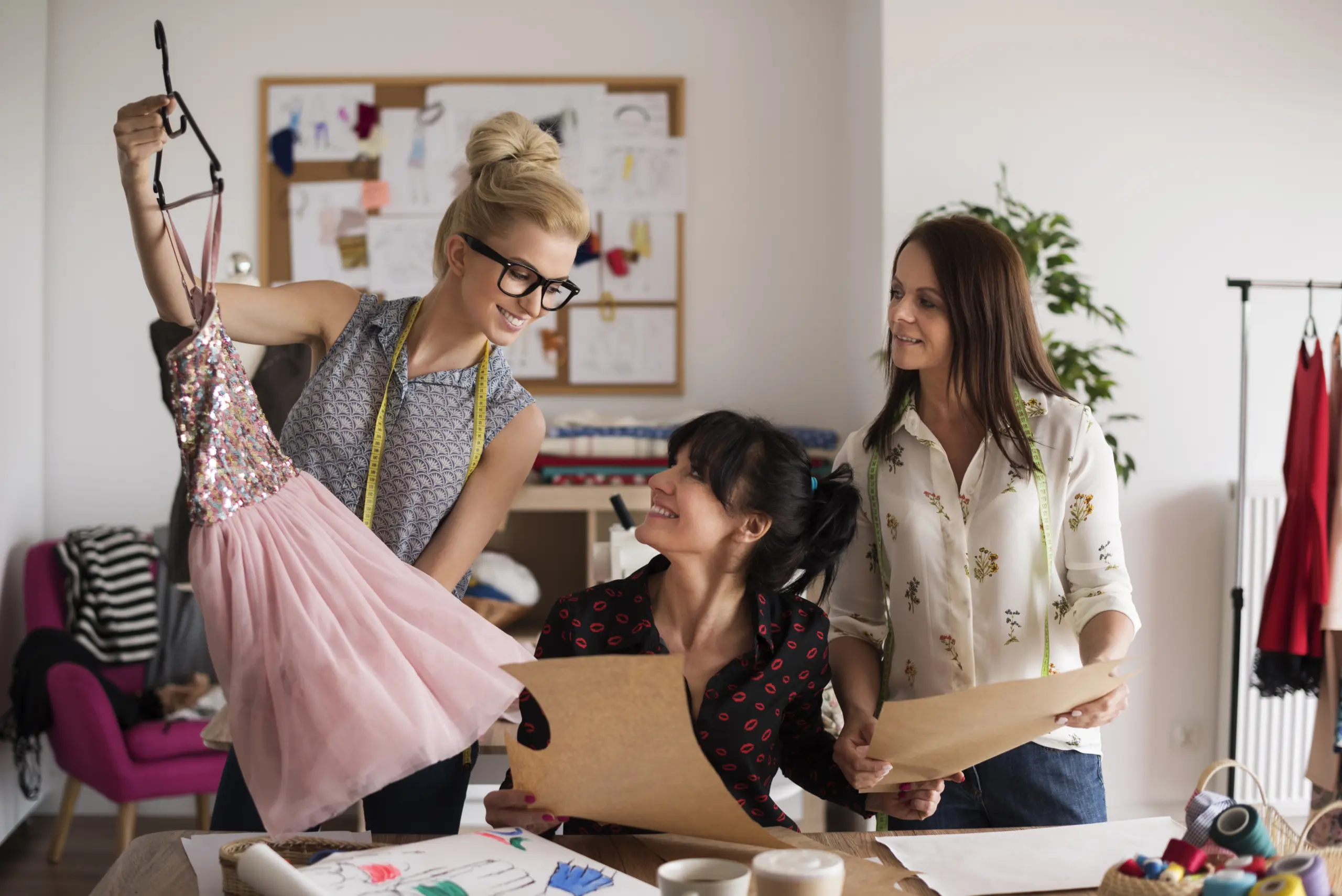
Before Sewing Machines Arrived, making clothes was the sole responsibility of people doing them all by hand. These old craft skills still thrive today. Big fashion brands are willing to pay high prices for handmade craftsmanship, you see.
Embroidery is an old art. You poke a needle through the fabric and thread it with different colour threads using a thread of your choice. If you want to follow a pattern, or if you want to go completely un-creative, then embroider. Embroidery adds style and depth to fabrics. Take a simple dress and thread some embroidered flowers over its bodice and now it looks fancy.
Crochet is another of those old school crafts. You use a single hooked needle and loops of yarn are pulled through each other like you would knit. The loops just sort of lock together to make fabric. It creates lots of natural holes and gaps. It makes a great fabric for summer clothes, beach covers, or boho style dresses.
Knitting, I reckon, is a bit like crochet but also a bit different. Knitters use two straight needles to get rows of interlocking loops. And because of that, the fabric it makes stretches pretty much in every direction. Its really good for sweaters, cardigans and winter gear. Of course hand knitting takes a lot longer than machine knitting, but the finished piece has a lovely softness to it that people really love.
Start Your Fashion Journey Today! Learn Advanced Designing & Boutique Skills with Experts!
The Conclusion
Art and craft are two completely different things, but they can’t be separated when it comes to fashion, can they? Art is what gives you the vision, the creativity, the emotional expression. Craft provides the skill, the precision, the physical building of something.
A young designer who only concentrates on drawing beautiful sketches is going to struggle. They might be able to draw lovely pictures, but they won’t know how to make a pattern, or sew a straight seam. Those beautiful drawings of theirs will just stay on paper.
And likewise, a young designer who only focuses on getting good at sewing will also fall short. They might be able to build whatever someone asks them to build, but they won’t know how to create original work. They won’t be able to express their own ideas. They’ll just be making designs that other people have done.
Master Fashion Designing and Create Your Signature Style
Unlock your creative potential with our expert-led Fashion Designing course. Build in-demand skills and step confidently into the world of fashion!
Begin Your Fashion Career Today!Frequently Asked Questions
What is the main difference between art and craft in fashion designing?
Art is the creative side that produces original ideas, drawings, and colour choices. Craft is the technical side that produces the actual stitched garment. Art lives in the imagination. Craft lives in the hands. Both are required to make professional clothing.
Can a person be a fashion designer with only art skills and no craft skills?
No. A designer who cannot sew or make patterns cannot build real garments. Their beautiful drawings will stay on paper forever. Fashion design requires physical objects, not just pictures. Learning basic sewing and construction is necessary for every designer.
Can a person work in fashion with only craft skills and no art skills?
Yes, but only as a pattern maker, sample sewer, or production worker. These jobs pay well and are very important. But the person will not be a fashion designer. Designers must create original ideas. Technical workers follow instructions given by others.
Which traditional craft is most valuable for fashion designers to learn?
Sewing by hand and by machine is the most valuable craft skill. Everything else depends on sewing. Embroidery, beading, and crochet are useful additions. But a designer who cannot sew cannot build anything at all. Start with sewing before learning any other craft.
How does fabric painting differ from block printing in fashion?
Fabric painting applies colour directly to the fabric surface. The painter controls every brush stroke. Block printing stamps a carved block onto the fabric. The printer repeats the same shape many times. Painting creates unique, one of a kind pieces. Printing creates repeating patterns across yards of fabric.
What makes handmade embroidery better than machine embroidery?
Hand embroidery has irregular, organic texture that machines cannot copy. Each stitch is slightly different from the one before it. This variation looks more alive and expensive. Machine embroidery is perfectly uniform. It looks clean but lacks the human touch that luxury buyers want.
How long does it take to learn both art and craft skills for fashion?
Most students need two to three years of full time study to reach a basic professional level. Drawing skills take six months of daily practice. Sewing skills take another six months. Pattern making takes a full year to learn well. Mastery takes ten years or more.
Do fashion schools teach art and craft separately or together?
Most fashion schools teach both sides together. Students take drawing classes in the morning and sewing classes in the afternoon. This integrated approach shows how art and craft depend on each other. Schools that teach only one side produce incomplete graduates.
Which fashion careers need the strongest craft skills but the weakest art skills?
Pattern making, sample sewing, and production management need strong craft skills. These workers must cut and sew perfectly every time. They follow existing designs created by other people. Original art skills are less important for these roles.