Table of Contents
Imagine that there’s a popular food stall in your neighbourhood. As part of running the business, that food stall uses local water, buys vegetables from local vendors, and sells food to people living in the nearby areas. However, what if this stall throws its trash right on the street? It is quite natural that neighbours will get angry and stop eating there. On the other hand, if the owner uses a little bit of their profit to clean up the street and put up streetlights, everyone will love them and buy more food.
This is the basic idea behind corporate social responsibility.
For a long time, corporations or businesses were bothered only about making money. However, today, things have changed a lot. Big companies use a lot of public resources such as water, electricity, and roads. Due to the fact that they use so much of public resources, they should give something back to the community. Let’s look at how this works in India.
Ace your personal finance journey with Entri’s Personal Finance Online Course. Join Now!
Key Takeaways
- Simple Meaning: It means companies doing good things for people and the planet, instead of just counting their profits.
- India is a Leader: India was the very first country to pass a law making this helpful spending mandatory for big companies.
- The Rule Of 2%: Big, successful companies must spend 2% of their average profits on helping society.
- Areas to be Spent: It builds free schools, helps rural clinics, plants trees, and provides clean drinking water.
- How It Matters: Communities get real help, and companies get love, trust, and happier customers.
More about Corporate Social Responsibility

1: What is a stock?
In simple words, corporate social responsibility (CSR) is a plan where companies take care of the world around them. To keep it simple, it is a promise that a company will not harm society just to make a quick profit. Instead of aiming only at profits, they focus on three things and they are People, Planet, and Profit.
In India, this isn’t a new idea. For generations, business families gave money to temples or handed out blankets to the poor. But today, it is much more organized. It is no longer about just giving random charity. It is about fixing real, long-term problems like lack of education or dirty water.
The Four Areas of CSR
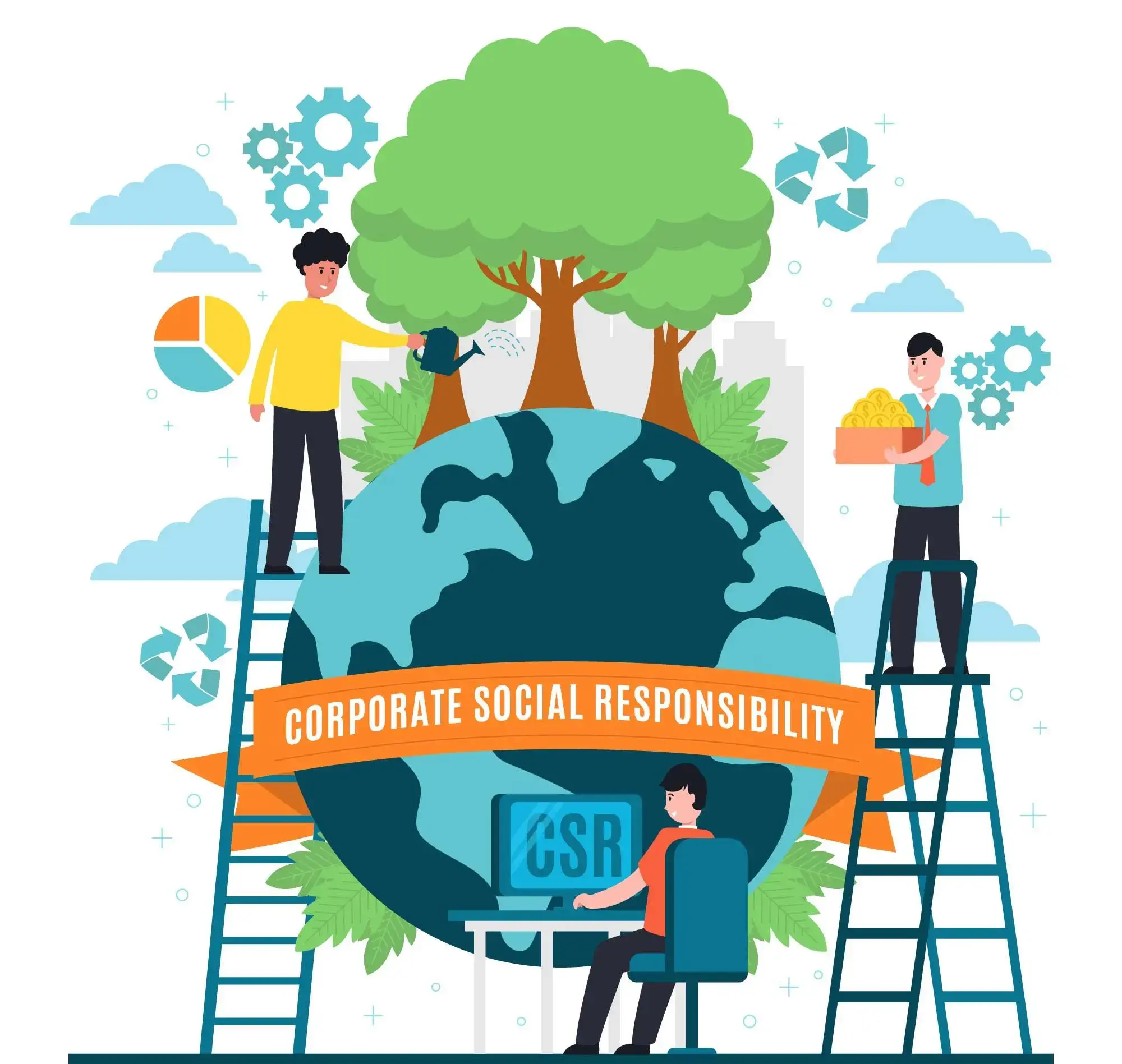
When companies design their helpful projects, they usually focus on four main areas:
1. Taking Care of Nature
Companies try to cut down the damage they cause to the environment. Some relatable examples include activities like using solar energy, planting trees, stopping the use of plastic, and recycling water.
2. Being Fair and Honest
This means treating everyone with respect and this includes paying workers fairly, refusing to buy from factories that use child labour, and being completely honest with customers.
3. Giving Donations
This is straightforward charity. Companies use their money to build public assets like hospitals, colleges, or libraries that anyone can use for free.
4. Smart Business Choices
This ties everything together. It means a company chooses to do the right thing even if it costs a bit more money. An example is buying an expensive machine that does not pollute the air, instead of relying on a cheap one that emits toxic smoke.
How Corporate Social Responsibility Works in India
While doing good is optional in most countries, India made it a strict rule. The Government of India, in 2013, passed a law making corporate social responsibility mandatory for large businesses. Believe it or not, the amount of money spent on CSR initiatives now stands at around Rs.40,000 crore.
Here is how the law works:
Which Companies Have to Pay?
Small shops or struggling new start-ups do not have to pay this. The rule is only for big, highly profitable companies that meet any of these conditions:
- They are worth ₹500 crore or more.
- Their total sales reach ₹1,000 crore or more.
- Their yearly net profit is ₹5 crore or more.
The 2% Math
If a company fits the description above, it must calculate its average net profit from the last three years. Then, it has to spend at least 2% of that average amount on social welfare projects every year. HDFC Bank and Reliance Industries were the top CSR contributors in India in FY24.
What can Companies Spend the Money on?

Companies cannot spend this money on whatever they want. For example, a company cannot throw a luxury party for its managers and call it charity. The government has a specific list of approved activities.
Some of the most common ways companies use their CSR money in India are:
- Fighting Hunger and Poverty: Feeding poor families and giving nutritious food to undernourished children.
- Better Healthcare: Setting up free medical camps, donating ambulances, and providing clean drinking water to villages. ICICI Bank donated Rs.625 crore in 2025 October as part of its CSR activity to construct a new cancer care building at Tata Memorial Centre’s (TMC) Advanced Centre for Treatment, Research and Education in Cancer (ACTREC). It will be one of India’s largest radiation therapy centres.
- Schooling and Education: Fixing broken government schools, buying computers for students, and supporting girls who want to study.
- Helping Women: Giving skill training to women so they can start small businesses and earn their own money.
- Saving Nature: Cleaning up dirty rivers, protecting wild animals, and planting forests.
- Disaster Relief: Giving money directly to emergency funds (like the PM CARES fund) to help people during floods, earthquakes, or medical crises.
In FY 25, the CSR spending by companies listed on stock exchanges rose by 23%. In the previous year, i.e. FY 24, the surge in CSR spending was 16%.
Stock Market Training Reviewed & Monitored by SEBI Registered Investment Advisor
Trusted, concepts to help you grow with confidence. Enroll now and learn to start investing the right way.
Know moreTop 3 Benefits of CSR for Companies

You might think companies hate spending this money, but they actually love it. Here is why:
1. It Builds Strong Reputation
Consumers in India generally prefer to purchase from brands they trust. When a company helps build a village or a school, people easily associate with it. This good reputation acts as a saviour for the brand in case they make a mistake in the future.
2. It Attracts Good Workers
It is not that young professionals work just for the sake of getting a salary. On the other hand, they want to feel proud of the organisation with which they work. Companies with great social programs easily hire the smartest young minds.
3. It Pleases Investors
People who invest big money into companies prefer safe businesses. A company that takes care of its environment and local people face fewer protests and less legal trouble, making it a safe choice for investors.
The latest news is that the Ministry of Corporate Affairs (MCA) now allows companies to spend up to 10% of annual CSR budget on Zero Coupon Zero Principal (ZCZP) instruments listed on Social Stock Exchanges.
Ace your personal finance journey with Entri’s Personal Finance Online Course. Join Now!
Conclusion
Corporate social responsibility is no longer just a marketing gimmick to create a good impression on television. On the other hand, it has become a powerful way in India to develop the country. By collecting money from big corporate profits and spending it on grassroots problems, it helps everyone grow together. To keep it simple, CSR is proof that businesses can make great money while making the world a better place.
|
RELATED POSTS |
|
| The Ultimate Guide to Personal Finance in India | |
| How To Stay Financially Afloat When Your Paycheque Suddenly Stops | |
| Parle Industries Share Price Jumps 5% After Modi-Meloni ‘Melody’ Moment | |
Stock Market Training Reviewed & Monitored by SEBI Registered Investment Advisor
Trusted, concepts to help you grow with confidence. Enroll now and learn to start investing the right way.
Know moreFrequently Asked Questions
Is CSR mandatory for every single company in India?
No. It is only required for larger companies that earn high profits or have massive sales every year.
What happens if a company does not spend its CSR budget?
The company must state the reason clearly in its public reports. They must also move the unspent money into special government funds or face fines.
Can a company spend this money on its own employees?
No. Any project that only benefits the company’s own staff does not count as a valid social responsibility spend.
Can companies give this money to political parties?
No. Giving money to political parties or election campaigns is strictly banned under this rule.
Who checks if companies are following the rules?
The Ministry of Corporate Affairs checks the details. Companies must submit a clear report on their spending every year.
Can a company give the money to an NGO to do the work?
Yes. Companies can do the work themselves or give the money to trusted, registered NGOs to complete the projects.
Do foreign companies in India have to follow this law?
Yes. If a foreign company operates a branch or office inside India and makes enough profit, it must follow the same rules.