

Table of Contents
Introduction: What’s Happening to the Indian Rupee?
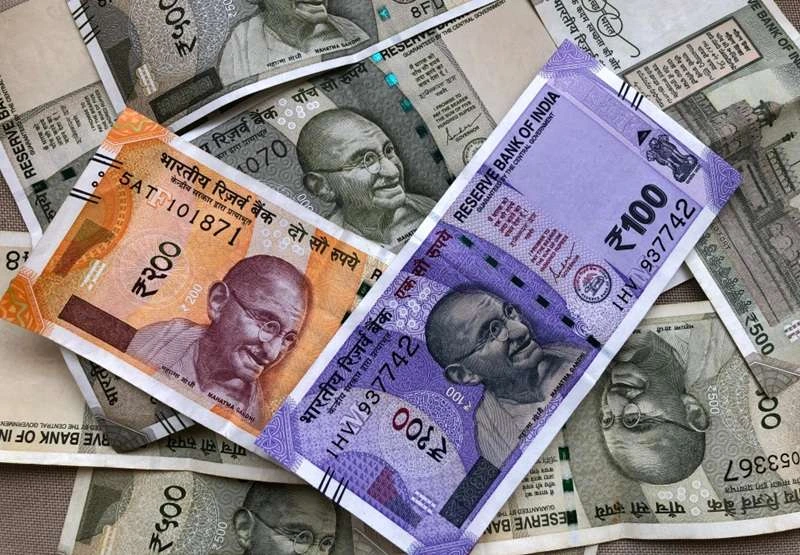
The value of the Indian rupee(INR) has significantly weakened against the US dollar(USD) in recent times. As late of 2025 it’s trading around ₹89-90 per dollar mark, which is a historic low and 2025 almost ended with worst annual performance in three years, that is 4.7% depreciation in 2025
This trend has been a concern among policymakers, investor,s and citizens alike. Before we analyse why the rupee is falling, it’s important to know how the currency market works. The value of currency is not fixed; it constantly adjusts its value based on demand and supply in global foreign exchange markets, like stocks and bonds.
Learn trading from experts! Join today to learn the fundamentals of trading!
1. Capital OutFlows
1: What is a stock?
One of the most crucial reasons for the rupee’s fall in recent months is the withdrawal of funds by foreign investors
a) Foreign Portfolio Investment ( FPI ) Outflows
Foreign investors buy Indian stocks and bonds, bringing foreign currency (often USD) into India. When they sell, they convert their INR holdings back into dollars and take that money overseas.
- In 2025, foreign portfolio investors sold roughly USD 16 – 18 billion worth of Indian equities – a massive outflow that drastically reduced demand for the rupee and increased demand for the dollar.
This outflow was caused by several factors:
- Risk aversion: Investors worldwide seek safer assets ( U.S Treasury bonds) in uncertain economic environments, withdrawing from new markets.
- Higher returns abroad: when other markets provide better yield, shift happens immediately
b) Reduced Foreign Direct Investment (FDI)
Net FDI inflows, long-term investments in businesses have also been low, further reducing steady foreign currency entering India.
The cumulative effect? Less demand for rupees relative to dollars, weakening the INR.
2. Trade Deficit (Imports greater than Exports)
Trade deficit occurs when a country imports its goods and services more than it exports, and uses foreign currency to pay for the purchase.
a) Rising Import Bills
India is heavily dependent on imports -especially crude oil, gold, electronic items, and machinery. When importers buy these goods, they need to convert rupees into foreign currency (mostly USD). That increases the demand for dollars and dollar gets stronger day by day.
- A widening trade deficit means more USD outflows, pressuring the rupee. Recent data shows exports weakening while imports surge, widening the deficit.
b) Impact of High Gold & Energy Imports
Gold imports have seen sharp increases, and oil is priced internationally in dollars. India imports approximately 80–85% of crude oil requirements, and rising oil prices or strong demand directly push up demand for dollars.
This structural imbalance between strong import demand and comparatively weak export puts sustained downward pressure on the rupee.
3. Strength of the US Dollar & Global Interest Rates
Currencies are correlated; if one becomes stronger, others weaken.
a) Strong Global Dollar
In recent years, the US dollar has been unusually strong because of:
- Higher interest rates and yields on U.S. asset classes,
- Investors view the USD as a safe haven during global uncertainty.
A powerful dollar naturally makes other currencies, including the INR, appear weaker.
b) Interest Rate Differential
When U.S. interest rates rise or are expected to stay high relative to Indian rates, investors prefer dollar-denominated assets. This shift attracts capital to the U.S. and away from emerging market currencies like the rupee.
This dynamic, called the interest rate differential is a major driver of currency shifts.
4. Geopolitical & Trade Policy Factors
Geopolitics matters in currency markets.
a) Delay in India–U.S. Trade Deal
Markets were anticipating a trade deal between India and the U.S., which could reduce tariffs on Indian exports. However, delays and uncertainty surrounding this deal weakened confidence among foreign investors, contributing to rupee depreciation.
U.S. tariffs on certain Indian goods (reportedly up to 50%) have also hurt export competitiveness and investor sentiment.
b) Global Risk Aversion
Geopolitical tensions (e.g., in the Middle East, East Asia, or related to global trade wars) push investors toward the safety of the dollar. This risk-off behavior amplifies pressure on emerging currencies like the INR.
Stock Market Training Reviewed & Monitored by SEBI Registered Investment Advisor
Trusted, concepts to help you grow with confidence. Enroll now and learn to start investing the right way.
Know more5. Reserve Bank Policy & Market Dynamics
Unlike some countries that defend a fixed exchange rate, India follows a managed float regime the RBI lets the market largely decide the rupee’s value, but steps in to reduce excessive volatility.
a) RBI’s FX Intervention
The Reserve Bank of India (RBI) occasionally intervenes by selling USD to support the rupee, but it has avoided defending a specific level. This approach helps conserve foreign exchange reserves and support export competitiveness but allows gradual depreciation.
b) Focus on Orderly Markets
RBI interventions are intended to smooth spikes and prevent disorderly movements, not to rigidly peg the currency. This stance has allowed market forces (capital flows, trade demand, and global cues) to influence the rupee more strongly.
6. Real Effective Exchange Rate & Valuation
While the nominal exchange rate shows the rupee weakening, the Real Effective Exchange Rate (REER) — which adjusts for inflation and trade weighting — sometimes tells a different story.
- Some reports show the rupee becoming undervalued on a real basis, suggesting that depreciation may be aligning India’s trading competitiveness with global norms.
This means the nominal fall doesn’t necessarily equate to a weak economy. It can improve export competitiveness if maintained in an orderly manner.
7. Structural Economic and Domestic Factors
a) Inflation Differences
If inflation in India is higher than in the U.S., the purchasing power of the rupee erodes faster — affecting currency value. Though Indian inflation rates have moderated recently, this long-term inflation differential impacts exchange rate trends.
b) Domestic Growth vs. Currency Strength
It’s important to note that strong GDP growth does not automatically strengthen a currency. India has been one of the fastest-growing major economies, yet its currency can depreciate because currency value hinges more on international capital flows and global conditions than on GDP alone.
8. How does this affect Indians?
a) Imports Become expensive
A weaker rupee makes imported goods more expensive from petrol and electronics to machinery and foreign travel. This can push up inflation for consumers, especially on imports paid in dollars.
b) Exporters Could Benefit Better
Export industries that earn in dollars (like IT services and pharma) may gain a better edge, translating into higher rupee revenues.
c) Migration Of Rich
Rupee depreciation has led some wealthy Indians to move money overseas to hedge against currency risk, prompting stricter documentation by banks.
9. Is This Permanent?
Currencies fluctuate and the rupee’s value is not fixed. Changes in:
Global interest rates,
Foreign investment sentiment,
Trade balance improvements, or
Trade deal breakthroughs
could stabilize or even strengthen the rupee in the future.
Some analysts expect that if a trade deal with the U.S and foreign investment flows improve, the rupee could recover toward the ₹88–89 range by early 2026.
Learn trading from experts! Join today to learn the fundamentals of trading!
Conclusion
The fall of Indian rupee is not just because of domestic failure, but a complex interplay of both local and global forces:
Capital outflows and weak investor confidence
Large import bills and trade deficits
Strong dollar and foreign interest rate dynamics
Geopolitical uncertainty and policy delays
Market-driven exchange rate regime
Understanding these drivers helps clarify that the rupee’s fall is market-driven, structural, and partly cyclical, not merely a sign of economic crisis.
If well-managed, controlled depreciation can even support the growth of exports and long-term competitiveness. However, if the decline continues, it may lead to higher costs for everyday consumers and import-dependent sectors, making currency dynamics a critical area for policymakers and citizens alike.
Stock Market Training Reviewed & Monitored by SEBI Registered Investment Advisor
Trusted, concepts to help you grow with confidence. Enroll now and learn to start investing the right way.
Know moreFrequently Asked Questions
Why is the Indian rupee falling against the US dollar?
The Indian rupee falls mainly due to a strong US dollar, higher US interest rates, foreign investor outflows, rising crude oil prices, and global economic uncertainty.
Is the fall in the Indian rupee a serious concern?
A moderate fall is normal and sometimes beneficial for exports, but a sharp or prolonged depreciation can increase inflation and import costs.
How does a strong US dollar affect the Indian rupee?
When the US dollar strengthens, global investors move money into dollar assets, reducing demand for emerging market currencies like the Indian rupee.
What role does crude oil play in rupee depreciation?
India imports most of its crude oil. Higher oil prices increase demand for dollars, putting pressure on the rupee.
Does RBI control the value of the Indian rupee?
The RBI does not fix the rupee’s value but intervenes occasionally to reduce excessive volatility and maintain stability.
How does foreign investment impact the rupee?
When foreign investors pull money out of Indian markets, demand for the rupee falls, leading to depreciation.
How does inflation affect the Indian rupee?
Higher inflation reduces a currency’s purchasing power, making it weaker compared to currencies of countries with lower inflation.