Table of Contents
Introduction
Huge appetites are common among toddlers. Sometimes, food gets refused. Other times, extra servings are requested. Such changes are run-of-the-mill.
Growing bodies require energy. Active play can increase hunger. Food choices affect fullness. Sleep alter eating habits.
Key Takeaways
- Appetite keeps changing.
- One feels hungry during Growth spurts.
- Balanced meals helps in fullness.
- Extra snacks may be needed.
- One cannot satisfy hunger by sugary snacks.
- One may confuse thirst to hunger.
- One’s appetite get affected by poor sleep.
- One becomes healthy with regular meals
- Hunger & fullness matter.
- Medical attention is needed by unusual symptoms.
Unlock your passion for education! Shape young minds as a Montessori teacher!
Is It Normal for Toddlers to Be Hungry Often?
1: What is the primary focus of the first plane of development in the Montessori method?
Yes, frequent hunger is normal. Different appetites can be seen daily.
- One may require bigger portions.
- Sometimes small meals are preferred.
- One may need extra snacks.
- Growth spurts rise hunger.
- Active days increase food needs.
- Eating patterns depend on age.
- Preferences affect meal intake.
- Hunger levels vary all day.

What Can Affect Toddler Hunger?
Factors that affect appetite.
– Growth spurts.
- Faster growth.
- Big meals.
- Extra snacks.
- Changing portions.
- Temporary changes.
- Increased food interest.
– Physical activity.
- Active play.
- Running around.
- Outdoor games.
- More energy use.
- Post-play hunger.
- Longer playtime.
– Meal choices.
- Protein.
- Fiber foods.
- Balanced diets.
- Suitable portions.
- Food variety.
- Good fats.
– Snack habits.
- Frequent snacking.
- Sugary snacks.
- Planned snacks.
- Snack timing.
- Food choices.
- Constant grazing.
– Sleep patterns.
- Late bedtimes.
- Night waking.
- Changing naps.
- Daytime tiredness.
- Evening pangs.
- Restless sleep.
– Emotional needs.
- Boredom.
- Comfort seeking.
- Attention seeking.
- Mood changes.
- Eating habits.
- Routine changes.
Eating Habits That Help
Simple routines like:
– Regular meals.
- Daily breakfast.
- Planned lunch.
- Family dinners.
- Regular timings.
- Simple schedules.
- Quiet dining.
– Planned snacks.
- Mid-time snacks.
- Filling foods.
- Suitable portions.
- Regular timings.
- less interruptions.
- Balanced choices.
– Enough water.
- Easy access.
- Regular sipping.
- Drinks after play.
- Outdoor hydration.
- less sugary drinks.
- Water with meals.
– Balanced meals.
- Protein.
- Grains.
- Soft vegetables.
- Good fats.
- Variety foods.
- Suitable portions.
– Calm mealtimes.
- Less pressure.
- calm surroundings.
- No screens.
- Enough time.
- Positive experiences.
- No food rewards.
How Can Hunger Be Recognised?
Kids may not communicate clearly. Some behaviours may help.
– Food requests.
- Asking for meals.
- Requesting snacks.
- Wanting favourite foods.
- Asking for seconds.
- Repeating food requests.
- Seeking extra portions.
– Food interest.
- Pointing at food.
- Observing cooking.
- Coming near the table.
- Searching for snacks.
- Accepting offered meals.
- Looking at others eating.
– Eating behaviour.
- Eating quickly.
- Finishing meals.
- Asking for more.
- Showing food interest.
- Seeking extra servings.
- Eating eagerly.
They don’t mean hunger always. One may request when tired. Boredom can also be a reason.
Get Certified & Start Your Montessori Career
Montessori Teacher Training Course by Entri App: Gain expert skills, earn certification, and kickstart your teaching career.
Join Now!7 Possible Reasons Your Toddler Is Always Hungry
1. Growth Spurts
Fast growth is experienced during certain periods. Hunger may increase during these phases. More food may suddenly be requested.
Common signs:
- Big meals.
- Extra snacks.
- Frequent requests.
- Huge appetite.
- Changing portions.
- More food interest.
- Appetite changes.
- Eating frequently.
- Asking for seconds.
- Accepting more foods.
What can help?
– Balanced diet.
- Protein.
- Soft vegetables.
- Grains.
- good fats.
- Preferred food.
– Good snacks.
- Yogurt.
- Fruit.
- Cheese.
- Eggs.
- Balanced combinations.
- Suitable portions.
– Respect hunger.
- Extra portions.
- Flexible servings.
- Fullness signs.
- Calm mealtimes.
- No pressure.
- No unnecessary restrictions.
– Watch changes.
- Appetite changes.
- Portion changes.
- Energy levels.
- Eating patterns.
- Growth concerns.
- Persistent symptoms.
2. Meals May Not Be Filling Enough
All meals may not kill hunger. Protein gives satisfaction Fibre give fullness. Smaller meals cause more hunger.
Helpful foods include:
- Eggs.
- Oats.
- Lentils.
- Full grain bread.
- Yogurt.
- Beans.
- Soft vegetables.
- Avocado.
- Suitable cheese.
- Gains.
What can help?
– Protein foods.
- Eggs.
- Lentils.
- Yogurt.
- Beans.
- Soft legumes.
- Cheese.
– Fibre-rich foods.
- Oats.
- Bread.
- Soft vegetables.
- Suitable fruit.
- Grains.
- Beans
- lentils.
– Simple combinations.
- Eggs & toast.
- Yogurt & fruit.
- Lentils & rice.
- Vegetables & grains.
- Beans & rice.
- Cheese & crackers.
– Balanced portions.
- Suitable servings.
- Different food groups.
- Familiar ingredients.
- Soft food textures.
- Extra servings.
- Varied meals.
One doesn’t need fancy meals. Combine foods in different ways.
3. Increased Physical Activity
Play needs energy. Hence increases hunger. More food may be needed After busy days.
Possible signs include:
- Hunger after play.
- Bigger meals.
- Extra snacks.
- More food interest.
- More movement.
- Longer outdoor play.
- Changing appetite.
- Frequent food requests.
- Increased activity.
- Asking for seconds.
What can help?
– Snacks after play.
- Fruit
- Yogurt.
- Cheese
- Crackers.
- Eggs
- Toast.
- Hummus.
– Enough water.
- Drinking water.
- Easy access.
- Outdoor hydration.
- Regular sipping.
- Warm-weather drinks.
- Water after play.
– Suitable portions.
- Extra servings.
- Filling snacks.
- Regular meals.
- Fullness signs.
- Activity patterns.
- Flexible portions.
– Regular routines.
- Planned meals.
- Regular snacks.
- Water breaks.
- Calm eating.
- Flexible schedule.
- Balanced food..
Hunger should be respected after active play.
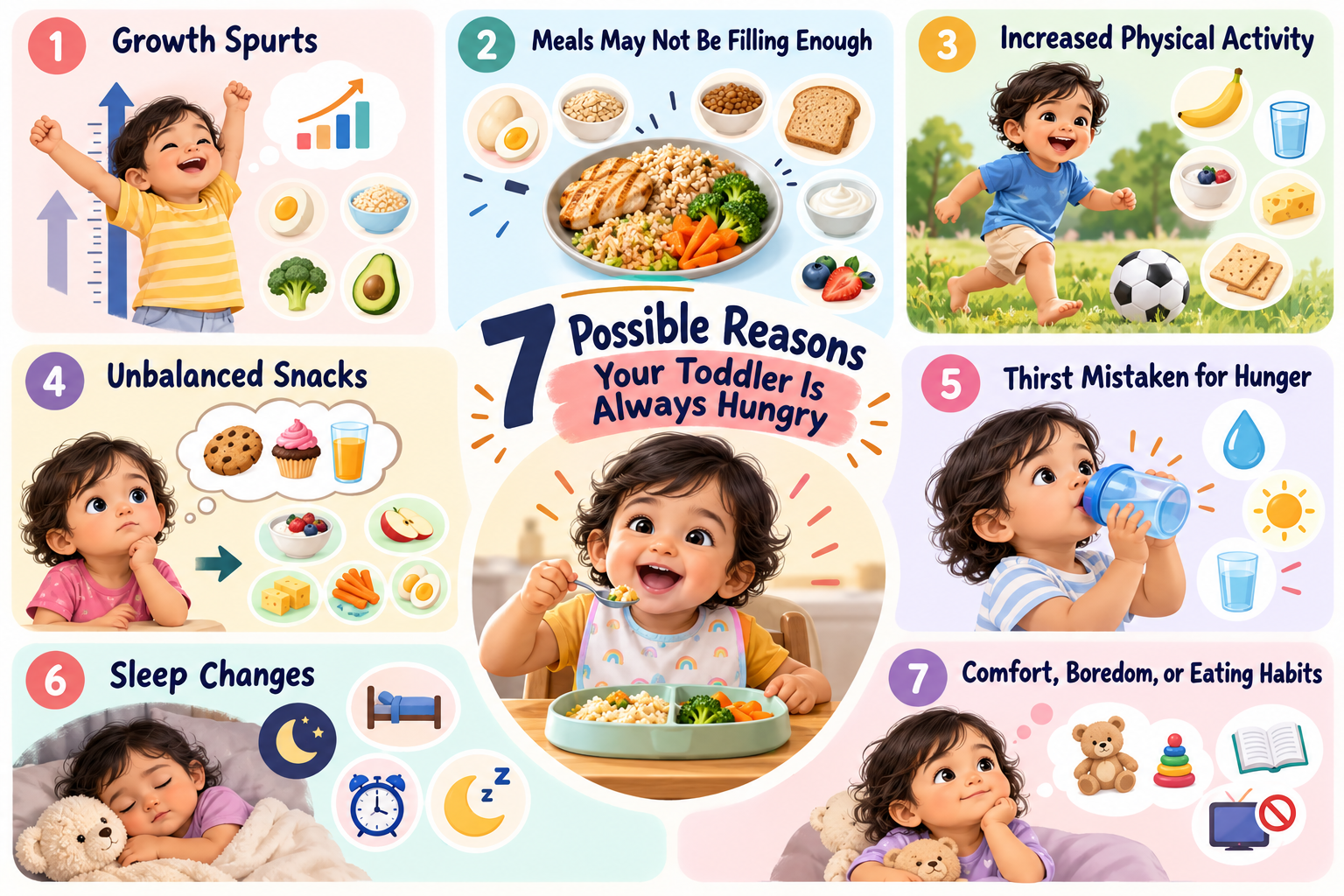
4. Unbalanced Snacks
Some snacks are not filling. Toddlers crave more. Such snack are low in protein. They lack fiber.
Examples include:
- Biscuits.
- Plain crackers.
- Sugary cereals.
- Sweets.
- Juice.
- Pastries.
- Low-fibre snacks.
- Sugary drinks.
- Sweetened cereals.
- Refined snack foods.
What can help?
– Better combinations.
- Fruit along with yogurt.
- Cheese along with crackers.
- Eggs n toast.
- Hummus along with vegetables.
- Protein-rich foods.
- Fruit with cheese.
– Filling snacks.
- Yogurt.
- Crackers.
- Soft fruit.
- Suitable cheese.
- Balanced combinations.
- Boiled eggs.
– Healthier habits.
- Planned snacks.
- Fewer sugary drinks.
- Less grazing.
- Regular water.
- Varied foods.
- Balanced choices.
– Other choices.
- Oats
- Soft fruit pieces.
- Eggs.
- Yogurt.
- Wholegrains.
- Homemade snacks.
Never ban treats. Balanced snacks can be offered.
5. Thirst Mistaken for Hunger
Thirst may be difficult for toddlers to explain. Food may sometimes be requested instead. This can happen after active play.
Possible signs include:
- Hot weather.
- Recent activity.
- Dry mouth.
- Limited drinking.
- Frequent drink requests.
- Sweating during play.
- low fluid intake.
- Warm environment.
- Outdoor play.
- High thirst.
What can help?
– Offer water.
- Easy access.
- Drinks after play.
- Regular sipping.
- Outdoor hydration.
- Prompt responses.
- Water with meals.
– Continue offering food.
- Regular meals.
- Planned snacks.
- Genuine hunger.
- Balanced portions.
- Familiar foods.
- Suitable servings.
– Build drinking habits.
- Accessible cups.
- Regular reminders.
- Drinking observations.
- Water breaks.
- Post-play drinks.
- Outdoor hydration.
Never replace needed food with water. Persistent excessive thirst require medical help.
6. Sleep Changes
Sleep affects eating habits. Poor sleep change appetite. Comfort may also be sought through food.
Possible signs include:
- Late bedtimes.
- Night waking.
- Early waking.
- Changing naps.
- Daytime tiredness.
- Restless sleep.
- Evening cravings.
- Difficulty settling.
- Changing routines.
- Increased snack requests.
What can help?
– Bedtime routines.
- Consistent bedtimes.
- Quiet activities.
- Peaceful surroundings.
- Fewer distractions.
- Suitable sleep schedules.
- Calming routines.
– Watch appetite changes.
- Evening hunger.
- Snack requests.
- Regular meals.
- Less grazing.
- Sleep patterns.
- Daily changes.
– Healthy routines.
- Regular meals.
- Calm evenings.
- Suitable naps.
- Relaxing activities.
- Consistent schedules.
- Screen-free bedtime.
One must discuss persistent sleep problems with a professional.
7. Comfort, Boredom, or Eating Habits
There can be other reasons for food requirement. Comfort is linked with snacks. Boredom lead to repeated requests.
Possible reasons include:
- Boredom.
- Attention seeking.
- Comfort eating.
- Frequent grazing.
- Screen-time eating.
- Food rewards.
- Mood changes.
- Unplanned snacking.
- Eating out of habit.
- Watching others eat.
What can help?
– Give attention.
- Shared reading.
- Calm conversation.
- Gentle reassurance.
- Focused attention.
- Emotional support.
- Family time.
– Offer activities.
- Favourite toys.
- Outdoor play.
- Creative activities.
- Storybooks.
- Safe exploration.
- Simple games.
– Keep routines.
- Planned snacks.
- Screen-free meals.
- No food rewards.
- Hunger signs.
- Regular mealtimes.
- Predictable schedules.
– Build healthy habits.
- Calm surroundings.
- Family meals.
- Different foods.
- No food pressure.
- Responsive feeding.
- Positive experiences.
Emotions need proper attention. One can build healthy routines. Never ignore hunger.
Unlock your passion for education and shape young minds as a Montessori teacher!
Healthy Foods and Snacks for Hungry Toddlers
One needs food for growth. Balanced meals keeps you full. Snacks manage hunger.
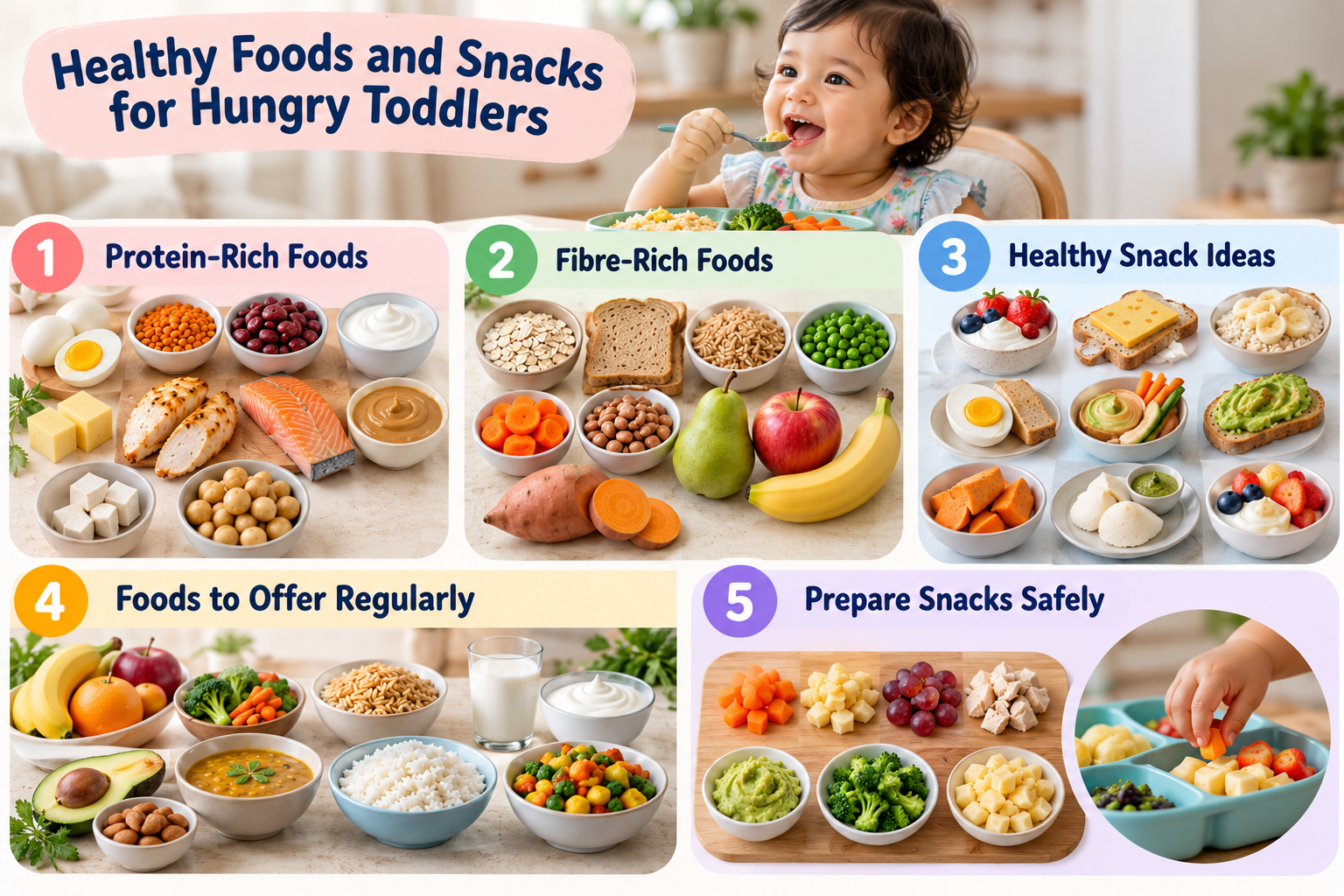
1. Protein-Rich Foods
It is needed for growth. It also helps in development.
- Eggs.
- Lentils.
- Beans.
- Yogurt.
- Cheese.
- Cooked chicken.
- Fish.
- Thinly spread nut butter.
- Soft tofu.
- Chickpeas.
2. Fibre-Rich Foods
It helps in digestion. It keeps one full.
- Oats.
- Bread.
- Brown rice.
- Cooked peas.
- Soft carrots.
- Cooked beans.
- Pears.
- Apples.
- Bananas.
- Soft sweet potatoes.
3. Healthy Snack Ideas
Offer them between meals.
- Fruit along with yogurt.
- Cheese along with toast.
- Banana in oats.
- Egg in bread.
- Hummus along with soft vegetables.
- Yogurt with berries.
- Avocado on toast.
- Cooked sweet potato.
- Soft fruit pieces.
- Oatmeal along with milk.
- Soft idli pieces.
- Small dosa pieces.
- Yogurt with fruit.
- Paneer.
- Mashed banana with oats.
4. Foods to Offer Regularly
Different nutrients can be provided through variety.
- Fresh fruits.
- Cooked vegetables.
- Whole grains.
- Protein-rich foods.
- Dairy foods.
- Healthy fats.
- Drinking water.
- Homemade meals.
- Soft lentils.
- Well-cooked rice.
- Mild vegetable dishes.
- Familiar family foods.
- Age-appropriate finger foods.
5. Prepare Snacks Safely
Choking risks should always be reduced.
- Soft textures.
- Small pieces.
- Cooked vegetables.
- Thin spreads.
- Seedless fruit pieces.
- Seated eating.
- Adult supervision.
- Age-appropriate portions.
- Carefully prepared grapes.
- Soft cooked meat.
- Finely chopped foods.
- Upright seating.
Whole grapes can cause choking. Hard raw vegetables are also risky. Whole nuts and popcorn should be avoided. Thick spoonfuls of nut butter are unsafe. Food should be prepared for the child’s age.
How Can Frequent Hunger Be Managed?
Frequent hunger can often be managed through routines. Food should never be used as punishment.
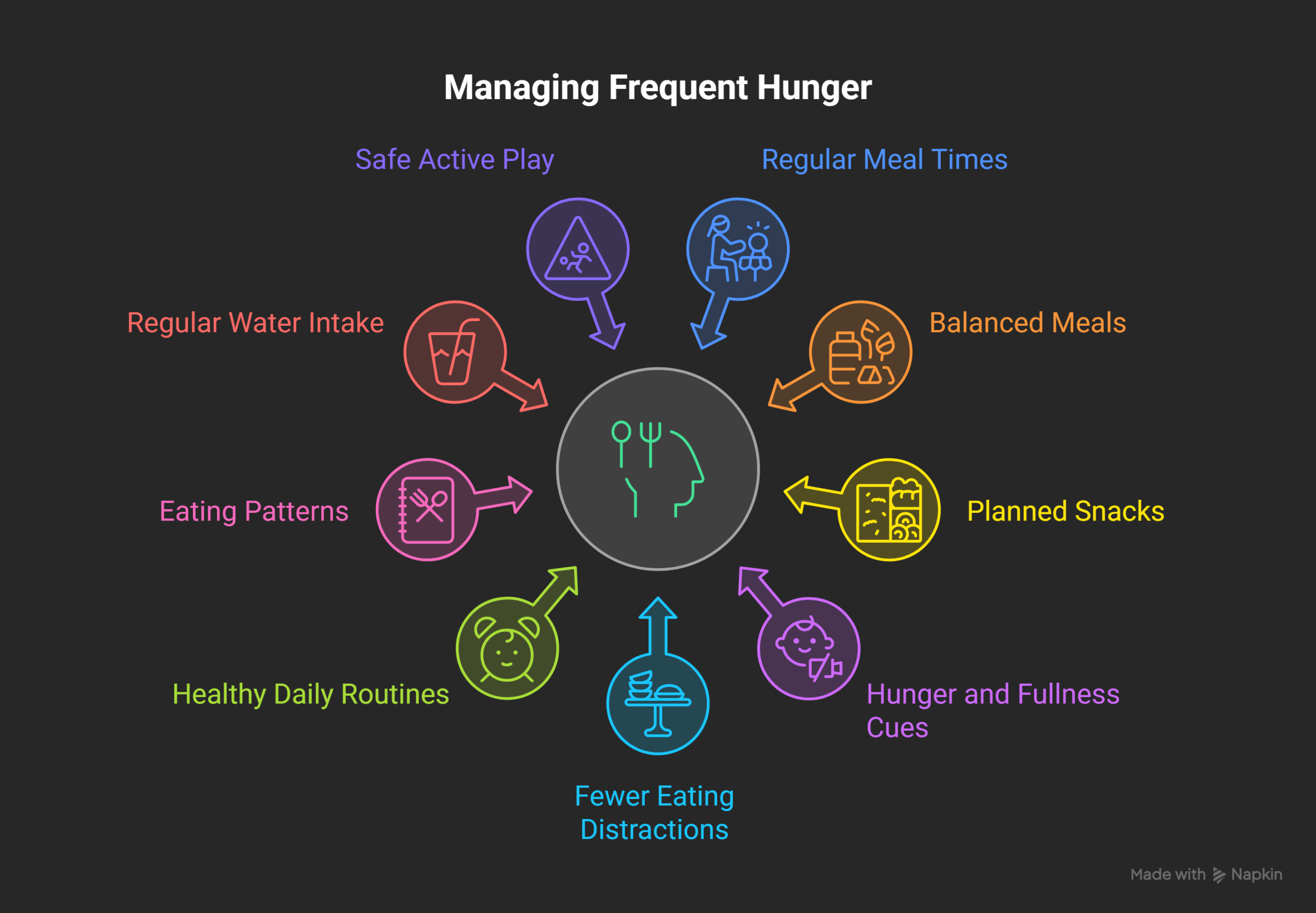
1. Regular Meal Times
Predictable meals can support healthy eating habits.
- Daily breakfast.
- Regular lunch.
- Family dinner.
- Planned snacks.
- Similar timings.
- Comfortable seating.
- Calm surroundings.
- Flexible portions.
- Enough eating time.
- No rushed meals.
- Predictable routines.
- Suitable meal gaps.
2. Balanced Meals
Different nutrients are needed for healthy growth.
- Protein foods.
- Whole grains.
- Fresh fruits.
- Cooked vegetables.
- Healthy fats.
- Dairy foods.
- Drinking water.
- Familiar foods.
- New food choices.
- Soft cooked lentils.
- Eggs with toast.
- Rice with vegetables.
- Yogurt with fruit.
- Beans with rice.
3. Planned Snacks
Hunger between meals can be managed with snacks.
- Regular snack times.
- Filling food choices.
- Suitable portions.
- Water access.
- Less grazing.
- Simple combinations.
- Calm eating.
- Flexible amounts.
- Fruit with yogurt.
- Cheese with crackers.
- Eggs with bread.
- Oats with milk.
- Soft vegetable pieces.
- Homemade snack options.
4. Hunger and Fullness Cues
Children may eat different amounts daily. Their hunger and fullness cues should be respected.
- Hunger cues.
- Fullness cues.
- No pressure.
- No punishment.
- No forced bites.
- Extra servings.
- Gentle encouragement.
- Patient support.
- No food rewards.
- No strict limits.
- Freedom to stop.
- Calm food offers.
5. Fewer Eating Distractions
Better attention can be supported during meals.
- Fewer screens.
- Shared meals.
- Quiet settings.
- Slow eating.
- Friendly conversations.
- Comfortable seating.
- Positive attention.
- Relaxed mealtimes.
- Fewer toys.
- Less television.
- Regular family meals.
- Gentle reminders.
6. Healthy Daily Routines
Appetite can be affected by daily habits.
- Regular bedtime.
- Active play.
- Outdoor time.
- Water breaks.
- Family meals.
- Planned snacks.
- Calm evenings.
- Consistent routines.
- Morning sunlight.
- Rest after activities.
- Regular wake-up times.
- Relaxing bedtime activities.
7. Eating Patterns
Useful changes can be noticed through simple records.
- Meal timings.
- Snack choices.
- Portion changes.
- Activity levels.
- Sleep patterns.
- Hunger cues.
- Drinking habits.
- Toilet frequency.
- Unusual symptoms.
- Food preferences.
- Mood changes.
- Digestive problems.
- Growth concerns.
- Recent illness.
8. Regular Water Intake
Thirst can sometimes be mistaken for hunger.
- Water offered often.
- Water with meals.
- Water during outings.
- Water after play.
- Proper cups.
- Drink regularly.
- less sugary drinks.
- No sweetened beverages.
- Accessible drinking water.
- Continued food offers.
Meals cannot replace water. Meet physician for persistent thirst.
9. Safe Active Play
Appetite changes with activity.
- Outdoor walks.
- Ball games.
- Dancing.
- Gentle running.
- Playground activities.
- Simple obstacle games.
- Supervised water play.
- Indoor movement games.
- Family walks.
- Active songs.
- Safe climbing activities.
- Free play.
Activities to be kept age-appropriate. Enough rest to be provided.
Get Certified & Start Your Montessori Career
Montessori Teacher Training Course by Entri App: Gain expert skills, earn certification, and kickstart your teaching career.
Join Now!When Should You Be Concerned?
Frequent hunger is normal. But, unusual symptoms need to be considered.
1. Warning Signs
They are:
- Weight loss.
- Excessive thirst.
- Frequent urination.
- Ongoing tiredness.
- Persistent weakness.
- Repeated vomiting.
- Poor growth.
- Sudden appetite changes.
- Unusual sleepiness.
- Signs of dehydration.
- Ongoing stomach pain.
- Reduced activity.
Excessive thirst needs particular attention. Frequent urination is another warning sign. Weight loss makes these symptoms more concerning.
2. Eating Concerns
Take professional advice for persistent problems.
- Too much hunger.
- Sudden changes in appetite.
- Stomach pain.
- Persistent constipation.
- Frequent diarrhoea.
- Feeding difficulties.
- Growth concerns.
- Food-related distress.
- Repeated food refusal.
- Pain during eating.
- Difficulty swallowing.
- Frequent choking.
- Very limited food choices.
- Ongoing vomiting.
Causes may differ. Proper assessment help identify them. Medical advice should be sought when concerns continue.
3. Details for Medical Appointments
Useful details should be recorded before appointments.
- Hunger patterns.
- Food intake.
- Drinking habits.
- Toilet frequency.
- Weight changes.
- Sleep changes.
- Activity levels.
- Digestive symptoms.
- Behaviour changes.
- Recent illness.
- Medication changes.
- Family health history.
- Growth records.
- Appetite changes.
These details can support medical assessment. No single symptom confirms a diagnosis.
Conclusion
Toddler hunger can change daily. Growth may increase appetite. Active days may require extra food. Balanced meals can support fullness. Planned snacks can also help.
Food should be offered without pressure. Hunger cues should always be respected. Water should be provided throughout the day. Regular sleep should be encouraged. Unusual symptoms should be monitored. Medical advice should be sought when needed.
Get Certified & Start Your Montessori Career
Montessori Teacher Training Course by Entri App: Gain expert skills, earn certification, and kickstart your teaching career.
Join Now!Frequently Asked Questions
Is it normal for toddlers to feel hungry all the time?
Yes, frequent hunger can be normal during toddlerhood because growth, physical activity, and changing eating patterns can affect appetite. However, persistent extreme hunger or hunger accompanied by excessive thirst, frequent urination, or unexplained weight loss should be discussed with a healthcare professional.
Why does my toddler ask for food shortly after eating?
A toddler may feel hungry again when the previous meal was small or lacked filling foods. Meals containing protein, fibre, healthy fats, and carbohydrates may help provide longer-lasting energy and satisfaction.
Can growth spurts make toddlers hungrier?
Yes, increased hunger can occur during periods of rapid growth because the body needs energy for development. Appetite may rise temporarily and return to its usual pattern afterward, although growth patterns differ between children.
What foods can help keep my toddler full for longer?
Protein-rich foods, fibre-rich foods, and healthy fats can help meals feel more satisfying. Eggs, lentils, oats, wholegrain bread, yogurt, beans, fruits, and cooked vegetables can be included in balanced meals and snacks.
How many snacks should a hungry toddler have daily?
Many toddlers do well with three meals and two or three planned snacks, depending on their age, activity, appetite, and individual needs. Snacks should be offered when needed without forcing the child to eat or restricting food when genuine hunger remains.
Can thirst be mistaken for hunger in toddlers?
Yes, thirst may sometimes be mistaken for hunger, particularly when drinking opportunities are limited. Water should be offered regularly, but food should still be provided when hunger is present; persistent excessive thirst or frequent urination requires medical assessment.
Can poor sleep increase a toddler's appetite?
Poor sleep may affect appetite and the body’s signals for hunger and fullness. A consistent bedtime, calming evening activities, and sufficient age-appropriate sleep may support healthier eating patterns.
Should a toddler be allowed to ask for extra food?
Yes, additional food can be offered when hunger continues after a meal, provided the food is suitable for the child’s age. Children should be allowed to respond to their hunger and fullness cues rather than being pressured to finish portions or denied reasonable extra servings.
When should frequent hunger in toddlers become a concern?
Medical advice should be sought when persistent hunger occurs alongside unexplained weight loss, excessive thirst, frequent urination, unusual tiredness, poor growth, or other concerning symptoms. Excessive thirst and urination combined with weight loss or weakness require urgent assessment because they can indicate diabetes.
How can frequent hunger be managed without overeating?
Regular meals, balanced snacks, water access, and a predictable daily routine can help hunger be managed comfortably. Food should never be used as punishment, and portions should remain flexible so the toddler’s natural hunger and fullness cues can be respected.