Table of Contents
Introduction
Parents are often worried about food portions. Very little food is sometimes eaten. Bigger meals are enjoyed some other times. Appetite of a child keeps changing every day. Hunger is affected by growth. Eating habits are affected by sleep. Chewing can be made painful by teething. Food preferences are also changed. The changes you will notice are normal. This blog covers in detail how much food a toddler needs.
Key Takeaways
- Three daily meals are usually recommended.
- Two or three snacks can be offered.
- Food portions are changed with age.
- Hunger is affected by growth and activity.
- Muscle growth is supported by protein.
- Blood health is supported by iron.
- Calcium provide Strong bones.
- Fruits add to vitamins in the diet.
- Built healthy habits through Regular meals.
- Hunger signs can be watched carefully.
- Fullness signs should always be respected.
- One may require medical advice for ongoing problems.
Unlock your passion for education! Shape young minds as a Montessori teacher!
How Much Should a Toddler Eat Each Day?
1: What is the primary focus of the first plane of development in the Montessori method?
Food is needed for growth. Daily energy is also provided. Appetite is changed during childhood. Bigger meals are sometimes eaten. Smaller meals are also common.
Daily Meals
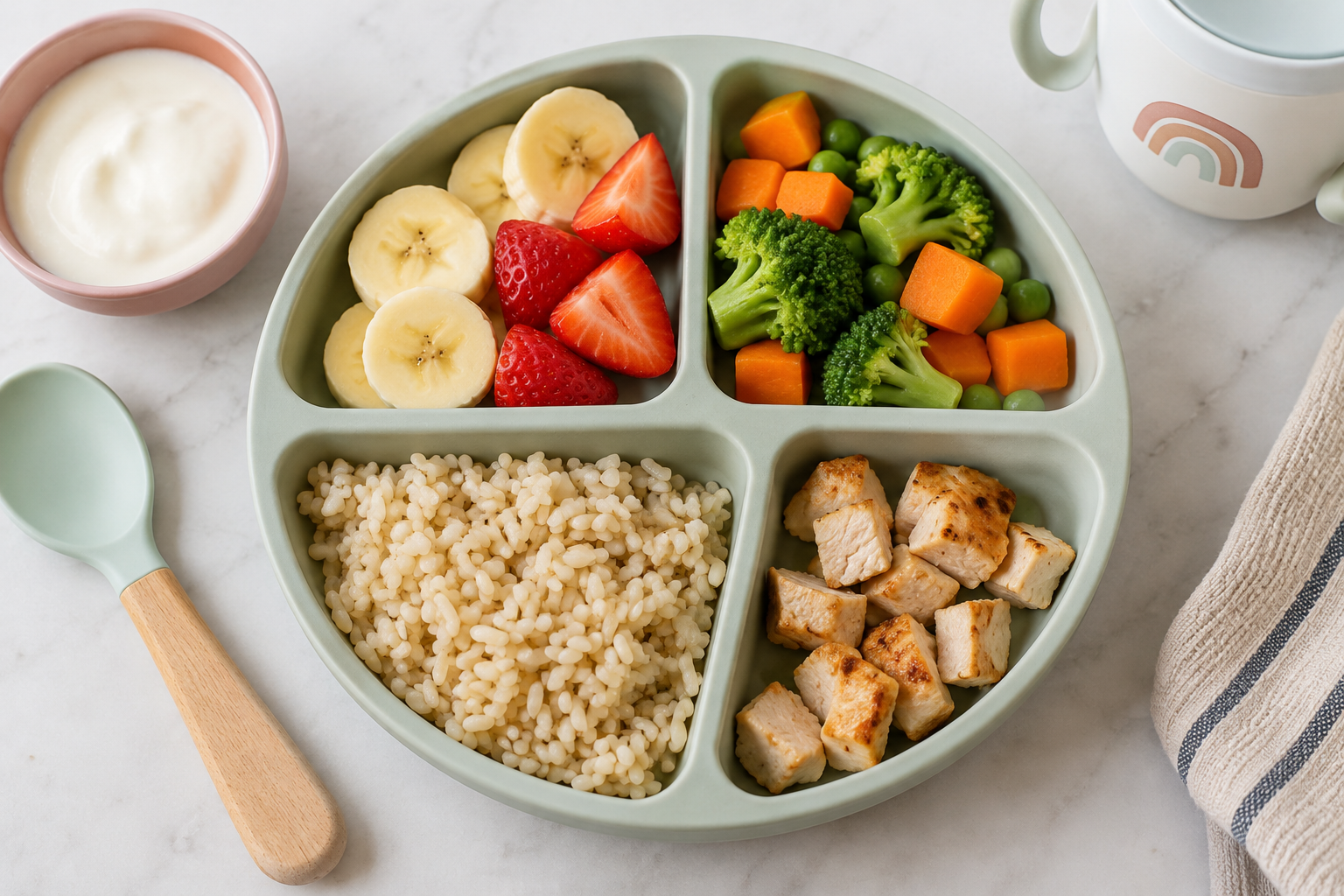
Three main meals are usually needed. Planned snacks are also helpful.
Main Meals
- Breakfast.
- Lunch.
- Dinner.
- 11 O’ clock snack.
- Afternoon snack.
- Drinking water.
- Balanced foods.
- Regular schedules.
Factors Affecting Appetite
Toddler hunger is affected by many things. Some changes pass quickly.
Growth and Activity
- Growth spurts.
- Active play.
- Energy needs.
- Development changes.
- Longer playtime.
- Changing routines.
- Outdoor activities.
- Increased movement.
Physical Comfort
- Teething.
- Constipation.
- Stomach pain.
- Minor illnesses.
- Mouth sores.
- Sore throats.
- Blocked noses.
- Digestive problems.
Day-to-day Habits
- Poor sleep.
- Frequent snacks.
- Excessive milk.
- Incomplete meals.
- Digital distractions
- High sugar drinks.
- Rushed meals.
- Late bedtimes.
When Is Eating Less Normal?
Each day is different. Toddlers eat different amount each day. Age plays an important role. Appetite depends on it.
Reassuring Signs
- Steady growth.
- Normal energy.
- Active play.
- Proper urination.
- Normal bowel movements.
- Comfortable feeding.
- Interest in food.
- Normal development.
Warning Signs
- Weight loss.
- Poor weight gain.
- Food refusal.
- Unusual tiredness.
- Less urination.
- Feeding difficulties.
- Pain while eating.
- Frequent vomiting.
Eating patterns should be watched. Go for medical help in case of ongoing problems.
Good Feeding Practices
To manage hunger one must follow certain habits.
Regular Habits
- On time meals.
- Planned snacks.
- Tiny servings.
- Familiar foods.
- Water breaks.
- Calm mealtimes.
- No forced feeding.
- Fullness awareness.
- Enough eating time.
- Good seating.
Get Certified & Start Your Montessori Career
Montessori Teacher Training Course by Entri App: Gain expert skills, earn certification, and kickstart your teaching career.
Join Now!Toddler Portion Sizes by Age
Suitable food portions are needed. Small servings should be offered first. More food can be provided later.
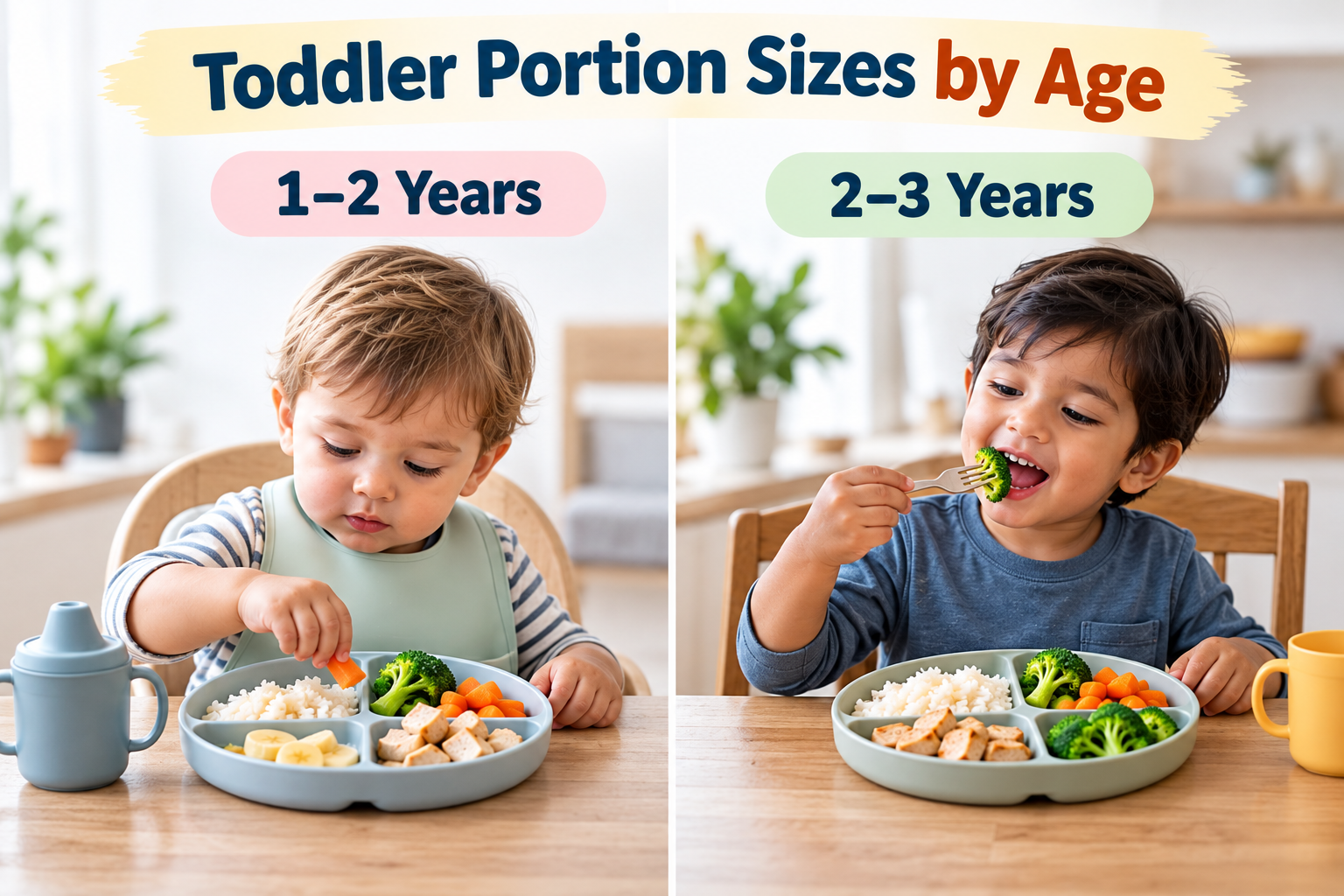
Children Aged 1–2 Years
Tiny portions are often preferred. Chewing is made easy via soft foods.
Grains
- Soft rice.
- Oats.
- Chapati.
- Soft pasta.
- Rice porridge.
- Soft bread.
- Wheat porridge.
- Cooked cereals.
Vegetables
- Carrots.
- Pumpkin.
- Potatoes.
- Soft peas.
- Broccoli.
- Spinach.
- Sweet potatoes.
- Cooked beans.
Fruits
- Banana.
- Papaya.
- Ripe pear.
- Soft mango.
- Melon.
- Stewed apple.
- Soft peach.
- Mashed fruit.
Protein
- Eggs.
- Lentils.
- Soft beans.
- Tofu.
- Fish.
- Chicken.
- Chickpeas.
- Minced meat.
Dairy
- Milk.
- Yogurt.
- Cheese.
- Plain curd.
- Suitable alternatives.
- Soft cheese.
- Unsweetened yogurt.
- Fortified drinks.
Children Aged 2–3 Years
Bigger portions may be required. Variety of food can be offered.
Grains
- Rice.
- Oats.
- Wheat bread.
- Soft pasta.
- Chapati.
- Upma.
- Porridge.
- Whole-grain cereal.
Vegetables
- Broccoli.
- Spinach.
- Cooked carrots.
- Sweet potatoes.
- Pumpkin.
- Green peas.
- Cauliflower.
- Green beans.
Fruits
- Oranges.
- Bananas.
- Papaya.
- Ripe mango.
- Soft pear.
- Melon.
- Apples.
- Peaches.
Protein
- Fish.
- Chicken.
- Eggs.
- Beans.
- Lentils.
- Tofu.
- Chickpeas.
- Minced meat.
Serving Food
Small portion can be manages easily.
Serving Tips
- kids plates.
- little servings.
- Soft textures.
- Safe pieces.
- Extra helpings.
- Baby spoons.
- Good seating.
- Patient feeding.
- No pressure.
- Close supervision.
Food should not be forced. Stop when they are full.
Signs of Suitable Portions
Watch Eating habits. Observe growth.
Positive Signs
- Relaxed eating.
- Normal energy.
- Steady growth.
- Interest in meals.
- Proper bowel movements.
- Normal development.
- Active play.
- Normal urination.
Look for any problem in the child’s growth. If there is any a pediatrician must be considered
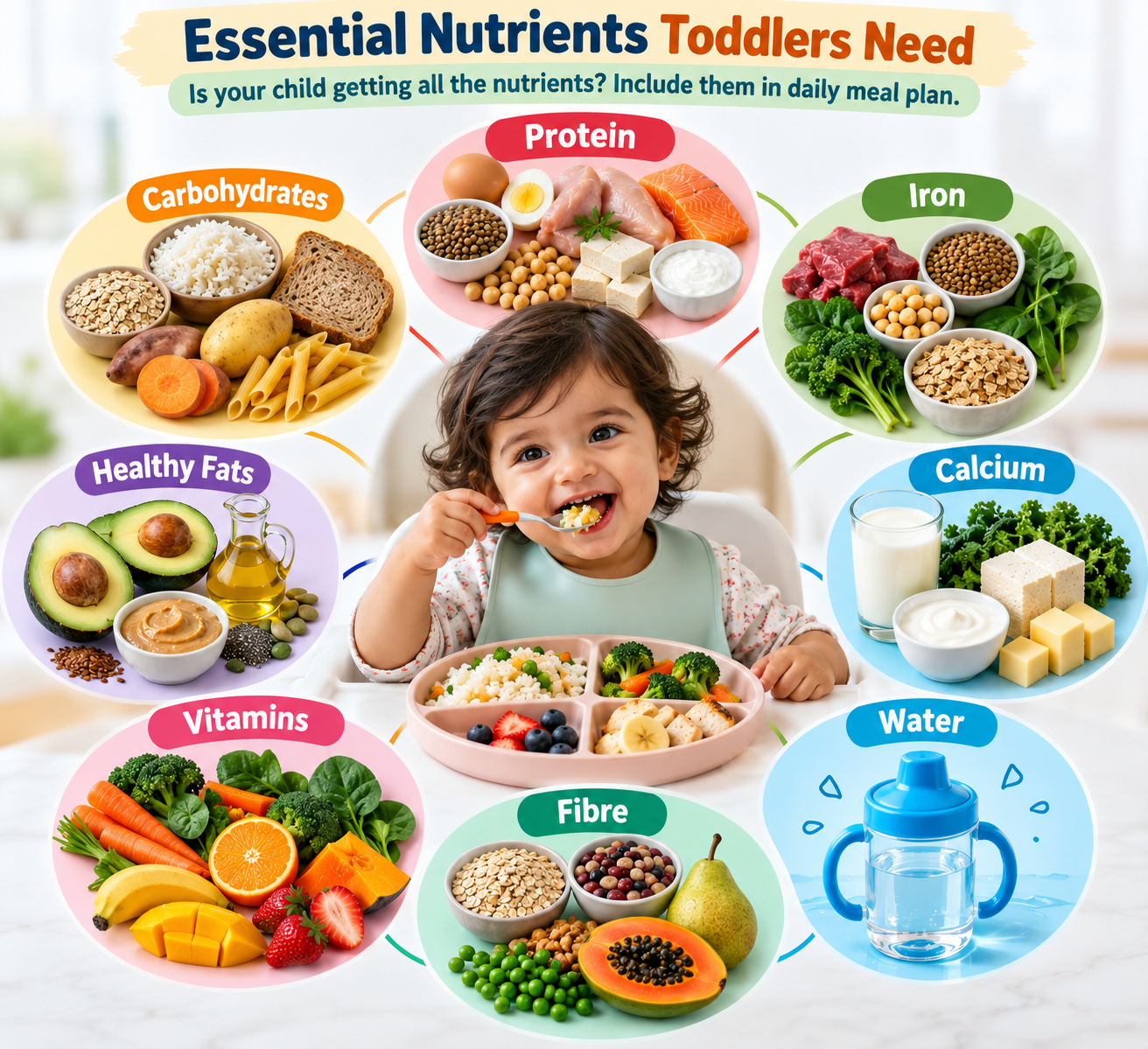
Essential Nutrients Toddlers Need
Is your child getting all the nutrients? Include them in daily meal plan.
1. Protein
Muscle growth is supported by protein. Body tissues are also repaired.
Food Sources
- Eggs.
- Fish.
- Chicken.
- Lentils.
- Beans.
- Tofu.
- Yogurt.
- Chickpeas.
Meal Ideas
- Lentil rice.
- Cooked eggs.
- Soft beans.
- Tofu dishes.
- Egg sandwiches.
- Fish along with rice.
- Mashed Chickpea.
- Chicken along side vegetables.
2. Iron
Blood and brain health are supported by iron.
Food Sources
- Meat.
- Fish.
- Eggs.
- Lentils.
- Beans.
- Cereals.
- Greens
- Chickpeas.
Meal Plans
- Lentil rice.
- Bean dishes.
- Fortified porridge.
- Egg along with toast.
- Mashed Chickpea.
- Lentil soup.
- Meat with rice.
- Iron-rich meals.
Vitamin C Foods
Our body cannot absorb iron. Vitamin C helps in iron absorption.
- Oranges.
- Tomatoes.
- Strawberries.
- Papaya.
- Broccoli.
- Sweet peppers.
- Ripe mango.
- Other fruits.
Iron is incorporated through tablets. Consult pediatrician for proper dose.
3. Calcium
Calcium gives Strong bones, It is also good for the teeth.
Food Sources
- Milk.
- Yogurt.
- Cheese.
- Fortified alternatives.
- tofu.
- Greens.
- Plain curd.
- Foods rich in calcium.
Meal Plans
- Just yogurt.
- Sandwiches made with cheese.
- Yogurt along with fruit.
- Tofu along side rice.
- Fortified porridge.
- Cheese dishes.
- Suitable milk portions.
- Calcium-rich meals.
Do not drink more milk. One feels less hungry.
4. Healthy Fats
Healthy fats produces energy Brain development is supported
Food Sources
- Avocado.
- Oily fish,
- Oils.
- Butter.
- Peanuts.
- Yogurt.
- Other seeds.
Meal Ideas
- Toast made with Avocado.
- Porridge prepared with Nut butter
- Vegetable oil dishes.
- Oily fish that is cooked.
- Yogurt along with seeds.
- Avocado that’s boiled and mashed.
- Dishes made out of vegetables.
- Nut butter which is smoothened.
Whole nuts should be avoided. They can cause choking.
5. Carbohydrates
Carbohydrates is for energy. Fibre is also supplied by grains.
Food Sources
- Rice.
- Oats.
- Potatoes.
- Sweet potatoes.
- Soft chapati.
- Wheat bread.
- Cereals.
- Pasta.
Meal Plans
- Lentil rice.
- Vegetable upma.
- Fruit porridge.
- Chapati curry.
- Pancakes oats.
- Boiled Potato.
- Pasta.
- Rice along with beans.
Grains are eaten with any of the two. Protein or veggies or both.
6. Vitamins
Vitamins are for growth. It provides immunity also.
Food Sources
- Carrots.
- Pumpkin.
- Spinach.
- Bananas.
- Oranges.
- Papaya.
- Broccoli.
- Seasonal fruits.
Meal Ideas
- Carrot rice.
- Mashed pumpkin.
- Ripe fruit pieces.
- Vegetables cooked in different ways.
- Banana porridge.
- Khichdi cooked with vegetables.
- Fruit yogurt.
- Patties made out of vegetables.
Wash fruits and veggies thoroughly. Cook them until soft.
7. Fibre
Fibre is for Healthy bowel movements.
Food Sources
- Oats.
- Pears.
- Beans.
- Papaya.
- Whole grains.
- Vegetables.
- Lentils.
- Peas.
Meal Ideas
- Oat breakfast.
- Lentil lunch.
- Fruit snacks.
- Vegetable dinners.
- Whole-grain chapati.
- Bean mash.
- Pear pieces.
- Vegetable porridge.
Fibre should be increased slowly. Keep offering water.
8. Water
Water provides hydration. It also helps in digestion.
Healthy Habits
- Drinks regularly.
- Water between meals.
- Accessible cups.
- Drinks during play.
- Extra water during hot weather.
- Water after active play.
- Drinks along with snacks.
- Reminders are kept for drinking.
Do not replace water with other drinks.
Making Balanced Meals
Every food provides different nutrients. Include all in a day.
Grains
- Rice.
- Oats.
- Chapati.
- Soft pasta.
- Whole-grain bread.
- Porridge.
- Upma.
- Cooked cereals.
Protein
- Eggs.
- Lentils.
- Fish.
- Beans.
- Chicken.
- Tofu.
- Chickpeas.
- Yogurt.
Vegetables
- Carrots.
- Spinach.
- Pumpkin.
- Broccoli.
- Potatoes.
- Peas.
- Cauliflower.
- Green beans.
Fruits
- Bananas.
- Oranges.
- Papaya.
- Pears.
- Mango.
- Melon.
- Apples.
- Peaches.
Healthy Fats
- Avocado.
- Vegetable oils.
- Ground seeds.
- Oily fish.
- Smooth nut butter.
- Seed paste.
- Mashed avocado.
- Thin nut butter.
Serve little portions. Different foods should be offered weekly. New foods should be introduced Slowly.
Unlock your passion for education! Shape young minds as a Montessori teacher!
What Should a Toddler’s Daily Meal Plan Include?
A balanced meal is required everyday. Generally three meals and two snacks are given. Portions depends on the child’s hunger level.
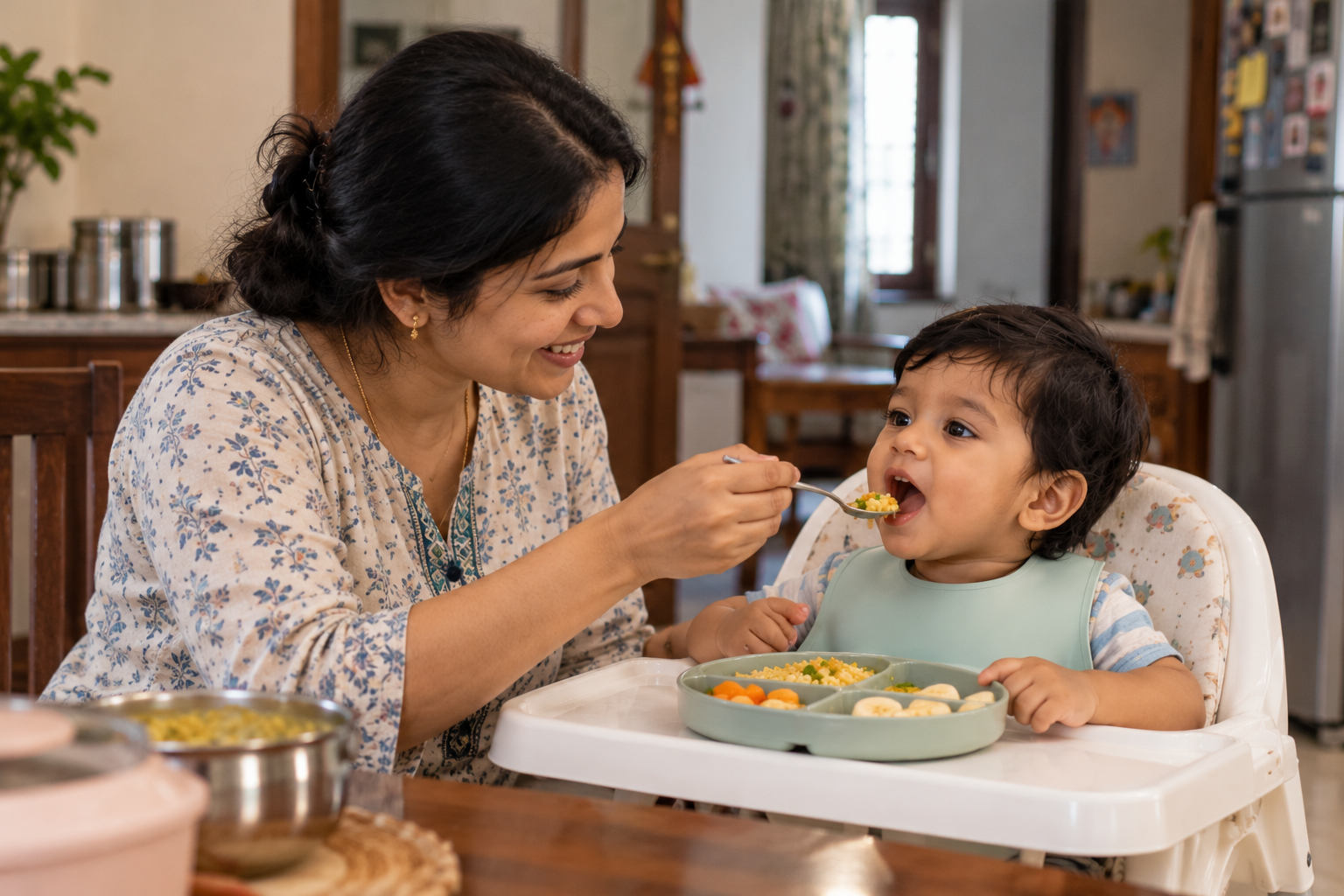
Breakfast
A Healthy breakfast provides energy.
Food choices:
- Oatmeal.
- Eggs which are scrambled.
- Soft idli.
- Banana that is sliced.
- Toast of whole-grain.
- Simple yoghurt.
- Dosa made with vegetables
- Soft porridge.
Lunch
Luch provides essential nutrients.
Food choices:
- Rice and dal.
- Soft chapati.
- Vegetables that is cooked.
- Potatoes that is boiled andmashed.
- Soft fish.
- Chicken which is boiled and .shredded
- khichdi made with vegetables.
- Beans that is cooked.
Morning Snack
Mid morning hunger is managed with small snacks.
Food choices:
- Ripe banana.
- Soft pear.
- Yoghurt.
- Steamed sweet potato.
- Cheese.
- Ripe papaya.
- Avocado.
- Carrots.
Evening Snack
Extra energy can be provided through snacks.
Food choices:
- Mini idlis.
- Dosa strips.
- Boiled egg.
- Toast fingers.
- Soft mango.
- Plain yoghurt.
- Soft fruit.
- Vegetable patties.
Dinner
Different food groups should be included at dinner.
Food choices:
- Rice and lentils.
- Vegetable pulao.
- Soft chapati.
- Cooked fish.
- Vegetable soup.
- Mashed sweet potato.
- Soft pasta.
- Rice and vegetables.
Healthy Drinks
Water should be offered throughout the day.
Drink choices:
- Plain water.
- Pasteurised milk.
- Breast milk, if continued.
- Fortified alternatives.
Important tips:
- Sugary drinks should be limited.
- Excessive juice should be avoided.
- Water should be offered often.
- Meals should not be replaced by milk.
Sample Meal Plan
| Meal | Food |
| Breakfast |
|
| Morning snack |
|
| Lunch |
|
| Evening snack |
|
| Dinner |
|
Adjust portion size to individual needs.
Get Certified & Start Your Montessori Career
Montessori Teacher Training Course by Entri App: Gain expert skills, earn certification, and kickstart your teaching career.
Join Now!Healthy Meal and Snack Ideas for Toddlers
Every food provides different nutrients. Prepare meals with simple ingredients.
Vegetable Ideas
Food choices:
- Carrot that is mashed
- Pumpkin which is steamed.
- Soft peas.
- Spinach that is cooked.
- Potatoes that are boiled and mashed
- Broccoli.
- Beetroot that is cooked.
- Khichdi made out of vegetables.
Preparation tips:
- Vegetables to be cooked until soft.
- Remove skins is needed.
- Cut safely.
- Add little salt only.
Fruit Ideas
Food choices:
- Banana.
- Papaya.
- Ripe mango.
- Soft pear.
- Melon pieces.
- Stewed apple.
- Mashed avocado.
- Soft peach.
Preparation tips:
- Seeds should be removed.
- Firm fruits should be softened.
- Pieces should be cut safely.
- Tough skins should be removed.
Protein Ideas
Food choices:
- Well-cooked eggs.
- Soft lentils.
- Mashed beans.
- Cooked fish.
- Shredded chicken.
- Soft tofu.
- Plain yoghurt.
- Smooth nut butter.
Safety tips:
- Fish bones must be removed.
- Meat must be cooked thoroughly.
- Beans should be softened well.
- Nut butter should be spread thinly.
Grain Ideas
Food choices:
- Soft rice.
- Oatmeal.
- Soft chapati.
- Idli.
- Dosa.
- Whole-grain toast.
- Soft pasta.
- Vegetable upma.
Preparation tips:
- Dry foods should be softened.
- Tough crusts can be removed.
- Food should be cut safely.
- Added salt should be limited.
Calcium-Rich Foods
Food choices:
- Pasteurised milk.
- Plain yoghurt.
- Soft cheese.
- Paneer.
- Fortified alternatives.
- Milk-based oatmeal.
- Yoghurt with fruit.
- Unsweetened dairy puddings.
Strong bones and teeth are supported by calcium. These foods can be included regularly.
Choking Prevention
Hazards to avoid:
- Whole nuts.
- Whole grapes.
- Raw carrot chunks.
- Popcorn.
- Hard sweets.
- Thick nut butter.
- Large food pieces.
- Fish bones.
Meals should be eaten while seated. Adult supervision should always be provided.
How to Know if Your Toddler Is Eating Enough
Appetite can change each day. Growth and energy can provide useful clues.
Healthy Growth
Positive signs:
- Steady height.
- Healthy weight gain.
- Usual energy.
- Gradual development.
Possible concerns:
- Unexpected weight loss.
- Slow growth.
- Persistent feeding problems.
- Reduced energy.
Ongoing concerns should be assessed professionally.
Changing Appetite
Some meals may be eaten less. Other meals may be enjoyed more.
Common patterns:
- Smaller portions.
- Changing preferences.
- Occasional food refusal.
- Increased hunger.
- Variable appetite.
Helpful responses:
- Small portions should be offered.
- Regular routines should be maintained.
- Food pressure should be avoided.
- Fullness cues should be respected.
Warning Signs
Professional advice should be sought for:
- Persistent food refusal.
- Frequent vomiting.
- Painful swallowing.
- Repeated choking.
- Difficulty chewing.
- Limited food choices.
- Poor weight gain.
- Signs of dehydration.
Urgent medical care may be needed for severe symptoms.
Tips for Creating Healthy Eating Habits
Healthy habits can be developed through practice. Positive mealtimes can make eating enjoyable.
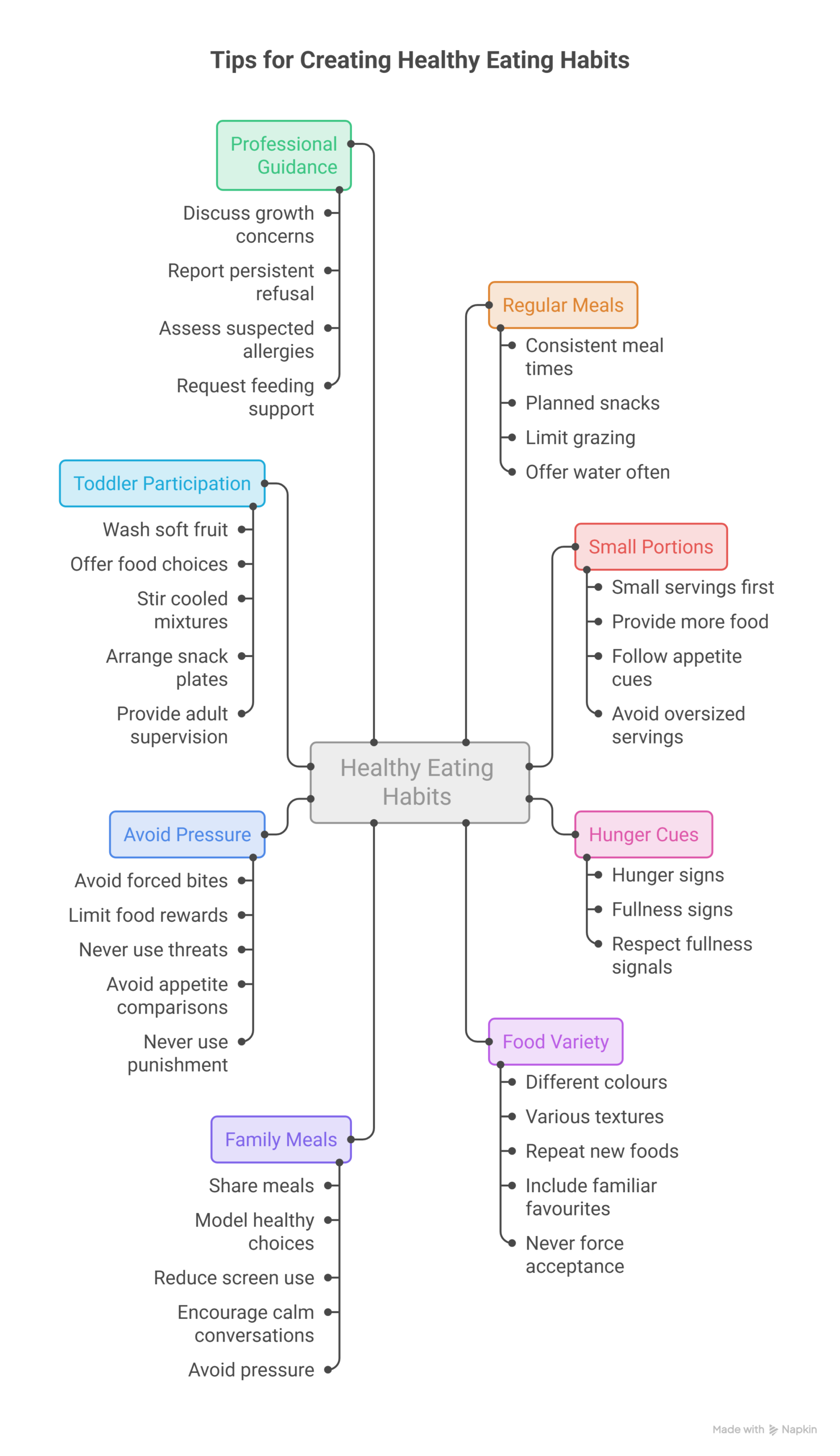
Regular Meals
- Meal times should be consistent.
- Snacks should be planned.
- Constant grazing should be limited.
- Water should be offered often.
Small Portions
- Small servings should be offered first.
- More food can be provided.
- Appetite cues should be followed.
- Oversized servings should be avoided.
Hunger Cues
Hunger signs:
- Asking for food.
- Showing food interest.
- Reaching for food.
Fullness signs:
- Turning away.
- Closing the mouth.
- Slowing down.
- Losing interest.
Fullness signals should be respected.
Food Variety
- Different colours should be included.
- Various textures should be offered.
- New foods should be repeated.
- Familiar favourites should be included.
New foods may need repeated exposure. Acceptance should never be forced.
Family Meals
- Meals can be shared.
- Healthy choices should be modelled.
- Screen use should be reduced.
- Calm conversations can be encouraged.
- Pressure should be avoided.
Avoid Pressure
- Forced bites should be avoided.
- Food rewards should be limited.
- Threats should never be used.
- Appetite comparisons should be avoided.
- Punishment should never be used.
Toddler Participation
- Soft fruit can be washed.
- Food choices can be offered.
- Cooled mixtures can be stirred.
- Snack plates can be arranged.
Adult supervision should always be provided.
Professional Guidance
- Growth concerns should be discussed.
- Persistent refusal should be reported.
- Suspected allergies should be assessed.
- Feeding support can be requested.
Conclusion
Toddler food needs change with age. Daily appetites can vary considerably. Balanced meals should be offered regularly. Portions can be increased when needed. Hunger and fullness cues should be respected. Safe food preparation should be followed. Growth concerns should be discussed with professionals.
Get Certified & Start Your Montessori Career
Montessori Teacher Training Course by Entri App: Gain expert skills, earn certification, and kickstart your teaching career.
Join Now!Frequently Asked Questions
How much food should a toddler eat daily?
A toddler usually needs three meals and two snacks daily. The amount should be adjusted according to age, appetite, activity, and growth.
What portion size is suitable for toddlers?
Small portions should be served first, with more food offered when needed. Portion sizes should be adjusted to the child’s hunger and fullness cues.
How many snacks should toddlers eat daily?
Most toddlers can be offered two nutritious snacks between their main meals. Snacks should provide useful nutrients without reducing appetite for regular meals.
Which foods should be included in a toddler's diet?
A toddler’s diet should include fruits, vegetables, grains, protein foods, and calcium-rich foods. These food groups provide nutrients needed for growth, energy, and healthy development.
How can parents tell if a toddler is eating enough?
Steady growth, usual energy levels, and regular development can indicate adequate food intake. Persistent weight loss, poor growth, or ongoing feeding difficulties should be discussed with a healthcare professional.
Is it normal for toddlers to refuse food?
Food refusal is common because toddler appetites and preferences can change frequently. New foods should be offered repeatedly in small amounts without pressure or force.
Which healthy snacks can be offered to toddlers?
Soft fruit, plain yoghurt, cooked vegetables, and suitable cheese can be offered as nutritious snacks. Foods should be prepared according to the child’s chewing abilities to reduce choking risks.
How much milk should a toddler drink daily?
Milk requirements depend on the toddler’s age, overall diet, and individual needs. Excessive milk intake should be avoided because it can reduce appetite for meals and may increase the risk of iron deficiency.
How can choking risks be reduced during toddler meals?
Foods should be softened, cut into safe pieces, and served while the child sits upright. Whole nuts, popcorn, whole grapes, and other choking hazards should be avoided.
When should parents seek medical advice about toddler eating?
Medical advice should be sought for persistent food refusal, poor weight gain, difficulty swallowing, or frequent vomiting. Signs of dehydration, repeated choking, or severe weakness may require urgent medical attention.