Table of Contents
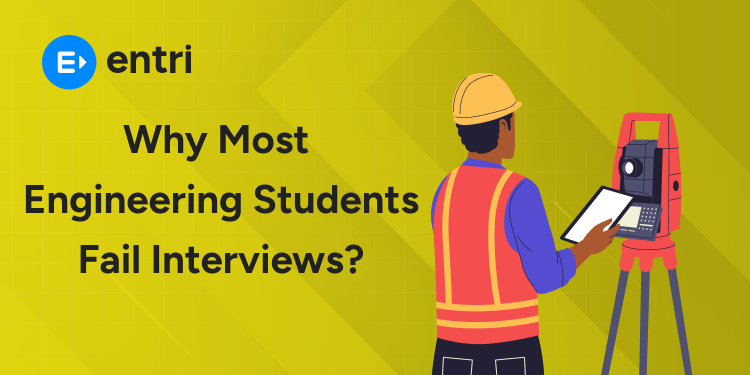
Most engineering students fail interviews due to weak practical skills and poor preparation. Many students focus only on theory and marks. Recruiters expect communication skills, confidence, problem-solving ability, and real-world knowledge. Interview success improves through practice, projects, mock interviews, and skill development.
- Weak communication reduces interview confidence.
- Lack of practical skills affects performance.
- Proper preparation improves interview success.
Key Takeaways:
- Recruiters prefer practical knowledge over memorization.
- Communication skills affect interview performance greatly.
- Strong projects improve student credibility.
- Confidence grows through regular interview practice.
- Weak fundamentals create technical interview problems.
- Many students ignore aptitude and soft skills.
- Real-world problem-solving matters during interviews.
- Structured preparation improves placement opportunities.
- Mock interviews help reduce nervousness.
- Skill development improves career growth significantly.
Get Career-Oriented BIM Certification Course with Expert Mentors! Get a free demo here!
📘 Introduction
Many engineering students struggle during placements today. Good marks alone no longer guarantee job offers. Recruiters now expect practical skills and confidence. Many students fail because of poor interview preparation.
Modern companies focus on real-world abilities heavily. They test communication, technical understanding, and problem-solving skills together. Students often prepare only before placements begin. This creates stress and poor interview performance.

Interview success depends on multiple skills today.
- Technical knowledge matters during interviews.
- Communication affects recruiter impressions strongly.
- Confidence improves interview performance greatly.
- Practical skills increase job opportunities.
- Mock interviews improve preparation quality.
- Strong projects improve placement chances.
Many interview problems can improve with proper preparation.
🔷 Background / Context
Engineering education changed greatly over recent years. Competition for jobs continues increasing across industries. Companies now expect industry-ready graduates during placements. Academic marks alone no longer guarantee job opportunities.
Earlier, recruiters focused mainly on theoretical knowledge and grades. Today, companies prioritize practical skills and communication abilities. Students must now demonstrate technical understanding and problem-solving together. Recruiters also evaluate confidence, adaptability, and teamwork skills.
Many engineering colleges still focus heavily on exams. Students spend more time memorizing concepts and formulas. Practical learning often receives less importance during academics. This creates a major gap between education and industry expectations.
🔸 Why Interview Failures Increased.
Modern industries require multiple professional skills together.
- Companies prefer skilled and adaptable candidates.
- Technical interviews became more challenging.
- Competition increases every placement season.
- Soft skills matter more today.
- Real-world problem-solving became important.
- Industry expectations changed significantly.
Students must prepare beyond classroom learning now.
🔸 Common Problems Engineering Students Face.
Many students struggle during placement preparation.
- Weak practical project experience.
- Poor communication skills.
- Limited interview exposure.
- Lack of confidence during discussions.
- Weak technical fundamentals.
- Poor aptitude preparation.
- Limited industry awareness.
These issues reduce placement opportunities significantly.
🔸 What Recruiters Expect Today.
Recruiters evaluate complete professional readiness.
- Strong technical understanding.
- Practical application knowledge.
- Clear communication skills.
- Confidence during interviews.
- Strong problem-solving ability.
- Teamwork and adaptability.
Students with balanced skills perform better during placements.
Master BIM and Elevate Your Career – Enroll Today!
Stay ahead in the construction and design industry with our comprehensive BIM Course! Learn Building Information Modeling (BIM) from experts, gain hands-on experience with top software, and boost your career prospects. Join now and become a certified BIM professional!
Know More🔷 Core Explanation: Why Engineering Students Fail Interviews
Many engineering students fail interviews for similar reasons. Most problems relate to preparation, communication, and practical skills. Academic marks alone no longer guarantee placement success today.
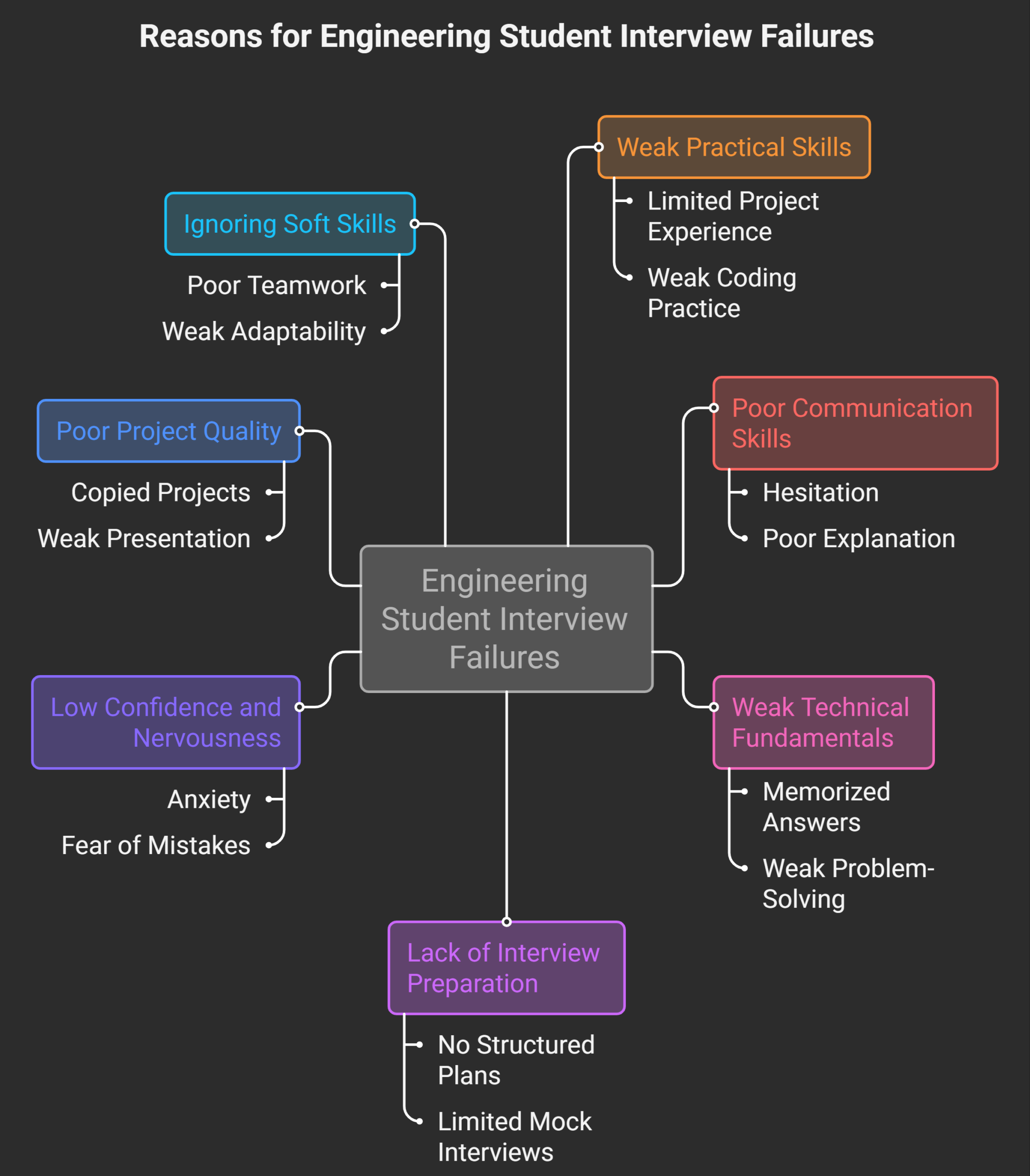
🔸 Weak Practical Skills
Many students focus only on theoretical learning. They memorize concepts mainly for examinations and grades. Recruiters expect practical understanding during technical interviews instead.
- Limited hands-on project experience.
- Weak coding or technical practice.
- Poor real-world application knowledge.
- Lack of industry exposure.
- Difficulty solving practical problems.
- Minimal internship experience.
Practical skills improve interview performance significantly.
🔸 Poor Communication Skills
Communication affects recruiter impressions greatly during interviews. Many students struggle while explaining technical answers clearly.
- Hesitation during conversations.
- Weak speaking confidence.
- Poor explanation abilities.
- Limited professional vocabulary.
- Difficulty expressing technical ideas.
- Poor listening skills.
Good communication improves confidence and clarity.
🔸 Weak Technical Fundamentals
Strong fundamentals remain important during interviews. Many students forget concepts after examinations finish.
- Memorized answers without understanding.
- Weak problem-solving logic.
- Poor subject clarity.
- Difficulty answering follow-up questions.
- Confusion during technical discussions.
- Inability to explain basic concepts.
Recruiters value clarity more than memorization.
🔸 Lack of Interview Preparation
Many students start preparation too late. Random preparation reduces interview performance significantly.
- No structured preparation plans.
- Weak aptitude preparation.
- Limited mock interview practice.
- Poor resume preparation.
- Lack of company research.
- Weak HR interview preparation.
Structured preparation improves placement success greatly.
🔸 Low Confidence and Nervousness
Fear affects interview performance negatively. Nervous students often struggle despite good knowledge.
- Anxiety during technical rounds.
- Fear of making mistakes.
- Lack of interview exposure.
- Poor body language.
- Overthinking difficult questions.
- Fear of rejection.
Confidence improves through regular practice and preparation.
🔸 Poor Project Quality
Projects play a major role during placements. Weak projects reduce recruiter interest quickly.
- Copied academic projects.
- Limited practical implementation.
- Poor project understanding.
- Weak presentation skills.
- Lack of innovation.
- Inability to explain project decisions.
Strong projects improve technical credibility greatly.
🔸 Ignoring Soft Skills
Many students focus only on technical preparation. Recruiters also evaluate professional behavior and teamwork.
- Poor teamwork abilities.
- Weak adaptability skills.
- Lack of leadership qualities.
- Poor time management.
- Weak professional attitude.
Balanced skills improve long-term career growth significantly.

Master BIM and Elevate Your Career – Enroll Today!
Stay ahead in the construction and design industry with our comprehensive BIM Course! Learn Building Information Modeling (BIM) from experts, gain hands-on experience with top software, and boost your career prospects. Join now and become a certified BIM professional!
Know MoreFrequently Asked Questions
Why do most engineering students fail interviews?
Many engineering students fail interviews because they focus mainly on theoretical learning and academic marks. Recruiters now expect practical skills, communication abilities, confidence, and real-world problem-solving during interviews.
What skills do recruiters expect from engineering students?
Recruiters expect strong technical fundamentals, communication skills, teamwork abilities, and practical project experience. They also evaluate confidence, adaptability, problem-solving ability, and professional attitude during interviews.
Why are practical skills important during interviews?
Practical skills show how well students can apply technical knowledge in real situations. Companies prefer candidates who can solve industry problems instead of only explaining theoretical concepts.
How does communication affect interview performance?
Good communication helps students explain technical answers clearly and confidently during interviews. Poor communication often creates hesitation, confusion, and weak recruiter impressions even when technical knowledge remains strong.
Why do students feel nervous during interviews?
Many students lack interview experience and proper preparation, which increases fear and anxiety. Nervousness also affects confidence, body language, and the ability to answer questions properly.
How important are projects during engineering placements?
Projects help recruiters evaluate practical understanding, creativity, and technical skills. Strong projects also improve resume quality and increase student credibility during technical discussions.
Can academic marks alone guarantee placement success?
Good academic marks help students qualify for placement opportunities initially. However, companies now prioritize practical skills, communication, and interview performance more than marks alone.
How can students improve technical interview performance?
Students should revise core subjects regularly and practice technical problem-solving consistently. Understanding concepts clearly matters more than memorizing interview answers.
What role do mock interviews play during preparation?
Mock interviews improve confidence and help students understand common interview patterns. They also reduce nervousness and help identify preparation weaknesses before actual placements.
How can engineering students improve placement success?
Students should start preparation early and focus on balanced skill development throughout college. Regular practice, strong projects, communication improvement, and industry awareness improve placement opportunities significantly.